
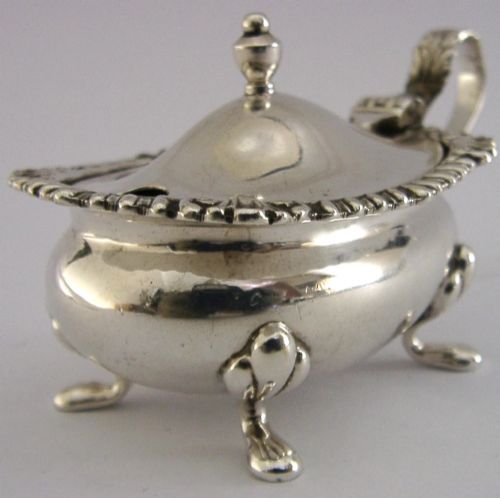


Antique Silver Condiment Jar
These antique silver condiment jars combine metalwork and glass to serve mustards, preserves, and jams at the dining table.
Antique Silver Condiment Jar
An antique silver condiment jar encompasses tableware designed for mustards, jams, and preserves, appearing across Victorian, Edwardian, and mid-century periods. The selection includes mustard pots with hinged lids, preserve jars paired with stands, and cruet sets.
Many examples combine sterling silver or silver plate with glass inserts, utilising ruby red, cranberry, or cut glass bodies. Makers from Birmingham and Sheffield produced these vessels in Georgian revival, Edwardian, and Art Deco styles.
Materials and construction
Silversmiths formed the mounts, lids, and spoons from sterling silver or silver plate, sometimes incorporating intricate pagoda designs or apple-shaped frames. Glass components were blown, moulded, or cut to fit snugly within the metal collars.
Liners frequently utilised coloured glass, including cranberry and vaseline varieties, providing a contrast to the polished silver framework.
One Birmingham workshop fashioned a silver preserve pot directly into the plump, round form of an apple.
Judging the work
Quality rests in the weight of the silver and the precision of the glass fitting. Heavier sterling silver pieces demonstrate substantial metal thickness, whereas plated wares rely on the integrity of the underlying base metal.
The integration of the glass liner, whether cut glass or coloured glass, indicates the original maker's attention to detail and proportion.
Hukin and Heath·Walker and Hall·Elkington and Company
The Antique Silver Condiment Jar Glossary
- Sterling silver
- A metal alloy containing a high proportion of pure silver combined with other metals for durability. It is the primary material for the higher-end pots.
- Silver plate
- A base metal coated with a thin layer of silver. Many Edwardian and Art Deco cruet sets and preserve dishes use this technique.
- Cut glass
- Glass decorated by cutting facets into the surface. It catches the light and adds texture to preserve jars.
- Vaseline glass
- A type of glass coloured with uranium oxide that glows under ultraviolet light. It appears in turn-of-the-century preserve dishes.
- Mustard pot
- A small lidded jar designed to hold prepared mustard at the dining table. They frequently include glass liners and matching spoons.
Antique Silver Condiment Jar: Frequently Asked Questions
What fits inside an antique silver condiment jar?
These vessels were made to hold mustards, jams, marmalades, and preserves during meals. Most retain their original glass liners, which protected the metal from acidic condiments.
Today, they function well on the dining table or sideboard for serving similar preserves or small table items.
How do I date an antique silver preserve jar?
Dating relies on hallmarks stamped onto the silver mounts, which indicate the assay office, date letter, and maker. Stylistic clues such as Art Deco geometric lines or Victorian ornamentation also help narrow down the period.
Matching the glass insert to the metal mount provides further confirmation of the original production era.
Are silver plated condiment jars durable?
Silver plated pieces offer robust daily use provided the plating remains intact. They were produced extensively during the Edwardian and Art Deco periods.
Careful cleaning preserves the plated surface without wearing through to the base metal beneath.
How should I clean glass and silver jars?
Silver components require a gentle polish designed for precious metals to avoid scratching the surface. Glass liners can be washed separately in warm soapy water.
Avoiding harsh abrasives keeps both the metal mounts and coloured glass inserts in good condition.