

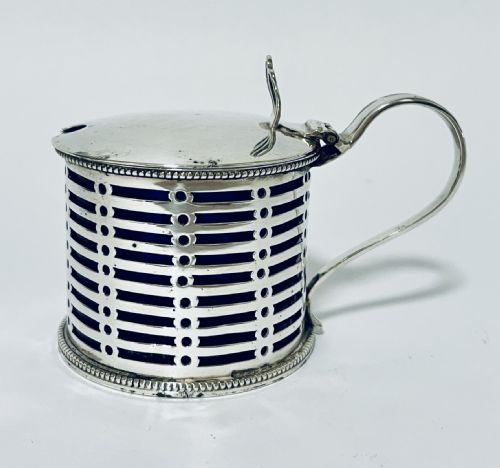
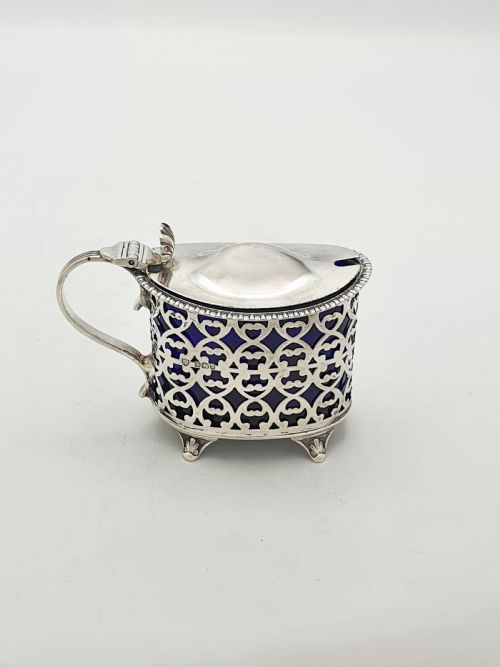


Blue Glass Condiment Pot
A blue glass condiment pot brings deep cobalt colour to the dining table, combining precious metal framework with rich, translucent glass.
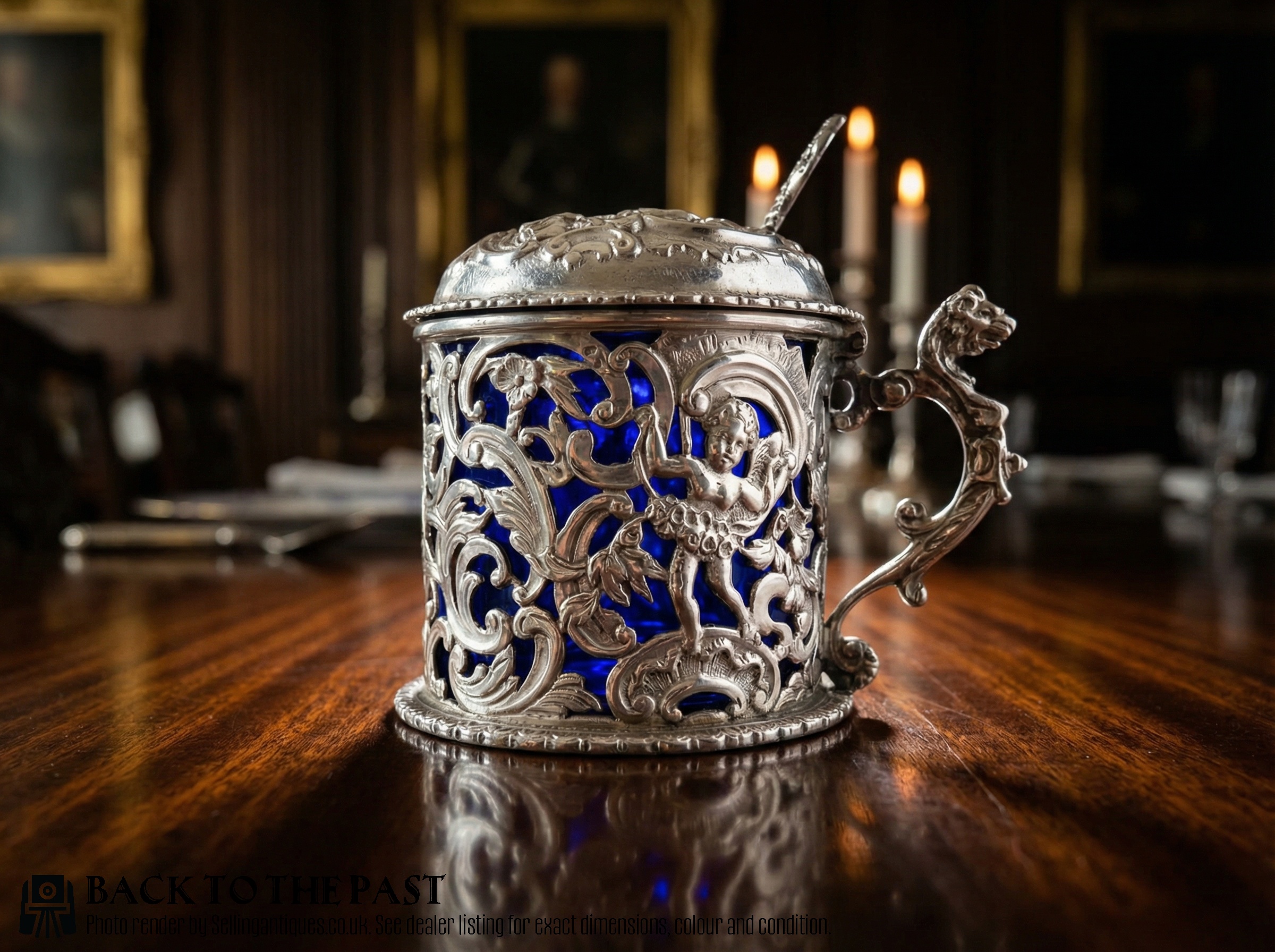
Blue Glass Condiment Pot
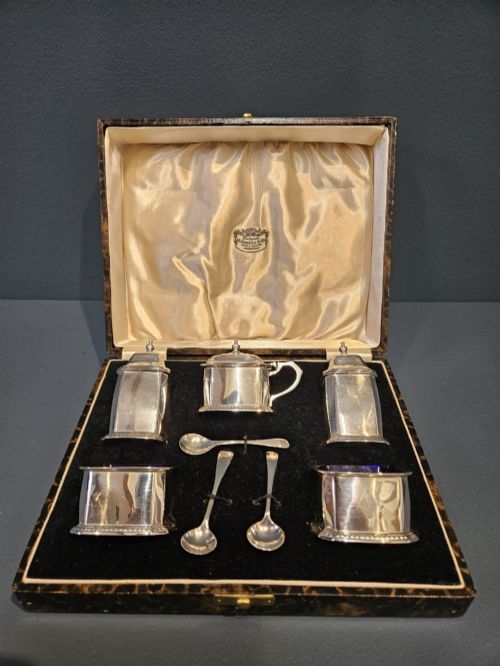
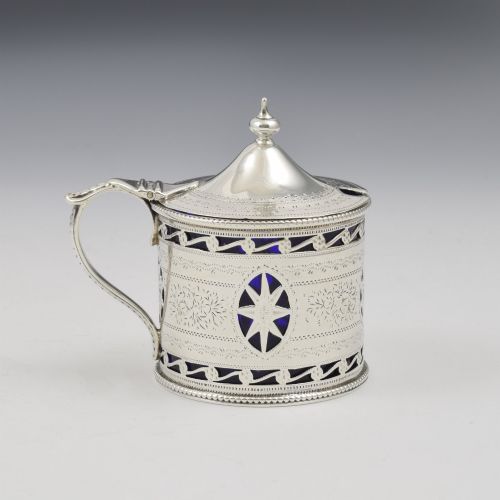
When you search for a blue glass condiment pot, you encounter small table vessels designed to hold mustards, salts and relishes during formal dining. These pieces typically consist of an open or pierced silver frame enclosing a removable cobalt glass liner.
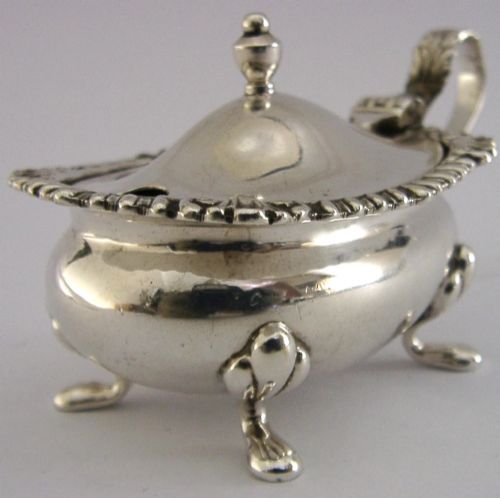
The selections on this page span the Victorian, Edwardian and Art Deco periods, alongside Georgian revival pieces. Mustard pots and cruet sets form the majority of these domestic tablewares.
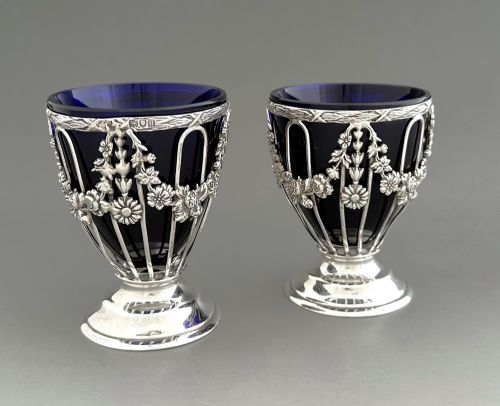
Most examples combine sterling silver pierced work or wirework with blown cobalt glass inserts. They reflect formal dining rituals where condiments were presented in miniature decorative containers.
How they were made
Silversmiths formed the outer frames through piercing, casting and wirework techniques using sterling silver or silver plate. Pierced designs required careful hand-sawing to create intricate geometric, floral or figural patterns that revealed the coloured glass within.
The glass liners were blown in deep cobalt blue shades, sometimes shaped to fit octagonal, oval or drum-form silver mounts. Artisans then fitted each liner snugly inside the metal framework to ensure stability during use.
Victorian silversmiths occasionally tucked tiny silver cherubs and birds among the pierced foliage of mustard pots, watching over the table salt.
What varies in quality
Quality depends on the weight and crispness of the silver framework, with heavier gauge metal and deeply struck hallmarks indicating superior manufacture. Finer pieces display refined hand-piercing and well-balanced proportions that securely cradle the glass insert.
The condition and original match of the cobalt glass liner also influence the character of the piece. Thick, clear-toned glass without internal flaws complements the craftsmanship of the surrounding silver mount.
Nathan & Hayes·William Neale·Charles Stuart Harris·Omar Ramsden
The Blue Glass Condiment Pot Glossary
- Cobalt glass
- Deep blue glass coloured with cobalt oxide. It provides a striking visual contrast when housed within pierced silver frames.
- Cruet set
- A matched group of condiment containers used at the dining table. These sets often include mustard pots, salt cellars and pepper shakers.
- Pierced work
- Metalwork decorated by cutting out open patterns from the sheet silver. This technique lightens the object and displays the glass liner beneath.
- Sterling silver
- An alloy consisting of pure silver and other metals, typically copper, standardised for quality. It provides the durable structure for many condiment pots.
- Wirework
- Metalware constructed from shaped silver wires soldered together. This method creates open, cage-like frames for glass inserts.
Blue Glass Condiment Pot: Frequently Asked Questions
What was a blue glass condiment pot used for?
These vessels held prepared mustards, salts and relishes on the dining table. The inner glass protected the silver metal from corrosive condiments while adding vibrant colour to the table setting.
Guests served themselves using miniature spoons during formal meals. The bright cobalt insert allowed diners to see the condiment level clearly.
How do I identify a Victorian condiment pot?
Victorian examples often feature heavy cast silver mounts, ornate pierced scrollwork and deep cobalt glass liners. Look for date letters and maker's marks stamped directly onto the silver framework.
Stylistic cues range from heavy early Victorian designs to lighter, pierced drum shapes popular towards the end of the nineteenth century.
Are the glass liners removable?
Most cobalt glass liners lift out easily from the silver frame for cleaning and refilling. The metal mounts are specifically shaped to hold the glass securely without permanent fixing.
Original liners fit snugly inside the silver casing. Replacements often show slight variations in thickness or height compared to the surrounding metal.
What is the difference between sterling silver and silver plate?
Sterling silver contains a high proportion of pure silver throughout the entire metal structure. Silver plate consists of a base metal coated with a thin layer of pure silver.
Both materials appear frequently in antique condiment sets. Hallmarks on the metal surface typically indicate whether a piece is solid sterling or plated.
How should I clean a silver and glass condiment pot?
Remove the glass liner from the silver frame before cleaning each part separately. Wash the cobalt glass in warm soapy water and dry it gently with a soft cloth.
Polish the silver mount with an appropriate cloth, taking care around pierced sections and hallmarks. Avoid harsh dips that might damage delicate patinas.