


Sterling Silver Condiment Vessel
When you search for a sterling silver condiment vessel, you find small silver table pieces designed to hold mustard, sugar, and preserves at dinner.
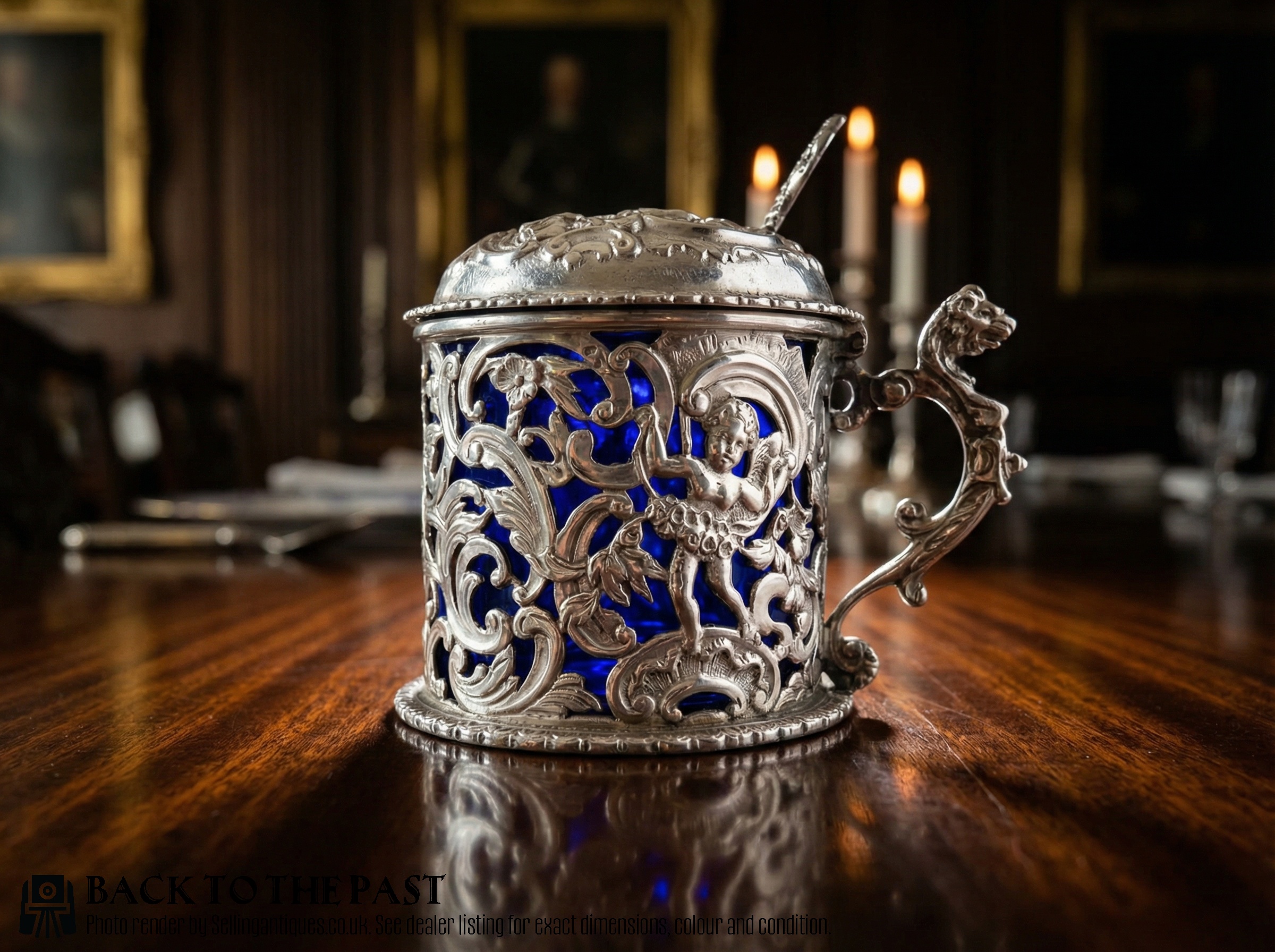
Sterling Silver Condiment Vessel
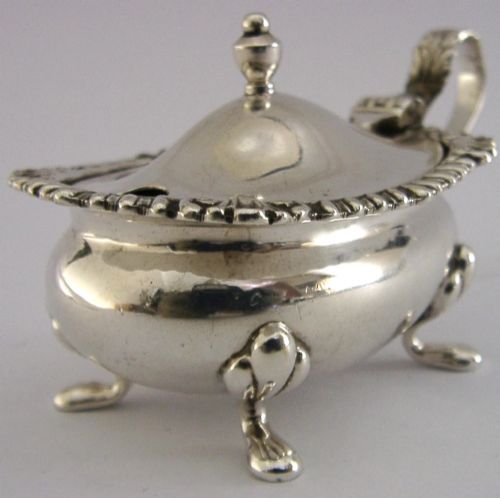
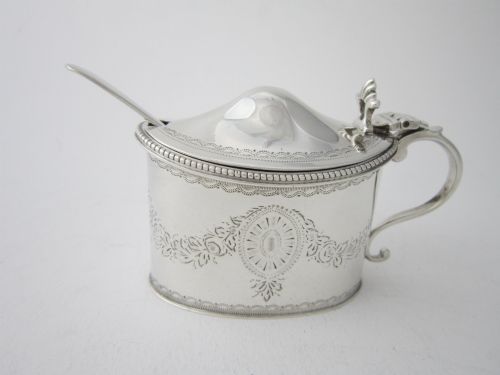
A sterling silver condiment vessel serves dining tables as a small container for mustard, sugar, or preserves, often appearing as a drum mustard pot, a sugar box, or a condiment jar. These pieces span Georgian, Victorian, Edwardian, and later twentieth-century periods, showing the changing tastes in dining table ware across generations.
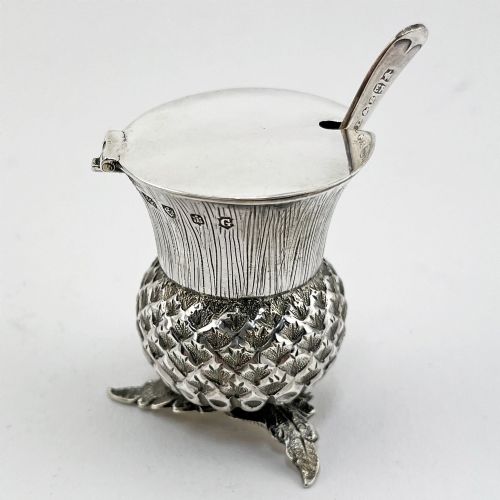
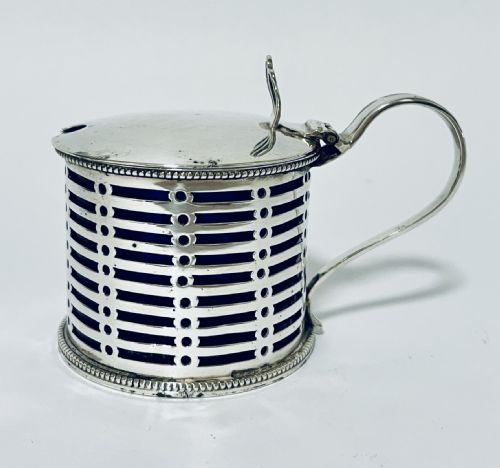
Makers utilised various geometric and naturalistic outlines, ranging from octagonal and polygon sides to pierced drum cylinders and Scottish novelty designs. The assortment reflects both formal dining traditions and whimsical decorative expressions.
What varies in quality
The quality of a sterling silver condiment vessel depends on the weight of the silver and the crispness of the hand-chased or pierced decoration. Thicker gauge silver and fully articulated cast mounts distinguish superior work from lighter, stamped alternatives.
The presence of a matching, undamaged original glass liner adds to the integrity of the piece, particularly when paired with maker marks that identify notable silversmiths. Precision in the hinge alignment and the secure closure of the lid also mark the distinction between standard production and master craftsmanship.
Current listings feature sterling silver, glass, and cobalt blue glass across Georgian, Victorian, Edwardian, and Art Deco periods.
Alfred Marston·Nathan and Hayes·Charles Fox II·Matthew Boulton·Robert Hennell I·Charles Stuart Harris·Omar Ramsden·Roberts and Belk·Heath and Middleton
The Sterling Silver Condiment Vessel Glossary
- Drum mustard pot
- A cylindrical silver container for mustard, flat-topped and straight-sided. This form became popular during the Georgian period.
- Pierced silver
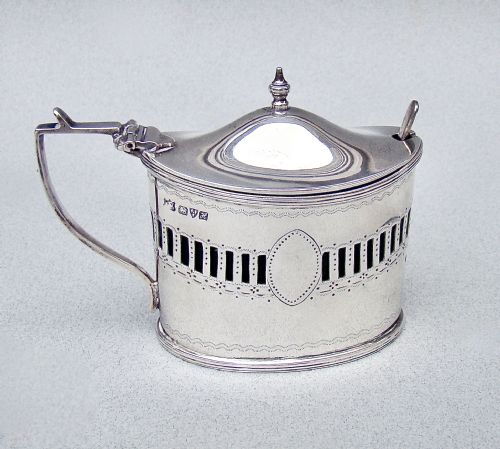
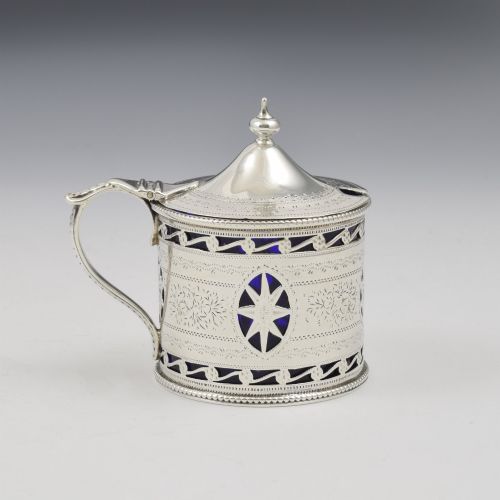
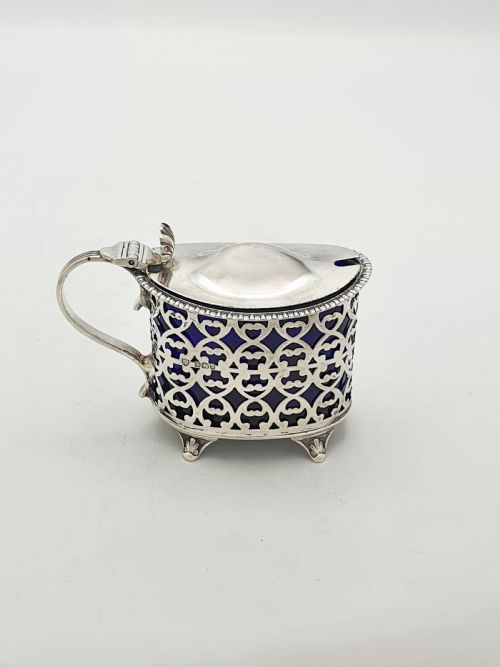
- Metalwork cut through to form decorative open patterns. This technique reveals the coloured glass liner housed within.
- Glass liner
- A removable insert fitted inside openwork silver pots. Cobalt blue glass is a frequent choice for these vessels.
- Sugar caster
- A perforated jar used for sprinkling sugar over food. These containers often feature polygon or round tops.
- Novelty silver
- Tableware shaped to resemble animals, plants, or objects. Examples include thistle forms and squirrel sugar boxes.
Sterling Silver Condiment Vessel: Frequently Asked Questions
What is a sterling silver condiment vessel used for?
These vessels held table condiments such as mustard, sugar, and preserves during formal meals.
They sat upon dining tables as functional tableware items paired with spoons and glass liners.
How do I identify a Georgian mustard pot?
Georgian examples often feature drum shapes, plain surfaces, or crisp hallmarks from makers such as Matthew Boulton and Robert Hennell I.
These pieces typically date from the eighteenth and early nineteenth centuries.
Are all mustard pots lined with glass?
Pots featuring pierced or openwork silver bodies require glass liners to hold loose condiments like mustard.
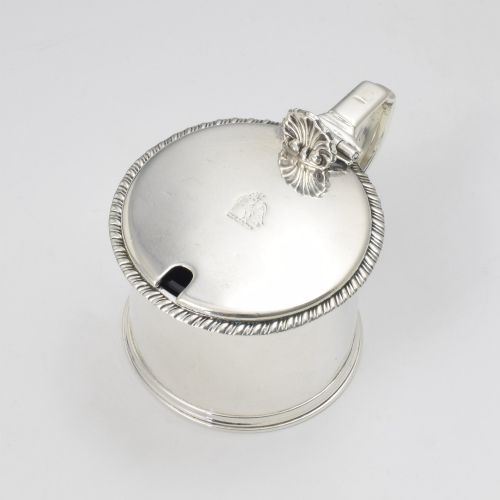
Solid-walled vessels often dispense with liners and hold dry contents or sauces directly against the silver.
How should I clean silver condiment vessels?
Use a soft cloth and a gentle silver polish formulated to preserve antique surfaces and hallmarks.
Remove glass liners before cleaning to protect the glass and the inner silver walls.