
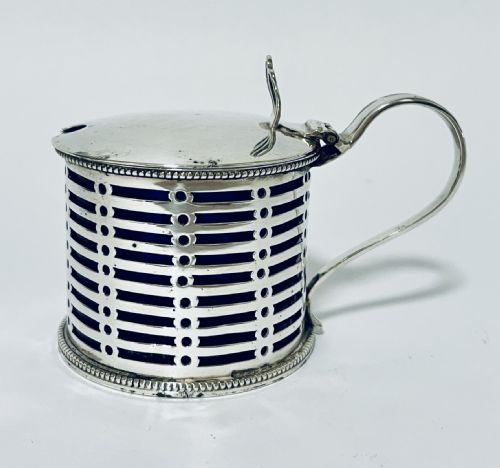
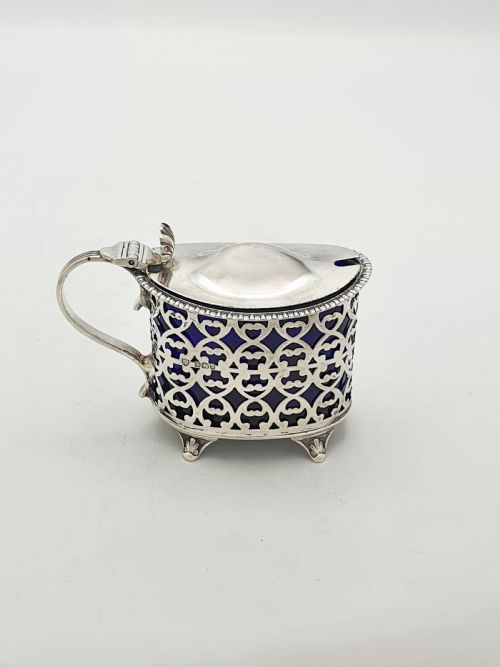


Pierced Silver Condiment Pot
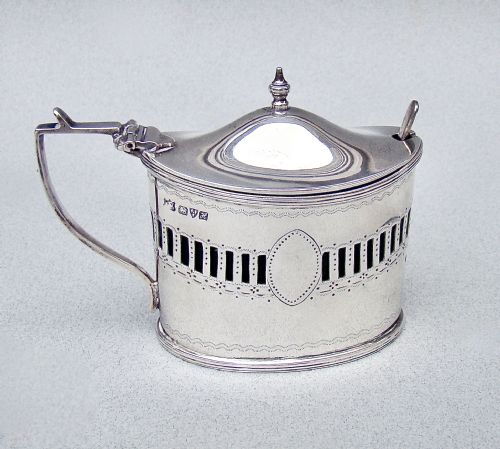
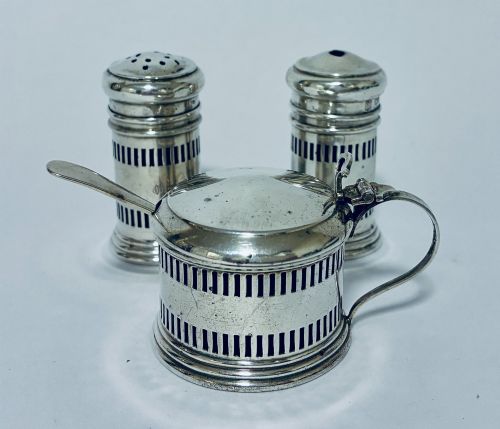
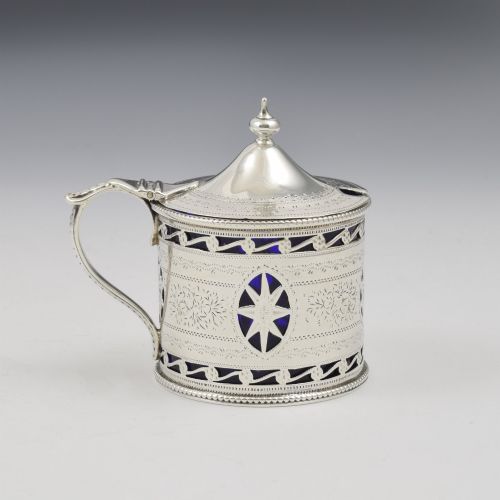
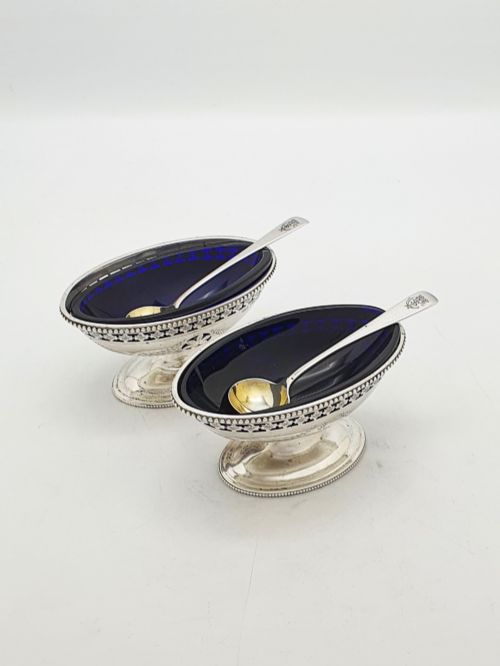
A pierced silver condiment pot brings elegance to the dining table, offering delicate openwork metal framing a coloured glass liner.
Pierced Silver Condiment Pot
A pierced silver condiment pot is a small tableware vessel designed for holding mustard, salt or pepper during meals. Buyers searching for a pierced silver condiment pot will find domestic dining pieces spanning the Georgian, Victorian, Edwardian and George V periods.
Originating as practical items for formal dining, these pots range from simple geometric containers to ornate revivalist pieces decorated with cherubs, birds or rococo scrolls.
How they were made
Silversmiths constructed these pots using sterling silver, shaping the bodies through casting, hammering or piercing techniques. The openwork patterns were meticulously cut by hand using small saws or pierced dies to create decorative lattices.
Glass liners in cobalt blue, ruby red or satin textures were mouth-blown and shaped to fit snugly inside the silver frames, protecting the metal from corrosive condiments. Hinged lids with small thumbpieces and delicate handles were soldered to the bodies to complete the construction.
Some Victorian mustard pots feature mischievous cherubs peering out through the silver fretwork.
What varies in quality
Quality in a pierced silver condiment pot rests upon the crispness of the openwork cutting and the weight of the sterling silver used in its construction. Finer examples display precise, clean piercing with well-defined decorative motifs rather than soft or cast-over edges.
The presence of an original, matching coloured glass liner significantly elevates a piece, as does the clarity and depth of the hallmarks stamped into the metal.
Alfred Marston·Nathan & Hayes·Robert Hennell I·Charles Stuart Harris·Omar Ramsden·William Hutton & Sons
The Pierced Silver Condiment Pot Glossary
- Piercing
- A metalworking technique where shapes are cut out of the silver sheet to form decorative patterns. This openwork allows coloured glass liners to show through.
- Mustard pot
- A small lidded container designed to hold prepared mustard on the dining table. It often includes a spoon slot in the lid or rim.
- Cruet set
- A matched group of condiment vessels held together on a stand or tray. These sets typically include mustard pots, salt cellars and pepper pots.
- Sterling silver
- An alloy of silver containing ninety-two point five percent silver and seven point five percent other metals, usually copper. This standard is marked by official assay offices.
- Cobalt glass
- Deep blue glass created by adding cobalt oxide to the molten batch. It is frequently used for liners in pierced silver salt cellars and mustard pots.
Pierced Silver Condiment Pot: Frequently Asked Questions
What was a pierced silver condiment pot used for?
These pots held condiments like mustard or salt during formal meals, serving individual diners or shared table settings.
They sat upon the dining table alongside cruet sets and tableware, combining functional storage with decorative display.
How do I care for silver condiment pots?
Clean the sterling silver gently using a soft cloth and proprietary silver polish, avoiding abrasive materials that damage fine piercing.
Remove the glass liner before cleaning to wash it separately in warm soapy water, protecting both the glass and the metal.
How do I identify the date of a silver pot?
Look for the hallmarks stamped on the silver body, which include symbols for the assay office, date letter and sterling standard.
Reference tables match these punched letters and symbols to specific years of manufacture during the Georgian, Victorian and Edwardian eras.
Why do these pots have coloured glass liners?
Glass liners prevented mustard and salt from corroding the sterling silver interior over time. Coloured glass also provided a vibrant visual contrast against the pierced silver exterior patterns.