
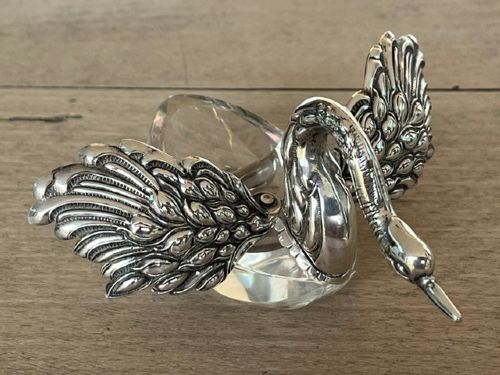
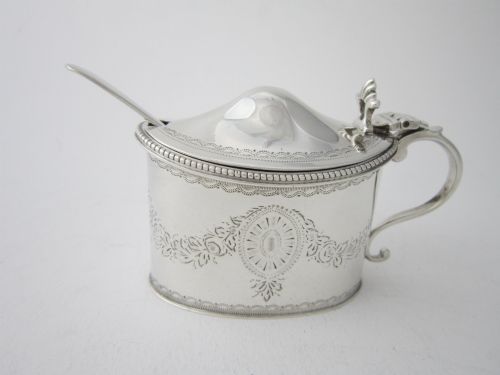


Hinged Silver Condiment Pot
These hinged silver condiment pot examples bring functional elegance to the dining table, combining precious metal with glass liners for everyday use.
Hinged Silver Condiment Pot
When you search for a hinged silver condiment pot, you are looking at small tableware vessels designed to hold mustards, salts, and preserves at the dining table. The pieces found here span from the Georgian period through the Victorian era up to the mid-twentieth century.
How they were made
Silversmiths formed the bodies of these vessels from sterling silver, shaping the metal through hammering, rolling, and soldering techniques. Hinges were carefully engineered to attach the lid securely to the rim while allowing smooth movement.
Liners were produced separately from blown or moulded glass, sometimes featuring deep cut glass patterns or vibrant cobalt colouring to contrast with the polished silver exterior.
Listings on this site range from eighteenth-century Georgian examples to mid-century twentieth-century pieces, incorporating sterling silver, crystal, and cobalt glass.
What varies in quality
Quality in these vessels is evident in the weight of the sterling silver and the precision of the hinge mechanism. Finer pieces maintain a tight lid alignment and feature crisp hallmarks stamped into the metal.
The craftsmanship of the accompanying glass liner also dictates the tier of the piece, with hand-cut crystal and unblemished cobalt glass representing superior production compared to standard moulded inserts.
Robert Hennell I·William Neale And Son
The Hinged Silver Condiment Pot Glossary
- Sterling silver
- A standard alloy consisting of ninety-two point five percent silver and seven point five percent other metals, typically copper. This composition provides the durability required for functional tableware.
- Hallmark
- A series of official marks stamped on precious metal items in the United Kingdom, indicating the purity of the metal, the assay office, and the year of manufacture.
- Cobalt glass
- A deep blue glass coloured by the addition of cobalt oxide during production. It is frequently utilised for interior liners in condiment vessels.
- Cruet set
- A matched group of small bottles, jars, or pots designed to hold condiments like mustard, salt, pepper, oil, and vinegar upon the dining table.
Hinged Silver Condiment Pot: Frequently Asked Questions
What is a hinged silver condiment pot used for?
These vessels were historically placed on dining tables to serve prepared mustards, salts, and relishes alongside meals. The attached lid kept the contents covered when not being actively spooned onto a plate.
Today, they function similarly in modern dining settings or serve as small decorative containers for domestic items.
How do I identify the period of a silver condiment pot?
Dating relies heavily upon the maker marks and date letters stamped into the sterling silver body. Comparing the overall shape and decorative style against known eras like the Georgian period helps narrow down the decade of production.
Design motifs such as clean neoclassical lines differ markedly from the ornate embellishments typical of later Victorian manufacturing.
Why do some pots have coloured glass liners?
Liners made from blue cobalt or crystal glass were inserted to protect the reactive silver metal from the corrosive acids found in mustard and vinegar. Coloured glass also added a striking visual contrast beneath pierced silver galleries.
Many surviving pieces retain their original blown or cut glass inserts, which add considerable interest for collectors.
Are these pots difficult to care for?
Maintaining sterling silver requires regular gentle polishing to remove natural tarnish caused by atmospheric sulfur. Glass liners can be removed easily and washed in warm soapy water.
Storing the pieces in dry conditions prevents accelerated oxidation of the metal surfaces.