
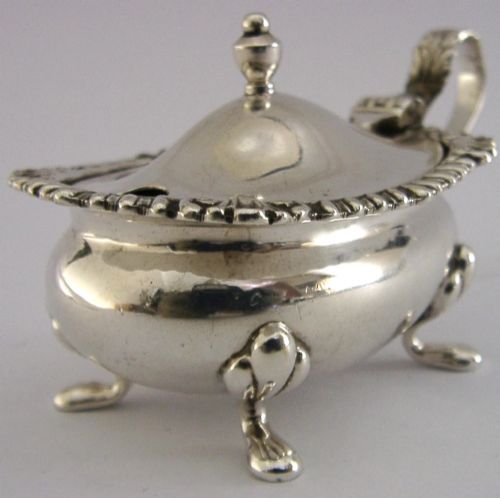


Sterling Silver Condiment Jar
A sterling silver condiment jar brings the weight of Georgian, Victorian, and mid-century British silver onto the table.
Sterling Silver Condiment Jar
A sterling silver condiment jar encompasses small table vessels designed for mustard, preserve, and pepper, often paired with coloured glass liners. The selection spans Georgian elegance, Victorian ornamentation, Edwardian refinement, and mid-century modern lines, reflecting changing dining customs across generations.
Makers from Birmingham and Sheffield feature prominently, utilising hallmarks that trace each vessel back to specific decades of British silversmithing. Buyers encounter both heavy silver constructions and delicate glass bodies framed in pierced or solid metal mounts.
How they were made
Silversmiths constructed these vessels using solid sterling silver alongside blown and cut glass, pairing metallic mounts with fitted ruby or blue glass liners. Techniques involved shaping sheet silver, casting handles, and piercing metal to create decorative galleries around the glass inserts.
Cut glass vessels required skilled wheel-cutting to achieve faceted patterns that catch the light beneath silver lids and rims. Hallmarks were stamped directly into the metal, recording the assay office, standard mark, and date letter for each piece.
An architectural pagoda design hides within the silver collection, turning an ordinary mustard pot into an oriental pavilion.
What varies in quality
Quality rests in the weight of the metal and the precision of the glass fitting, separating substantial silver vessels from lighter alternatives. Heavier mustard pots with matching spoons and intact coloured glass liners demonstrate a higher grade of manufacture.
Design ambition distinguishes standard production items from unusual forms, such as pagodas or elaborate pierced galleries. The clarity of the cut glass and the crispness of the hallmarks further define the standard of the piece.
Walker and Hall·Elkington and Company
The Sterling Silver Condiment Jar Glossary
- Sterling silver
- A silver alloy containing 92.5 percent pure silver and 7.5 percent other metals, typically copper, ensuring durability for tableware. This standard is verified by traditional British hallmarks.
- Hallmark
- An official stamp applied to precious metal items to guarantee their purity and origin. These marks identify the maker, assay office, and year of manufacture.
- Liner
- A removable glass insert placed inside a silver mustard pot or preserve jar to protect the metal from acidic contents. They appear in clear, ruby red, and blue glass.
- Cut glass
- Glass decorated by grinding facets or patterns into the surface using a rotating wheel. It adds weight and sparkle to condiment and preserve jars.
- Pierced work
- A decorative technique where metal is pierced or cut through to create openwork patterns. Silversmiths used this method on jar galleries to reveal the coloured glass within.
Sterling Silver Condiment Jar: Frequently Asked Questions
What is a sterling silver condiment jar?
A sterling silver condiment jar is a small dining table vessel intended for mustard, preserves, or pepper. These pieces combine silver mounts with glass bodies and often include matching spoons.
They reflect historical dining practices where condiments were served from decorative containers rather than commercial jars. The category includes mustard pots, preserve jars, and pepper pots across multiple design periods.
How do I identify the date of a silver mustard pot?
Dating a silver mustard pot relies on reading the hallmarks stamped into the metal by British assay offices. These marks include a date letter corresponding to the specific year the piece was tested and marked.
Stylistic cues such as Victorian ornamentation or mid-century modern lines also help narrow down the period of manufacture. Comparing the form to known historical styles provides further context for the date.
Why do some jars have glass liners?
Glass liners protected the sterling silver from the corrosive effects of mustard and preserves. Acidic condiments could tarnish or pit unprotected silver over time.
These removable inserts made cleaning easier and allowed coloured glass, such as ruby red or blue, to show through pierced silver galleries. Many surviving pieces retain their original glass components.
How were silver condiment jars used?
These jars sat on dining tables to hold table condiments dispensed with small spoons or sprinkled from perforated tops. Mustard pots, preserve jars, and pepper pots were standard elements of formal table settings.
Guests served themselves from these vessels during meals. Their presence on the table combined practical utility with decorative display.