


Hinged Silver Pot
These hinged silver pot selections bring practical elegance to the table and desk, spanning centuries of fine metalwork.
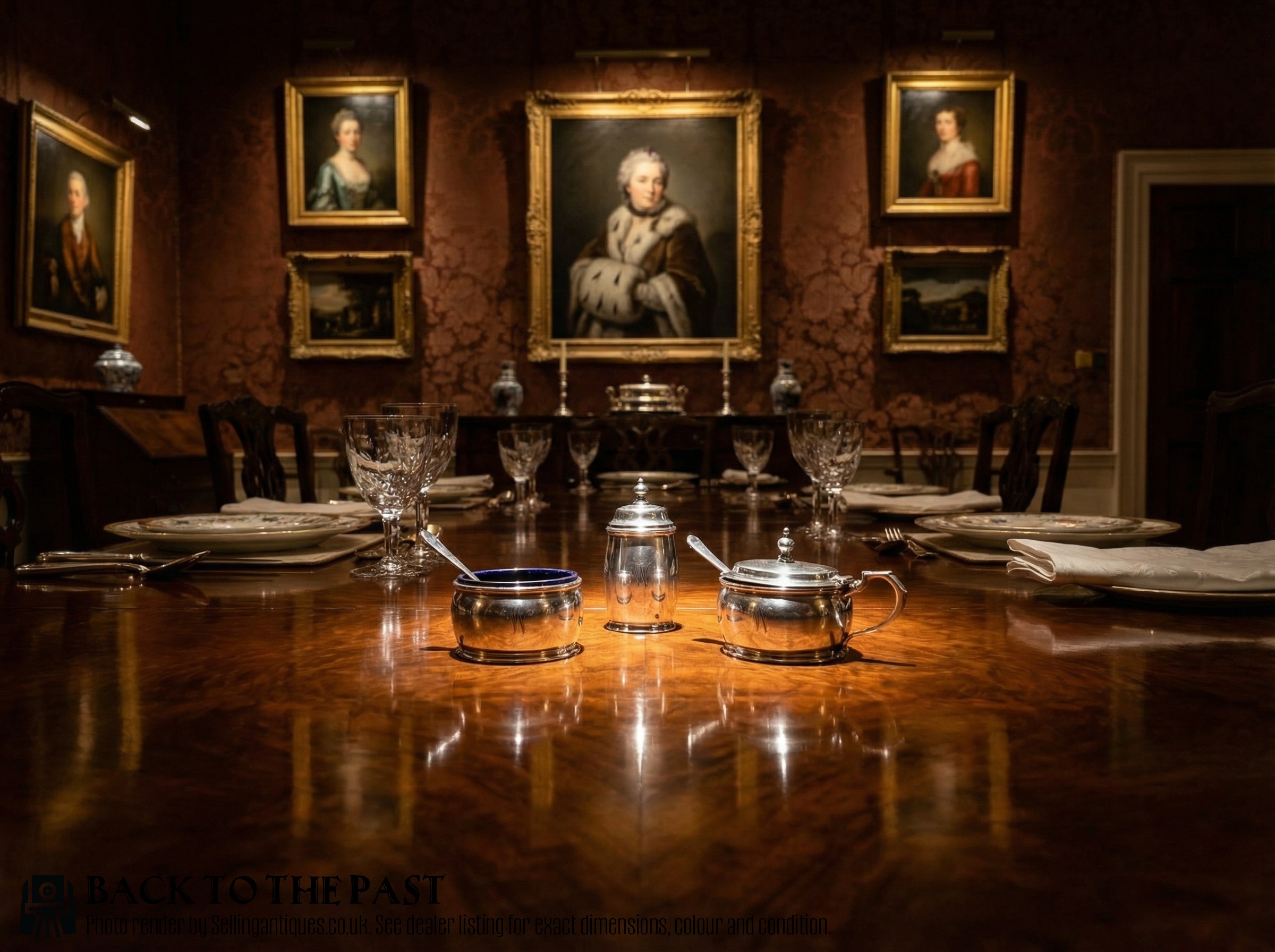
Hinged Silver Pot
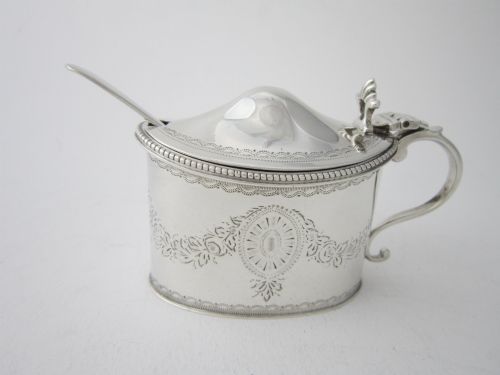
When you search for a hinged silver pot, you are looking at an array of small domestic vessels designed with lids on pivots, most commonly taking the form of mustard pots, inkwells, and condiment jars.
The versions you are most likely to meet on this page hail predominantly from the Georgian, Victorian, and Edwardian eras, alongside later twentieth-century examples in sterling silver.
Many of these containers combine precious metal mounts with glass bodies, such as cut glass or cobalt glass, while others are fashioned entirely from solid silver in oval, square, or circular shapes.
How they were made
Silversmiths utilised sterling silver alongside clear and coloured glass, mounting metal hinged lids securely onto vessels ranging from heavy capstan inkwells to delicate mustard pots.
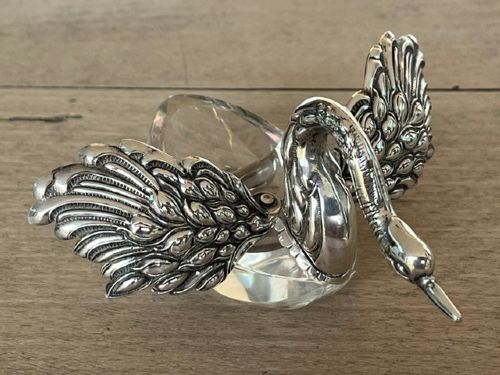
Techniques varied from plain polished surfaces to chased and fluted bodies, often paired with fitted glass liners and movable components like swan wings or bell mechanisms.
Object types include capstan inkwells, condiment jars, salt cellars with movable wings, and traditional mustard pots.
What varies in quality
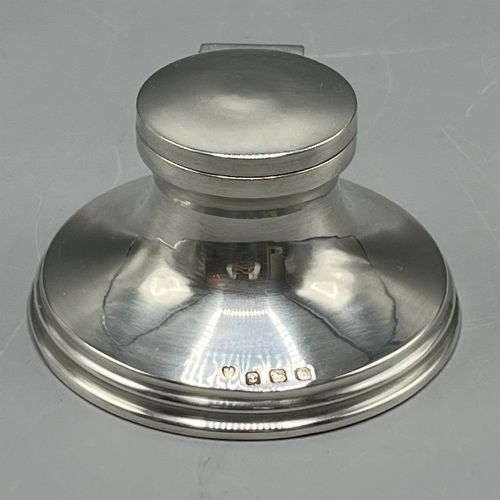
Quality rests in the crispness of the hallmarks, the weight of the sterling silver, and the precision with which the hinged lid closes onto the body.
The integration of materials also defines the tier of the piece, particularly where heavy cut glass or cobalt inserts meet well-balanced silver mounts.
Robert Hennell I·William Neale and Son·Henry Williamson Ltd
The Hinged Silver Pot Glossary
- Capstan inkwell
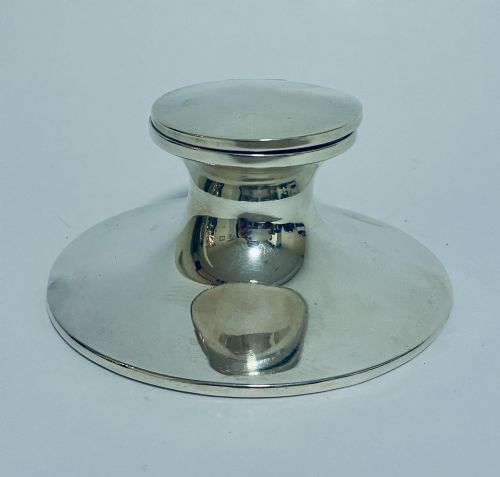
- A desk accessory shaped like a nautical capstan, featuring a wide base that tapers upward to a hinged silver lid. It sits securely on a writing desk.
- Mustard pot
- A small table vessel designed for condiments, typically featuring a hinged lid and a glass liner to protect the silver from vinegar.
- Sterling silver
- An alloy containing a high proportion of pure silver, standard for British hallmarked items across the Victorian and twentieth-century periods.
- Cobalt glass
- Deep blue glass frequently utilised for liners within mustard pots and condiment jars, providing a strong visual contrast against the polished silver.
Hinged Silver Pot: Frequently Asked Questions
How do I date a hinged silver pot?
Dating relies heavily upon the stamped hallmarks, which indicate the assay office, the specific year letter, and the maker's mark.
Stylistic cues such as Edwardian novelty shapes or Georgian plain proportions also point toward the era of manufacture.
Were these pots only used for mustard?
While mustard pots form a large category, the hinge mechanism appears across various small domestic containers including inkwells, salt cellars, and condiment jars.
Desk items often incorporated glass wells for ink, whereas table vessels held dry spices or wet condiments.
Do these pieces usually have glass liners?
Many condiment vessels and mustard pots were manufactured with removable glass liners to prevent corrosive contents from damaging the silver interior.
Some surviving pieces retain their original glass inserts, which adds to their completeness.
What is a capstan inkwell?
A capstan inkwell is a specific desk form modelled after the shipboard winch, featuring a broad weighted base and a central hinged lid.
This design prevented the inkpot from tipping over during the vigorous act of writing.