
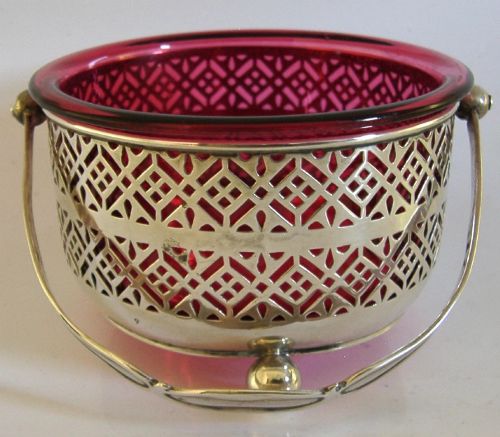
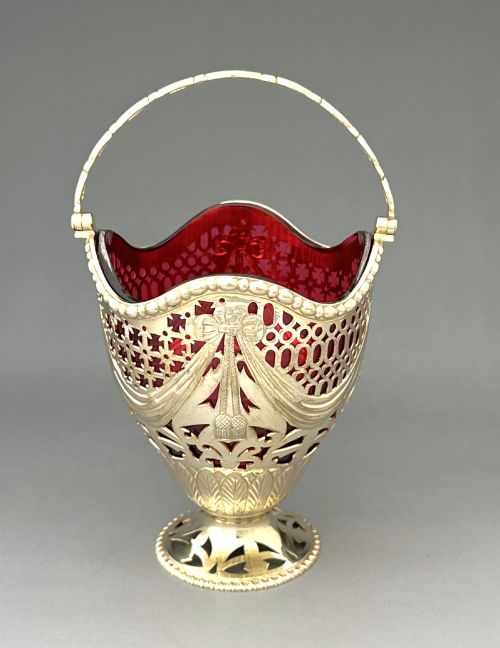
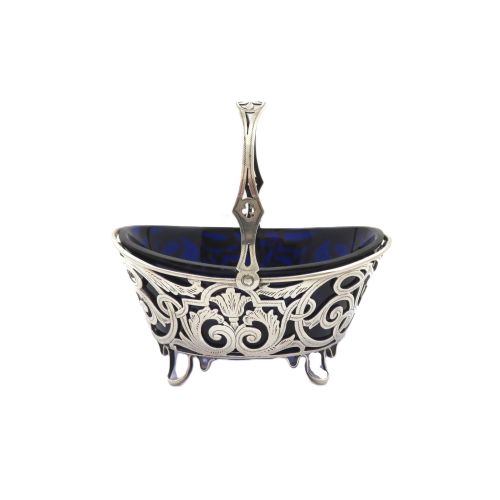
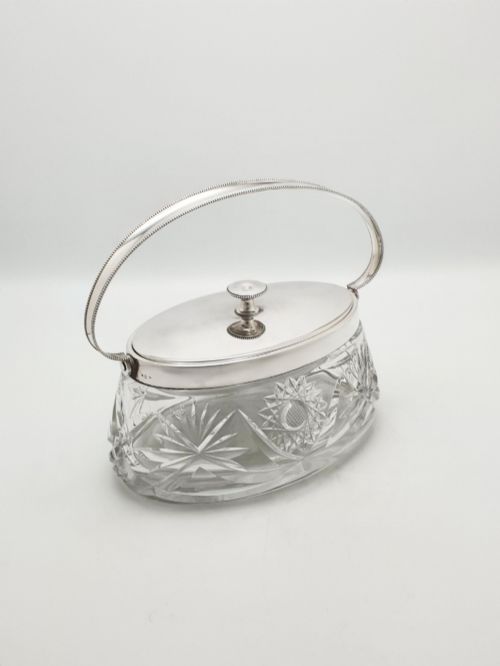



Silver Handled Glass Dish
These silver handled glass dish pieces combine bright crystal or coloured glass with precious or plated metal mounts, offering a practical centrepiece for table service.
Silver Handled Glass Dish
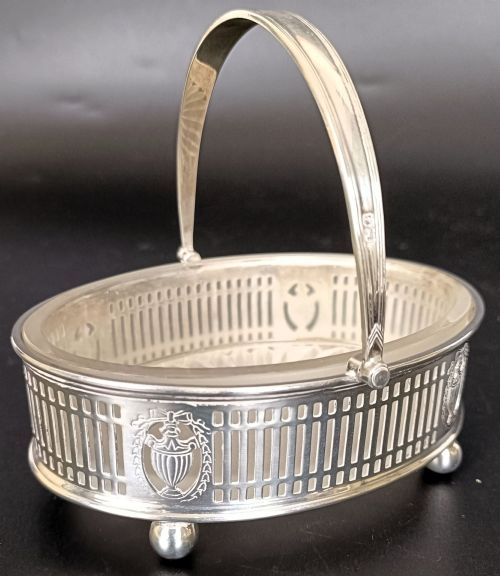
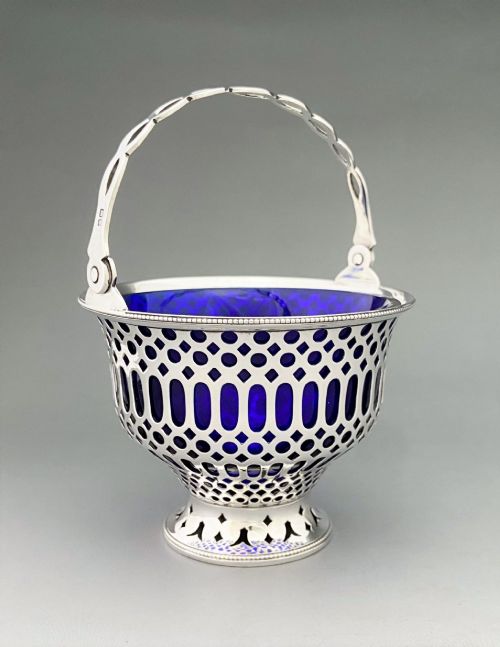
A silver handled glass dish unites a glass body with a metal handle, frequently taking the form of a swing handled basket, sugar basket, or preserve stand. These items function primarily as tableware for serving sugar, jam, sweetmeats, or biscuits during formal meals.
The objects span multiple periods, with strong representation from the Victorian and Edwardian eras alongside pieces from the eighteenth century, the eighteen-eighties, and the nineteen-thirties. Forms range from pierced silver baskets fitted with removable glass liners to segmented serving dishes and mounted potpourri vessels.
How they were made
Makers combine glassblowing, cutting, or moulding with metalworking techniques such as casting, piercing, and silver plating. Coloured glass varieties like cranberry, ruby, cobalt, and opaline sit inside pierced or solid metal frameworks, often secured by hinged swing handles.
Silver components utilise either sterling silver, indicated by town marks and dates, or silver plate over a base metal. Cut crystal and rock crystal glass provide heavy, refractive bowls that contrast with the polished metal of the handles and stands.
Materials span sterling silver, silver plate, cut crystal, and striking coloured glass such as cranberry, ruby, cobalt, and opaline.
What varies in quality
Quality rests in the weight and clarity of the glass vessel, the crispness of the metal piercing, and the presence of solid sterling silver rather than plating. Heavy cut crystal and well-defined cast floral handles separate finer workshop output from standard production.
The integrity of the pairing matters greatly, as pieces retaining their original matching glass liners command more interest than later replacements. Finer examples display precise maker marks and careful integration between the handle mounts and the glass body.
William Comyns·George Fox·WMF
The Silver Handled Glass Dish Glossary
- Swing handle
- A movable metal arch attached to the rim of a basket or dish by pivot pins, allowing the handle to drop to either side. This mechanism facilitates serving and storage on the dining table.
- Cranberry glass
- A transparent red-pink glass coloured by the addition of gold chloride during melting. It appears frequently in nineteenth-century tableware and decorative baskets.
- Silver gilt
- Silver that has been coated with a thin layer of gold on its surface, giving a warm golden sheen to the interior or exterior of the metal mount.
- Pierced work
- A decorative technique where metal is cut through in geometric or floral patterns to lighten the weight of the basket and reveal the coloured glass liner beneath.
- Biscuit barrel
- A cylindrical container with a fitted lid and handle designed to hold dry biscuits or crackers for parlour tea service.
Silver Handled Glass Dish: Frequently Asked Questions
What were silver handled glass dishes used for?
These vessels served specialised functions on the dining table, holding sugar, preserves, sweetmeats, or biscuits during formal afternoon tea and dinner service. The removable glass liners allowed servants to replenish contents easily.
Over time, many transitioned from active dining implements to decorative display pieces, prized for the way coloured glass catches natural light in a room.
How do I identify an Edwardian piece?
Edwardian examples, dating roughly from nineteen-hundred to nineteen-ten, frequently feature bright cranberry or ruby glass liners paired with pierced silver plate or sterling mounts. Look for lighter, more exuberant floral motifs influenced by Art Nouveau design.
Maker marks and date letters stamped on the metal components provide precise verification of the manufacturing year.
Are the glass liners original?
Original liners fit the metal frame snugly without excessive movement, matching the exact contour of the base and rim. Glass thickness, colour consistency, and wear marks on the underside often correspond to the age of the metal mount.
Replacements are common due to breakage over decades of use, though a correct period replacement still functions well for display.
How should I clean silver and glass?
Wash the glass liner gently in warm soapy water, avoiding harsh abrasives that might scratch coloured or cut surfaces. Lift the liner out of the metal frame entirely before cleaning to prevent moisture from becoming trapped between the two materials.
Polish the silver frame with a soft cloth and a dedicated metal cleaner, taking care not to let polish residue gather in pierced cutouts or near the glass rim.