
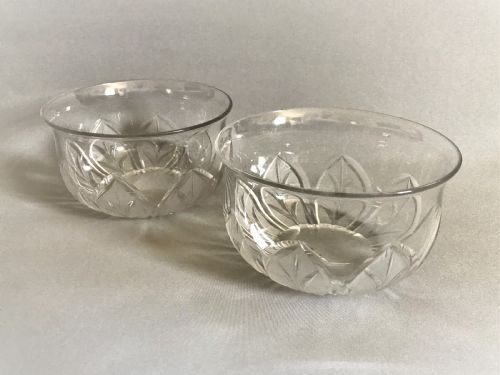
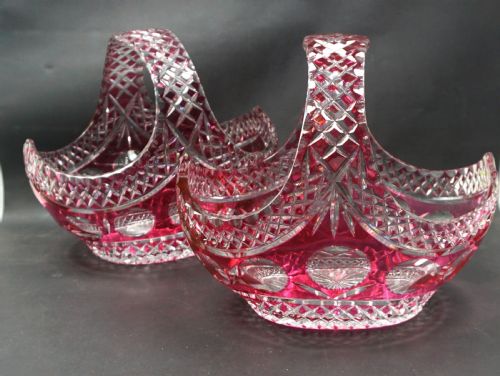
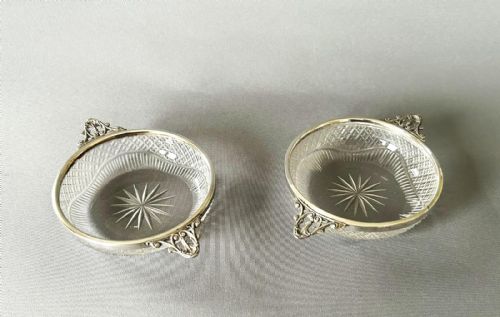


Pair Cut Glass Bowls
These pair cut glass bowls bring sparkle and proportion to a table, offering matched symmetry that single vessels simply cannot match.
Pair Cut Glass Bowls
When searching for pair cut glass bowls, you encounter matched vessels designed for dining, display, and service across the nineteenth and early twentieth centuries. The selection spans utilitarian forms and decorative showpieces shaped for specific domestic rituals.
Champagne bowls, finger bowls, and sweet dishes dominate the available forms, alongside larger centrepieces and smaller salt cellars. Victorian examples appear most frequently, sitting alongside Georgian, Regency, Edwardian, and Art Deco interpretations.
Origins stretch from English workshops to French and Belgian glasshouses, incorporating coloured, clear, and frosted variants. Buyers find everything from table salts to grand nautical silver-plated centrepieces fitted with heavy crystal bodies.
How they were made
Master glassmakers formed these vessels using lead crystal, cut glass, and coloured glass matrices such as ruby, amber, and blue over crystal. Molten material was blown into moulds or free-blown before artisans applied deep wheel-cut geometric and star motifs across the surface.
Many items incorporate secondary materials, uniting the glass body with sterling silver, silver plate, Sheffield plate, or frosted glass elements. Mounts, rims, and spoons were fashioned by silversmiths to complement the heavy facets of the crystal bowls.
Materials recur across clear lead crystal, ruby glass, amber straw glass, and silver plate.
What varies in quality
The distinction between ordinary and exceptional pieces lies in the crispness of the wheel-cutting and the weight of the metal. Superior examples display deep, sharp facets that refract light brilliantly, while lesser items show softer, shallower grinding.
Material purity and colour saturation dictate desirability, particularly in flashed or overlaid glass where the depth of tone creates visual richness. The integration of hallmarked silver mounts or associated silver spoons elevates the overall substance of the pairing.
Val St. Lambert
The Pair Cut Glass Bowls Glossary
- Lead crystal
- Glass containing a high proportion of lead oxide, which increases weight, clarity, and the refractive index. This material allows for deeper, sharper facet cutting than standard soda-lime glass.
- Champagne bowl
- A wide, shallow vessel traditionally used for rinsing glasses or holding iced bottles during dining. These items frequently feature pronounced flutes and star-cut bases.
- Finger bowl
- A small bowl filled with water and sometimes scented petals, placed before diners for hand-washing between courses. Victorian examples often match cut glass rinse bowls.
- Centrepiece
- A large decorative vessel placed in the middle of a dining table, occasionally elevated on silver-plated stands. These pieces often incorporate nautical themes or complex architectural framing.
- Overlay
- A technique where a layer of coloured glass is fused over a clear glass body before being partially cut away. This process reveals contrasting colours through the faceted windows.
Pair Cut Glass Bowls: Frequently Asked Questions
What were pair cut glass bowls used for originally?
These vessels served various dining functions, from holding finger water and rinsing champagne glasses to presenting sweets, condiments, and tea leaves. Larger versions acted as grand table centrepieces.
Their matched nature ensured symmetrical arrangement on formal dining tables during the Georgian, Victorian, and Edwardian eras.
How do I identify Victorian pair cut glass bowls?
Victorian pieces typically display heavy lead crystal construction with deep prismatic cutting, star-cut bases, and occasionally silver-plated or sterling silver rims. The proportions tend to be robust and functional.
Stylistic cues include heavy thumbprints, hobnail patterns, and association with silver spoons or Sheffield plate stands typical of the nineteenth century.
Can I use antique cut glass bowls daily?
These bowls handle gentle everyday use, such as serving desserts, holding floating flowers, or displaying small objects on a sideboard. Hand washing in tepid water preserves the historic surfaces.
Sudden temperature changes and modern dishwashers must be avoided to protect the lead crystal and any integrated silver mounts.
Are coloured glass bowls rarer than clear ones?
Coloured variants, including ruby, amber, and blue over crystal, occur less frequently than clear lead crystal examples. Glasshouses produced them in smaller quantities using specialised metallic oxides.
Overlay techniques further increase the distinction of coloured pieces within historical dining ware.