



Silver and Glass Cruet
A silver and glass cruet brings together cut glass bottles and precious metal frames to hold dining table condiments in style.
Silver and Glass Cruet
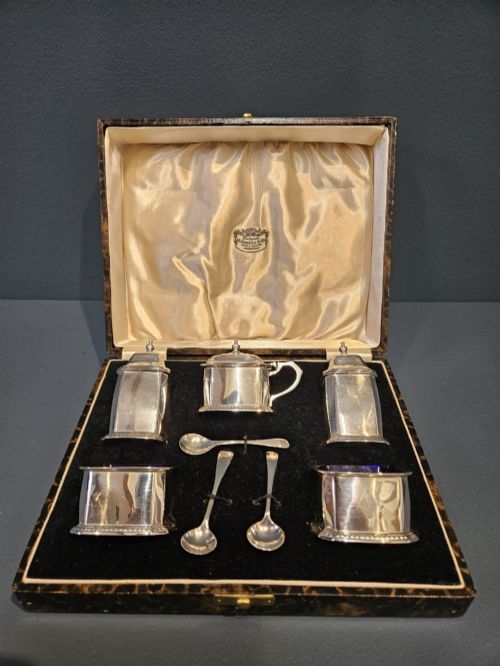
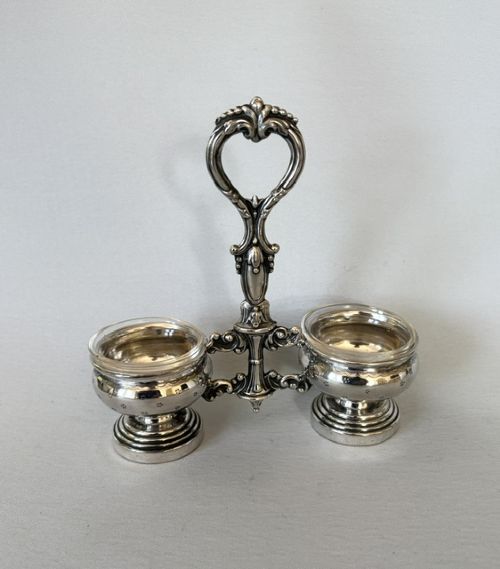
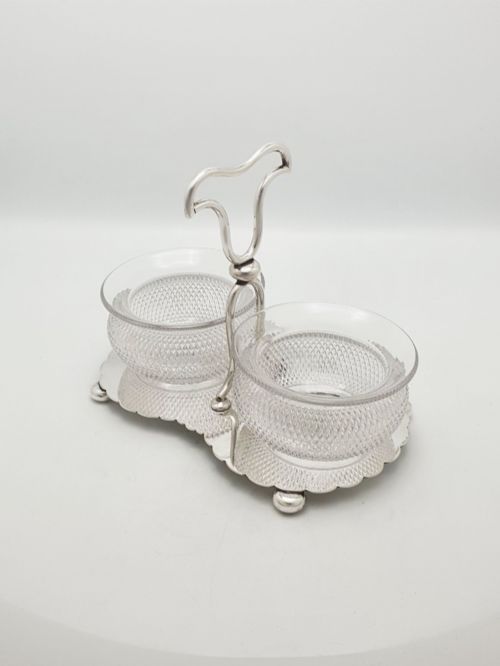
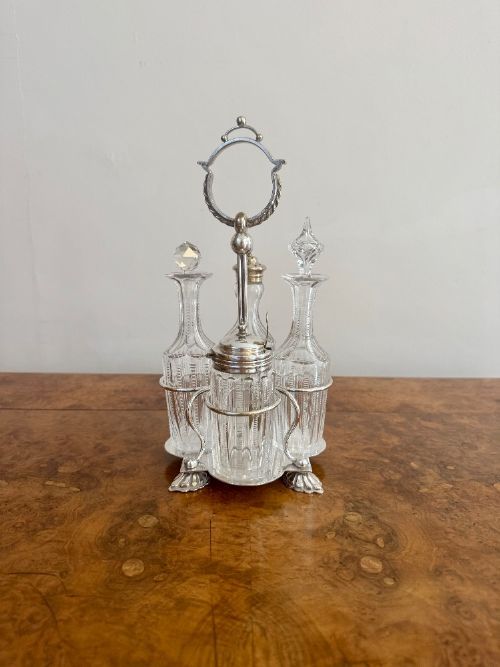
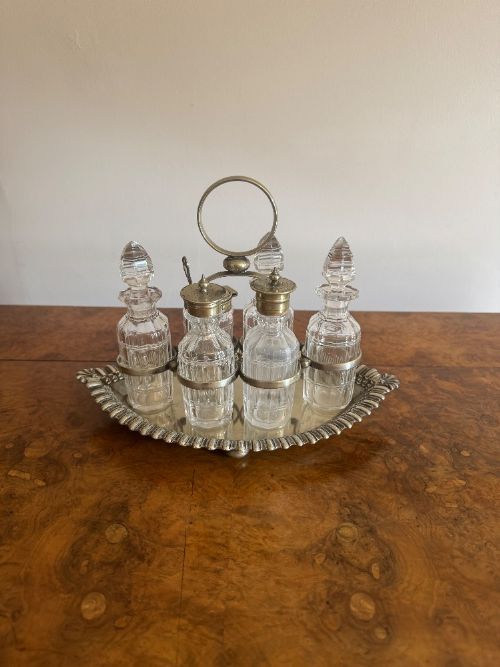
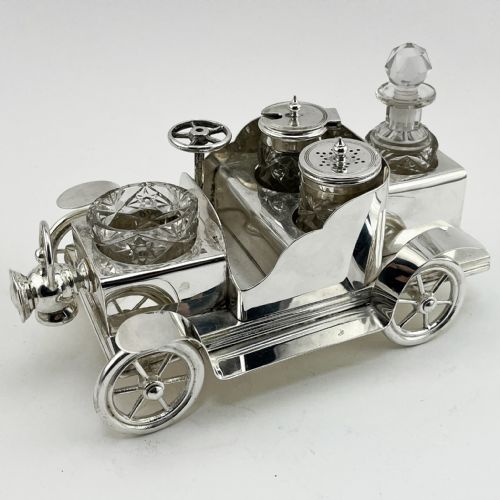
A silver and glass cruet combines a metal stand with fitted glass bottles, jars, or casters designed for mustard, pepper, oil, and vinegar. These table sets range from compact bachelor versions holding just two or three bottles up to large seven or eight piece dining room centrepieces.
Edwardian silver plated examples dominate the selection, alongside Georgian sterling silver stands and later Art Deco iterations. Buyers encounter fitted frames featuring carry handles, silver mounts, and cut glass bodies spanning the Victorian and Edwardian decades.
Materials and construction methods
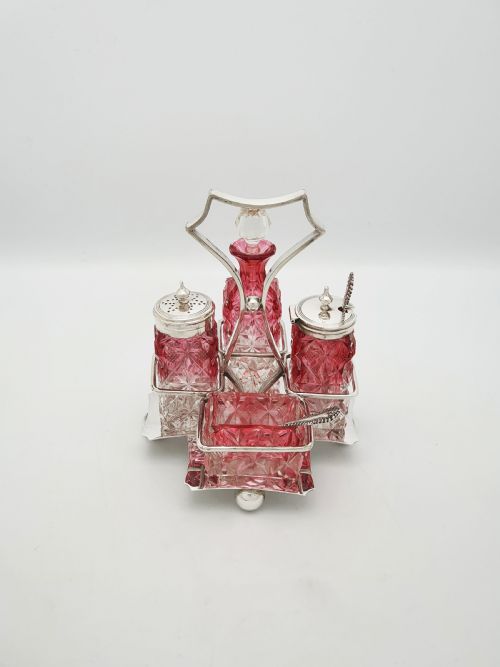
Silversmiths shaped the stands using sterling silver, Old Sheffield plate, or silver plate over a base metal, frequently incorporating decorative wirework, cast handles, and footed bases. Glass components relied on heavy cutting, moulding, or cranberry flashing to catch the light on the dining table.
Makers integrated glass and metal by fitting silver collars, mounts, and hinged lids directly onto the bottle necks, while stands utilised secure ring slots to hold each individual cruet bottle firmly in place during service.
Listings span from the 18th century through the Victorian, Edwardian, and Art Deco eras, employing cut glass, sterling silver, and silver plate.
Distinctions in quality and execution
Quality rests upon the weight and crispness of the metal frame, the depth of hand cut facets on the glass bottles, and the completeness of the set. Matching original bottles carrying identical cut patterns or hallmarks indicate superior manufacture.
Finer examples display intricate silver cast decoration, substantial gauge silver or plating, and intact original stoppers. Simpler plated stands with replacement glassware sit lower down the scale.
Goldsmith & Silversmith's·William Neale·Mappin Brothers·Walker & Hall·Charles Thomas Fox·Elkington & Co·Hester bateman·William Neale & Son·HEATH AND MIDDLETON
The Silver and Glass Cruet Glossary
- Cruet stand
- A metal frame or basket fitted with handles and feet to hold condiment bottles. It allows multiple seasonings to travel together around the table.
- Caster
- A small jar or bottle with a pierced top used for sprinkling sugar or dry spices. These form part of larger table cruet sets.
- Bachelor cruet
- A reduced scale cruet set designed for single diners or small households. They typically hold between two and four condiment bottles.
- Old Sheffield plate
- A material made by fusing a thin sheet of silver onto a heavier copper core. Makers utilised this technique before the invention of electroplating.
- Cranberry flashed
- Glass coated with a thin outer layer of gold ruby glass before being cut. This technique creates a rich red colour where the cutting exposes the clear glass beneath.
Silver and Glass Cruet: Frequently Asked Questions
How were cruet sets used?
Dinners placed the cruet set centrally on the table so guests could season their food to taste. Individual bottles held liquids like oil and vinegar alongside dry spices.
Smaller bachelor versions were brought out for intimate meals, while massive seven bottle stands catered to large Victorian banquets.
How do I date a cruet set?
Dating relies on silver hallmarks, maker marks, and stylistic clues within the metal frame. Georgian pieces exhibit classical proportions, whereas Victorian examples lean towards heavier ornamentation.
Edwardian stands often feature silver plate combined with bright cut glass, while Art Deco sets adopt clean geometric lines from the 1920s and 1930s.
Are original bottles important?
Original glass bottles that match the exact contours and cut patterns of the frame are essential for a complete set. Replacements often fit loosely or display mismatched glass.
Checking that stoppers match the corresponding mustard pots or oil bottles preserves the integrity and historical value of the piece.