


Cut Glass Condiment Stand
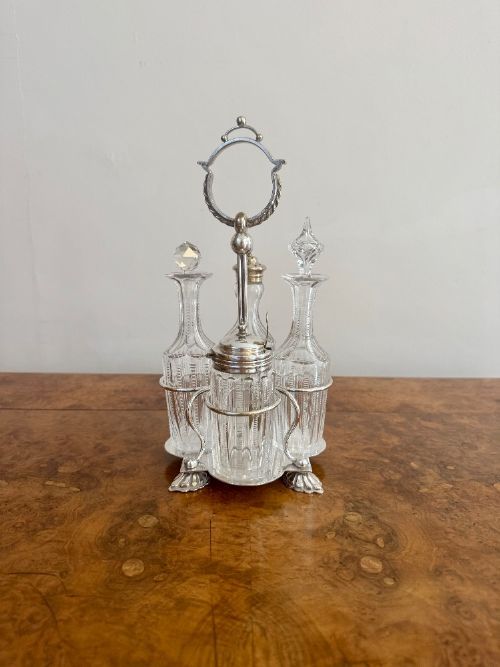
A cut glass condiment stand brings the sparkle of heavy crystal and polished silver to the dining table.
Cut Glass Condiment Stand
A cut glass condiment stand holds cruets, bottles, and jars in a secure frame of silver plate or sterling silver. These table pieces organise oils, vinegars, mustards, and sauces for formal dining.
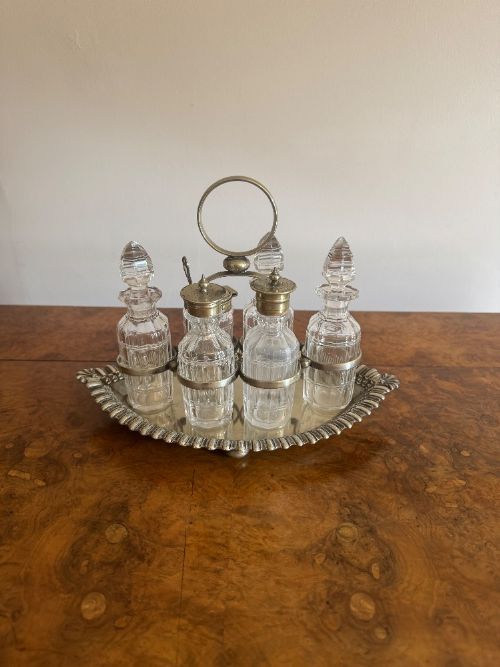
Edwardian silver plated six-bottle cruet sets appear frequently among the listings, alongside Georgian and Victorian examples. The forms range from multi-bottle frames to single preserve dishes and relish caddies.
Materials and Technique
Cut glass and lead crystal provide the faceted containers, shaped by wheel-cutting and hand-polishing to catch the light. Silver plate, Old Sheffield plate, and sterling silver form the supporting stands and bottle mounts.
Metal frames utilise casting and soldering techniques, often featuring intricate pierced galleries and carrying handles. Glass stoppers and bottles are ground by hand to fit their specific collars.
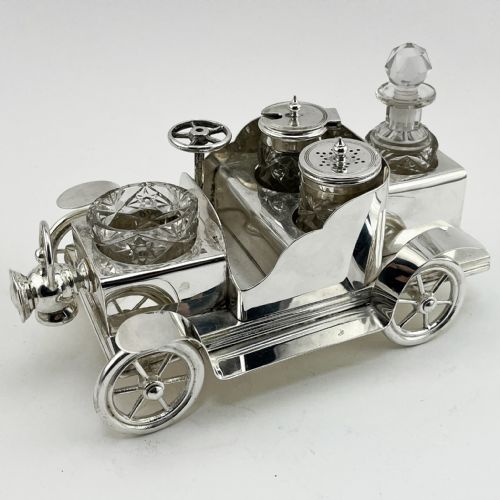
Victorian dining included novelty sets shaped like vintage cars, horse carriages, and Black Forest bears holding condiment bottles.
Defining Quality
Quality rests in the crispness of the glass cutting and the weight of the metal frame. Heavy lead crystal displays sharp, deep facets that differ visibly from lighter pressed glass.
The completeness of the set and the presence of matching original bottles dictate the status of the piece. Superior stands exhibit balanced proportions, crisp hallmarks on the silver, and undamaged bottle rims.
Mappin Brothers·Walker And Hall·Charles Thomas Fox·Elkington And Co·Hester Bateman·Wade Wingfield Wilkins
The Cut Glass Condiment Stand Glossary
- Cruet set
- A collection of small bottles or jars held on a single stand for table condiments.
- Silver plate
- A layer of silver fused or electroplated onto a base metal such as copper or brass.
- Cranberry glass
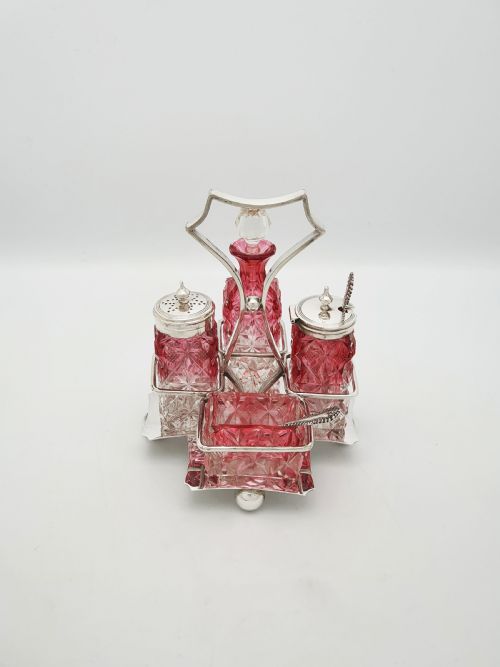
- A rich red glass coloured with gold chloride, seen in late Victorian pieces.
- Lead crystal
- Glass containing lead oxide, known for its high refractive index and heavy weight.
- Open salt
- A small cellar used for holding loose salt before the invention of shaker bottles.
Cut Glass Condiment Stand: Frequently Asked Questions
What goes into a cut glass condiment stand?
These stands hold glass bottles for oil, vinegar, and soy sauce, alongside covered jars for mustard and relish.
Larger configurations include salt and pepper casters or open salt cellars arranged within the main frame.
How do I date a silver plated cruet?
Stylistic clues such as Edwardian pierced galleries or Victorian novelty car frames help narrow the production period.
Maker marks and silver plate quality stamps on the base provide further chronological evidence.
Are replacement bottles easy to find?
Matching original cut glass bottles can prove difficult because each stand required specific heights and stopper cuts.
Many collectors purchase complete sets to ensure all bottles and stoppers match the frame correctly.
How do I clean antique silver plate?
Silver plate requires gentle polishing with a non-abrasive cloth to preserve the thin layer of precious metal.
Harsh dips strip the protective plating and should be avoided on older tablewares.