


Antique Silver Caster Stand
An antique silver caster stand brings orderly elegance to the dining table, holding glass bottles and shakers in a secure frame.
Antique Silver Caster Stand
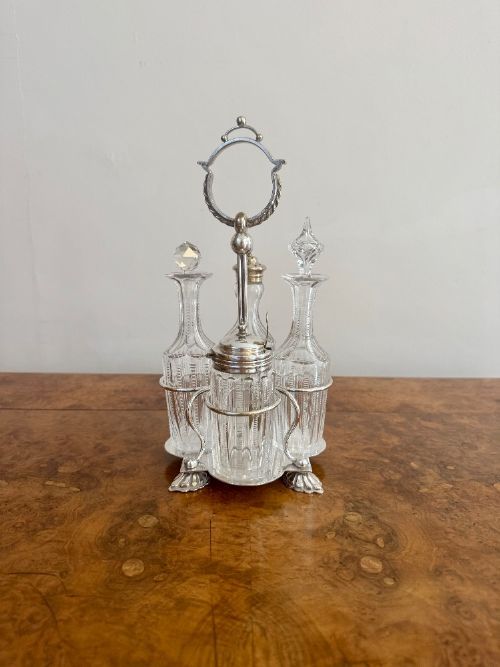
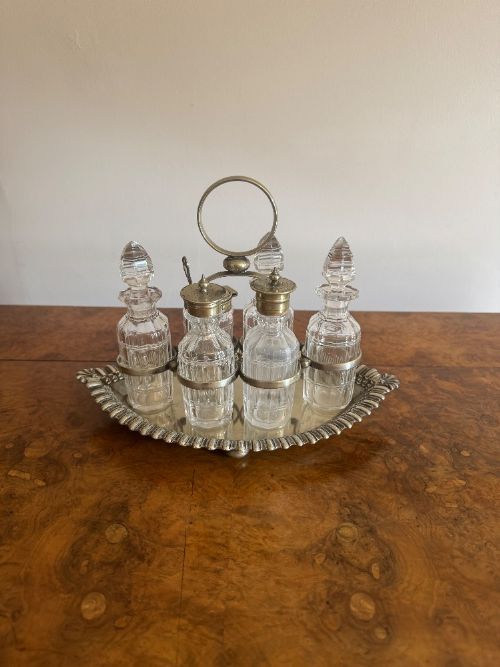
When you search for an antique silver caster stand, you are looking at table frameworks designed to hold glass cruets, condiment bottles, and individual shakers for salt, pepper, and mustard. These pieces emerge in Georgian, Victorian, and Edwardian periods, taking the form of large multi-bottle frames as well as compact bachelor sets.
The most common versions on this page are silver plated Edwardian and Victorian cruet sets featuring fitted cut glass bottles. You will also encounter Georgian silver designs alongside novelty pieces shaped like farmyards, hunting scenes, or butlers' trays.
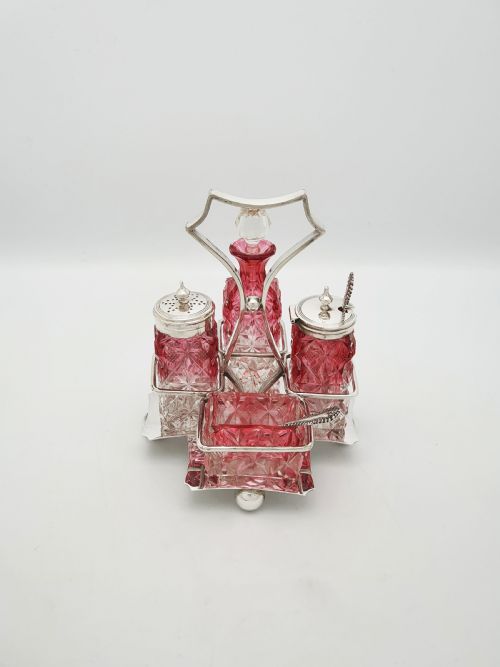
The materials span sterling silver, electroplated nickel silver, and silver plate, often paired with clear, cut, or cranberry flashed glass inserts. Stands range from simple ebonised wood frames with silver mounts to elaborate oval and Warwick frames holding up to eight individual pieces.
Markers of superior manufacture
Quality rests in the weight of the silver plate or the gauge of sterling silver used for the frame and handle. Heavier stands maintain rigidity even when fully loaded with glass bottles, whereas lighter examples flex under weight.
Another distinction lies in the completeness and originality of the set. Matching sets where every cut glass bottle and silver-capped caster fits its designated numbered or sized aperture command greater respect than assemblages gathered together later.
Victorian silversmiths occasionally built cruet stands shaped like farmyards, complete with silver chickens and troughs holding the mustard.
Mappin Brothers·Walker and Hall·Charles Thomas Fox·Elkington and Co·Wade Wingfield Wilkins·Viners Sheffield
The Antique Silver Caster Stand Glossary
- Cruet set
- A matched collection of glass bottles and jars for vinegar, oil, and condiments, held together in a fitted stand. These sets sat at the centre of the dining table for guests to season their food.
- Caster
- A small container with a perforated top used for sprinkling sugar or dry spices onto dishes. They form the central components of many traditional condiment frames.
- Silver plate
- A manufacturing process where a thin layer of silver is fused or electroplated onto a base metal such as copper or nickel. This technique allowed makers to produce impressive dining wares at a lower cost than solid sterling silver.
- Cranberry glass
- A rich red-pink glass created by adding gold chloride to the molten glass batch. It appears frequently in decorative Edwardian bottle inserts.
- Bachelor set
- A smaller, scaled-down version of a cruet or condiment stand made for intimate dining or single households. They typically hold fewer bottles than standard dining room sets.
Antique Silver Caster Stand: Frequently Asked Questions
What is an antique silver caster stand used for?
These stands served as portable table service centres, keeping oil, vinegar, pepper, salt, and mustard within reach during meals. Diners used the individual casters and cruet bottles to season their plates directly.
Today, they function as decorative dining room centerpieces or as organised storage for vintage glassware collections.
How do I clean silver plated cruet stands?
Use a soft microfiber cloth and a mild silver cream formulated specifically for plated items. Avoid harsh scrubbing on the raised decorative borders and handle joints to preserve the underlying metal.
Wash the glass bottles separately in warm soapy water, ensuring they are completely dry before returning them to their frame slots.
How can I tell a Georgian stand from a Victorian one?
Georgian stands often feature simpler neoclassical lines, heavier cast sterling silver components, and distinct hallmarks indicating London or provincial assay offices. They frequently take the form of Warwick frames with distinct rings for individual bottles.
Victorian and Edwardian examples introduce more eclectic revival styles, extensive silver plating over nickel, and elaborate novelty designs such as farmyard scenes or butlers' trays.
Are the glass bottles usually original to the stand?
Many surviving sets retain their original cut glass or cranberry flashed bottles, which fit snugly into the numbered or matching apertures of the frame. Because glass is fragile, replacement bottles from the same period are also common.
Check whether the cut patterns on the glass match across the set and whether the silver lids or collars share consistent manufacture.
What does a bachelor cruet set mean?
A bachelor set is a miniature or reduced-size cruet stand designed for smaller households or individual dining rather than large banquets. They generally hold two to four bottles instead of the six or seven found in full-sized dining room sets.
Despite their smaller scale, they received the same attention to detail and silver plating quality as their larger counterparts.