


Silver Plated Caster Set
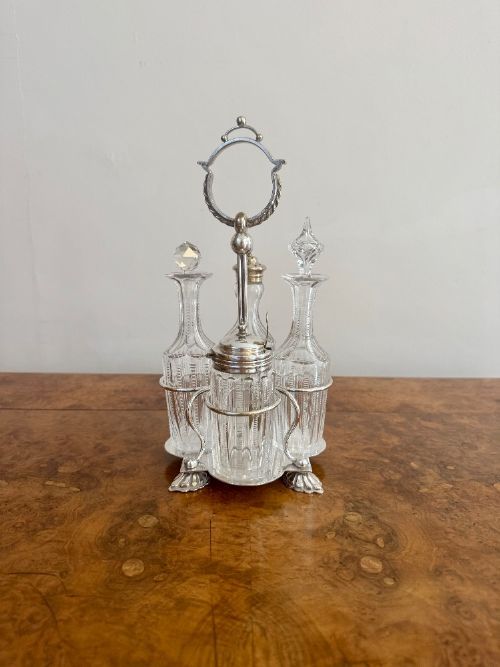
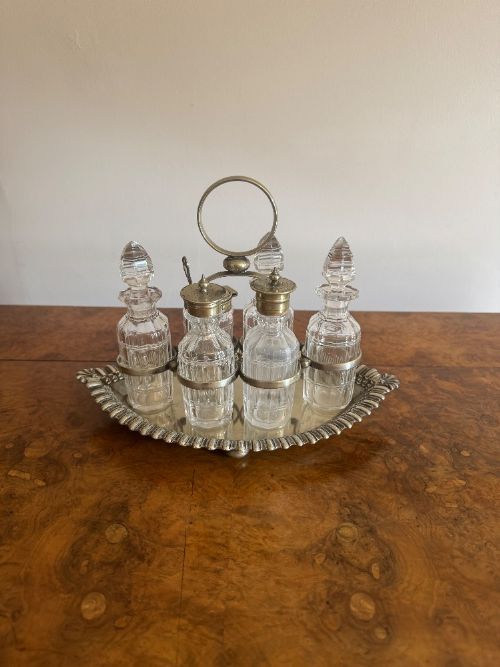
A silver plated caster set organises your dining table with polished metal stands and glass condiment bottles.
Silver Plated Caster Set
A silver plated caster set brings together multiple condiment bottles, cruets, and pots within a fitted metal frame or stand for table service. These groupings frequently appear as Edwardian and Victorian creations, alongside examples styled to resemble Georgian forms.
The objects on this page span several decades, featuring large multi-bottle frames designed for formal dining alongside smaller bachelor sets meant for individual use. Novelty iterations shaped like farmyard scenes or hunting equipment also surface among the standard cruet and condiment configurations.
Materials and Construction
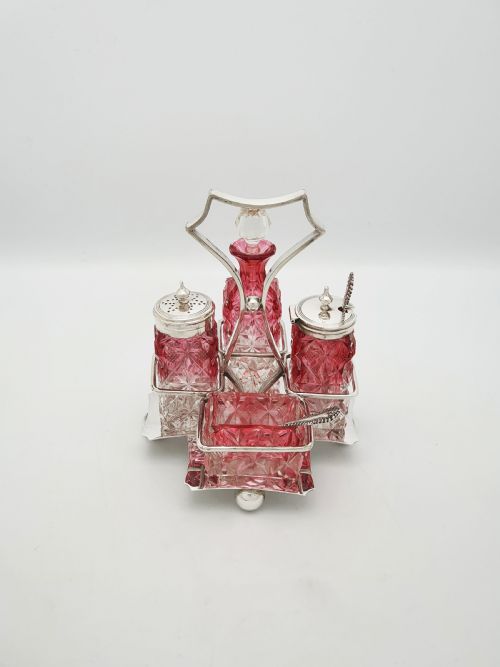
The underlying metalwork relies on silver plate and electroplated nickel silver to provide a durable reflective surface over a base metal. Cut glass, cranberry glass, and gilt details form the individual bottles and jars that sit within the stands.
Makers shaped the metal through casting and plating techniques, often incorporating wooden elements such as oak in tray designs. Glass components received hand-cut geometric patterns or flashed colour treatments to contrast against the polished metal frames.
Equestrian novelty cruets allow diners to pass the pepper via a miniature hunting tray.
Distinctions in Quality
Quality rests upon the weight and balance of the metal frame, the precision of the handle and foot castings, and the clarity of the cut glass bottles. Sets that retain a complete matching complement of original glass cruets achieve greater cohesion than those assembled with replacement vessels.
Figural and novelty pieces demonstrate workmanship through the expressive detail of animal or farmyard motifs rather than standard geometric framing. The thickness of the silver plating and the crispness of the chased or engraved ornament similarly separate standard production from superior workshop output.
Mappin Brothers·Walker & Hall·Wade Wingfield Wilkins·Mappin & Webb
The Silver Plated Caster Set Glossary
- Cruet set
- A matched group of small bottles and jars held in a frame for holding condiments at the dining table. These collections generally include containers for oil, vinegar, mustard, and pepper.
- Electroplated nickel silver
- A base metal alloy of copper, nickel, and zinc coated with a thin layer of pure silver through an electrical process. This method became widespread during the nineteenth century for producing durable tableware.
- Cranberry glass
- A rich red glass produced by adding gold chloride to the molten batch. It frequently appears flashed or cut on Victorian condiment bottles.
- Bachelor cruet
- A reduced version of a standard condiment set created for single diners or smaller households. These compact stands hold fewer bottles than formal dining room suites.
Silver Plated Caster Set: Frequently Asked Questions
How do I clean the silver plate?
Use a soft cloth and a gentle silver polish formulated for plated items to maintain the shine without wearing through the coating. Avoid harsh abrasive cleaners that can damage the underlying metal.
Wash the glass bottles separately in warm soapy water and dry them completely before returning them to the metal stand.
Can I use the bottles for daily dining?
The glass bottles are suitable for holding vinegars, oils, and sauces during meals provided they are washed thoroughly after each use. Check that the stoppers or lids fit securely before tipping any liquids.
Take care when placing heavy cut glass vessels back into antique metal frames to prevent chipping the rims.
How do I identify an Edwardian set?
Edwardian sets often display lighter, more restrained frames drawing on neoclassical or floral motifs popular in the early twentieth century. The glass inserts frequently feature crisper mechanical cutting styles.
Look for registration numbers or maker marks stamped onto the underside of the metal base to confirm the manufacturing period.
What is a novelty cruet?
A novelty cruet incorporates figurative elements, such as farmyard animals or hunting gear, into the design of the condiment stand. These pieces turn utilitarian table settings into sculptural conversation items.
They often date from the Victorian era when playful tabletop accessories enjoyed widespread popularity.