


Shaped Japanese Imari Plate
These shaped japanese imari plate pieces bring vibrant cobalt blue, iron red, and gold into a room through inventive forms.
Shaped Japanese Imari Plate
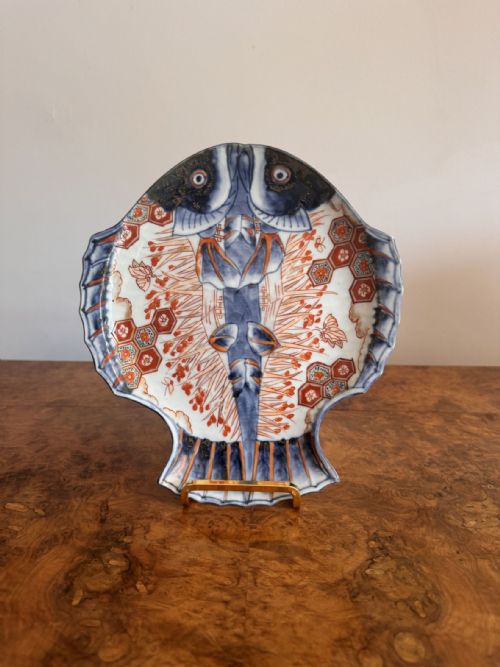
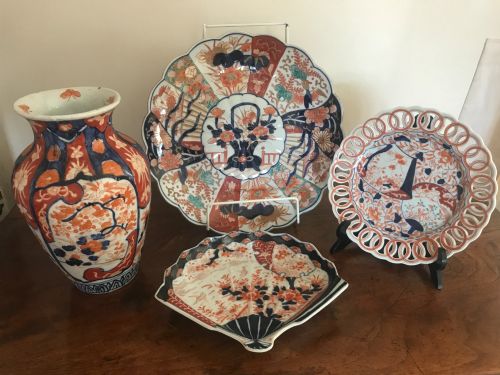
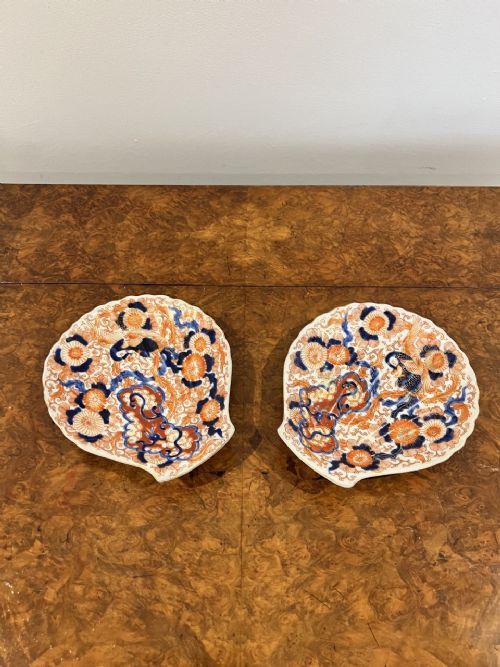
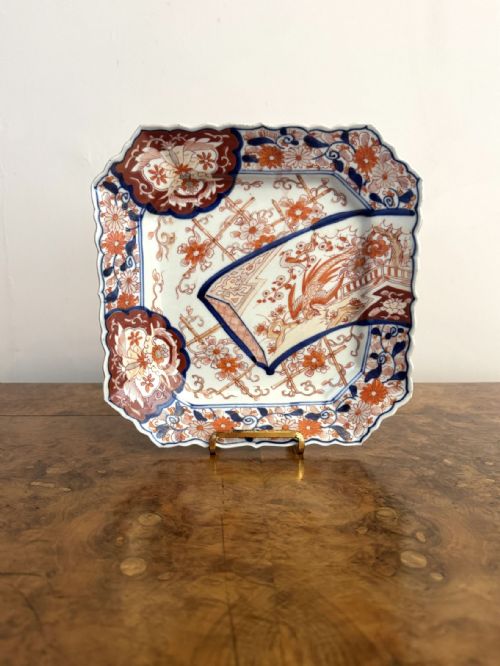
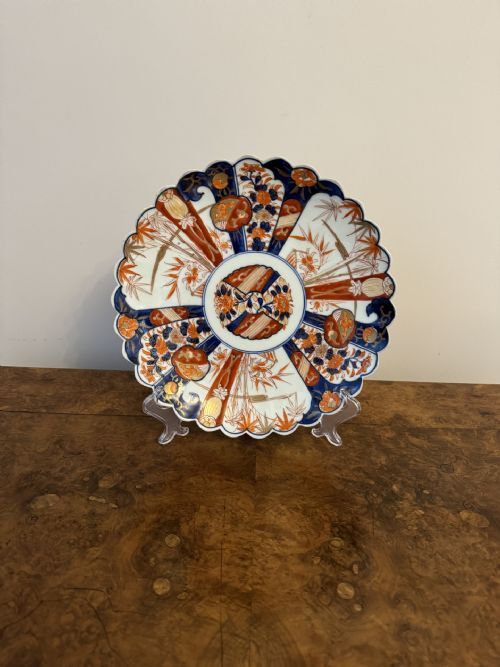
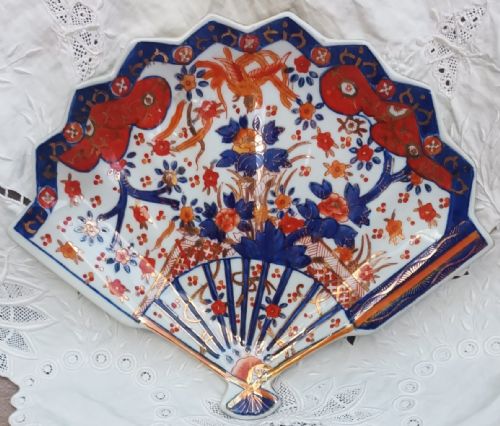
When you search for a shaped japanese imari plate, you are looking at porcelain ceramics designed in distinct forms such as shells, fans, fish, squares, petals, and scalloped edges. These decorative pieces originate from Japanese traditions, with the records here showing examples spanning from the late seventeenth century through the Meiji period and into the early twentieth century.
The version you are most likely to meet on this page is a nineteenth or early twentieth century porcelain plate or dish shaped into fan, shell, or scalloped outlines. Alongside these, the archive and current listings hold earlier moulded pieces decorated in iron red, black, and gold, as well as European interpretations like the Kakiemon style shell plate.
These items function as decorative plates and dishes rather than utilitarian tableware. Their varied silhouettes set them apart from standard round vessels, making them focal points for display on walls, cabinets, or surfaces.
How they were made
Makers shaped porcelain clay into specific forms, sometimes moulding pieces in shallow relief to create dimensional contours like fish, shells, or crane silhouettes before firing. This ceramic foundation was then decorated with mineral pigments and glaze.
The signature palette relies on underglaze blue combined with iron red enamel overglaze, often enriched with gold leaf, gilt, or gilding to highlight details. Firing fixed these ceramic glazes and metal accents onto the porcelain body.
Materials across the listings include porcelain, enamel, gold leaf, glaze, gilt, gilding, and ceramic glaze.
What varies in quality
The distinction between tiers rests upon the crispness of the moulding and the precision of the hand-painted decoration. Plates with sharply defined fan, shell, or scalloped edges demonstrate superior craftsmanship compared to softer, less distinct profiles.
Control over the iron red, blue, and gold application dictates visual depth. Pieces that balance pigment and gilding without crowding the porcelain surface achieve greater harmony and visual weight.
The Shaped Japanese Imari Plate Glossary
- Imari
- A style of Japanese porcelain named after the port from which it was shipped, characterised by a palette of cobalt blue and iron red, frequently accented with gold.
- Meiji Period
- A Japanese historical era lasting from 1868 to 1912, representing a time of prolific ceramic production seen across many of these listings.
- Kakiemon
- A style of Japanese enamel decoration known for asymmetric designs and a refined palette, which later inspired European potteries.
- Gilt
- A thin layer of gold applied to the ceramic surface to enrich the decoration and catch the light.
Shaped Japanese Imari Plate: Frequently Asked Questions
How were shaped Japanese Imari plates used?
These pieces served primarily as decorative plates and dishes for display rather than everyday dining.
Their distinctive silhouettes allowed them to be mounted or set on surfaces to showcase rich patterns.
What periods do these plates come from?
The listings span from the late seventeenth century through the Edo and Meiji periods up to the early twentieth century.
The majority of pieces date from the nineteenth and early twentieth centuries.
How do I identify different shapes?
Makers moulded the porcelain into specific outlines such as fans, shells, fish, squares, and scalloped edges.
These forms define the physical silhouette of the ceramic dish.
What colours define Imari porcelain?
The palette typically combines underglaze cobalt blue and iron red enamel.
Gold leaf, gilt, or gilding is frequently added over the glaze to provide metallic contrast.