

Seventeenth Century Storage Chest
A seventeenth century storage chest brings centuries of domestic history into a room through heavy timber and hand-carved panels.
Seventeenth Century Storage Chest
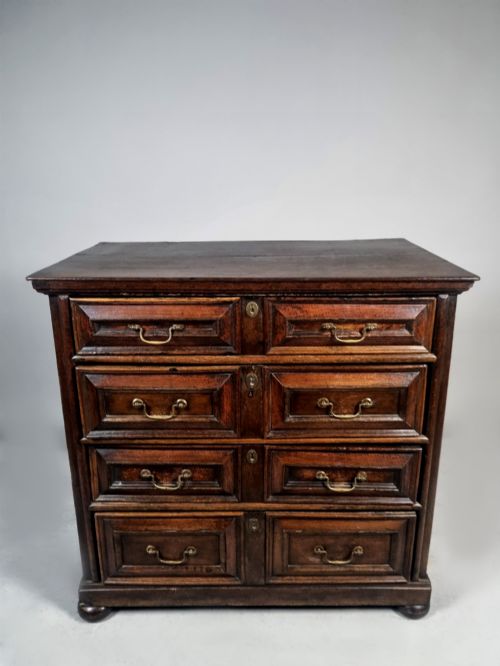
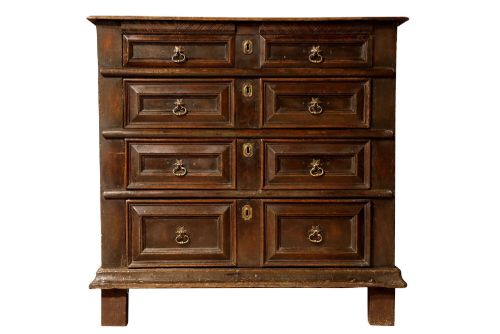
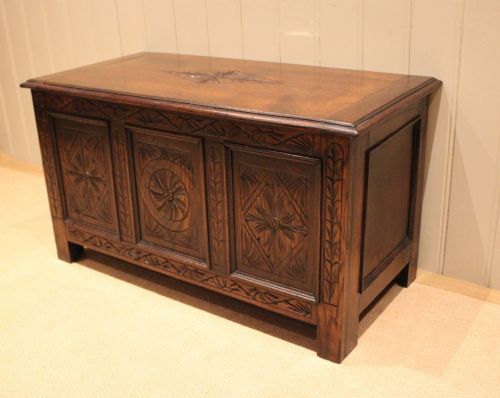
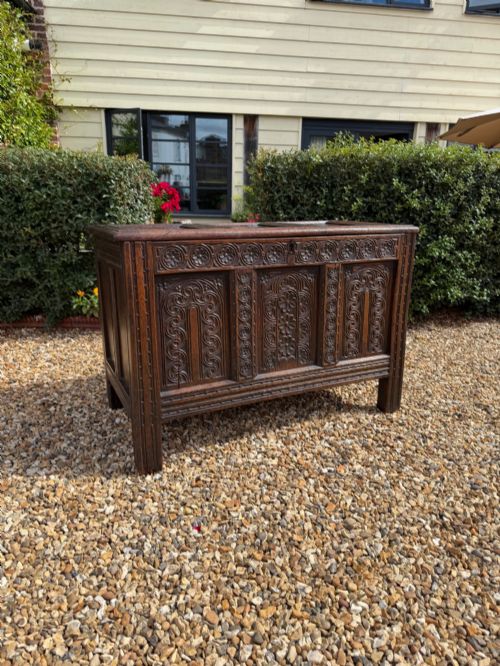
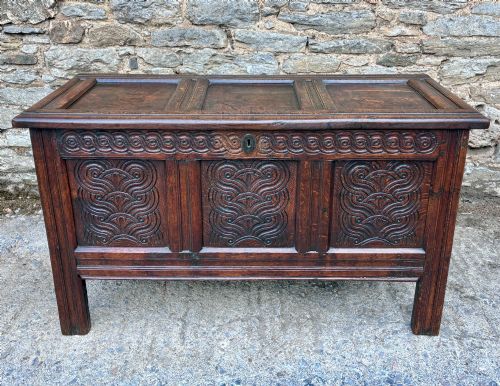
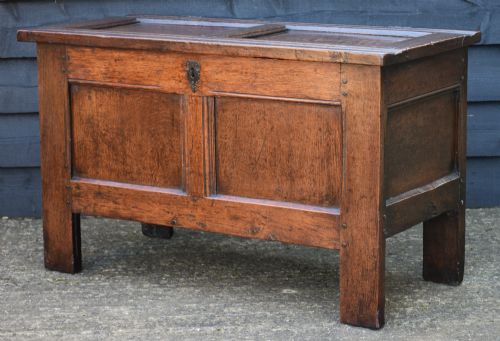
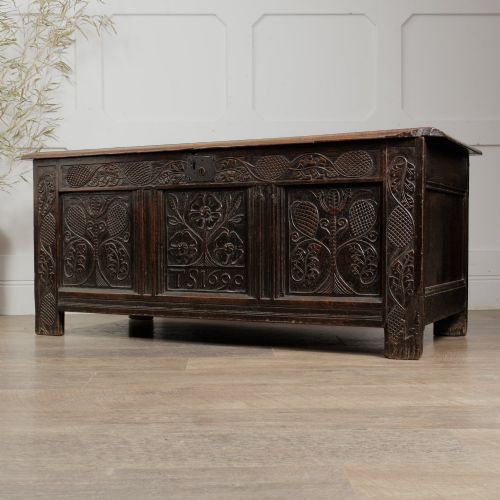
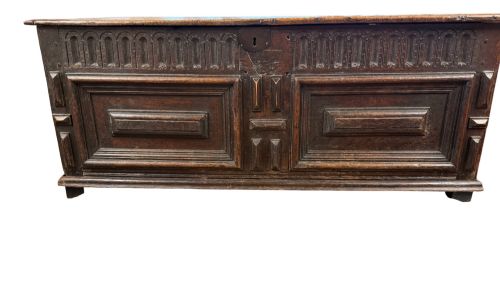
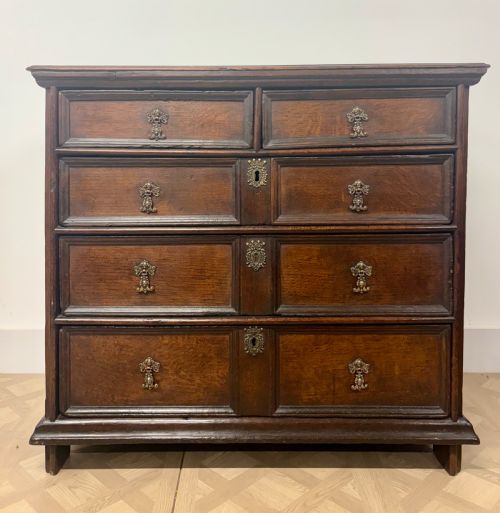
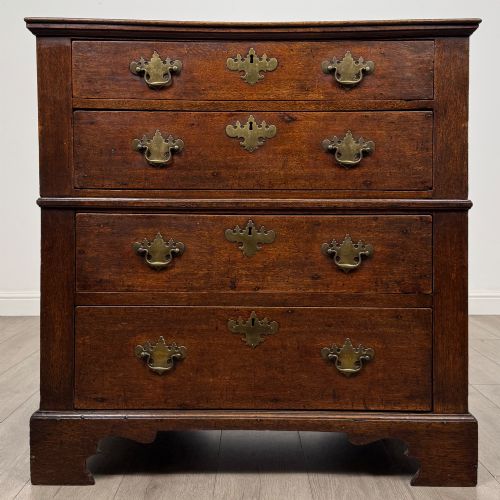
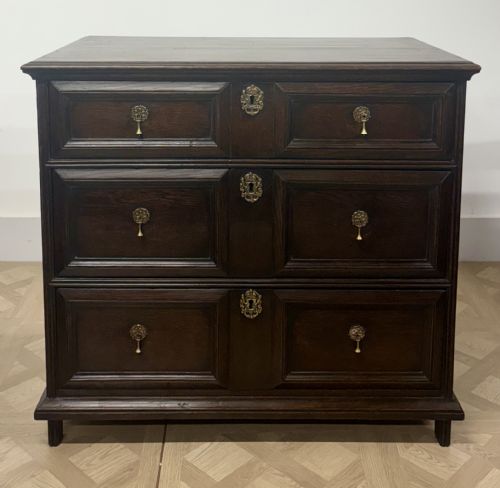
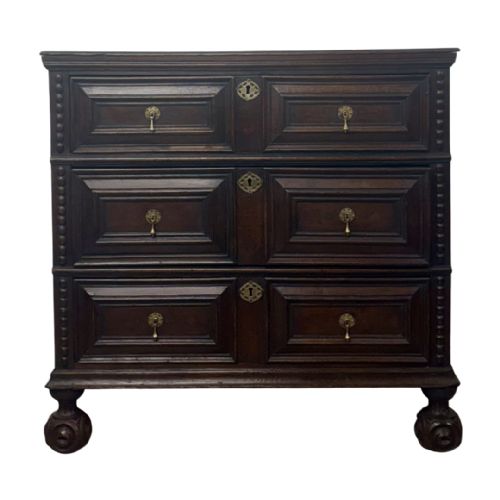
A seventeenth century storage chest typically appears as an oak coffer, blanket box, or chest of drawers built for domestic utility. Buyers most frequently meet panelled oak coffers and moulded drawer units originating from English, Welsh, or regional workshops.
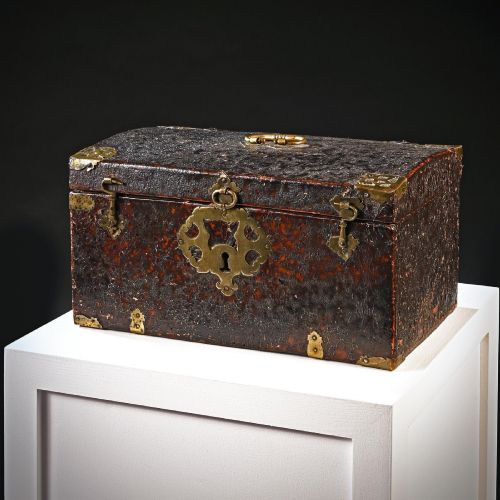
The inventory encompasses specific regional variants such as Welsh coffers and pieces associated with Exeter makers. Alongside standard coffers, the selection includes travelling boxes in leather and brass, as well as chests on stands dating from the period.
Materials and Construction
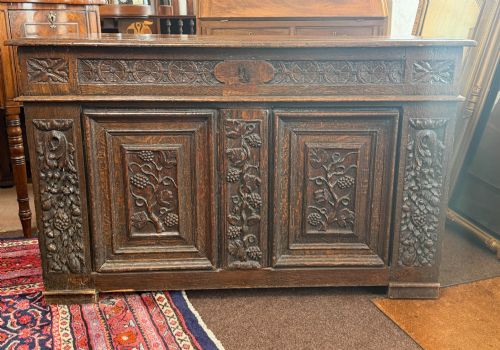
Construction relies heavily on solid oak, shaped through panelled framing and traditional joinery techniques. Secondary or alternative timbers include fruitwood, walnut, and olive, sometimes enhanced with wood inlay and geometric mouldings.
Hardware details incorporate brass and iron fastenings, while surface treatments feature carved decoration, linenfold panels, and leather applications. Many surviving examples retain fitted locks and hinges characteristic of seventeenth-century production.
A travelling box wrapped in leather and brass reminds us that seventeenth-century packing meant heavy fortification against the road.
Distinctions in Execution
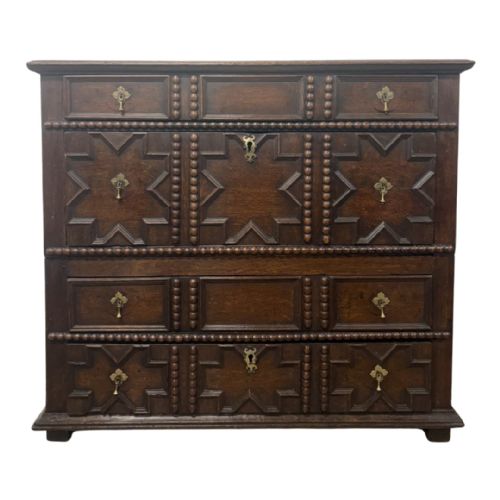
Quality separates pieces by the crispness of carved geometric designs and the integrity of the original panelled structure. Greater visual reward attaches to items with undisturbed surfaces, such as faded patinas on moulded fronts or distinct fruitwood grain.
The integration of period components dictates standing within the category, distinguishing contemporary assemblies from homogeneous survivors. Regional character, such as documented West Country provenance, adds specific architectural depth to individual items.
Thomas Dennis
The Seventeenth Century Storage Chest Glossary
- Coffer
- A heavy wooden box used primarily for storage, often constructed with joined oak panels and a hinged lid.
- Linenfold
- A style of relief carving on wooden panels that mimics folded fabric or linen.
- Geometric design
- Surface decoration formed by applied mouldings arranged in repeating geometric patterns on drawers or panels.
- Oyster veneer
- Thin slices cut across small branches of olive or walnut to create circular oyster-like patterns on furniture surfaces.
- Sword chest
- A long, narrow storage chest traditionally used for holding swords or similar long implements.
Seventeenth Century Storage Chest: Frequently Asked Questions
What were seventeenth century storage chests used for?
These pieces served households as secure repositories for valuable textiles, documents, and domestic goods.
Over time, their roles shifted from utilitarian storage to prominent furnishings that displayed family wealth and craftsmanship.
How do I identify a Jacobean chest?
Jacobean pieces typically display heavy rectilinear proportions, dark oak timber, and geometric or strapwork carving.
They rely on joined framing rather than later veneer techniques, reflecting the cabinetmaking methods of the early seventeenth century.
Where should I place a heavy oak coffer?
Solid oak coffers function well as hallway benches or living room focal points, providing practical interior space.
Keep them away from direct heat sources and dramatic humidity shifts to protect the historic timber.
How do I distinguish Charles II styles?
Charles II furniture often incorporates richer surface treatments, including moulded drawer fronts and walnut or fruitwood accents.
Design shifts during this reign introduced more elaborate geometric patterns and raised panels compared to earlier austere forms.