
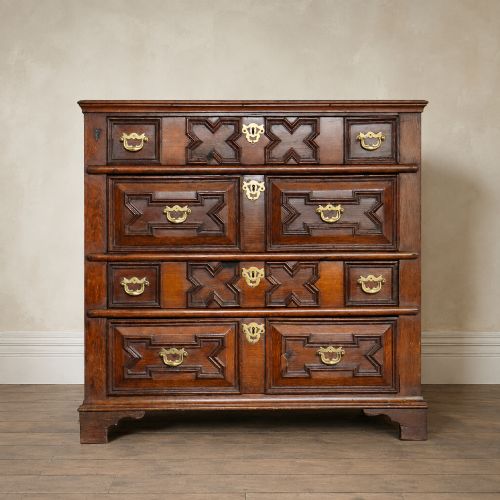


Early Oak Geometric Chest
An early oak geometric chest is a robust storage piece defined by applied mouldings, bringing centuries of tactile history into a room.
Early Oak Geometric Chest
An early oak geometric chest typically presents as a chest of drawers, safe box, or mule chest originating from the seventeenth and eighteenth centuries. These forms showcase the distinct aesthetic of the Stuart, Jacobean, Charles II, and early Georgian periods, alongside later revival pieces.
The chests you encounter most frequently on this page date from the seventeenth century through to the early eighteenth century, constructed primarily in solid oak. Alongside standard drawer configurations, variations include enclosed chests, cabinets on stands, and lidded boxes with complex ironwork.
Moulders applied geometric patterns using raised wooden panels and mitred bars across the drawer fronts and doors, creating deep relief and shadow. This architectural approach distinguishes these storage pieces from plain boarded boxes and later smooth-fronted furniture.
How they were made
Cabinet makers built these pieces using solid oak, often incorporating secondary woods such as fruitwood for contrast or internal elements. Iron and steel were utilised for structural hinges, brackets, and complex locking mechanisms.
The characteristic geometric facades rely on applied mouldings cut, fitted, and pinned directly onto the drawer fronts and panels. Joinery techniques from the period involved pegged mortise and tenon frames, panelled backs, and hand-cut dovetails on the drawer carcasses.
Several seventeenth-century safe boxes feature intricate steel locking mechanisms inside the lid, designed to outsmart anyone daring to tamper with the family silver.
What varies in quality
The distinction between ordinary and superior examples rests upon the intricacy of the geometric moulding patterns and the preservation of the original timber surfaces. Crisp, deeply cut mitres and well-balanced arrangements on the drawer fronts indicate superior workshop execution.
Survival of original hardware, including brass drop handles, escutcheons, and complex steel locks, elevates the integrity of a piece. Replacement fittings and extensive timber repairs alter the original balance of the facade and diminish historical consistency.
The Early Oak Geometric Chest Glossary
- Geometric moulding
- Applied wooden strips arranged in repeating patterns such as triangles, diamonds, and rectangles across drawer fronts. This technique created architectural depth during the seventeenth century.
- Mule chest
- A storage chest featuring one or more drawers beneath the main lidded compartment. They bridged the transition between traditional boarded coffers and modern drawer chests.
- Jacobean
- The stylistic period spanning the reign of James I and subsequent seventeenth-century decades. Furniture from this era is characterised by heavy proportions and dark oak.
- Escutcheon
- A protective plate surrounding a keyhole, usually fashioned from brass or iron. They often provide stylistic dating clues through their shape and mounting.
- Safe box
- A small, reinforced storage box fitted with complex internal steel locking mechanisms. These portable containers secured valuable documents and currency.
Early Oak Geometric Chest: Frequently Asked Questions
How do I date an early oak geometric chest?
Dating relies on observing construction methods, timber patination, and the specific style of the applied mouldings. Seventeenth-century pieces typically exhibit hand- cleft oak boards, pegged joints, and robust iron hardware.
Later revival examples from the twentieth century display different internal secondary woods and mechanical saw marks that distinguish them from period originals.
Where should I place an early oak geometric chest?
These robust storage pieces suit hallways, living rooms, or studies where their strong architectural lines and dark oak surfaces anchor the room. Keep them away from direct heat sources and strong sunlight to protect the timber and historic wax finishes.
Ensure stable indoor humidity levels to prevent the oak and applied mouldings from moving or splitting over time.
How were these chests used originally?
Households utilised these chests and boxes to store valuable textiles, documents, silver, and personal apparel securely. Safe boxes and enclosed chests served as portable repositories for high-status items requiring heavy locks.
Drawers allowed for more organised storage than traditional deep coffers, marking a shift in domestic organisation during the seventeenth century.
What is the difference between a coffer and a chest of drawers?
A coffer is a deep box accessed by lifting a lid from the top, representing an older form of furniture storage. A chest of drawers incorporates horizontal sliding compartments stacked vertically within a frame.
Mule chests combine both forms by placing drawers underneath a traditional top-lidded compartment.