
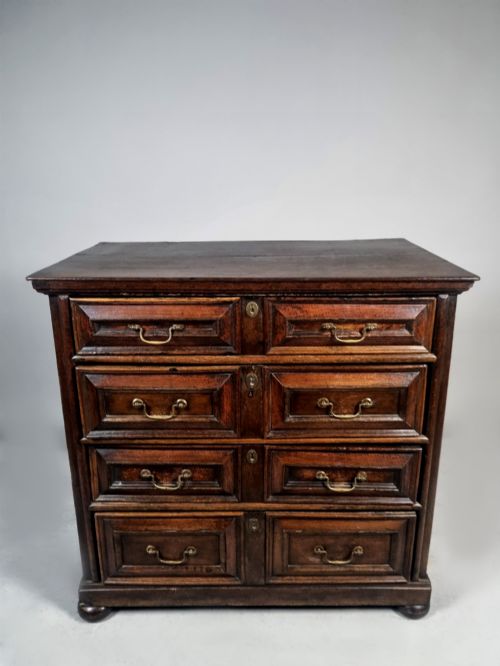
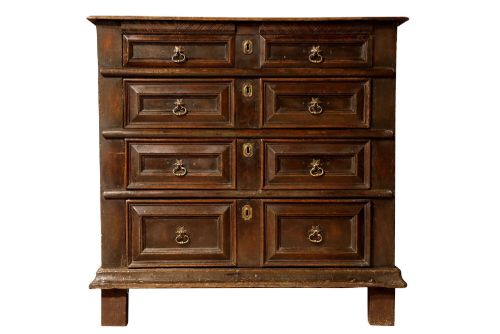
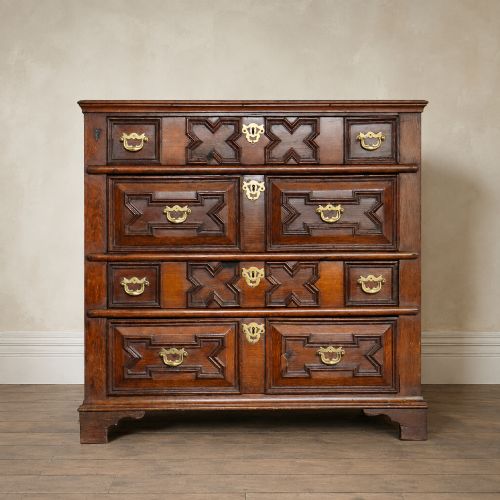
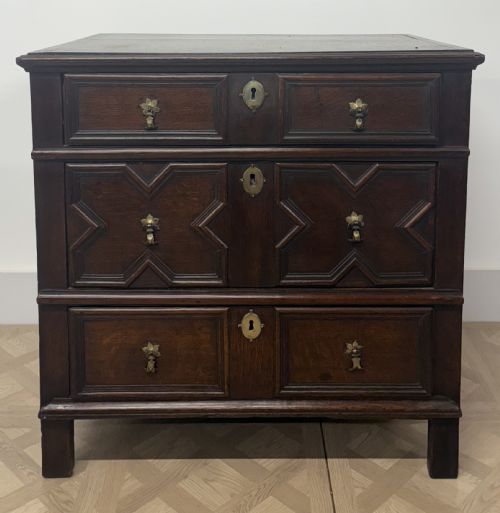
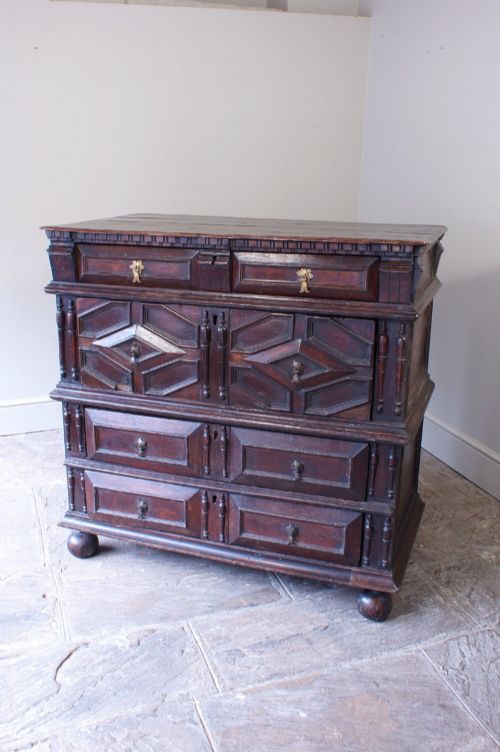

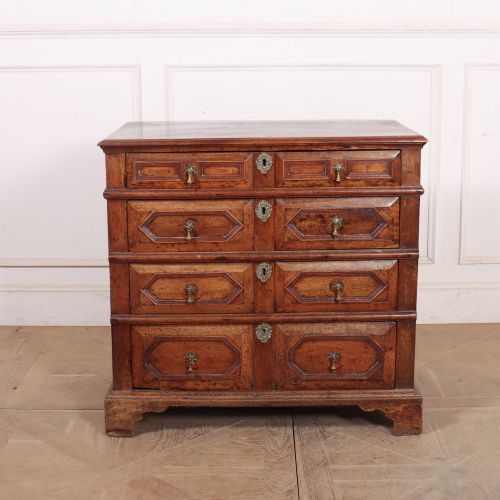

Oak Geometric Commode
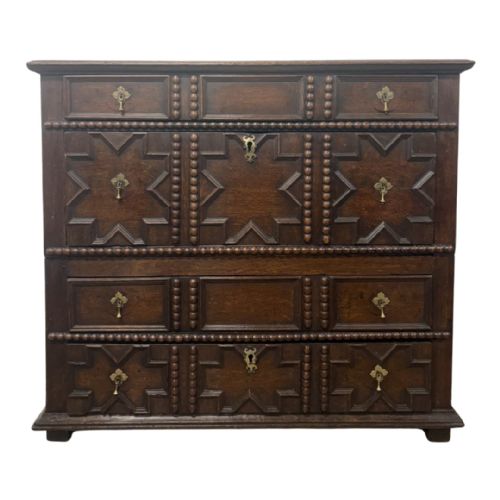
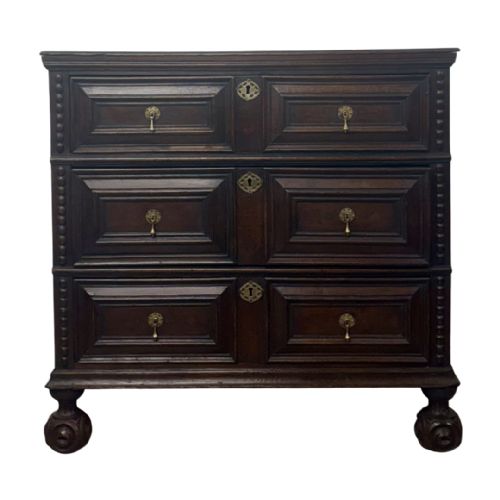
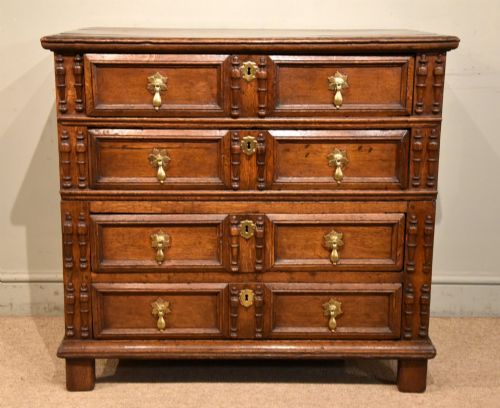
An oak geometric commode is a substantial seventeenth-century storage piece defined by disciplined front mouldings that reward close inspection.
Oak Geometric Commode
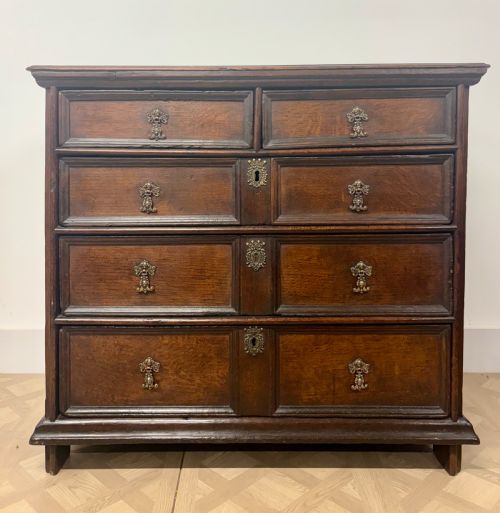
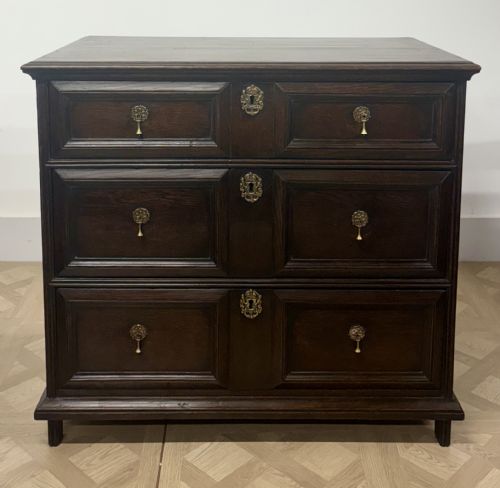
An oak geometric commode is most frequently encountered as a seventeenth-century chest of drawers or two-part chest from the Charles II, Jacobean, or William and Mary periods. These pieces serve as functional storage furniture built with sturdy timber frames and deep drawer divisions.
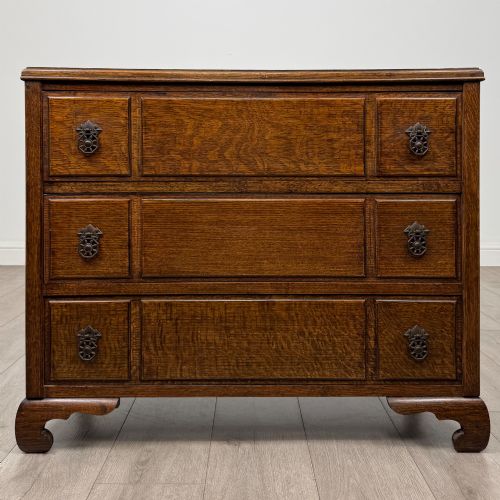
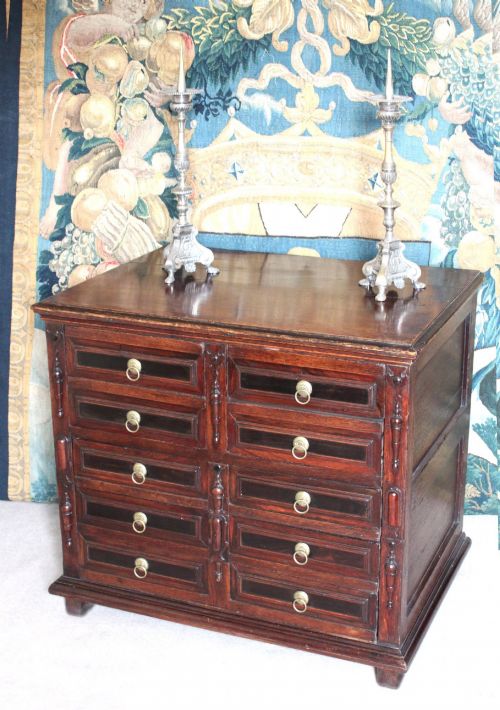
The variants appearing on this page span from the late seventeenth century into the eighteenth century, with occasional Edwardian and nineteenth-century examples alongside Georgian pieces. Buyers encounter various formats, including small chests of drawers and pieces built on later cupboards.
Materials and Construction
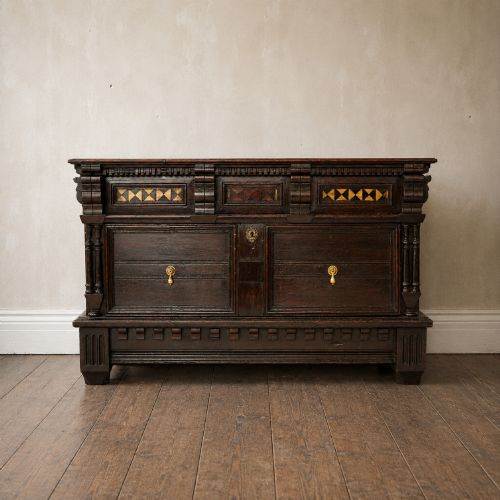
Carpenters built these chests primarily using solid oak, often combining walnut, fruitwood, and applied oyster veneer to create patterned drawer fronts. Wood inlay and intricate geometric mouldings define the surface ornamentation across the period.
Metal hardware such as brass handles and iron fittings secure the structural joints and drawers. Two-part construction allowed makers to transport these heavy items more easily during the seventeenth century.
Listings feature oak, walnut, fruitwood, and oyster veneer combined across seventeenth-century forms.
Evaluating the Pieces
The crispness and survival of the geometric mouldings on the drawer fronts distinguish finer examples from plain or heavily restored surfaces. Original brasses and unaltered timber patination elevate the integrity of a piece.
The integration of later elements, such as replacement cupboards underneath or altered bases, shifts the character of the furniture. Cohesion between the primary oak carcase and secondary woods like walnut determines the overall standard.
The Oak Geometric Commode Glossary
- Geometric commode
- A chest of drawers featuring applied raised mouldings arranged in geometric patterns across the front. This style dominated English cabinetmaking in the late seventeenth century.
- Oyster veneer
- Thin slices of branch wood laid in circular or symmetrical patterns to resemble oyster shells. Makers used this decorative technique on walnut and fruitwood surfaces.
- Two-part chest
- A piece constructed in upper and lower sections to facilitate movement. This method was common for large seventeenth-century storage furniture.
- Jacobean
- A style spanning the early to mid seventeenth century characterised by solid construction and geometric panel relief. It forms a key stylistic root for these chests.
- Block front
- A drawer configuration divided into three vertical sections where the central section recedes. This provides distinct visual depth to the piece.
Oak Geometric Commode: Frequently Asked Questions
How do I date an oak geometric commode?
Examination of the timber joints, moulding profiles, and secondary woods helps determine the age of an oak geometric commode. Seventeenth-century pieces typically display hand-cut construction and pegged frames.
Subsequent revivals in later centuries often replicate these forms using different joining techniques and modern fixings. Comparing the drawer linings and backboards clarifies the original period of manufacture.
What is a two-part chest?
A two-part chest is built as two separate stacked boxes rather than a single tall carcase. This design made heavy seventeenth-century furniture easier to move through doorways and up staircases.
The division is usually visible as a horizontal break running around the middle of the cabinet. Many examples sit upon a separate lower base or later cupboard structure.
Where were these chests placed?
These chests functioned as principal storage furniture in bedrooms, chambers, and formal reception rooms of seventeenth-century houses. Their deep drawers held textiles, garments, and household valuables.
Today, they suit living rooms and hallways where their decorative fronts act as a focal point. Their robust construction allows them to hold everyday items securely.
How do I care for oyster veneer?
Oyster veneer requires stable indoor humidity to prevent the thin wooden discs from lifting or cracking away from the oak carcase. Avoid placing the furniture near direct heat sources or strong sunlight.
Regular dusting with a dry cloth maintains the surface without stripping the historic wax polish. Gentle application of traditional beeswax helps nourish the walnut and fruitwood timbers.