


Seventeenth Century Stool
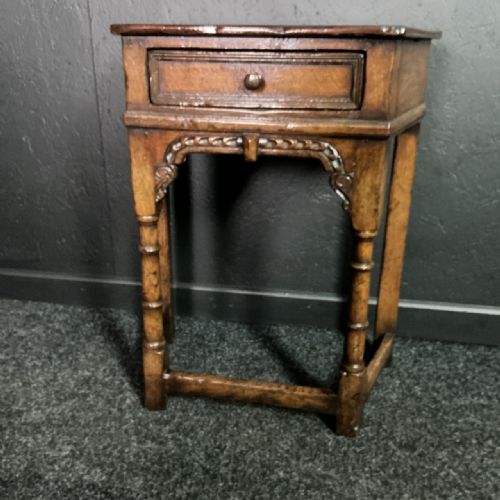
These seventeenth century stool examples are sturdy oak seating built for daily use, offering compact utility and honest joinery that suit modern halls or living rooms.
Seventeenth Century Stool
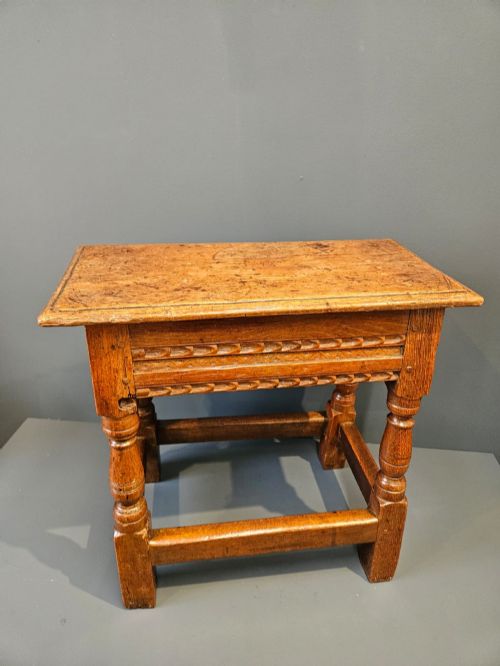
A seventeenth century stool typically takes the form of a joint stool or backstool, constructed with pegged mortise and tenon joints designed to bear heavy weight. Buyers encounter genuine period pieces alongside later revival interpretations from the Victorian era and nineteen-twenties.
The primary forms on this page include joint stools, backstools with low wooden supports, and commode stools meant for chamber use. While genuine seventeenth century examples command attention for their age, revival pieces built in the nineteenth and twentieth centuries replicate the sturdy proportions of earlier domestic furniture.
Materials and construction methods
Makers relied on solid oak harvested locally, shaping the timber with hand saws, drawknives, and adzes to form thick rectangular tops and straight legs. Pegs secured the frame tightly together without reliance on modern metal screws.
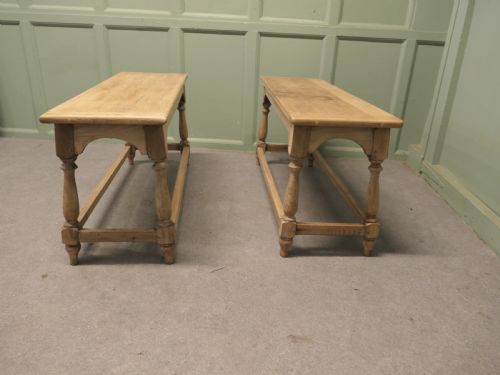
Iron brackets or hinges appear on specialised forms like close stools, while occasional tapestry upholstery softens seating surfaces. Bleached oak finishes also appear among later interpretations, altering the raw timber tone.
Seventeenth Century Stool Retail Price Guide 2026
Typical asking prices for seventeenth century stool among the pieces listed under this phrase on Sellingantiques today, from the lower quarter to the upper quarter. They describe what is for sale here now, not the wider market.
Listings span multiple centuries, ranging from original seventeenth-century oak pieces to nineteenth-century Victorian revivals and twentieth-century interpretations.
Assessing quality in early seating
Quality rests in the integrity of the original timber and the crispness of the hand-cut joinery. Heavy oak frames that retain their original pegged construction without excessive modern timber replacement stand apart from heavily altered examples.
Proportion and surface patination dictate visual success. Pieces showing deep, natural wear across the oak grain hold greater coherence than those stripped down or aggressively cleaned.
The Seventeenth Century Stool Glossary
- Joint stool
- A sturdy wooden seat built with pegged joints rather than turned upholstery. These form the bulk of early domestic seating found in this category.
- Backstool
- An early form of chair featuring a low wooden backrest attached to a joint stool base. This type offers rudimentary support while maintaining compact proportions.
- Close stool
- A box-like seating form concealing a chamber pot or commode interior. These items combine domestic seating with sanitation functions.
- Jacobean
- A design style spanning the early seventeenth century characterised by straight lines and solid oak construction. Revival versions emulate these traits centuries later.
- Patina
- The surface sheen and colour developed by aged oak through decades of handling and wax polishing. This quality marks genuine historical depth.
Seventeenth Century Stool: Frequently Asked Questions
How do I spot a true seventeenth century stool?
Examine the construction for hand-cut pegged joints and natural timber wear rather than machine-cut precision.
Period examples show distinct tool marks and heavy oak density consistent with early English joinery techniques.
What is the difference between a joint stool and a backstool?
A joint stool provides a flat top surface designed solely for sitting or resting small objects.
A backstool incorporates a low upright wooden back attached to the frame to offer minimal back support.
Can I use an antique oak stool daily?
Solid oak construction makes these pieces remarkably durable for everyday seating in hallways or living spaces.
Ensure the pegged frame remains secure and avoid placing them in damp areas that threaten dry timber.
Why do some listings date to the Victorian period?
Victorian craftsmen frequently produced Jacobean revival furniture to satisfy popular demand for early styles.
These nineteenth-century interpretations replicate seventeenth-century forms using period-appropriate oak and construction methods.