

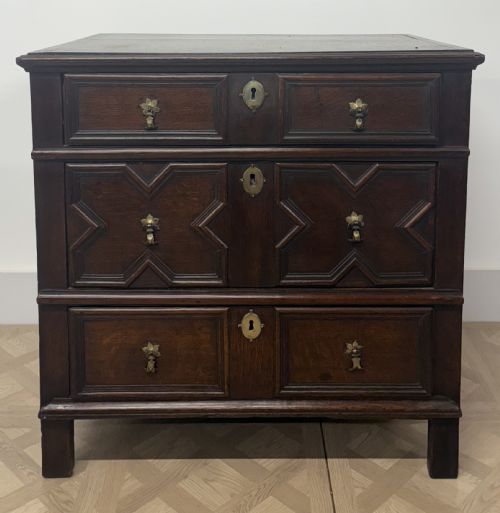
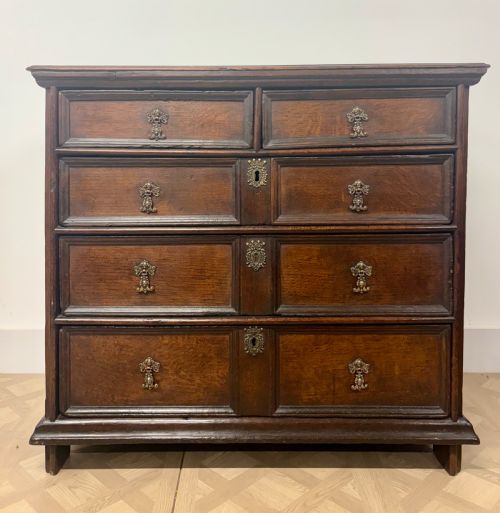
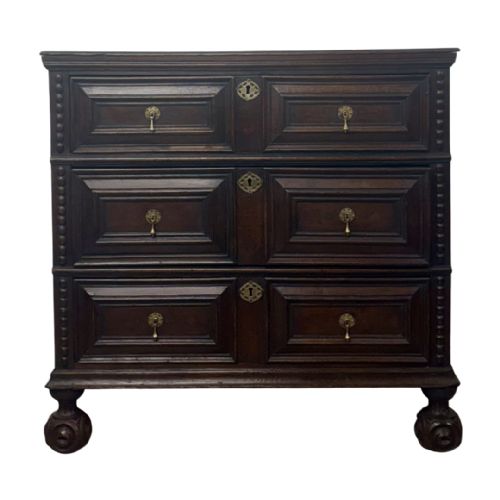
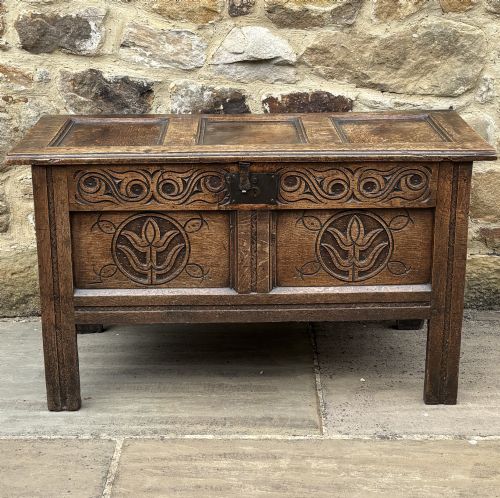
Seventeenth Century Oak Panel
A seventeenth century oak panel brings heavy timber architecture into a room, offering genuine period grain and hand-carved detail.
Seventeenth Century Oak Panel
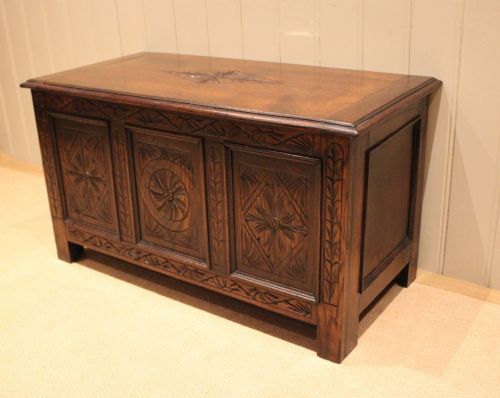
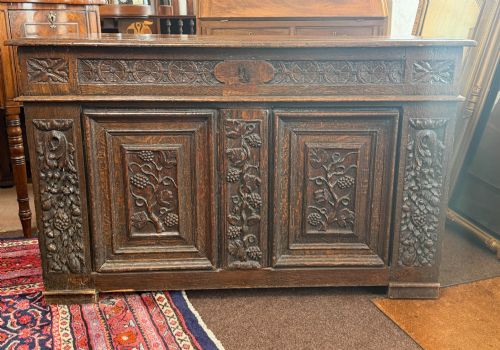
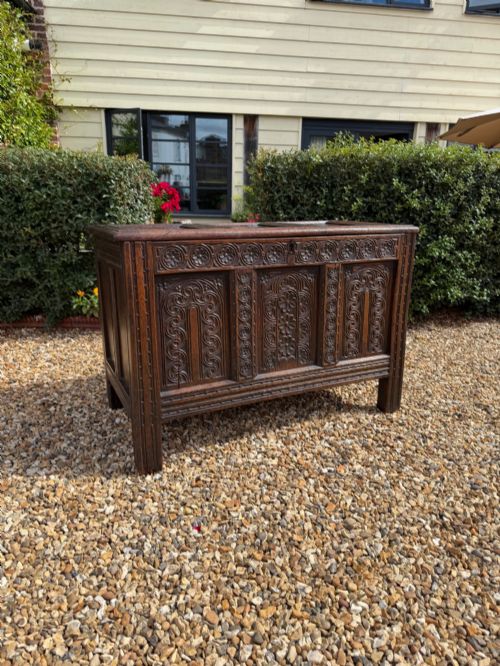
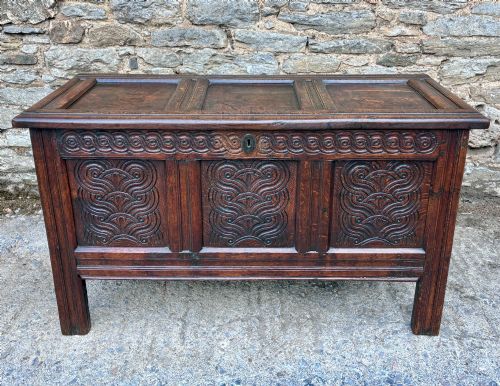
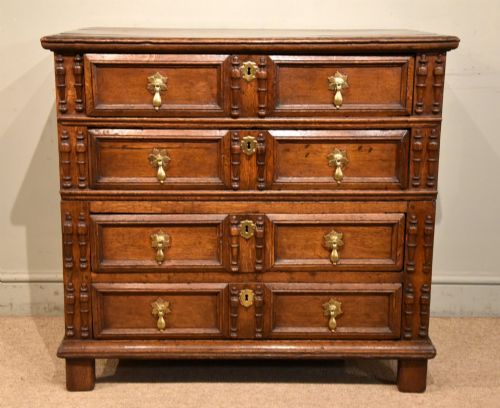
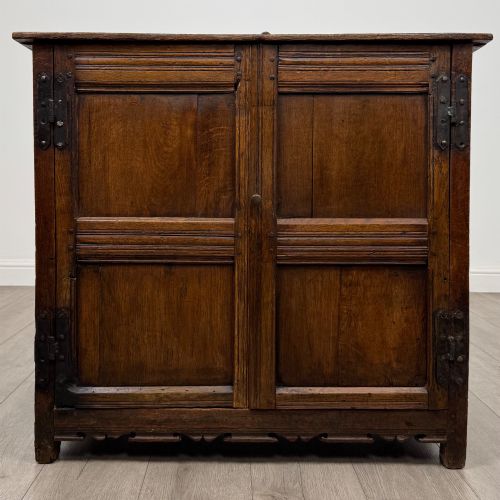
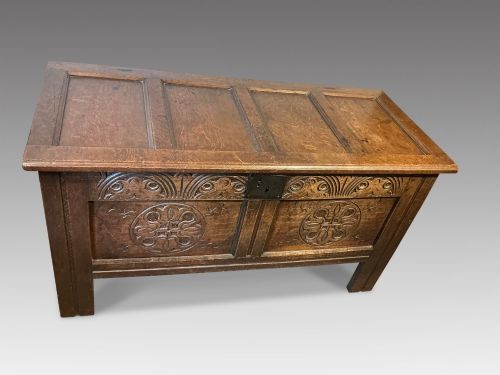
A seventeenth century oak panel forms the structural and decorative core of heavy domestic furniture from the period, including coffers, chests of drawers, and wainscot armchairs. Buyers look for these elements to anchor an interior with authentic seventeenth century timber and traditional joinery.
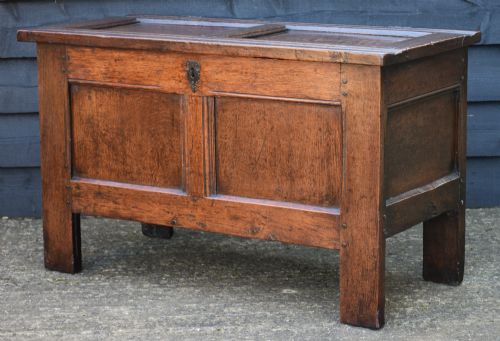
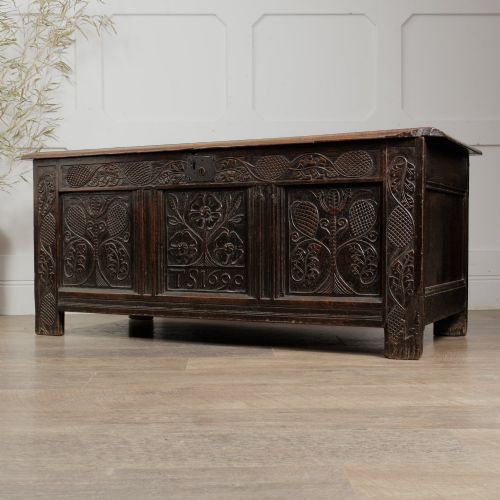
The most common form encountered here is the coffer or storage chest, alongside joined chairs and cupboards built with framed panels. These items reflect the domestic architecture of seventeenth century English and Welsh households, often carrying period carving or linen fold decoration.
Survival rates lean towards robust items constructed from solid oak, sometimes augmented by walnut or fruitwood, reflecting the utilitarian needs of the era. Later nineteenth century revivals also appear, mimicking the seventeenth century manner with carved oak panels.
How they were made
Joiners built seventeenth century oak panel furniture using frame-and-panel construction, allowing the solid timber to expand and contract with seasonal humidity without splitting. Iron and brass hardware, including hinges and locks, secured the heavy lids and doors of coffers and cupboards.
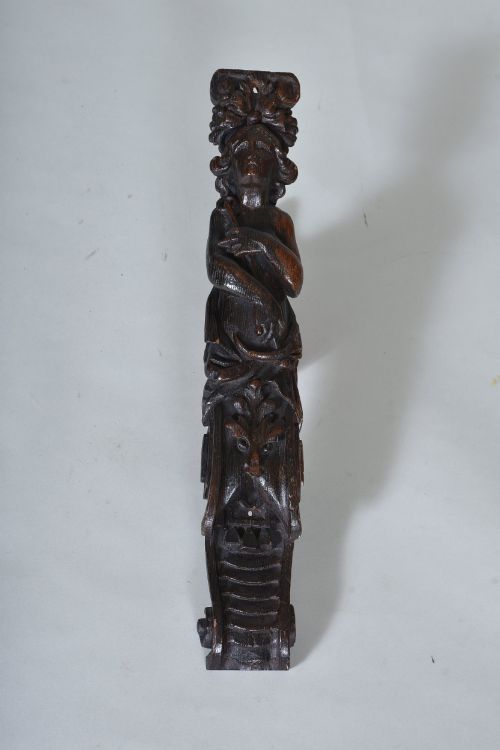
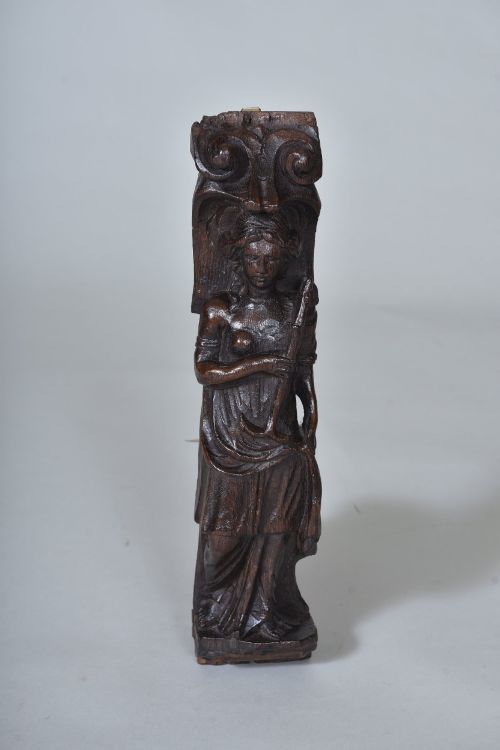
Carving was executed directly onto the oak surface using gouges and chisels, producing geometric strapwork, floral motifs, or linen fold patterns. Some pieces retain oil paint or exhibit a dark oak finish developed through centuries of wax application and natural oxidation.
Listings span multiple centuries, encompassing seventeenth century originals alongside nineteenth century pieces built in the seventeenth century manner.
What varies in quality
Quality rests in the crispness of the hand-carving and the depth of the natural patina accumulated across the oak surface. Examples with untouched, faded surfaces and original panel proportions stand apart from heavily restored or later nineteenth century revival pieces.
Construction integrity dictates value, distinguishing between items retaining their original joined frames and those altered or re-pegged during later centuries. The presence of secondary timbers like fruitwood or walnut within the primary oak structure also marks regional variations in craftsmanship.
The Seventeenth Century Oak Panel Glossary
- Coffer
- A heavy wooden storage chest with a hinged lid, frequently constructed with panelled sides. These boxes held valuables, textiles, and documents in seventeenth century homes.
- Wainscot chair
- A solid wooden armchair constructed with joined frame-and-panel techniques, typical of seventeenth century domestic seating. The term originally referred to fine imported oak used for panelling.
- Linen fold
- A carved wooden panel motif imitating folded linen fabric, popular in early joinery. This style adds vertical texture to the face of seventeenth century coffers and cupboards.
- Patina
- The surface sheen and colour developed on oak furniture through age, light, and repeated waxing. A desirable finish shows subtle variation and depth rather than uniform modern polish.
- Strapwork
- A carved decorative band resembling interlaced leather straps or flat ribbons. It appears frequently on the friezes of seventeenth century chests and wainscot chairs.
Seventeenth Century Oak Panel: Frequently Asked Questions
What is a wainscot chair?
A wainscot chair is a heavy wooden armchair built using joined panel construction rather than turned legs alone. These sturdy seats were principal items in seventeenth century households.
They often feature carved back panels and solid wooden seats, reflecting the architectural joinery methods of the period.
How do I care for old oak?
Old oak furniture requires stable room humidity and protection from direct sunlight to prevent the timber from drying out or splitting. Regular applications of traditional beeswax nourish the wood and maintain the surface.
Avoid modern silicone polishes, which can build up and dull the historic patina accumulated over centuries.
Are these pieces all original?
Listings combine authentic seventeenth century survivals with later nineteenth century revival pieces made in the same manner. Descriptions note periods ranging from the seventeen hundreds back to the sixteen hundreds.
Examining the construction methods, joinery pegs, and wear patterns helps distinguish original period items from later interpretations.
What is a coffer used for?
A coffer served as a secure storage chest for household valuables, linens, and documents before fitted wardrobes became common. Their robust panelled construction allowed them to double as benches or tables.
Today, they function well as living room storage units or coffee tables while retaining their historic character.