
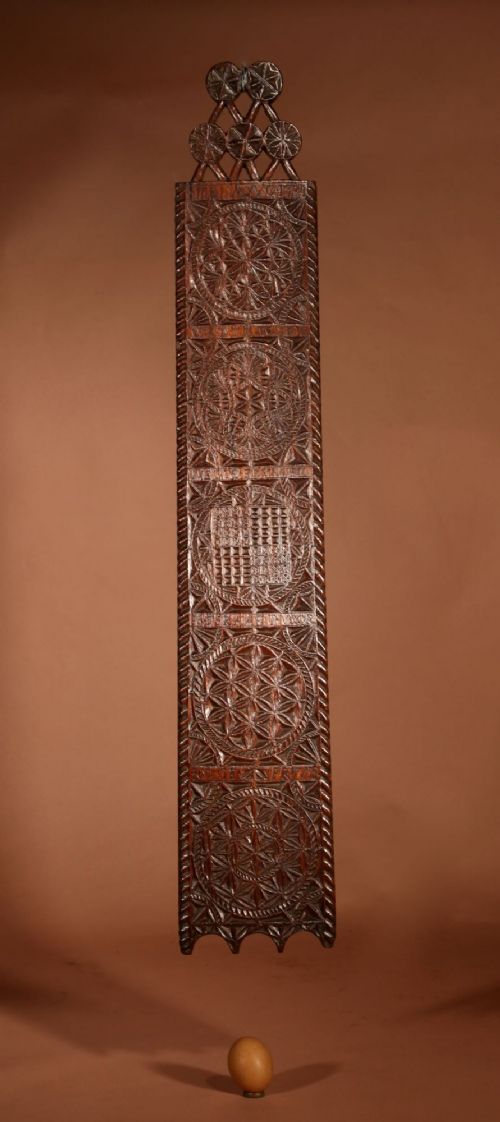


Dutch Folk Art Carving
Dutch folk art carving comprises domestic wooden artefacts fashioned by regional hands, prized for bringing centuries of tactile rural craft directly into the home.
Dutch Folk Art Carving
When you search for dutch folk art carving, you encounter domestic items built for daily household use yet decorated with deep hand-worked detail. These pieces range from functional kitchenalia and architectural salvage to decorative scale models and wall art.
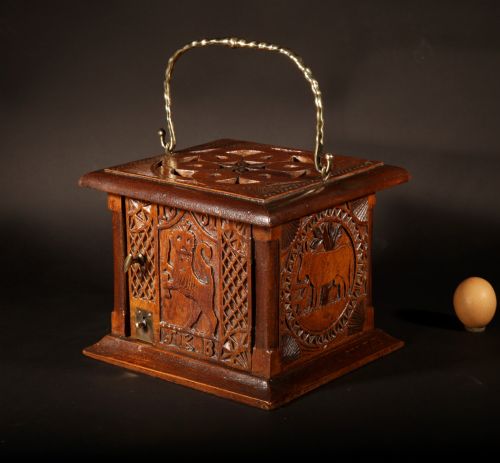
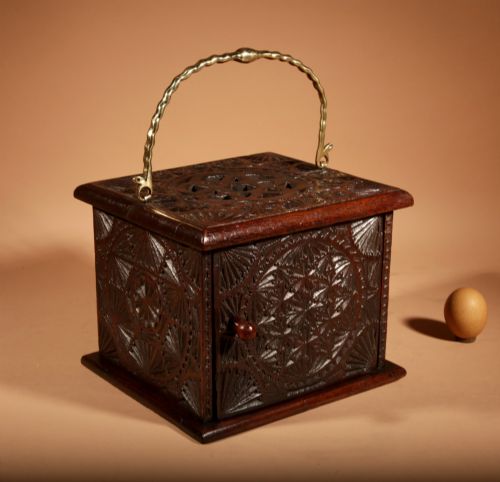
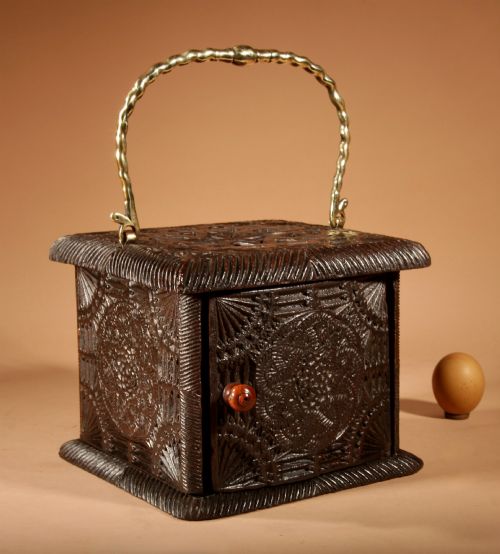
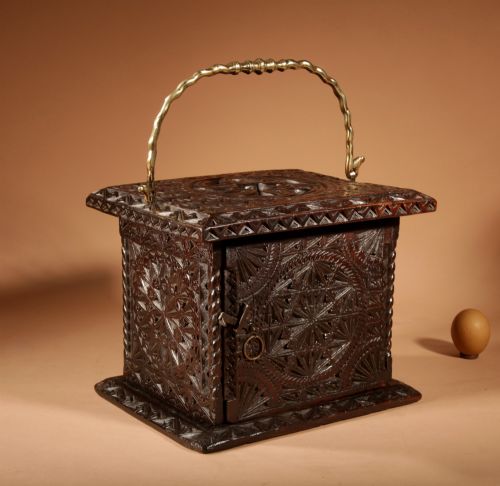
The most common survivals on this page are chip carved foot stoves and substantial wooden mangle boards, alongside gingerbread moulds and working windmills. They span multiple centuries, stretching from the seventeenth century through to the mid twentieth century.
Many of these objects carry specific dates, initials, or carved text, anchoring them firmly to particular makers and moments in history. Their origins often trace back to regional traditions, including distinctive Frisian styles.
How they were made
The makers relied primarily on solid timbers such as oak and mahogany, shaping them with hand tools to create robust domestic objects. Chip carving is the dominant technique, producing geometric relief patterns across the wooden surfaces.
Selected pieces incorporate paint, leaf gilding, or brass elements to highlight the carved designs and add textural contrast. Joinery and jigsaw woodwork relief also appear, showing varied carpentry skills applied to utilitarian forms.
A nineteenth century gingerbread mould preserves the proud image of a man on horseback, ready for the oven.
What varies in quality
Quality rests in the crispness and depth of the chip carving, distinguishing confident handwork from simpler execution. The presence of clear dates, early inscriptions, or original painted surfaces elevates certain examples above standard utilitarian survivals.
Proportion and scale also play a role, with larger or more ambitious forms like extensive mangle boards and architectural pieces demanding greater skill from the maker. Preservation of the original timber integrity determines the overall strength of each surviving object.
The Dutch Folk Art Carving Glossary
- Chip carving
- A method of removing small chips from a wooden surface with knives or chisels to form geometric patterns. This technique defines the surface decoration on many early domestic items.
- Mangle board
- A flat wooden board with a handle, used historically in Northern Europe to smooth linens by wrapping them around a roller. These boards often feature elaborate carved decoration, dates, and initials.
- Foot stove
- A small wooden box perforated to hold a container of hot coals, used for warming the feet during cold weather. They frequently display intricate pierced work and chip carved details.
- Gingerbread mould
- A carved wooden board pressed into dough to impart a decorative relief figure before baking. They showcase pictorial folk carving intended for culinary use.
- Frisian folk art
- The distinct regional artistic tradition originating from Friesland, known for specific decorative motifs and chip carved woodwork. This style appears frequently on historical domestic items.
Dutch Folk Art Carving: Frequently Asked Questions
How were foot stoves used?
Foot stoves were small wooden boxes containing a small ceramic or metal pot filled with hot embers, designed to keep people warm while sitting in unheated buildings.
Users placed their feet on top of the perforated wooden lid, allowing the heat to circulate while enjoying the decorative chip carved patterns.
What does chip carving mean?
Chip carving is a relief carving technique where small triangular chips are removed from a flat wooden surface to create geometric and symmetrical patterns.
This method requires steady knife work and precise angles, forming the primary decorative language across many regional wooden antiques.
How can I tell the age of these carvings?
Age is often indicated by carved dates, initials, or specific construction methods visible in the timber and joinery of each individual object.
Stylistic markers, such as seventeenth century Dutch Baroque influences or regional Frisian motifs, also help place pieces within their respective centuries.
Where should I display these pieces at home?
These wooden objects suit wall mounting or display on sturdy surfaces where their textures and carved details can be appreciated up close.
Placing them in living spaces or kitchens highlights their historic domestic origins without requiring complex installation.