


Geometric Carved Wood Panel
A geometric carved wood panel brings tactile depth and rich surface pattern to a room, offering centuries of joinery skill built into oak, walnut, and fruitwood.
Geometric Carved Wood Panel
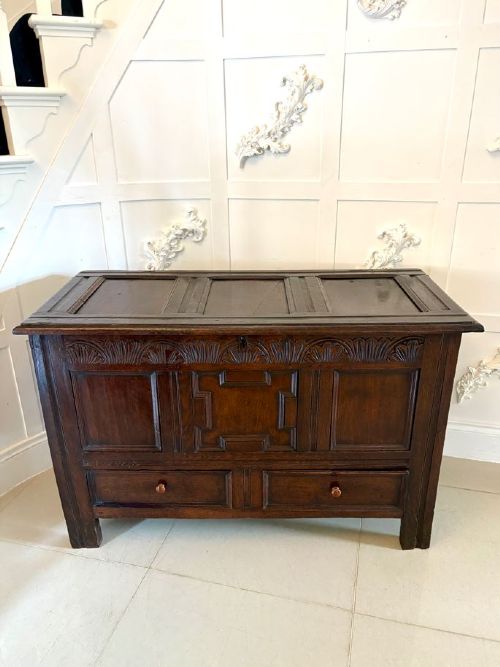
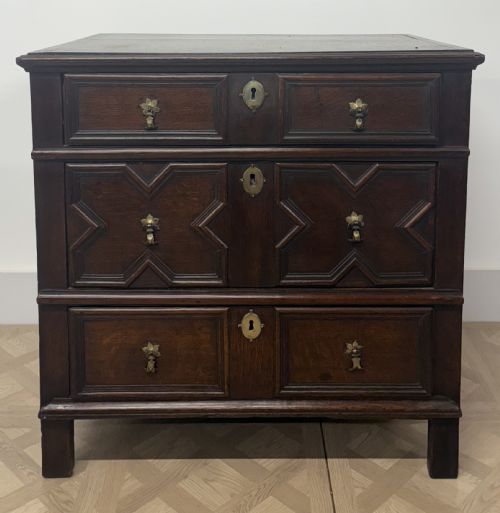
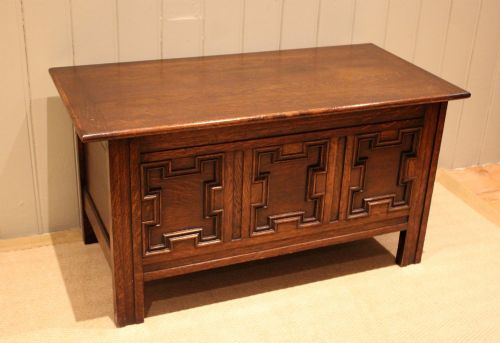
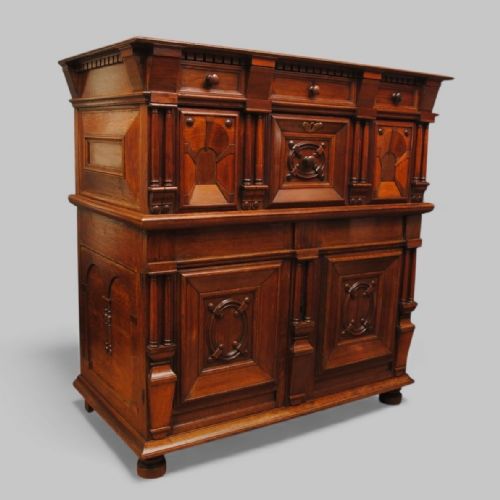
A geometric carved wood panel forms the decorative heart of heavy case furniture, featuring stark repeating patterns derived from Renaissance and Jacobean traditions. These panels emerge most frequently on seventeenth-century chests, coffers, and sideboards, anchoring large expanses of timber with precise incision.
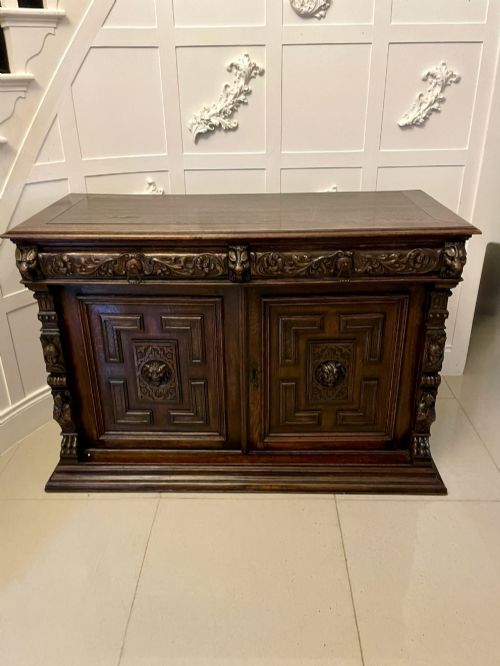
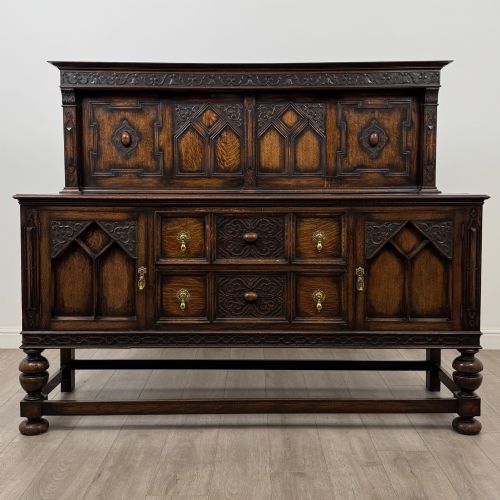
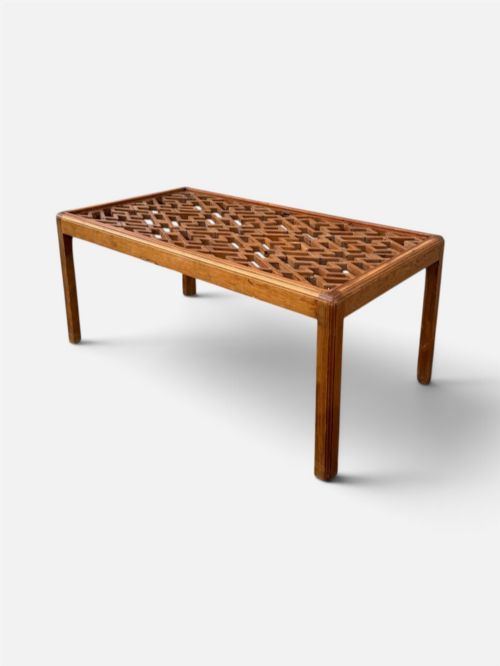
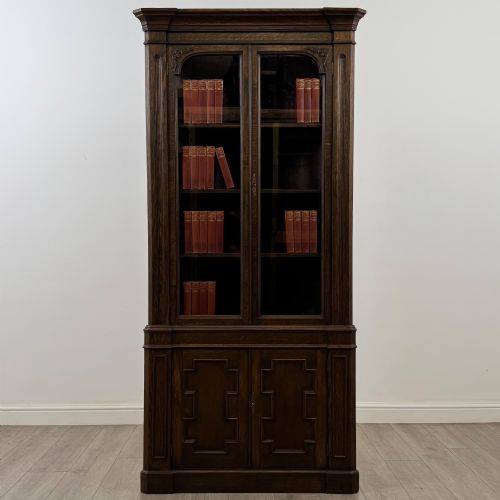
The selections here range from authentic seventeenth-century oak coffers with geometric moulding and chip-carved mangle boards to later revival sideboards, corner cabinets, and twentieth-century coffee tables incorporating antique fretwork. Oak dominates the offerings, supplemented by walnut, fruitwood, elm, and cedar.
Buyers encounter diverse regional expressions, including English country interpretations and Dutch folk art alongside Edwardian and later revivals. Each piece demonstrates how carvers manipulated flat timber surfaces to create shadows and structured ornamentation.
Materials and Technique
Craftsmen built these panels primarily using native oak, alongside walnut, fruitwood, elm, and cedar, selected for stability and grain character. Carpenters relied on hand chisels, gouges, and knives to execute chip carving and geometric mouldings directly into the solid timber.
Assembly involved traditional frame-and-panel construction, allowing the wood to expand and contract naturally without splitting the carved face. Supplementary materials such as brass fittings and glass tops appear on later adaptations like coffee tables and cabinets.
The listings feature periods spanning from the seventeenth century through Edwardian revivals to the nineteen-fifties, predominantly worked in oak.
Quality Variations
The depth and crispness of the chisel work distinguish superior panels from weaker revival examples, where carving can appear shallow or mechanically uniform. Crisp undercutting and deliberate tool marks demonstrate the carver's direct engagement with the material.
Integration between the carved panel and the wider cabinet structure dictates overall integrity, separating pieces where panels are integral to the joinery from those with later adaptations or composite elements.
The Geometric Carved Wood Panel Glossary
- Chip carving
- A technique of removing small chips from a wooden surface at shallow angles to form geometric patterns. This method relies entirely on knife work rather than deep chisel excavation.
- Coffer
- A large wooden chest used historically for storing valuables, typically constructed with heavy planking and panelled sides. These often feature prominent geometric mouldings across the front elevation.
- Jacobean style
- An English design aesthetic spanning the early seventeenth century, characterised by rigid symmetry, heavy proportions, and geometric strapwork. Revival pieces from later centuries frequently emulate these severe architectural lines.
- Mangle board
- A domestic wooden board used historically in Northern Europe for smoothing linen by wrapping cloth around a roller. They frequently display intricate chip carving and dates from the seventeenth century.
- Geometric moulding
- Raised wooden strips applied to a panel to create three-dimensional repeating patterns such as diamonds, octagons, and strapwork. This technique creates strong shadow lines across the furniture face.
Geometric Carved Wood Panel: Frequently Asked Questions
How do I clean a carved wood panel?
Dust the carved recesses regularly with a soft, dry brush to prevent dirt accumulation in the geometric grooves.
Apply a traditional beeswax polish sparingly and buff with a clean cloth to nourish the timber without clouding the surface detail.
Are these panels always seventeenth century?
Many examples originate in the seventeenth century, but the listings also include Edwardian and later revivals that intentionally replicate earlier styles.
Examine the construction methods, timber patination, and tool marks to determine whether a piece is period or a later revival.
What woods were used for these panels?
Oak is the predominant timber found across these pieces, valued for its durability and strong medullary rays.
Walnut, fruitwood, elm, and cedar also appear in specific regional chests and cabinets, offering different tones and grain textures.
How can I tell a revival piece from an older one?
Revival items, such as Edwardian sideboards, often combine machine-cut joints with applied decoration intended to mimic seventeenth-century workmanship.
Genuine period pieces display hand-riven timber, irregular tool marks, and construction techniques appropriate to the recorded date.