

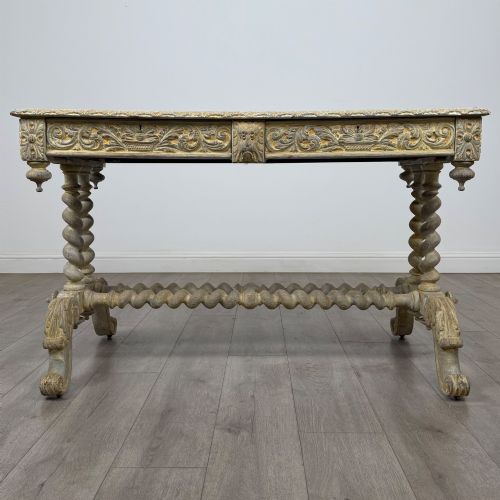
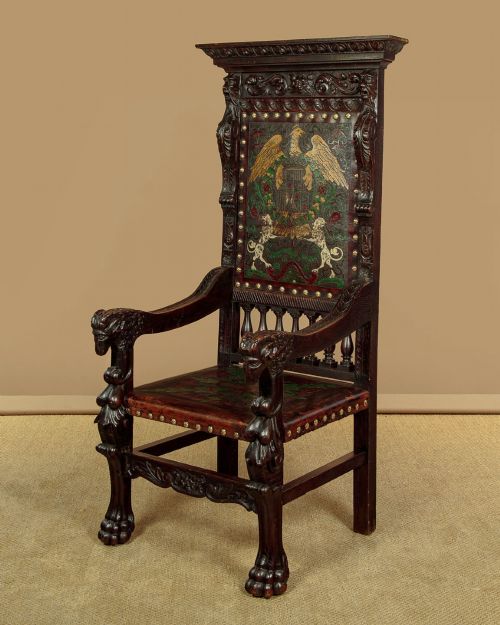

Renaissance Style Oak Carving
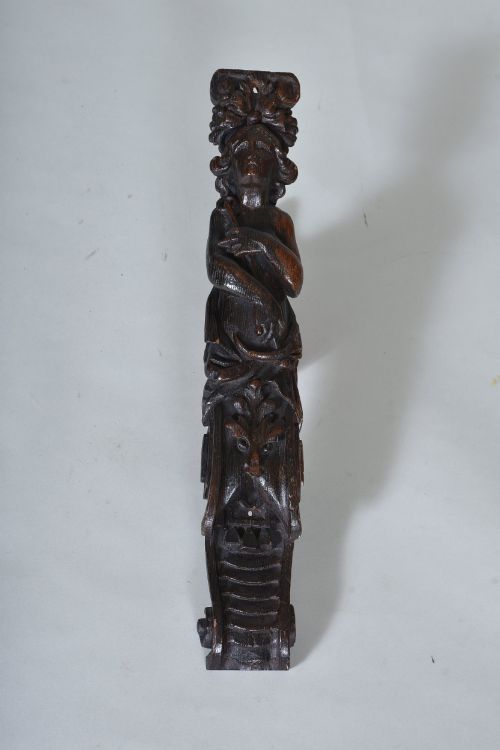
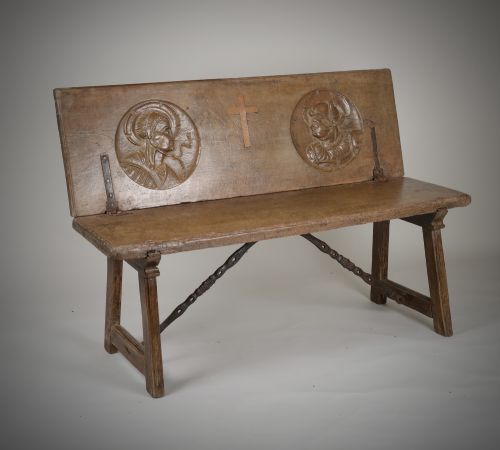
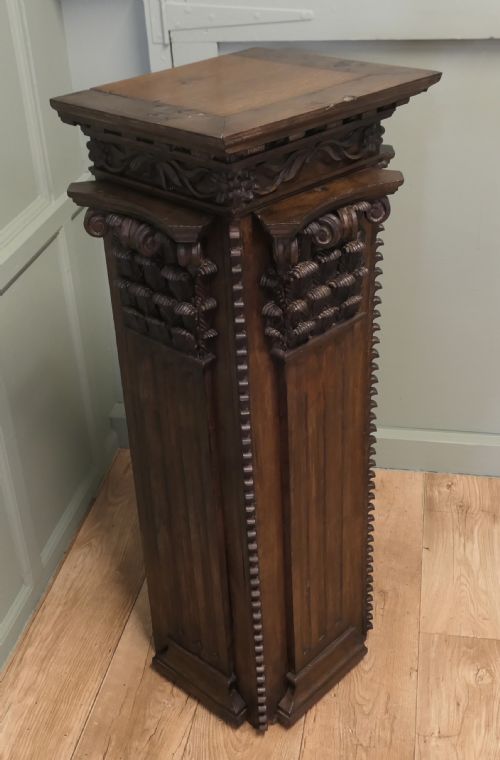
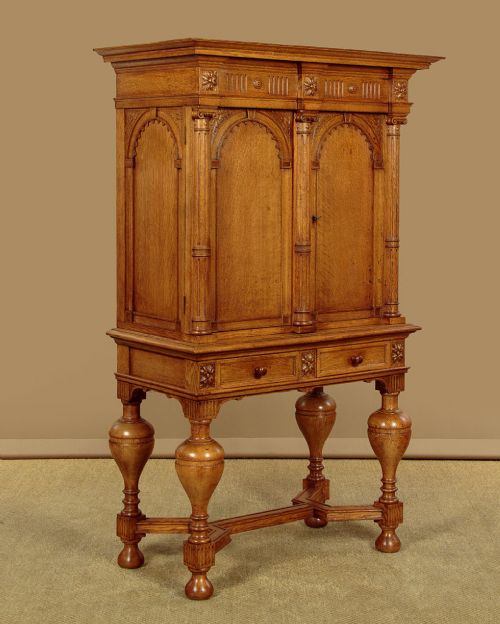
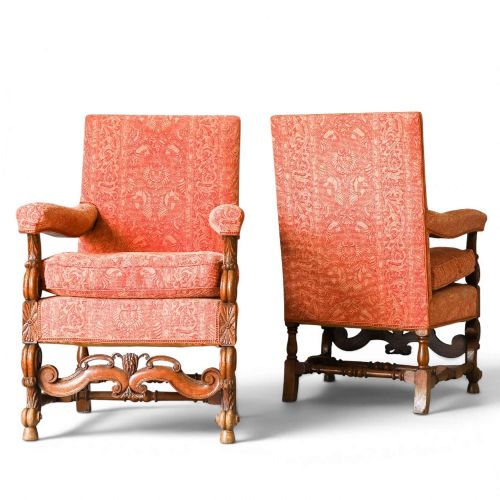
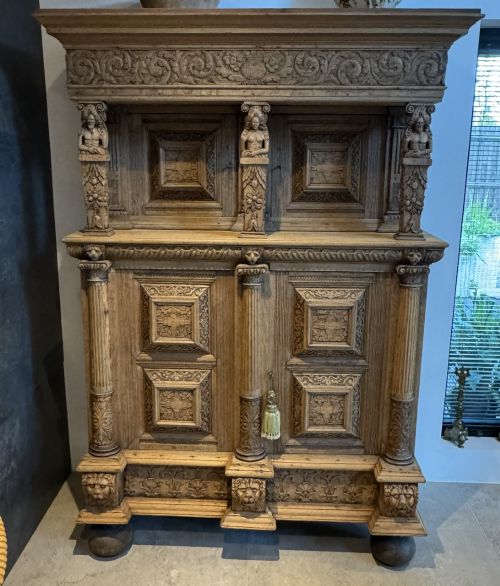
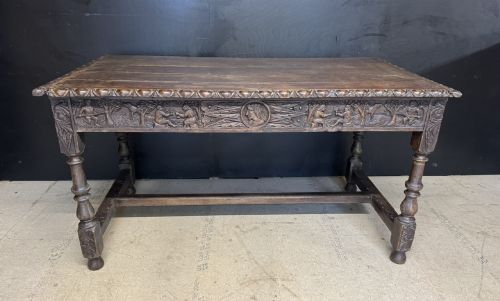
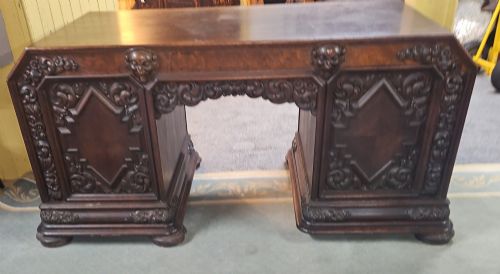
Renaissance style oak carving brings bold architectural relief, figural panels, and dark timber gravitas directly into a room.
Materials and Construction
Makers relied on solid oak, selected for its strength and ability to hold intricate chisel work without crumbling. Walnut appears in select continental pieces, while secondary additions incorporate brass, iron, glass, and painted leather.
The construction depends on traditional joinery methods, utilising tenons and pegged joints to support massive sideboards, cabinets, and tables. Carvers worked directly into the timber blanks, building up depth through layers of undercutting and background punching.
Assessing Quality
Quality separates in the depth, conviction, and crispness of the carving itself. Superior examples display confident chisel work with clean undercut details and lively figural forms, whereas lesser works rely on shallow, mechanical stamping or flat surface incision.
The selection of the timber and the harmony of the architectural proportions dictate the overall success of a piece. Well-balanced revival works integrate panels, columns, and mouldings with structural integrity, while inferior items crowd surfaces with uncoordinated motifs.
Carved wooden lions and guardian angels watch silently from these panels, having witnessed centuries of shifting interior fashions.
The Renaissance Style Oak Carving Glossary
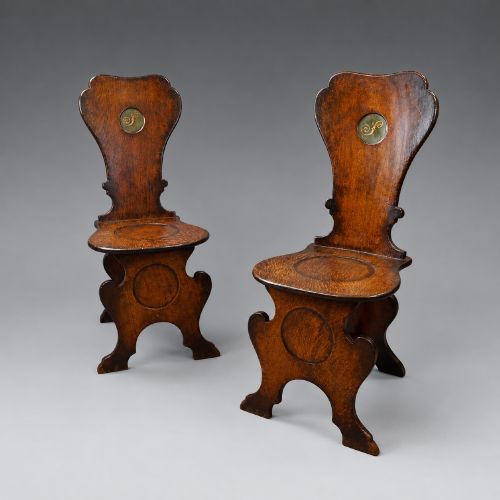
- Sgabello
- A Renaissance chair type featuring a wooden seat supported by two carved board legs or trestles rather than traditional four legs. These narrow seats stood alongside walls in grand halls.
- Renaissance Revival
- A nineteenth-century artistic movement that imitated the architectural and decorative styles of the fifteenth and sixteenth centuries. Designers borrowed heavily from French, Italian, and Flemish sources.
- Coffer
- A heavy wooden chest used for storage, often decorated with carved panels, linenfold, or figural medallions. They served multipurpose roles as seating and storage in early interiors.
- Strapwork
- A decorative motif resembling interlaced bands of leather or flat ribbonwork, popular in sixteenth- and seventeenth-century carving. It often frames cartouches or figural scenes.
- Buffet
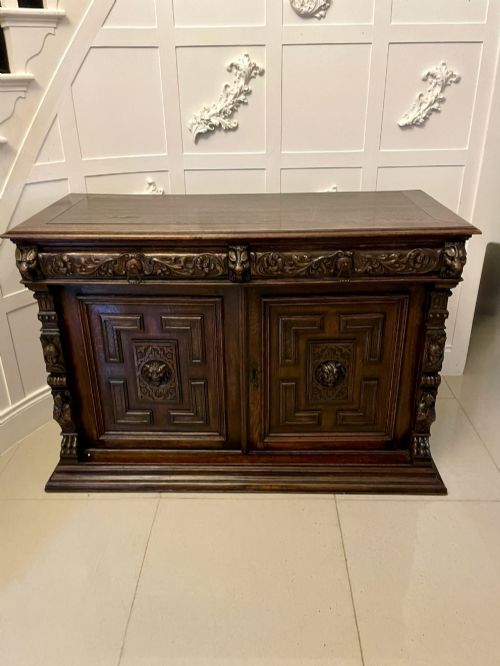
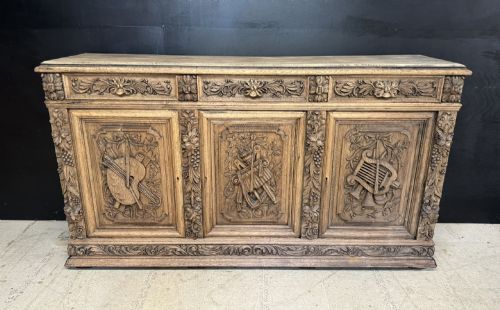
- A sideboard or cupboard designed for displaying plate and storing dining wares. These large case pieces provide expansive surfaces for heavy relief carving.
Renaissance Style Oak Carving: Frequently Asked Questions
How do I spot a nineteenth-century revival piece?
Nineteenth-century revival pieces often display mechanical consistency in the carving and machine-sawn timber elements hidden behind the decorative facade. Closer inspection of the construction joints and timber shrinkage reveals the true age of the piece.
Cabinetmakers of this era frequently exaggerated earlier styles, combining French, Flemish, and Italian motifs onto standardised carcass forms like sideboards and armchairs.
Where should I place a heavy oak sideboard?
Heavy oak sideboards require substantial wall space and load-bearing ground floors to support their immense weight. Placing them against a neutral wall allows the dark timber and deep relief carving to stand out clearly.
Keep these pieces away from direct heat sources and strong sunlight to prevent the solid oak panels from splitting or warping over time.
What is the difference between French and Flemish styles?
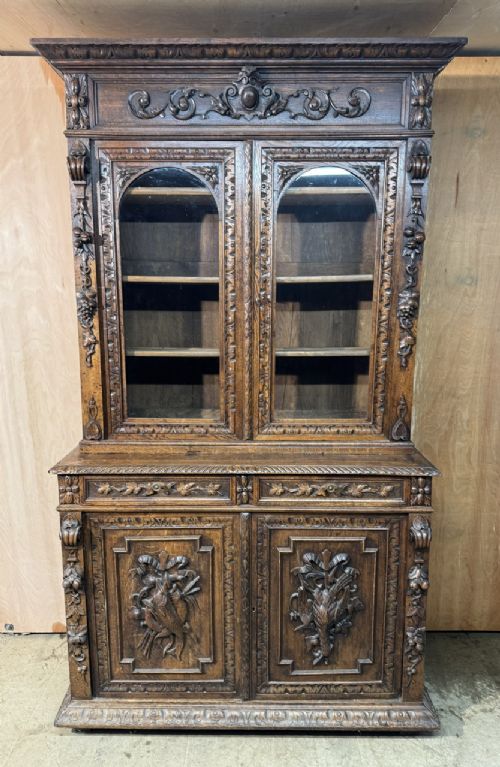
French Renaissance carving tends to emphasise refined architectural symmetry, classical columns, and restrained figural medallions. Flemish examples often introduce a more exuberant, heavy treatment of fruit garlands, wildlife, and dramatic hunting scenes.
Both regional interpretations utilise dark oak surfaces, but the overall silhouette and choice of ornamental borders usually distinguish their origin.
How do I care for antique carved oak?
Maintain antique carved oak by applying a neutral beeswax sparingly and buffing it gently with a soft bristle brush to reach into recessed carved details. Avoid modern liquid polishes containing silicones, which build up within the grain over time.
Maintain stable room humidity to ensure the timber does not dry out and crack along historical joinery lines.