


Jacobean Oak Carving
Jacobean oak carving brings robust seventeenth-century character and heavy geometric decoration into modern interiors through authentic period survivors and later revival pieces.
Jacobean Oak Carving
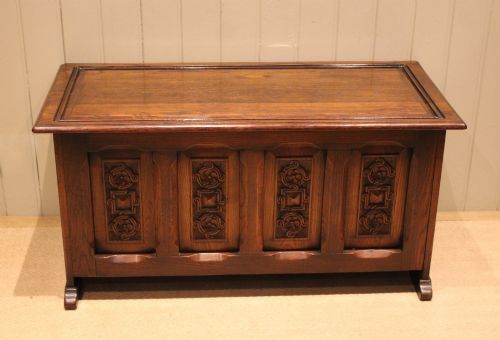
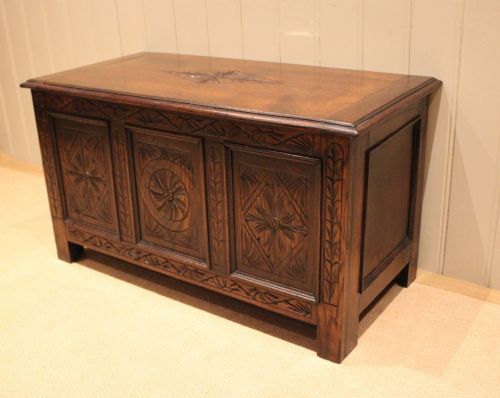
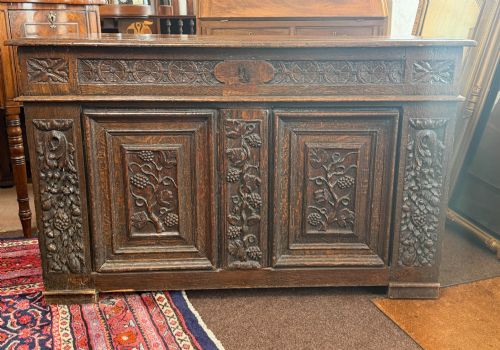
When people search for jacobean oak carving, they are looking at heavy, dark timber furniture and architectural panels decorated with distinctive strapwork, guilloche, and floral motifs. These objects range from genuine seventeenth-century coffers and panels to Edwardian and Victorian revival pieces produced in large numbers during the early twentieth century.
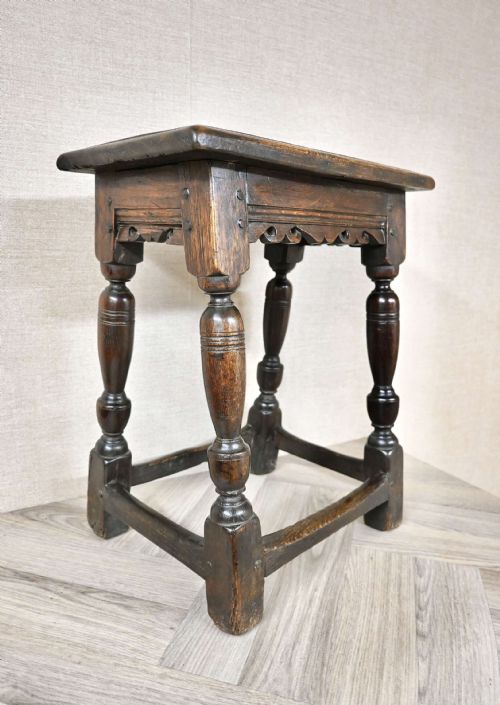
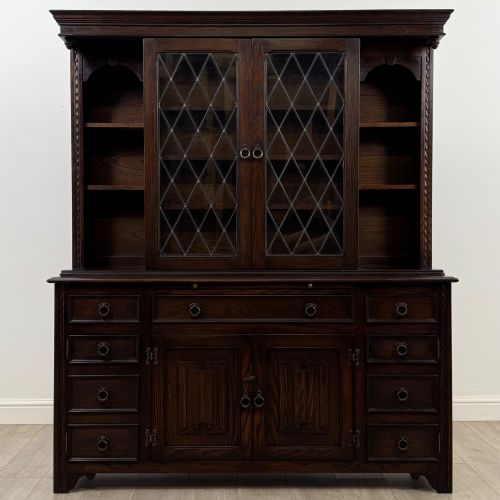
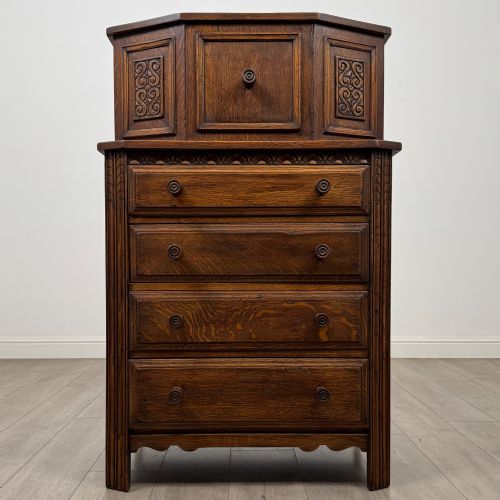
Buyers are most likely to meet Edwardian side tables, dining sets, and display cabinets built in the Jacobean style alongside genuine seventeenth-century oak coffers and carved panels. These revival forms adapt older decorative motifs for domestic use in country houses and suburban villas.
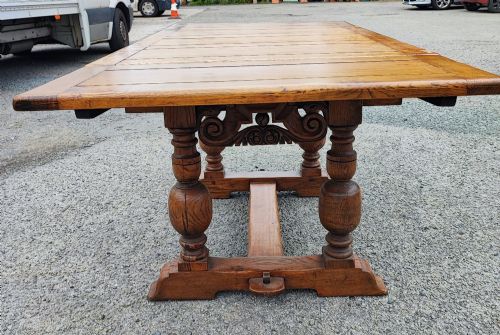
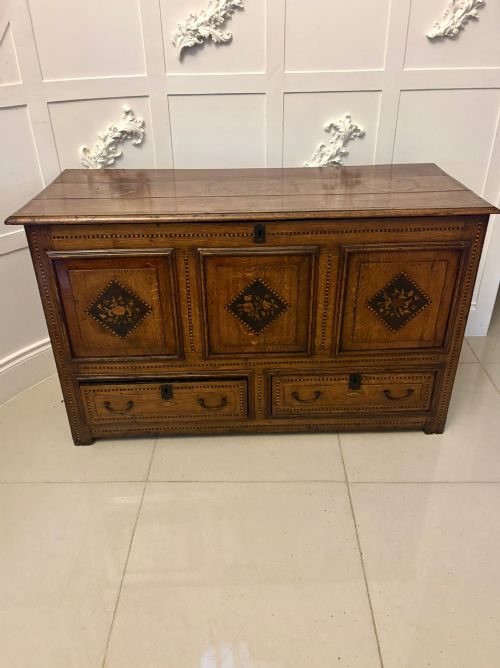
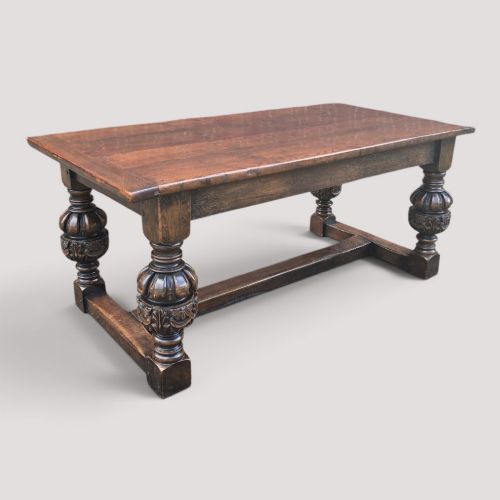
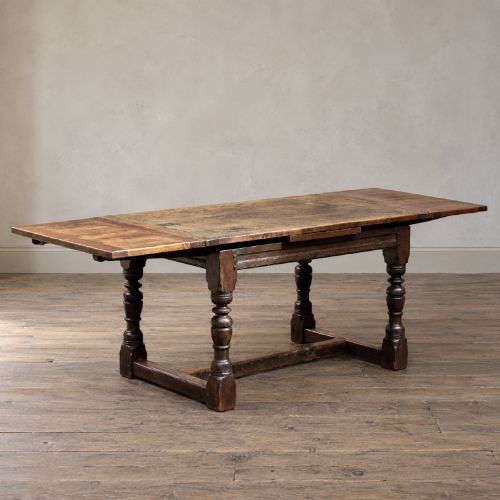
The objects span multiple functional forms, including refectory draw leaf tables, mule chests, monks benches, and wall-hanging cupboards. Solid oak forms the primary structural foundation across both period originals and later revivals.
Variations in Quality
The depth, crispness, and hand-carved detail of the ornamentation separate superior examples from routine production. Period originals display the tool marks and organic shrinkage of seventeenth-century working methods, whereas revival pieces show twentieth-century mechanical precision.
The selection of timber grain and the integrity of original joinery dictate the structural merit of each piece. Later alterations, such as Victorian carving added to earlier chests, introduce stylistic mismatches that affect the overall coherence of the object.
At least one nineteenth-century carver could not resist adding Joan of Arc to a seventeenth-century panel.
The Jacobean Oak Carving Glossary
- Cofer
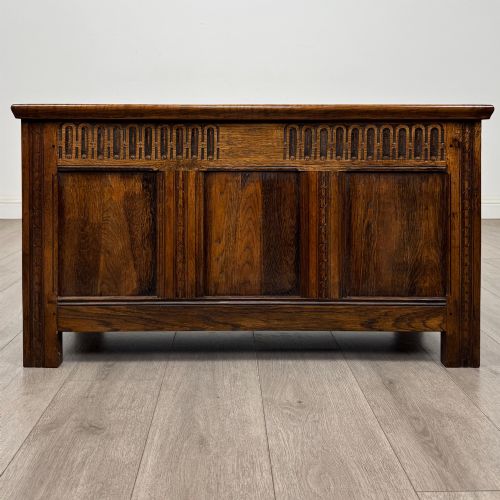
- A heavy wooden chest used for storage, typically constructed with solid oak panels and framed lids. These pieces often feature front panels decorated with carved strapwork or linenfold motifs.
- Draw leaf table
- A dining table equipped with pull-out extension leaves stored beneath the main top surface. This mechanism allows the table length to double without removing items from the centre.
- Linenfold
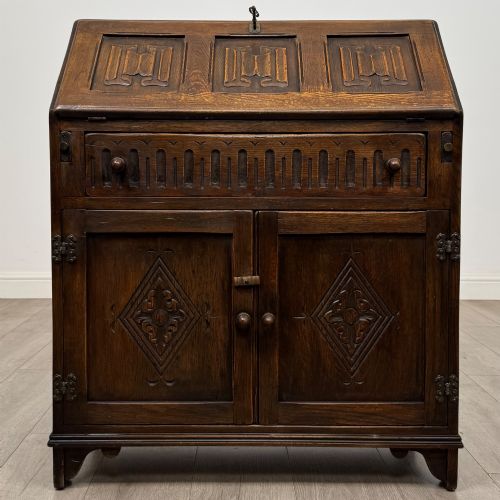
- A style of wood carving that imitates folded parchment or linen cloth. It appears frequently on the vertical panels of cupboards, bureaus, and chests from the period.
- Refectory table
- A long, narrow dining table traditionally used in communal halls and dining rooms. They feature substantial solid oak tops supported by heavy legs connected with floor-level stretchers.
- Strapwork
- A decorative carving style consisting of flat, intertwined bands resembling leather straps or scrolls. This motif dominates seventeenth-century friezes and panel borders.
- Mule chest
- A storage chest fitted with one or more drawers in the base beneath the main compartment. They combine the traditional function of a coffer with the accessibility of drawer storage.
Jacobean Oak Carving: Frequently Asked Questions
How do I spot a genuine seventeenth-century piece?
Examine the construction methods and timber characteristics closely. Genuine seventeenth-century items show hand-cut joinery, pegged tenons, and natural timber oxidation rather than uniform machine milling.
Look for tool marks left by pit saws and hand chisels on unexposed surfaces. Later revival pieces from the Edwardian era often use standardised screws and cleaner, lighter wood preparation.
What is linenfold carving?
Linenfold is a specialised relief carving technique that makes flat wooden panels resemble folds of fabric. Craftsmen used specialised gouges to create the illusion of stiff cloth draped across the wood.
This motif is most commonly found on the doors of cupboards, the fronts of chests, and the panels of desks from the era.
How should I care for solid oak furniture?
Keep solid oak furniture away from direct heat sources and sudden temperature fluctuations to prevent timber splitting. Apply natural beeswax periodically to nourish the dry wood and maintain a soft sheen.
Avoid using modern silicone sprays or heavy liquid polishes that can build up on the carved surfaces and attract dust.
Can I use an antique coffer as a coffee table?
Antique coffers function well as low storage units and occasional tables in living spaces. Their flat lids provide a stable surface for books and decorative objects while concealing household clutter inside.
Ensure the antique hinges and lid supports remain stable before placing heavy items on the top surface.