


Set of Three Tables
A set of three tables delivers practical versatility through stacking designs that tuck neatly away when floor space matters most.

Set of Three Tables
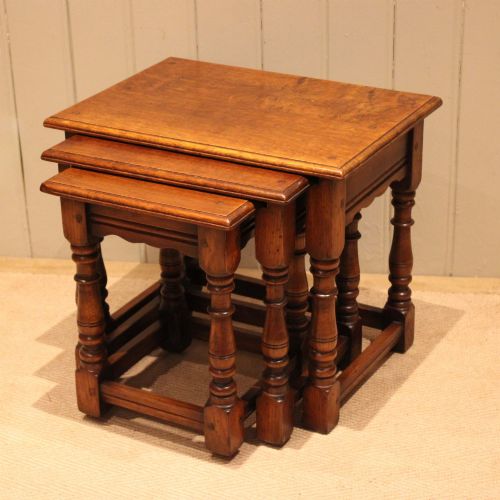
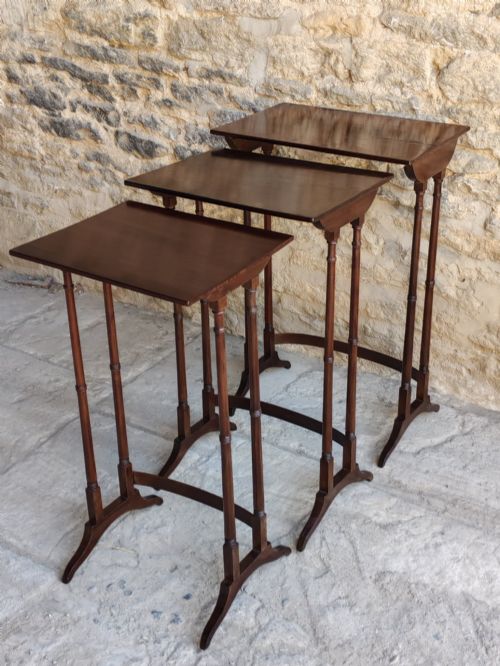
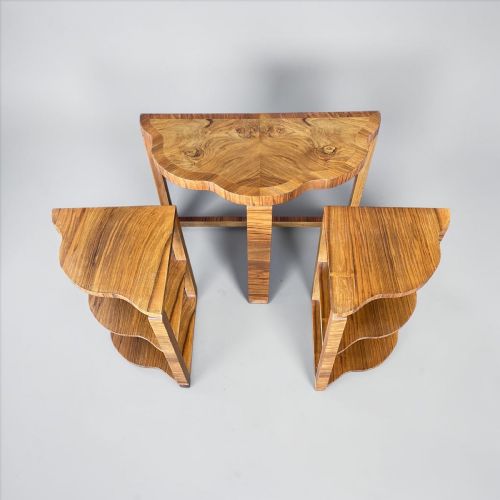
A set of three tables primarily appears in the form of nesting tables, where graduating sizes slide one beneath the other to save room. These functional pieces emerge frequently in Edwardian, Victorian, and Art Deco designs, offering flexible surfaces for lamps or teacups.
Buyers seeking a set of three tables will encounter various timber constructions, from Georgian and Regency rosewood and mahogany to later oak and walnut examples. Makers also utilised exotic hardwoods like Chinese hardwood, alongside decorative finishes such as Chinoiserie and marquetry.
Beyond traditional nests, the category occasionally spans alternative groupings of three, including matched coffee table arrangements or occasional tables produced in graduating trios. These variations reflect changing domestic needs across the nineteenth and twentieth centuries.
Materials and construction
Cabinetmakers constructed these tables using sturdy primary timbers such as mahogany, oak, rosewood, and walnut, frequently selecting figured veneers for the main surface tops. Inlaid stringing, marquetry, and carved elephant motifs further decorated the wood on specific Art Deco and Edwardian iterations.
Joinery techniques matched the period of production, employing stable frames designed to withstand the friction of continuous stacking and removal. Lighter Edwardian and Victorian versions relied on slender turned or tapered legs, whilst earlier Regency and Georgian models utilised rich grains and solid proportions.
Certain Art Deco iterations feature hand-carved elephants tramping across the timber tops, bringing an unexpected safari element to the drawing room.
Markers of distinction
Quality rests heavily on the selection of timber and the precision of the graduating frame clearances, ensuring each smaller table slides smoothly without binding. Superior examples display thoughtful grain matching across the surfaces and crisp, unblemished edge moulding.
Maker attribution elevates certain pieces, particularly when workshops like Heal's or H & L Epstein produced the design. Finer details such as hand-carved elements, marquetry work, and retained structural integrity separate standard utility items from exceptional furniture.
Heal's·H & L Epstein·Gordon Russell·Gillows·B Cohen & Sons
The Set of Three Tables Glossary
- Nest of tables
- A set of graduating tables designed to fit neatly beneath one another. This space-saving arrangement became particularly popular during the Victorian and Edwardian periods.
- Inlay
- A decorative technique where contrasting materials are embedded into the wood surface. Edwardian versions frequently feature delicate mahogany stringing.
- Marquetry
- Elaborate decorative veneer patterns assembled from various wood pieces to create pictorial or geometric designs. This technique often appears on Art Deco and Arts and Crafts examples.
- Chinoiserie
- European decorative style reflecting Chinese artistic motifs. These painted or lacquered surfaces appear on selected period occasional furniture.
- Rosewood
- A dense, heavily figured timber prized for its rich dark colour and distinct grain patterns. Regency and Georgian makers utilised this material for high-status occasional tables.
Set of Three Tables: Frequently Asked Questions
How were stacking tables used historically?
These tables served primarily in sitting rooms and drawing rooms where extra surface area was required for entertaining guests. Servants or homeowners could easily pull out the smaller tables to hold drinks, books, or writing materials.
Once the gathering concluded, the tables stacked back together into a single compact footprint. This adaptability made them essential furniture for Victorian and Edwardian urban dwellings.
How do I date a nest of tables?
Dating relies heavily on timber selection, leg styles, and construction methods characteristic of specific eras. Georgian and Regency pieces feature rich mahogany or rosewood with clean classical lines, whilst Edwardian versions often incorporate delicate inlaid stringing and satinwood.
Later Art Deco examples display geometric forms, sometimes utilising teak, walnut, or distinctive carved motifs. Examining the underside and joinery provides further clues to the manufacturing decade.
Are nesting tables strong enough for daily use?
Period nesting tables were built from solid hardwoods like oak and mahogany, ensuring sturdy construction capable of supporting everyday items like lamps and cups. The smaller tables possess lighter frames, but their scale naturally limits heavy loads.
Gentle handling preserves the joints over time, particularly when sliding the tables in and out of the main frame. Regular maintenance keeps antique timber stable and resilient.
What is the difference between Georgian and Edwardian sets?
Georgian and Regency sets display deeper, richer wood tones with restrained classical proportions and minimal surface embellishment. They rely on the natural beauty of rosewood or mahogany grains for visual impact.
Edwardian iterations tend to be lighter in weight, frequently incorporating decorative string inlay, satinwood, or painted details. These later pieces reflect the turn-of-the-century preference for versatile, easily moveable drawing room furniture.