




Set of Framed Engravings
When you collect a set of framed engravings, you secure multiple matching prints unified by subject, period, and framing.
Set of Framed Engravings
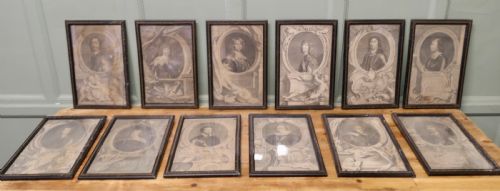
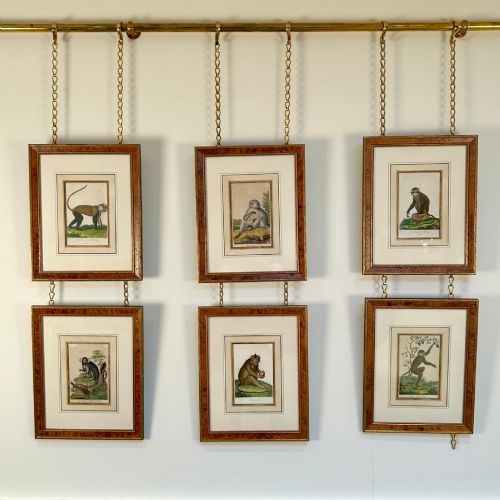
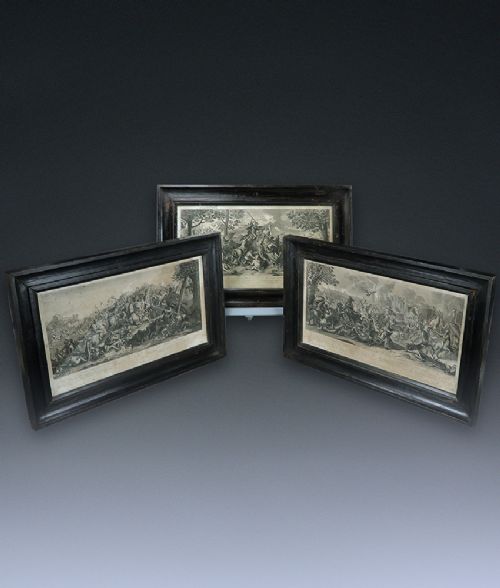
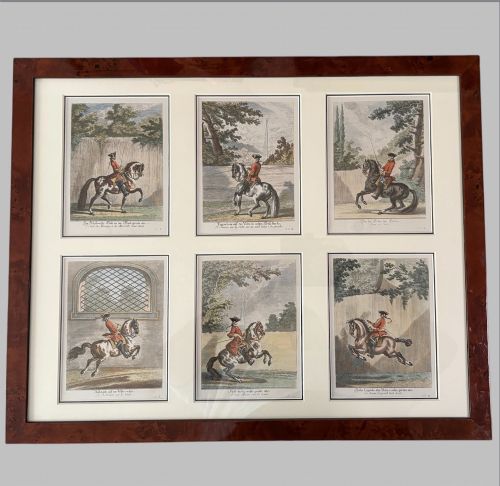
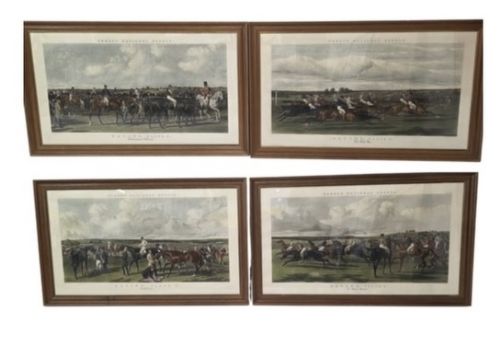
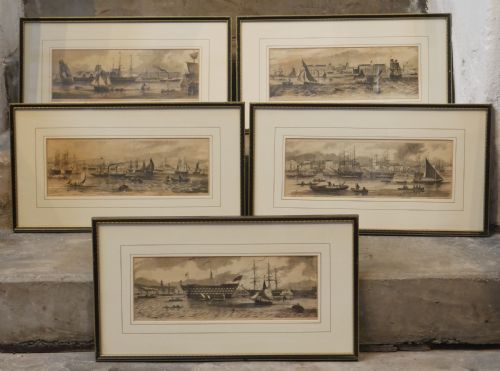
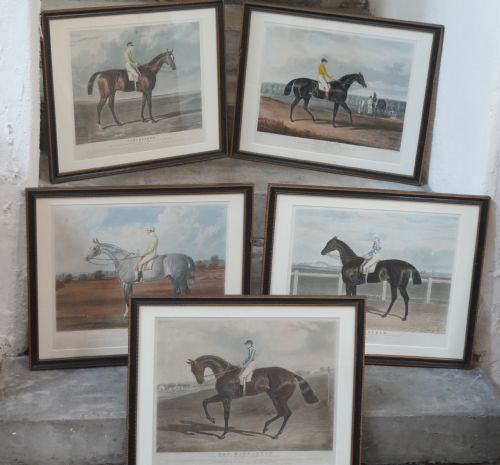
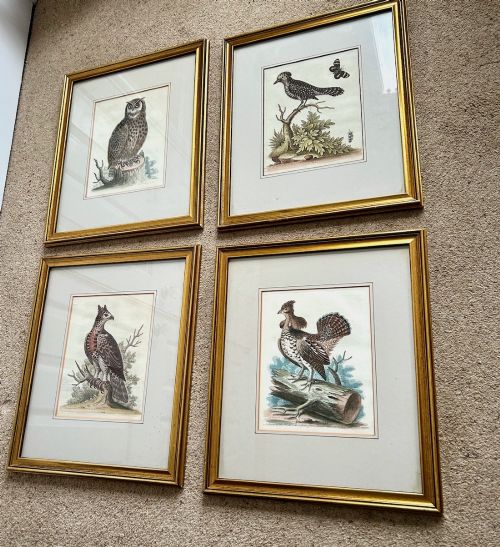
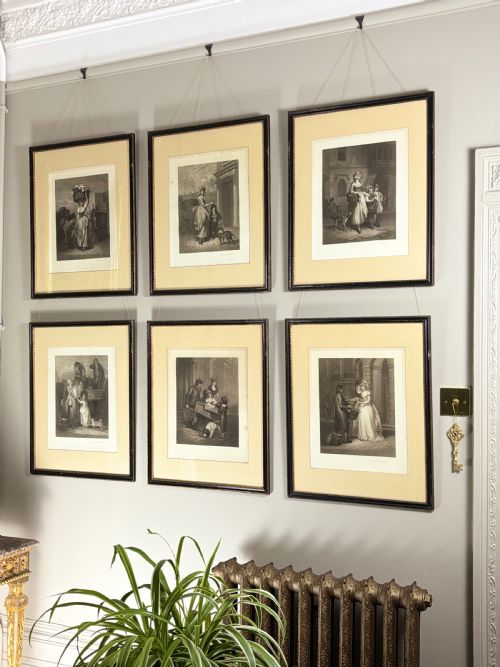
A set of framed engravings brings together related prints depicting subjects such as natural history, architecture, sporting scenes, and classical illustrations. These groupings are most frequently encountered from the eighteenth and nineteenth centuries, including Georgian and Victorian periods.
The selections range from small botanical studies and ornithological plates to large architectural elevations and equestrian scenes. Buyers encounter these matched sets housed in period timber frames, often utilising glass and gilt wood mounts.
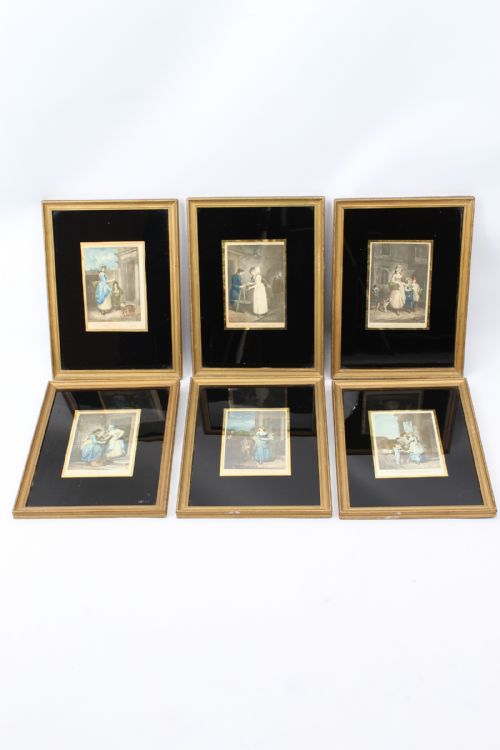
Sets vary from small trios and quartets up to larger groupings of twelve or more plates. Each individual print maintains a consistent scale and printing technique, designed to be hung together as a unified decorative scheme.
Materials and production methods
These works rely on traditional printmaking techniques including copperplate engraving, mezzotint, aquatint, and lithography executed on handmade paper. Many examples feature delicate hand-colouring applied with watercolours or washes over the inked impressions.
The framing utilises period timbers such as oak, walnut, or pine, frequently finished with gold leaf, gilt, or giltwood mouldings. Protective glass shields the fragile paper surfaces from dust and atmospheric moisture while allowing clear viewing of the fine lines.
Available forms include botanical prints, architectural plans, ornithological plates, and equestrian scenes.
Distinctions in quality
Quality rests upon the crispness of the plate impression and the retention of fine detail in the ink lines. Early impressions pulled before the metal plate wore down show sharper contrast than later strikes.
The precision of the original hand-colouring distinguishes superior plates, along with the survival of matching original frames and uniform paper tone across the entire set.
Jacobus Howbraken·Le Brun·Ridinger·Oliver Goldsmith·George Edwards·Thomas G Appleton·Edward Stodart·W. Collard·Alken·John Flaxman·Simon François Ravenet·Jonathan Couch·E. Jackson Stodart·Pancrace Bessa·Victor Adam·John Curtis·Charles Paillasson·Edward Lear·A.Zanetti
The Set of Framed Engravings Glossary
- Engraving
- A printmaking technique where an artist carves lines directly into a metal plate using a sharp tool called a burin. The incised lines hold the ink that transfers to paper under pressure.
- Mezzotint
- A tonal printmaking method where the copper plate is roughened uniformly to produce rich dark areas, then scraped and smoothed to create gradual highlights. This technique allows for subtle gradations of light and shade.
- Aquatint
- An intaglio printing process that uses powdered resin to create tonal areas resembling watercolours. It is frequently combined with standard line engraving to produce multi-coloured prints.
- Giltwood
- Wood that has been coated with a thin layer of gold leaf or gilt paint. It is commonly found on traditional frames from the Georgian and Victorian eras.
- Hand-coloured
- A print that has received pigment by hand after the mechanical impression is pulled. Artisans used fine brushes to apply watercolour tints to botanical, ornithological, and topographical subjects.
Set of Framed Engravings: Frequently Asked Questions
How do I care for framed engravings?
Keep the framed pieces away from direct sunlight to prevent the handmade paper from yellowing and the watercolour pigments from fading. Maintain stable room temperatures to protect both the antique timber frames and the paper.
Dust the frames gently with a dry cloth and avoid using liquid cleaners on the glass or the gilded surfaces. Ensure the hanging wire and wall fixings remain secure.
Were these prints always framed together?
Many sets were published as bound volumes or loose portfolios and were framed together later in their lives to create matching wall displays. Surviving sets often share uniform framing styles applied during the Victorian or Edwardian periods.
Occasionally, series published with matching decorative borders were framed as sets from the outset. Inspecting the backing boards and framing materials reveals whether the grouping was assembled recently or long ago.
How can I tell an engraving from a lithograph?
Engravings leave a distinct plate mark in the paper where the edges of the metal plate pressed into the damp sheet during printing. Under magnification, engraved lines appear sharp and slightly depressed into the paper surface.
Lithographs rely on a chemical process on stone or metal plates rather than incised lines, resulting in a flat surface without a plate mark. Granular patterns under magnification often indicate a lithographic stone matrix.
What subjects are most common?
Natural history subjects such as birds, botanicals, sea shells, and animals appear frequently across eighteenth and nineteenth-century print sets. Topographical views, architectural scenes, and sporting plates are also widely represented.
Series depicting classical illustrations, cries of London, and naval docks reflect popular educational and decorative themes of the Georgian and Victorian eras.