



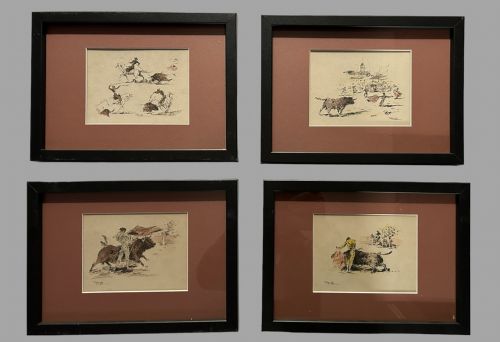

Antique Etchings Set
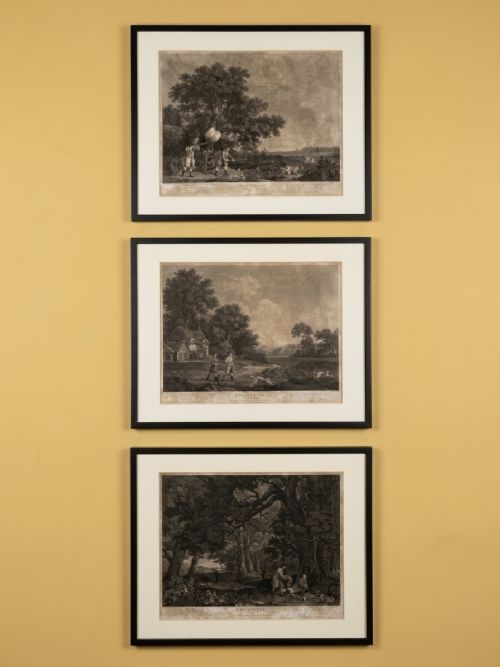
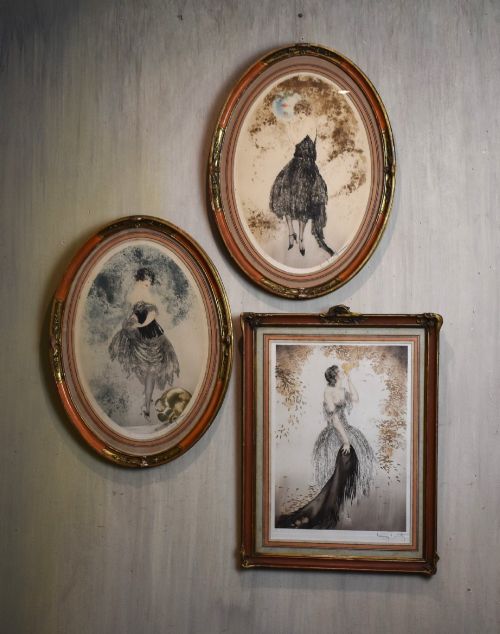
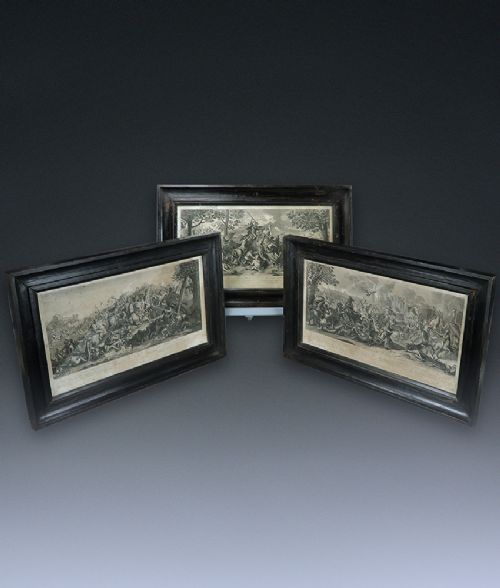
These antique etchings set selections bring together multi-plate series and coordinated suites spanning the eighteenth century to the early twentieth century.
Antique Etchings Set
When you search for an antique etchings set, you are looking at multi-plate series and coordinated suites created for display, study, or decoration. The pieces range from large architectural scenes and natural history plates to intimate figural studies.
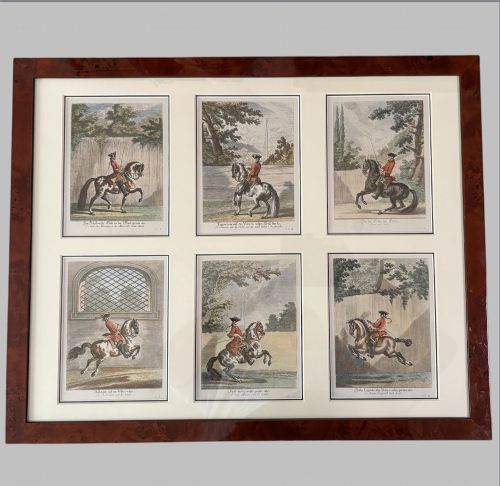
On this page, you are most likely to meet Georgian and eighteenth-century hand-coloured engravings alongside twentieth-century plates, often mounted in matching frames of wood or gilt.
The subjects cover everything from ornithology and botany to classical architecture, equestrian scenes, and bullfighting. These sets preserve complete editorial visions from past centuries, kept together across generations.
Materials and techniques
The works rely on paper as the primary support, frequently enhanced with watercolour or hand tinting applied over copper plate engravings and etchings. Master printmakers worked metal plates with acid or burins to achieve fine lines before applying pigment by hand.
Frames utilise wood, gilt wood, and burr wood veneer, occasionally incorporating glass to protect the delicate paper surfaces from environmental damage. Gold leaf accents finish the frames on many of the neoclassical and Georgian items.
Antique Etchings Set Retail Price Guide 2026
Typical asking prices for etchings set among the pieces listed under this phrase on Sellingantiques today, from the lower quarter to the upper quarter. They describe what is for sale here now, not the wider market.
Materials in these listings include paper, glass, wood, gilt, gold leaf, watercolour, gilt wood, and burr wood veneer.
Assessing quality in multi-plate groupings
Quality rests in the crispness of the plate impression, the fidelity of the hand colouring, and the integrity of the original grouping. Early impressions show sharp, clear lines where the metal plate transferred deep ink, whereas worn plates yield softer details.
The preservation of the paper, the brilliance of any watercolour tinting, and the survival of the complete set without mixed editions distinguish finer suites. Matching frames and period mounts further elevate the standing of a collection.
Louis Icart·Le Brun·Ridinger·George Edwards·John Curtis·Joaquim Terruella Matilla·Robert Dighton
The Antique Etchings Set Glossary
- Etching
- A printmaking technique where lines are bitten into a metal plate with acid before ink is applied and transferred to paper. This method allows for fine, fluid lines and subtle tonal variations.
- Engraving
- A process of cutting designs directly into a metal plate using a sharp tool called a burin. The resulting prints exhibit precise, clean lines.
- Hand colouring
- The application of watercolour or tint by hand to a printed monochrome sheet. This technique brings life to botanical, ornithological, and architectural subjects.
- Burr wood veneer
- A thin slice of figured wood displaying swirling knot patterns applied to a framing surface. It creates a decorative, highly textured border.
- Gilt wood
- Wood carved and coated with gold leaf or metallic paint. It provides a reflective, ornate finish typical of neoclassical and baroque frames.
Antique Etchings Set: Frequently Asked Questions
How do I care for antique paper sets?
Keep framed prints away from direct sunlight to prevent the watercolour tinting from fading over time. Maintain stable room humidity to protect both the paper and the wooden frames from warping.
Avoid hanging pieces in damp areas such as kitchens or bathrooms. Check the backing boards periodically to ensure dust and moisture do not reach the paper.
Were these prints always kept together?
Many series were published as portfolios or books and only framed as sets much later in their lives. Others were issued by publishers specifically as coordinated suites for wall display.
Matching paper types, plate marks, and uniform toning usually indicate that a set has remained together since its original creation.
How can I tell eighteenth-century prints apart from later copies?
Examine the paper closely for chain lines, watermarks, and plate marks that indicate handmade rag paper from the period. The ink in genuine older impressions sits slightly raised on the paper surface.
Modern photographic reproductions lack the physical indentation of the plate mark and the subtle variations of hand application.
What is the difference between an etching and an engraving?
An etching uses acid to bite lines into the metal plate, producing freer, more expressive strokes. An engraving relies entirely on a hand tool to carve the metal, resulting in stiffer, highly controlled lines.
Both techniques frequently appear together or overlap in antique print production.