
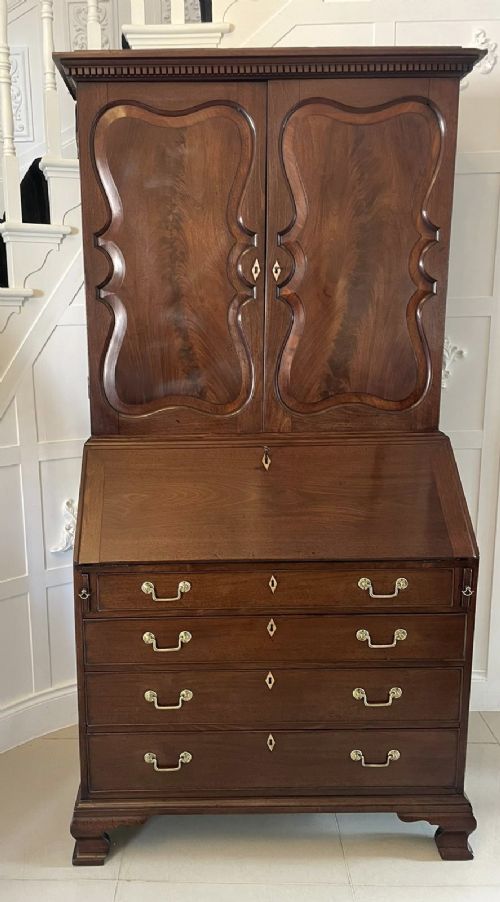
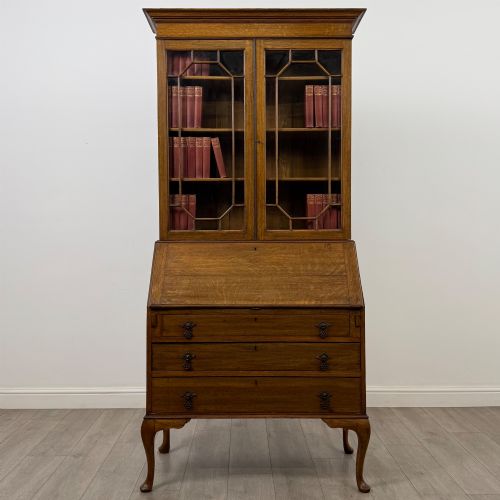
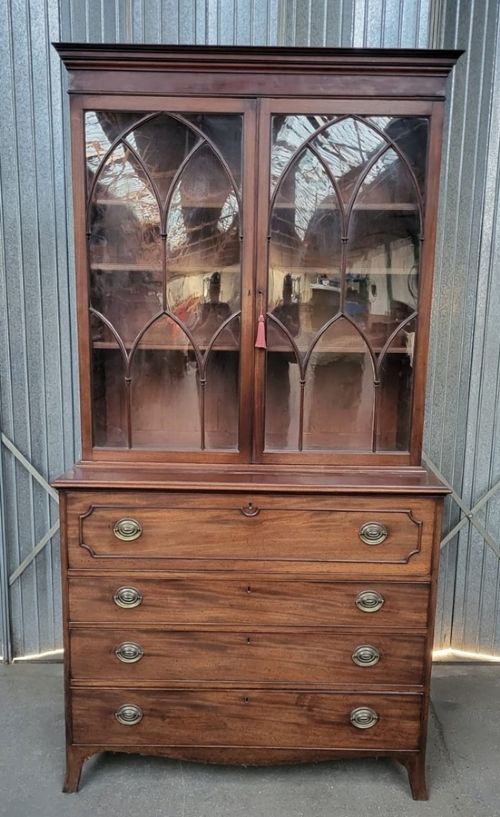
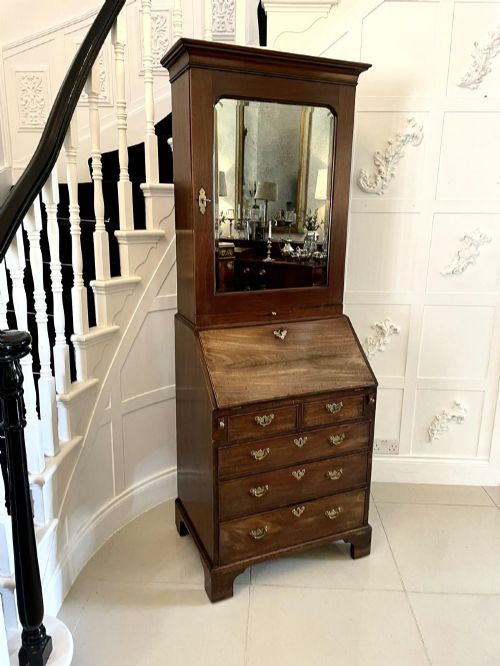
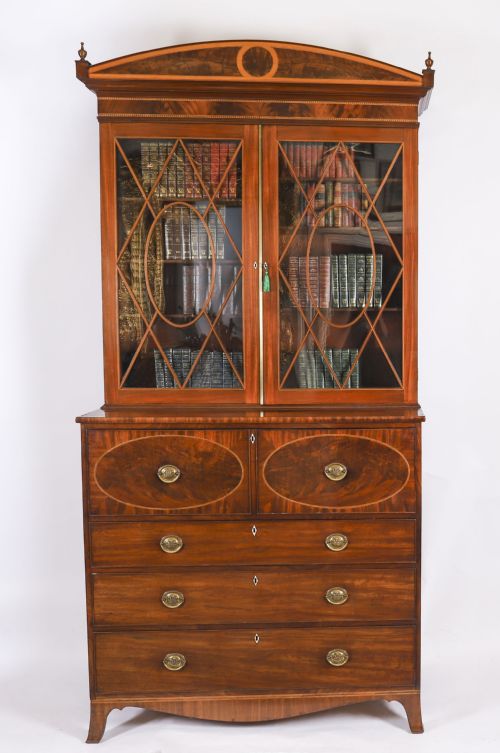
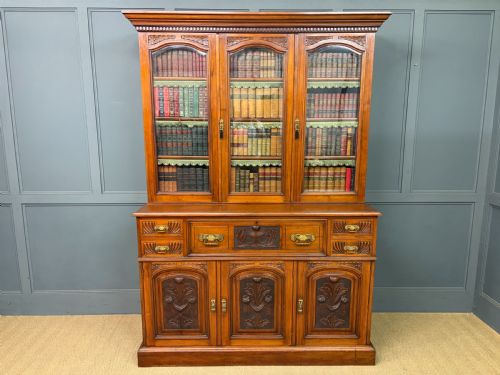


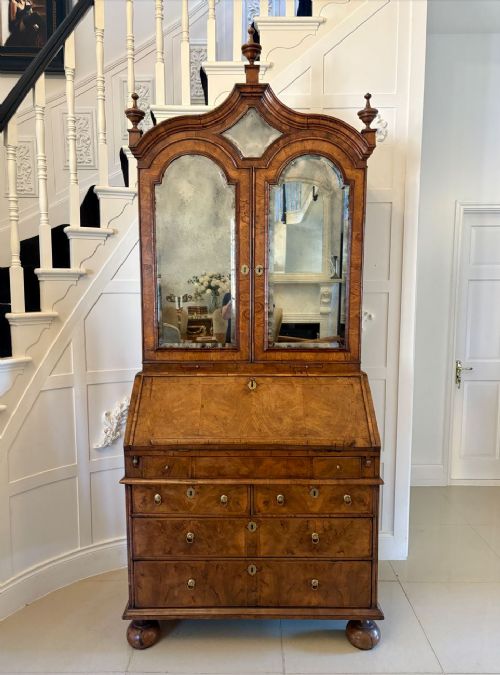
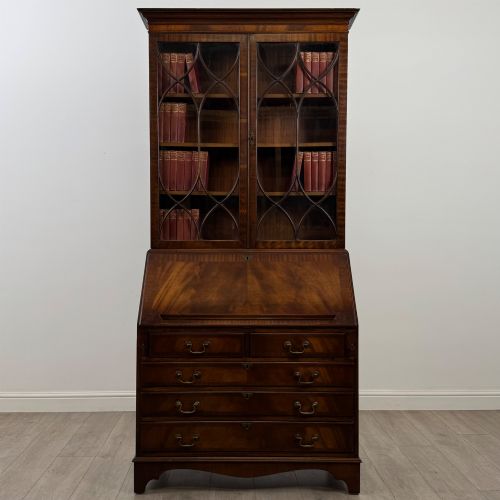
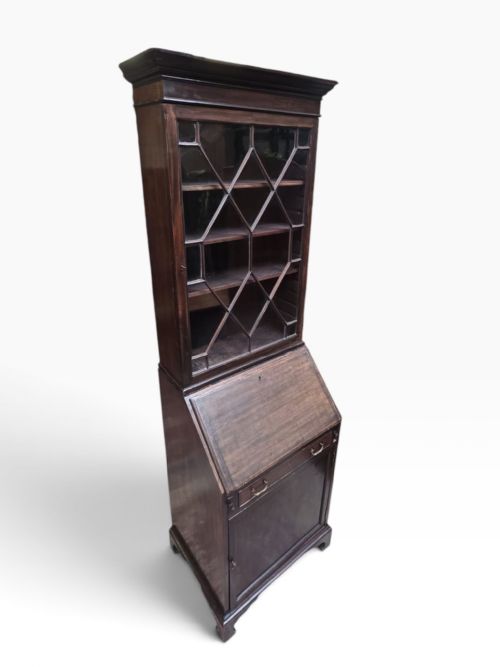
Secretary Desk Bookcase
A secretary desk bookcase combines a writing surface with a glazed cabinet, offering workspace and display in one stately piece.
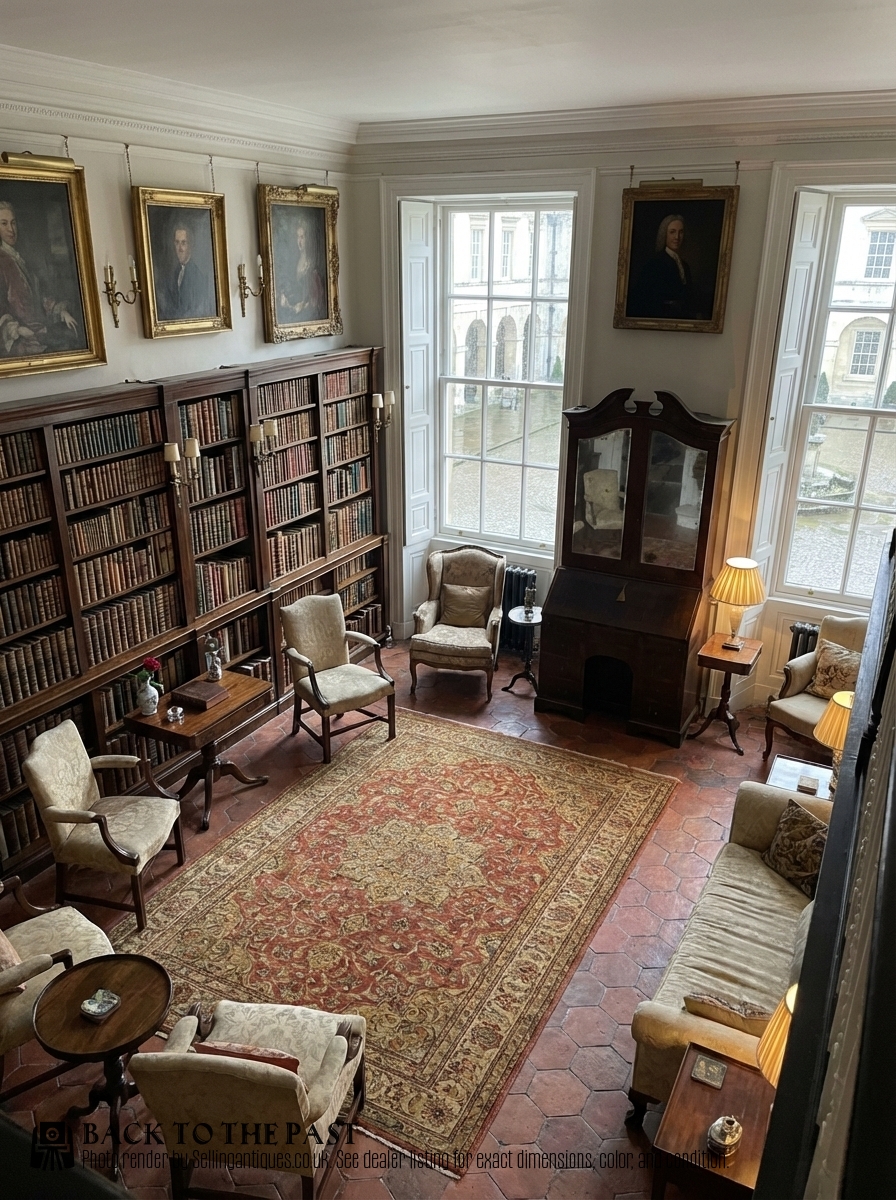
Secretary Desk Bookcase
A secretary desk bookcase unites a drop-front writing compartment with upper shelving behind glass doors, designed to store books and manage correspondence. These pieces appear across multiple eras, ranging from early walnut examples to later mahogany and oak iterations.
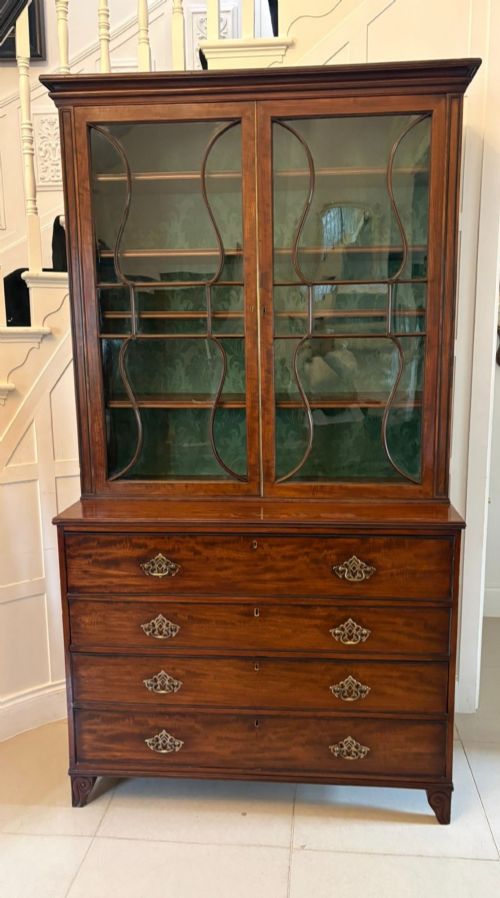
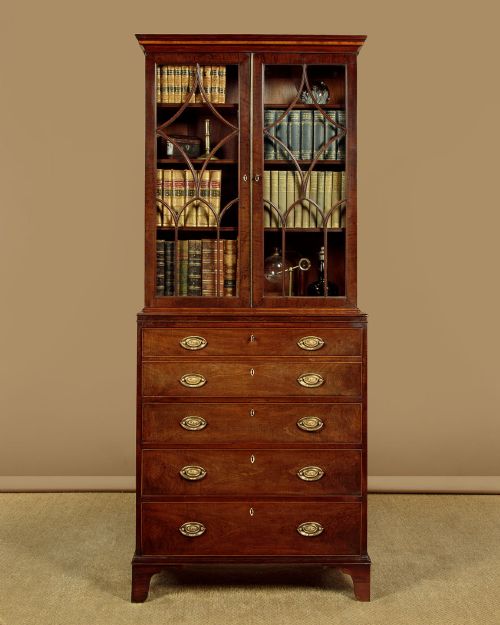
The most common formats on this page include Georgian and Regency mahogany pieces alongside Edwardian oak variants. Makers built these dual-purpose items for domestic studies and libraries, keeping papers hidden behind the fall-front desk while books remained visible above.
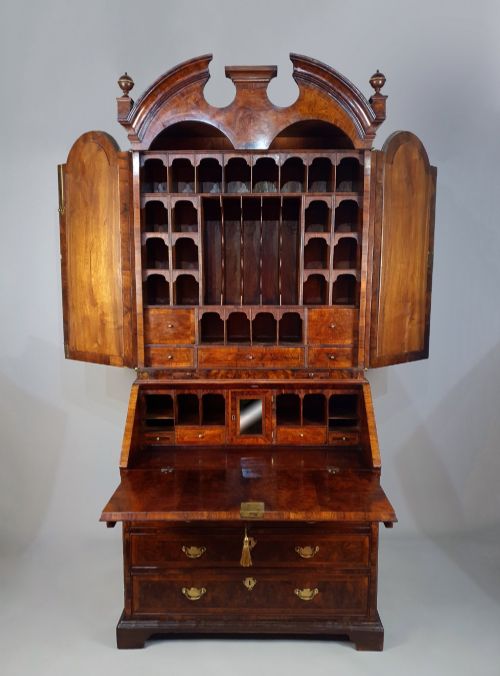
Earlier versions often feature fitted interiors with pigeonholes and small drawers, while subsequent decades introduced simpler styling and alternative timbers like yew and satinwood.
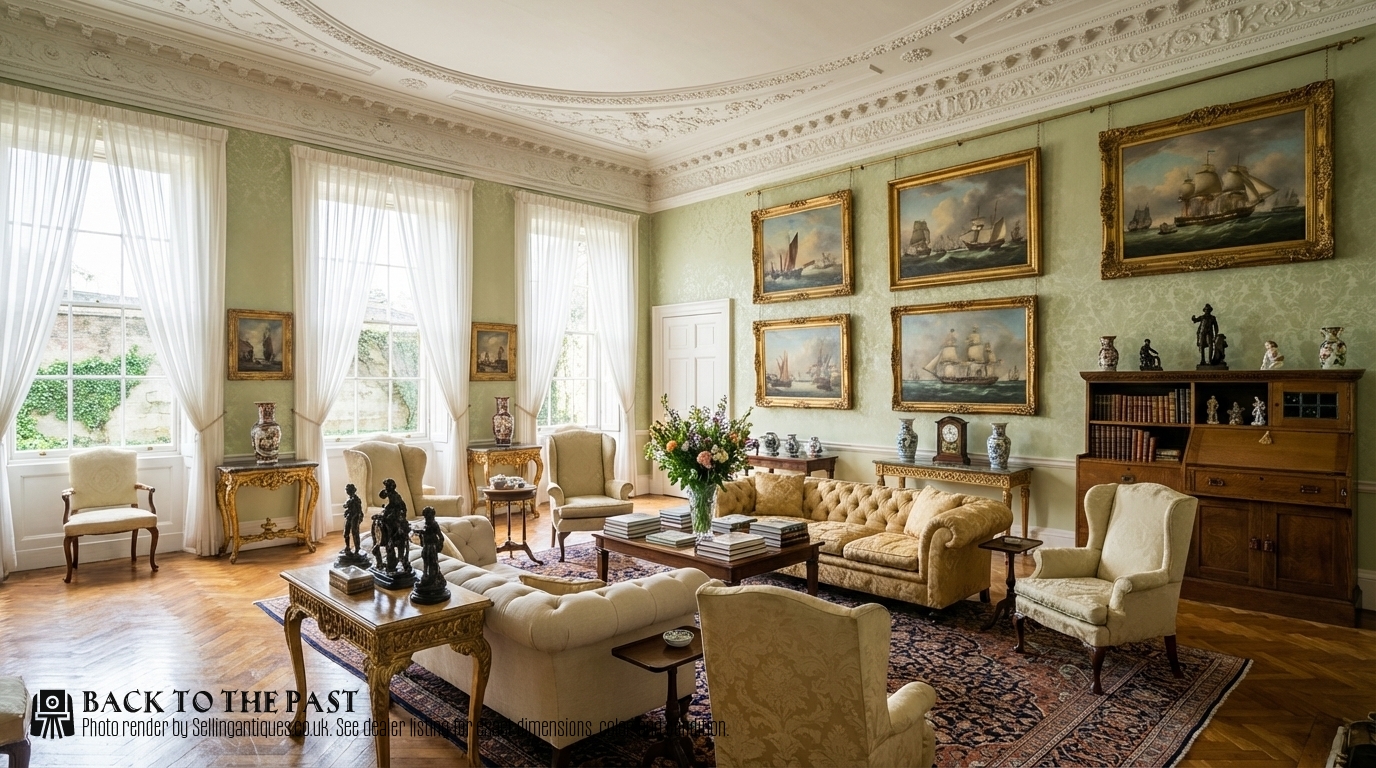
Materials and Technique
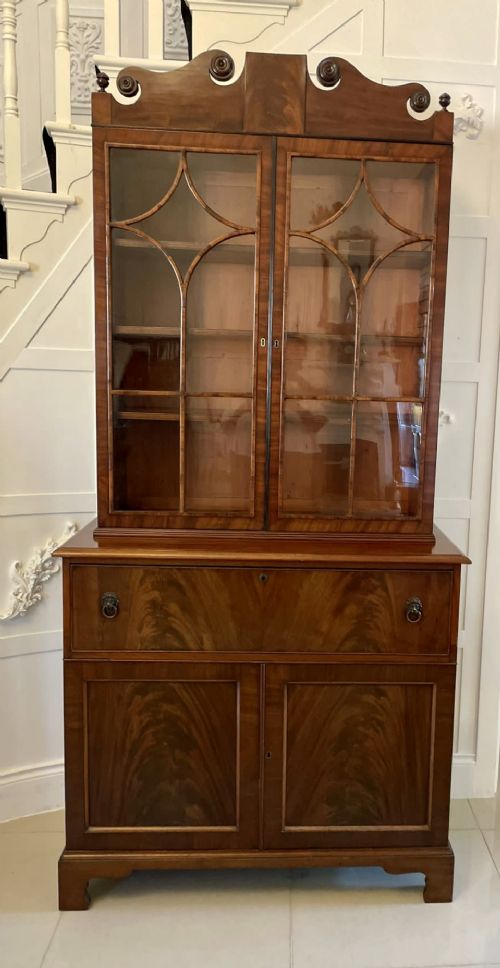
Cabinetmakers utilised dense hardwoods such as mahogany, oak, and walnut, frequently applying figured veneers or flame mahogany to exterior surfaces for visual depth. Brass hardware secures doors and supports drop-front mechanisms, while glass panels protect the upper shelving.
Construction methods rely on traditional joinery to support the weight of the upper bookcase section atop the lower desk cabinet. Drawer linings and interior partitions utilise secondary timbers, built to withstand daily use of the writing surface.
Secretary Desk Bookcase Retail Price Guide 2026
Typical asking prices for secretary desk bookcase among the pieces listed under this phrase on Sellingantiques today, from the lower quarter to the upper quarter. They describe what is for sale here now, not the wider market.
Early oak examples occasionally show adaptations for modern technology, housing televisions behind their antique doors.
Evaluating Execution
Superior examples display careful timber selection, where veneer grains match symmetrically across drawer fronts and fall-front panels. Lesser pieces rely on plain secondary woods and simpler internal fittings without decorative banding.
The complexity of the fitted interior distinguishes finer iterations from utilitarian ones, with secret compartments, stepped drawers, and intricate pigeonholes marking higher craftsmanship. Glazing bar arrangement and the weight of the brass fittings also signal the standard of manufacture.
George Oakley·Gillows
The Secretary Desk Bookcase Glossary
- Secretaire
- A writing drawer or fall-front compartment that pulls down to reveal a fitted desk interior. It conceals writing materials when closed.
- Flame mahogany
- A veneer cut from the fork of the mahogany tree, creating a distinctive flickering flame pattern. Cabinetmakers prized this figure for principal display surfaces.
- Bureau bookcase
- A combination of a slope-front desk and a shelved upper cabinet. These items served dual functions for writing and storage.
- Glazed doors
- Glass-fronted upper cabinet doors designed to display books while protecting them from dust. They frequently feature timber glazing bars.
- Featherbanded
- A decorative inlay technique using small strips of veneer laid diagonally to form a herringbone border. It frames drawer fronts and panels on walnut pieces.
Secretary Desk Bookcase: Frequently Asked Questions
What is a secretary desk bookcase?
A secretary desk bookcase is a dual-purpose furniture form featuring a lower writing cabinet with a fall-front desk and an upper shelving unit enclosed by glass doors.
These pieces emerged to provide both workspace for correspondence and secure storage for volumes in domestic libraries and studies.
How do I use a secretary desk bookcase?
The drop-front or drawer mechanism opens to reveal a writing surface accompanied by small drawers and pigeonholes for stationery. The upper section houses books behind glass.
Items fit well in home offices, living rooms, and hallways where floor space benefits from combined storage and desk functions.
How do I tell periods apart?
Early 18th-century examples often employ walnut with featherbanding and candle slides, whereas Georgian and Regency pieces favour figured mahogany with classical proportions.
Edwardian and later iterations frequently use oak, satinwood, or yew, showing simpler lines and lighter construction methods compared to earlier centuries.
Are these pieces made of solid wood?
Most carcases and drawer frames utilise solid timbers like oak or mahogany, while prominent surfaces often feature decorative veneers applied over stable pine or oak bases.
Cabinetmakers used veneers to display dramatic wood figures, such as flame mahogany or burr walnut, which solid planks could not provide uniformly.