
Secretaire Desk Cabinet
When you search for a secretaire desk cabinet, you enter a world of hidden writing drawers and panelled drop-fronts designed for compact correspondence.
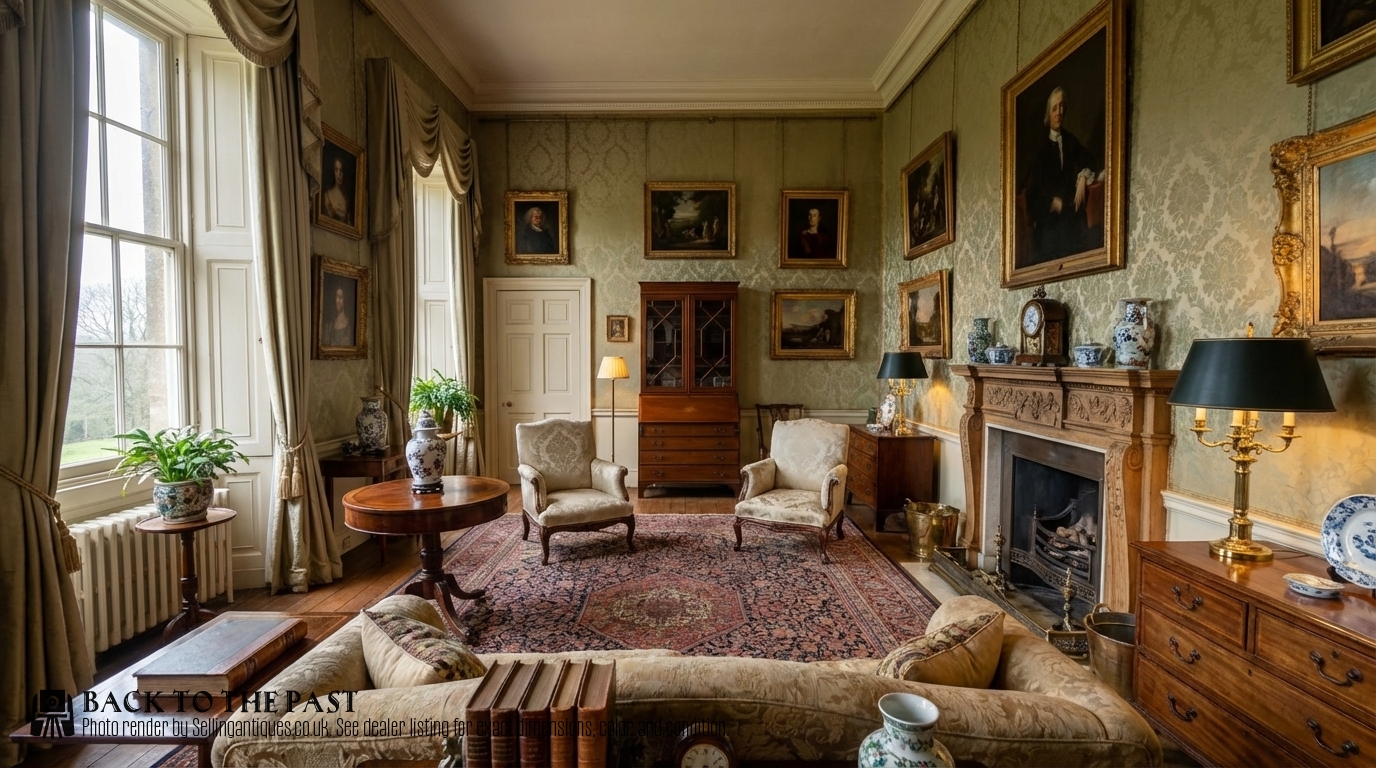
Secretaire Desk Cabinet
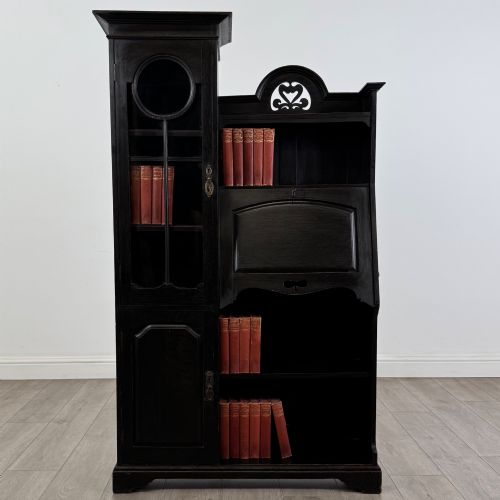
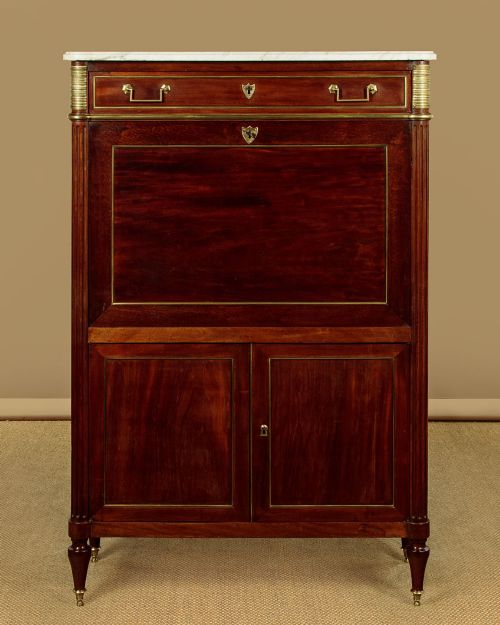
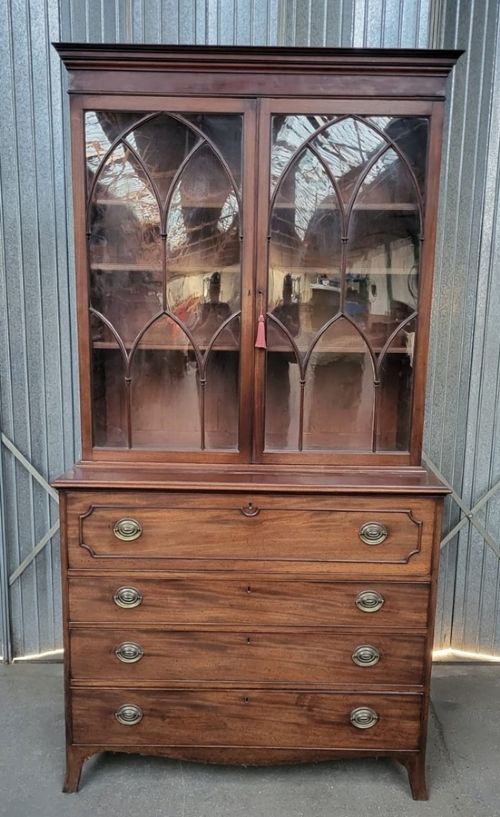
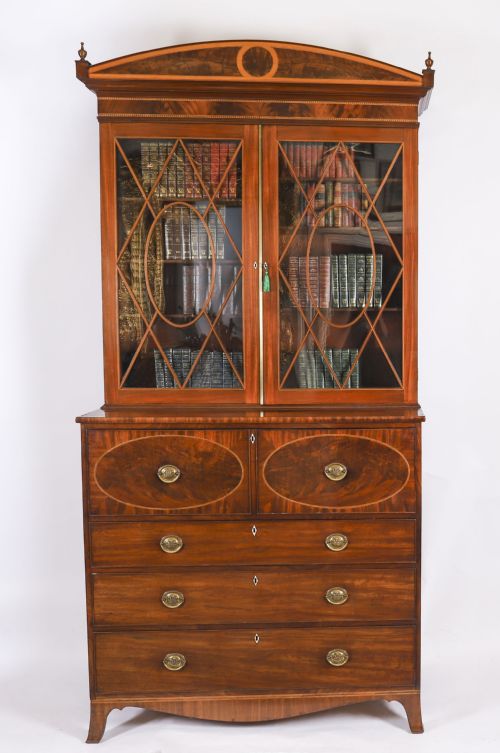
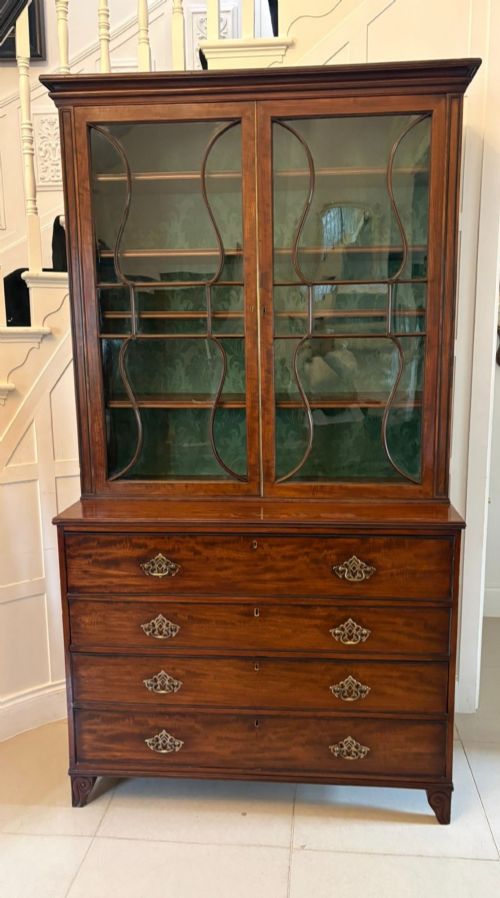
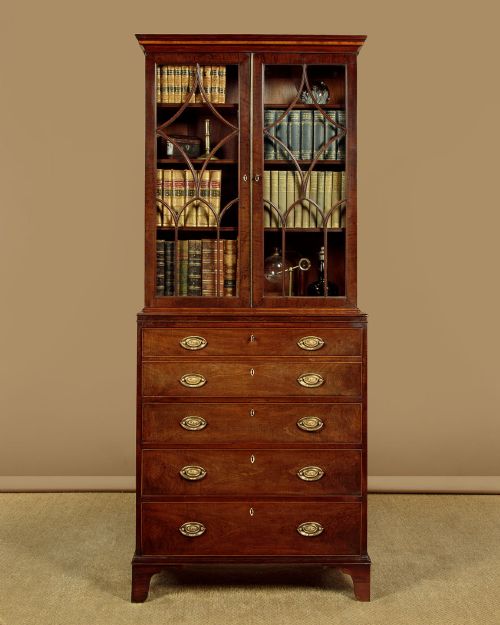
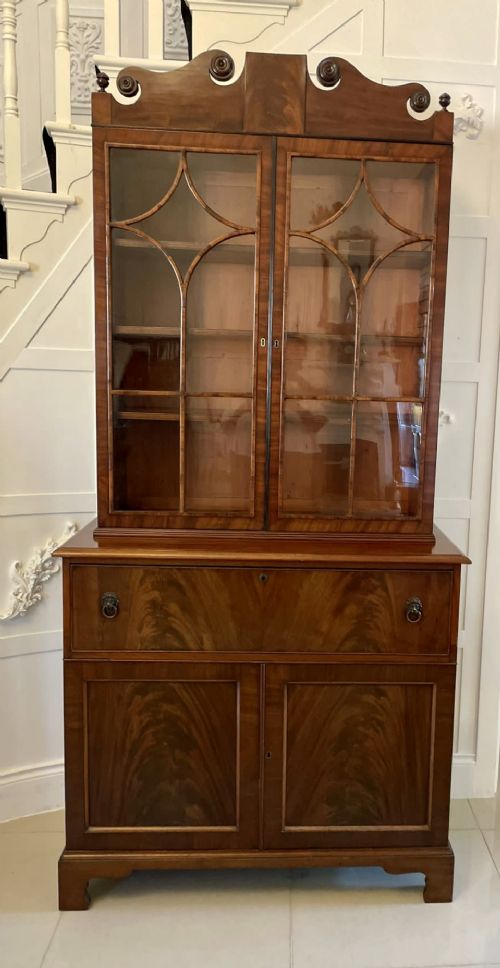
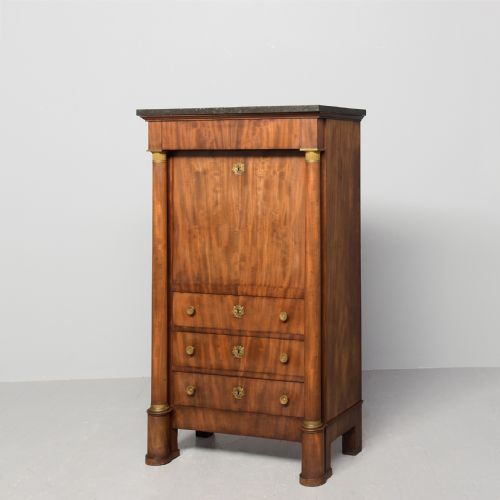
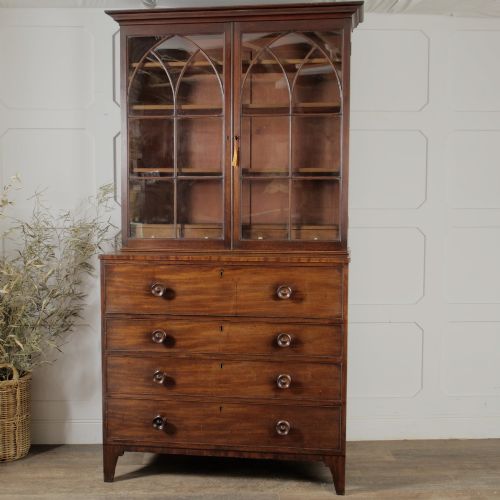
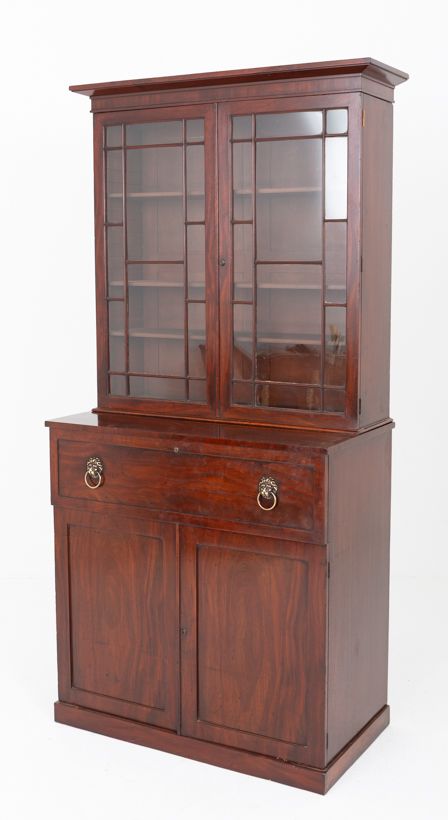
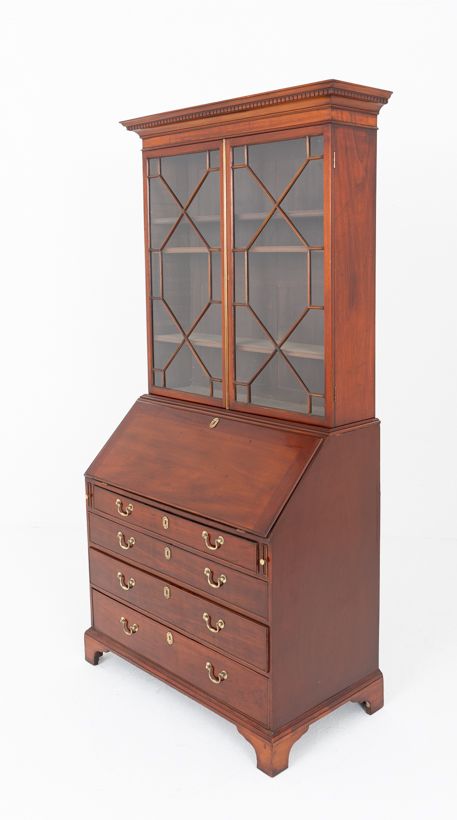
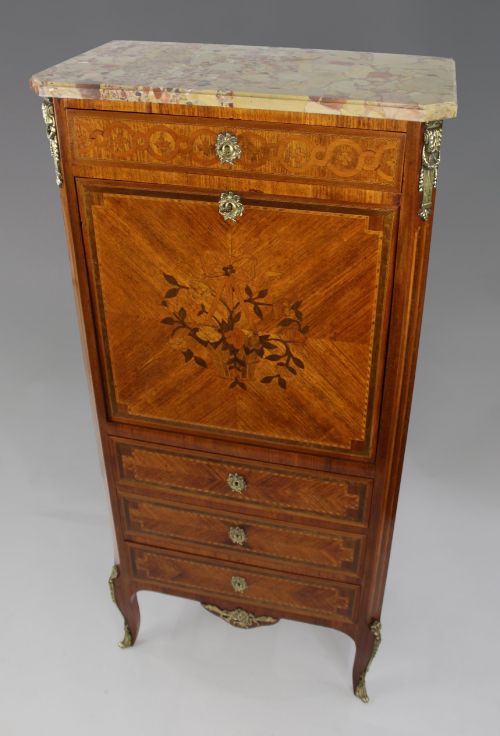
A secretaire desk cabinet combines the upright storage of a bookcase, chest or cabinet with a fitted writing drawer that drops down to reveal pigeonholes and small drawers. These versatile pieces arrive from various eras, including the Georgian, Regency and Victorian periods, alongside continental manifestations like the French secretaire abattant.
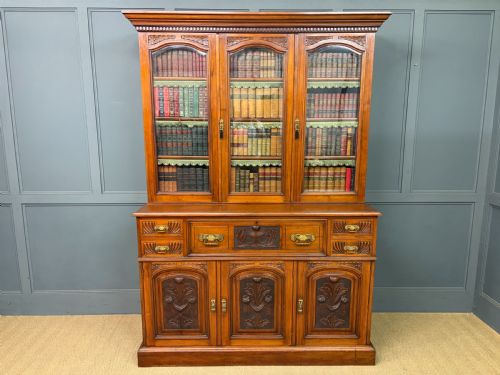
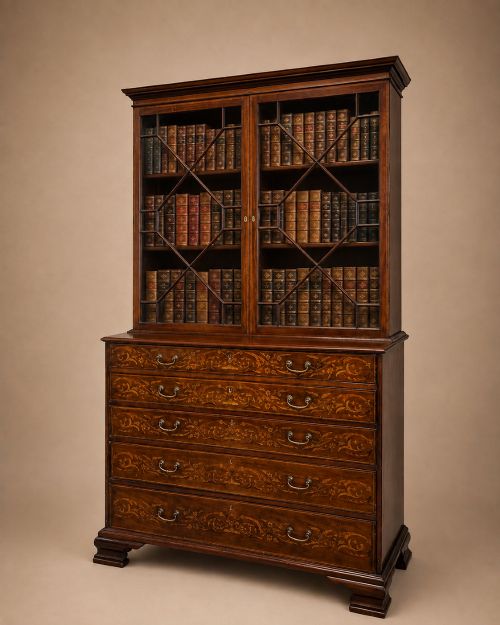
The most common forms you will encounter on this page are tall secretaire bookcases featuring glazed upper doors and mahogany or walnut timber. Alongside these stand smaller writing cabinets, Wellington chests and chest-on-chest configurations that integrate a concealed writing surface into their upper sections.
Originating to serve the practical needs of writing and secretive storage in domestic settings, these pieces range from austere British mahogany constructions to ornate French marquetry examples topped with marble.
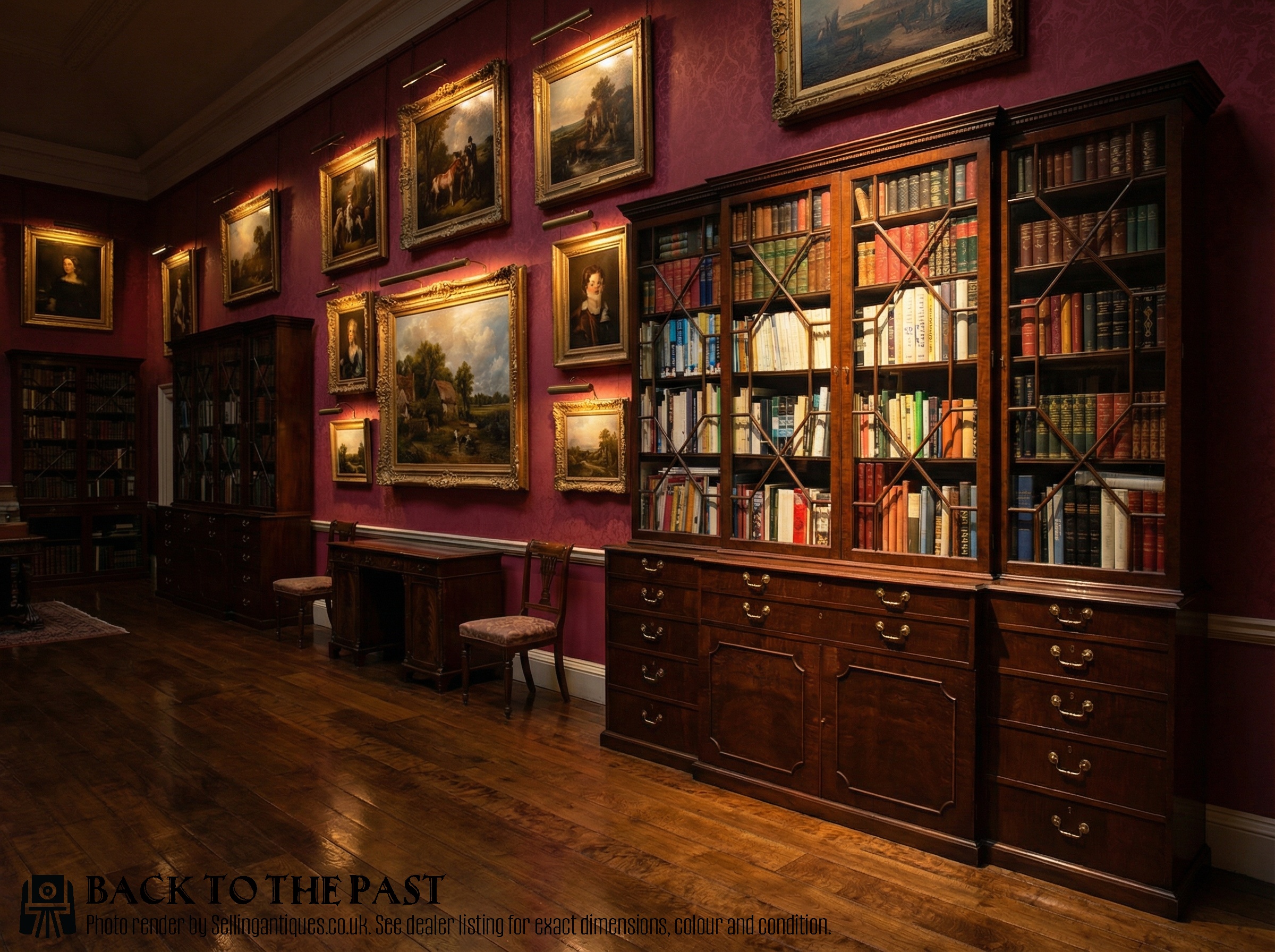
How they were made
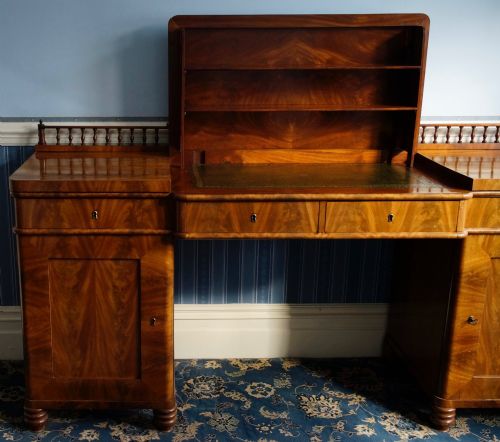
Cabinet makers constructed these pieces using solid timbers like mahogany, walnut, oak and rosewood, frequently applying flame mahogany or satinwood veneers to the primary surfaces for visual depth. Brass hardware, ormolu mounts and leather writing inserts completed the structural and functional composition.
Advanced joinery methods allowed craftsmen to conceal complex mechanisms within the fitted interiors of the drop-front drawers, incorporating secret compartments and pigeonholes behind spring-loaded panels.
Secretaire Desk Cabinet Retail Price Guide 2026
Typical asking prices for secretaire desk cabinet among the pieces listed under this phrase on Sellingantiques today, from the lower quarter to the upper quarter. They describe what is for sale here now, not the wider market.
Secret compartments require sliding hidden panels or pulling unsuspected pins to release tiny drawers that whisper of old letters.
What varies in quality
The sophistication of the internal fitting dictates much of the distinction, where simple rows of pigeonholes give way to intricately detailed miniature drawers, secret compartments and arched pigeonholes.
Timber selection and veneer matching set individual examples apart, as highly figured flame mahogany or elaborate marquetry displays greater artisan skill than plain stock timber.
The integration of mountings, such as gilt bronze or ormolu on continental pieces, reflects the original commission's budget and the maker's standing.
George Oakley·Gillows·Maison Krieger
The Secretaire Desk Cabinet Glossary
- Secretaire abattant
- A vertical cabinet with a drop-down front that serves as a writing surface. This continental form often conceals numerous interior drawers.
- Escritoire
- A small writing cabinet or desk. The term frequently applies to French and continental pieces.
- Flame mahogany
- A wood veneer figure resembling flickering flames. Cabinet makers prized this cut for its striking visual movement on drawer fronts.
- Ormolu
- Gilded bronze mounts applied to furniture. This decorative technique appears frequently on French nineteenth-century pieces.
- Wellington chest
- A tall, narrow chest of drawers secured by a locking side pilaster. Some variants incorporate a secretaire drawer into the stack.
Secretaire Desk Cabinet: Frequently Asked Questions
What is a secretaire desk cabinet?
A secretaire desk cabinet is a hybrid furniture piece that combines vertical display or storage with a drop-front writing surface. It allows a user to write letters and store documents within a concealed internal compartment.
These pieces range from tall Georgian bookcases to French abattants topped with marble, serving both a decorative and a utilitarian purpose in the home.
How do I use a secretaire drawer?
The secretaire drawer typically operates with a pull-down front supported by internal quadrants or hinges. Dropping the front exposes a fitted interior of small drawers and pigeonholes for correspondence.
When closed, the drawer locks shut to keep sensitive papers and writing implements entirely hidden from view.
Where were most secretaire cabinets made?
These cabinets were produced across Britain and continental Europe during the eighteenth and nineteenth centuries. British workshops favoured native timbers like oak and imported mahogany.
Continental makers, particularly in France and Sweden, utilised exotic veneers, marquetry patterns and marble tops to create distinct regional variations.
How can I date a secretaire cabinet?
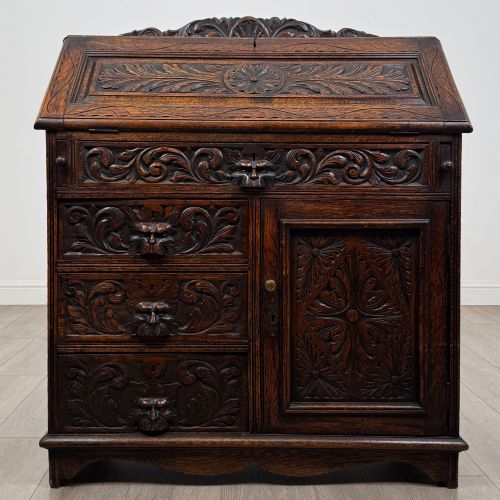
Dating relies upon observing the timber, hardware, construction methods and stylistic markers of the period. Georgian and Regency pieces often feature simpler lines and mahogany construction, whereas Victorian examples may incorporate heavier carvings or walnut.
Continental pieces from the mid-nineteenth century frequently display specific revival styles, such as Louis XV or Empire motifs.