
19th Century Secretary Desk
A 19th century secretary desk provides a hidden writing surface and organised storage, bringing functional elegance to a room.
19th Century Secretary Desk
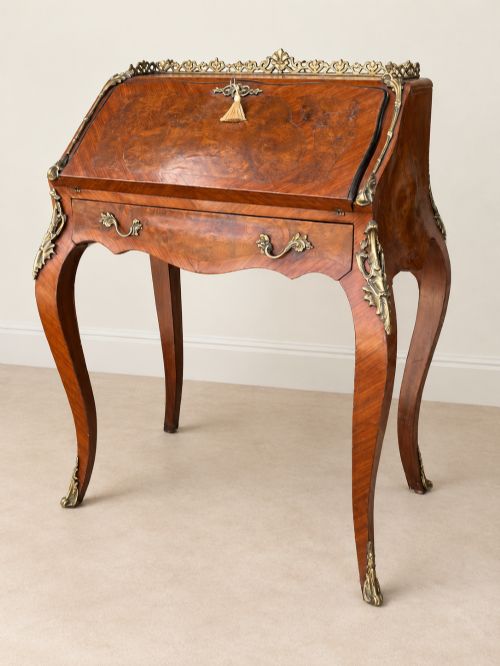
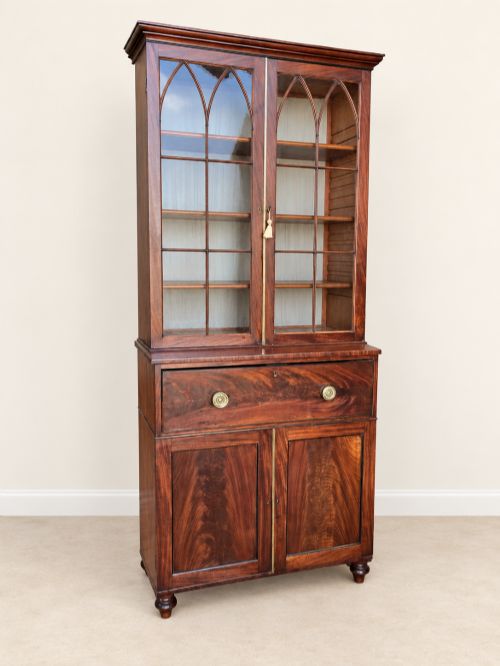
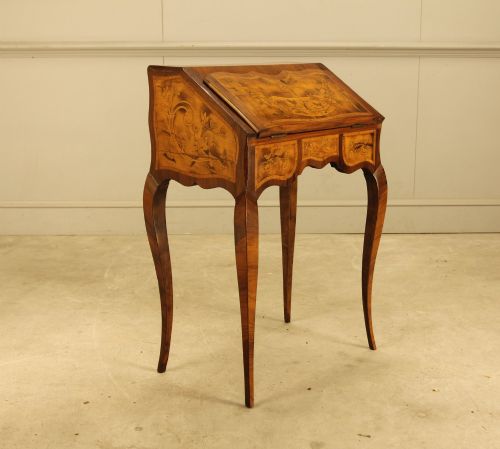
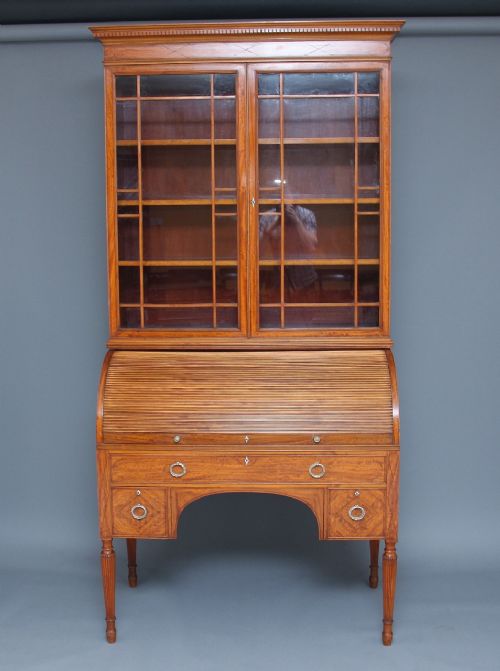
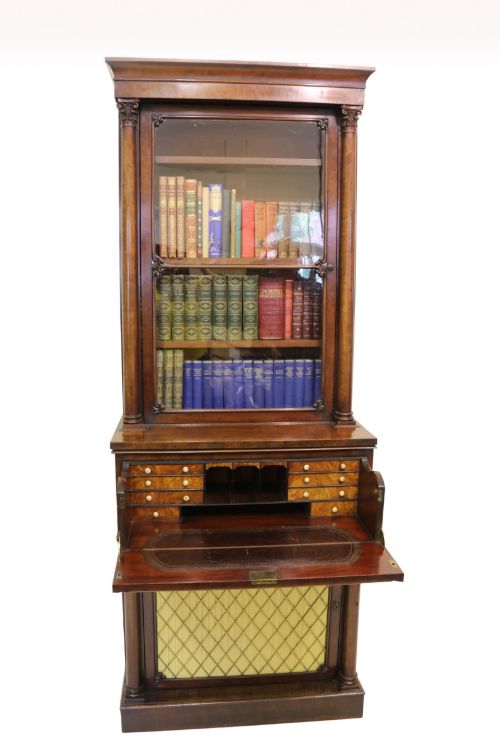
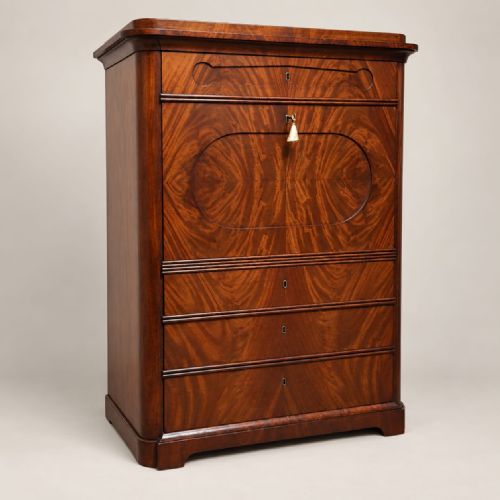
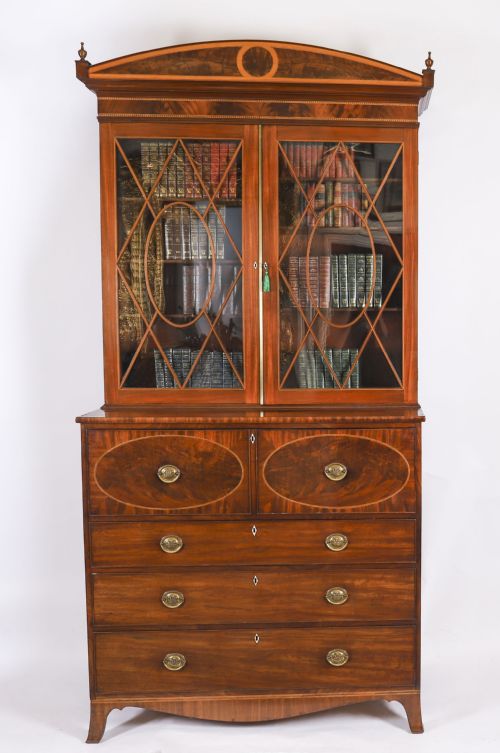
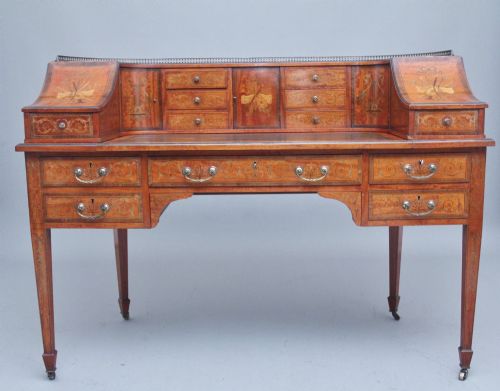
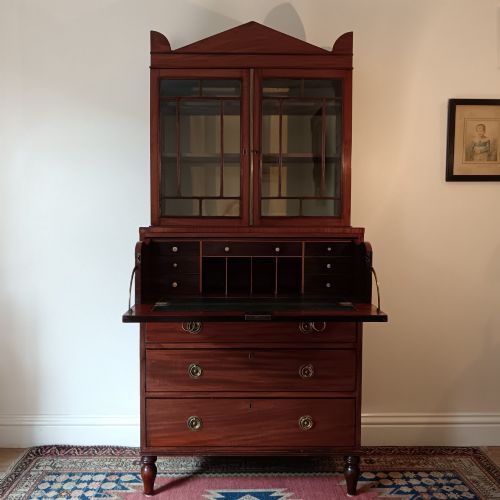
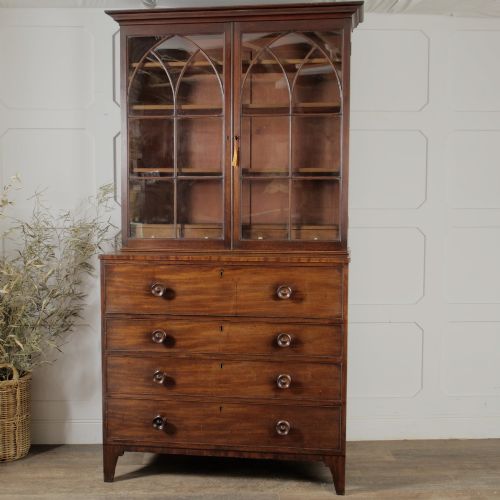
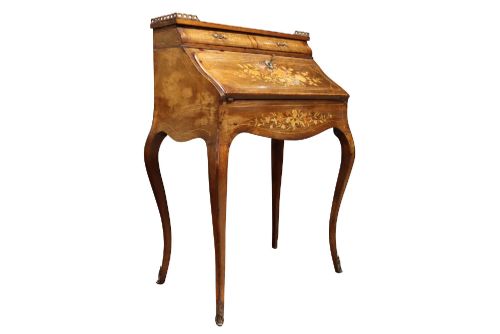
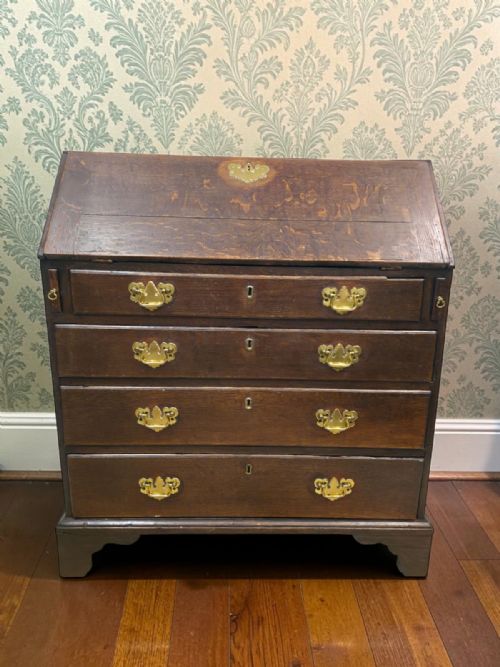
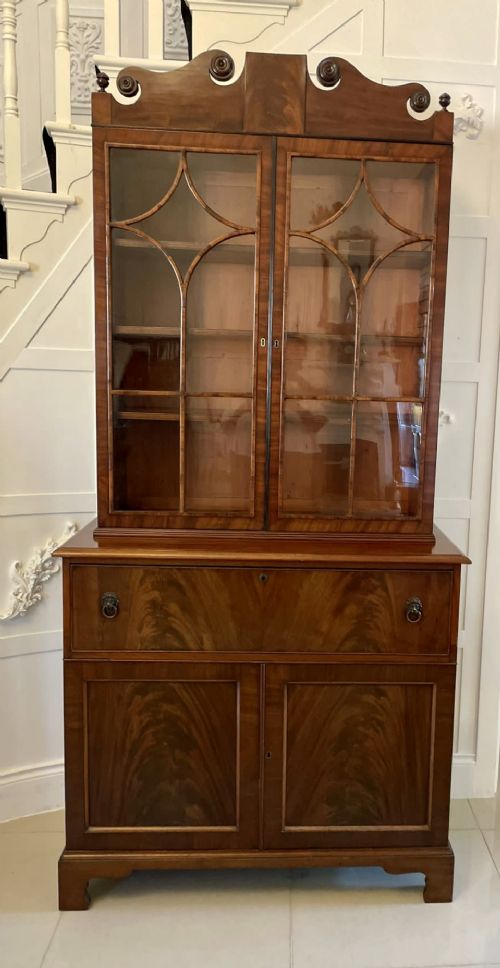
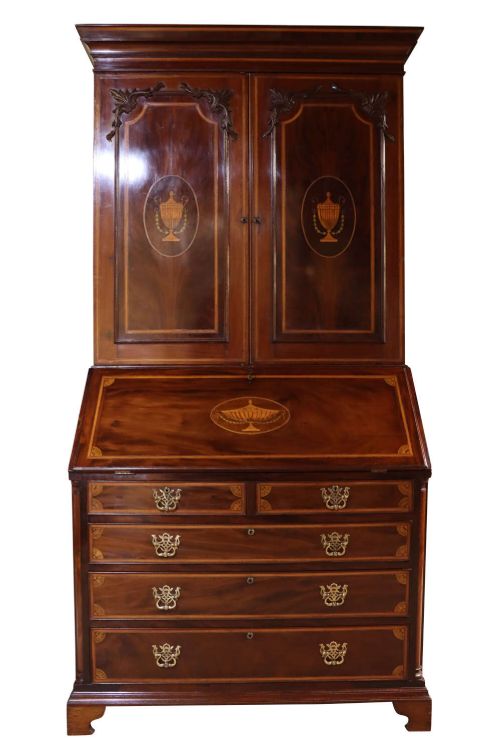
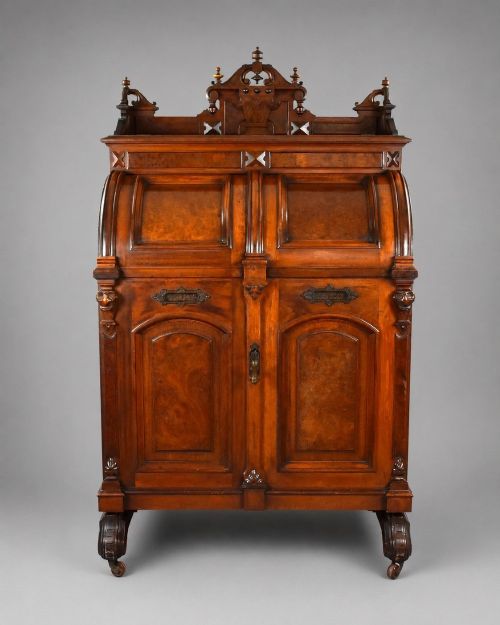
A 19th century secretary desk combines a concealed writing drop-front or cylinder with drawers, shelving, and bookcases. The selection includes tall bureau bookcases, fall-front escritoires, compact bonheur-du-jour tables, and Davenport forms.
Makers across England, France, Sweden, and the wider Continent produced these pieces using local timbers and specific regional styles. Examples range from Georgian and Regency eras through the Victorian period, William IV, and French Empire aesthetics.
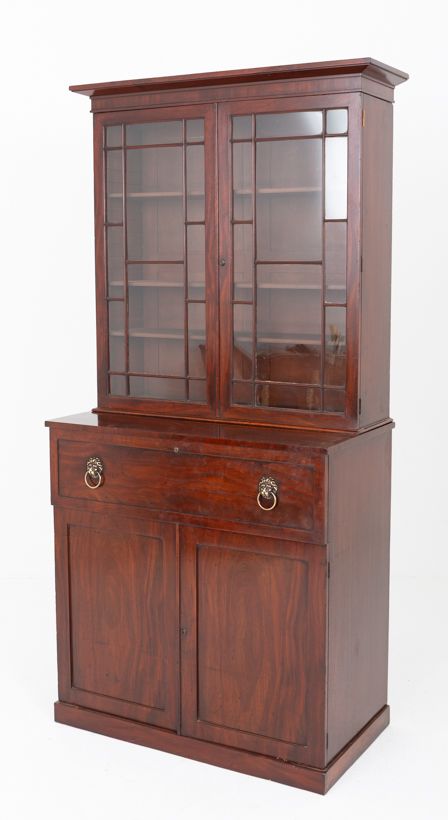
The version most commonly met on this page is the tall mahogany or walnut secretaire bookcase with glazed upper doors, alongside smaller French abattant desks topped with marble.
Materials and Construction Methods
Cabinet makers built these pieces using solid timbers and supportive secondary woods, applying veneers of flame mahogany, burr walnut, rosewood, tulipwood, and satinwood to visible surfaces. Inlays of contrasting woods, stringing, and marquetry enrich the exterior panels.
Metalwork played a structural and decorative role, with brass hardware, ormolu, and gilt bronze mounts fitted to key escutcheons, mounts, and galleries. Marble tops appear on several continental abattant and writing cabinet forms.
Internal fitted sections utilise small drawers, pigeonholes, and compartments constructed with traditional joinery, occasionally incorporating cylinder mechanisms or drop-front hinges to reveal the writing surface.
Listings feature woods including mahogany, walnut, rosewood, burr walnut, and oak, paired with brass, glass, and ormolu mounts.
Distinctions in Execution and Detail
The refinement of the internal fitted stationery compartments and the complexity of secret drawers separate standard cabinet work from superior commissions. Well-executed pieces integrate the drop-front or cylinder action seamlessly into the main carcass.
The choice and matching of timber veneers define the visual depth of the exterior, particularly where burr walnut or flame mahogany grain aligns across multiple drawers. Finer examples display meticulous parquetry or marquetry patterns.
Mounts and hardware contribute to the overall standard, distinguishing heavy cast or chased ormolu and gilt bronze from simpler brass fittings.
Edwards & Roberts·George Oakley
The 19th Century Secretary Desk Glossary
- Secretaire
- A desk or cabinet featuring a concealed writing drawer or a drop-down writing flap. It often hides smaller drawers and pigeonholes inside.
- Secrétaire à abattant
- A tall, vertical writing cabinet with a vertical drop-front flap that pulls down to form a writing surface. This form originated in France.
- Bonheur-du-jour
- A light ladies writing desk featuring a small cabinet or set of shelves superstructure on top. The style developed during the eighteenth century and continued through the nineteenth.
- Cylinder bureau
- A desk characterised by a quarter-cylinder rolling shutter or lid that retracts to expose a pull-out writing slide and interior fittings.
- Ormolu
- Gilded bronze furniture mounts and decorative elements used extensively on French nineteenth-century furniture. It provides metallic contrast against dark woods.
19th Century Secretary Desk: Frequently Asked Questions
What is a secretary desk?
A secretary desk is a piece of furniture that combines a chest of drawers or cabinet base with a concealed writing surface. When closed, it presents a neat cabinet front.
Opening the fall-front, cylinder, or pull-out drawer reveals an inner sanctum of pigeonholes and small drawers for stationery.
How do you tell a Georgian desk from a Victorian one?
Georgian desks typically exhibit restrained classical proportions, rectilinear carcass shapes, and understated bracket feet or straight legs. Mahogany and oak dominate this earlier phase.
Victorian desks often employ heavier proportions, bolder use of burr walnut veneers, and varied revival styles ranging from French influences to heavy oak carving.
Where were these desks placed in a nineteenth-century home?
These desks served administrative functions in libraries, studies, and drawing rooms where correspondence required a private space. Tall bookcase variants stored library volumes in the upper glazed section.
Smaller bonheur-du-jour and Davenport tables functioned as personal writing stations in bedrooms or private sitting rooms.
What is the difference between a bureau and a secretaire?
In British terminology, a bureau traditionally refers to a desk with an angled slope-front that pulls down to write upon. A secretaire describes a cabinet where the writing surface is housed within a drawer or vertical drop-front.
Nineteenth-century descriptions frequently overlap these terms, particularly when cataloguing imported Continental furniture.