

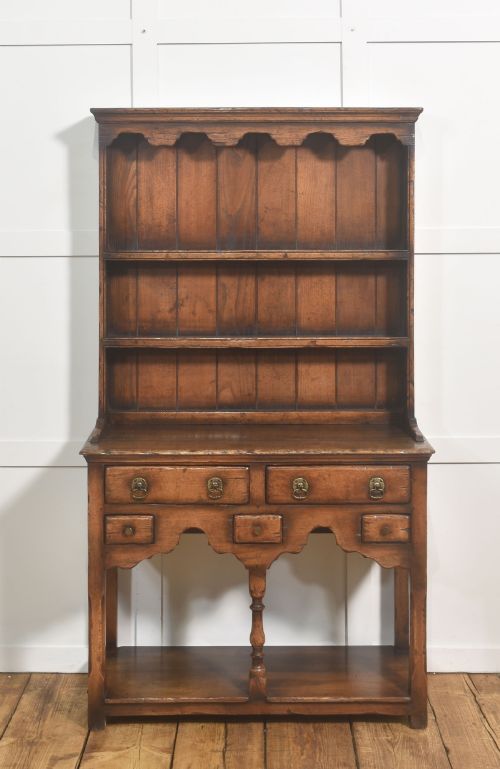
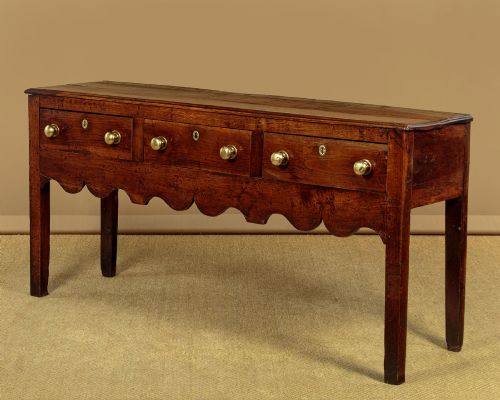


Scalloped Oak Welsh Dresser
A scalloped oak welsh dresser brings architectural warmth and practical display to a room, grounding your interior with centuries of country craftsmanship.
Scalloped Oak Welsh Dresser
A scalloped oak welsh dresser combines a substantial lower base with an upper plate rack, offering both enclosed storage and open display space for tableware. These functional storage units emerge from English country and Welsh vernacular traditions, shaped by regional furniture makers during the Georgian and Victorian eras. You will encounter open pot board bases alongside enclosed cupboard designs, reflecting the varied domestic needs of eighteenth and nineteenth century households.
The examples available here span from eighteenth century Georgian pieces to later 1900 and 1920 interpretations. Earlier periods present traditional vernacular construction, whilst early twentieth century pieces adopt classic George III and Georgian styles. This mix allows you to select between authentic period antiques and sturdier revival interpretations suited to contemporary homes.
Construction and materials
Makers built these pieces primarily using solid oak, occasionally incorporating fruitwood elements for secondary timbers or decorative accents. Timber selection focused on durability, utilising native hardwoods that withstood decades of daily kitchen or dining room use.
Structural assembly relied on traditional joinery methods, pairing pegged tenons with hand-planed boards for the pot boards, bases, and plate racks. Brass hardware, including period handles and escutcheons, frequently completed the construction on drawer fronts and cupboard doors.
Scalloped Oak Welsh Dresser Retail Price Guide 2026
Typical asking prices for scalloped oak welsh dresser among the pieces listed under this phrase on Sellingantiques today, from the lower quarter to the upper quarter. They describe what is for sale here now, not the wider market.
Listings feature oak as the primary timber, complemented by brass hardware and occasional fruitwood accents across Georgian and Victorian periods.
Assessing quality and proportion
Quality reveals itself in the harmony of proportions between the dresser base and the upper plate rack, alongside the crispness of any carved detailing. Superior pieces maintain their original timber patination and structural integrity, showing honest wear without extensive timber replacement.
The refinement of the base construction, from simple pot boards to sophisticated cabriole legs or carved profiles, distinguishes standard country furniture from exceptional workshop examples. Original plate racks and undisturbed brass fittings further elevate the standing of a piece.
The Scalloped Oak Welsh Dresser Glossary
- Pot board
- A low slatted or solid lower shelf built between the legs of a dresser base, traditionally used to store pots and pans. This platform defines many vernacular Welsh designs.
- Plate rack
- The upper shelving unit attached to the back of a dresser, featuring grooved plate rails and vertical boards to display ceramic plates upright. It forms the visual counterpart to the lower base.
- Welsh vernacular
- A regional style of furniture making characterised by practical construction, local timber usage, and unpretentious country aesthetics. These pieces developed organically to serve rural domestic life.
- Fruitwood
- A dense timber such as pear, apple, or cherry used by country cabinet makers for contrasting details or secondary structural elements. Its tight grain takes a fine finish.
Scalloped Oak Welsh Dresser: Frequently Asked Questions
What is a welsh dresser?
A welsh dresser is a traditional piece of furniture combining a lower storage base of drawers and cupboards with an upper open rack for displaying plates.
Originally designed for rural kitchens, these pieces served as both working storage and a way to showcase best tableware.
How do I style a dresser?
You can style a dresser by curating ceramic collections, glassware, and decorative objects on the upper plate rack while keeping everyday items in the base cupboards.
Allow the natural oak grain and historical patination to act as the primary focal point in a dining room or kitchen.
Are these dressers solid wood?
These pieces are constructed from solid native timbers, predominantly oak with occasional fruitwood elements used in regional workshops.
Traditional cabinet makers relied on solid wood planks to build durable furniture capable of withstanding heavy daily domestic use.
How do I date an oak dresser?
Dating relies on examining construction methods, tool marks, timber shrinkage, and stylistic indicators such as leg shapes and brass hardware.
Comparing structural details against established vernacular periods helps distinguish eighteenth century Georgian examples from twentieth century revivals.