

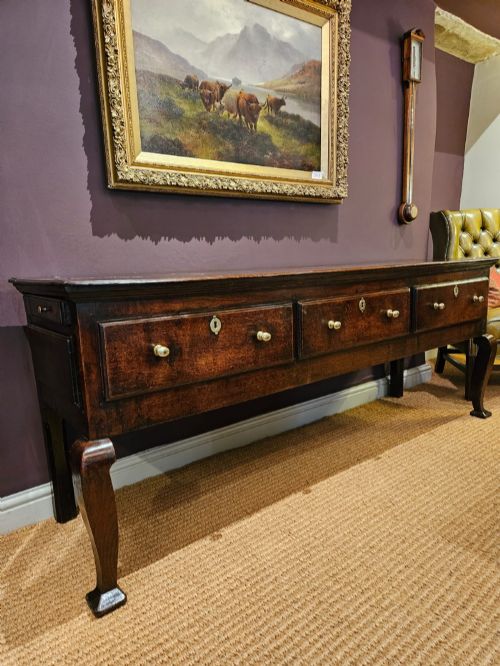
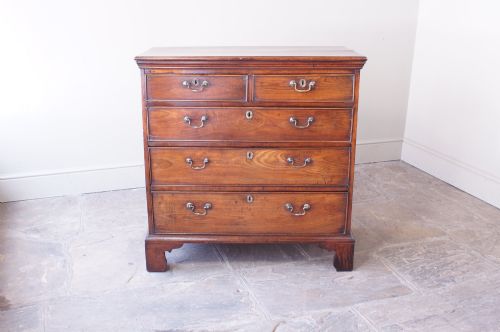

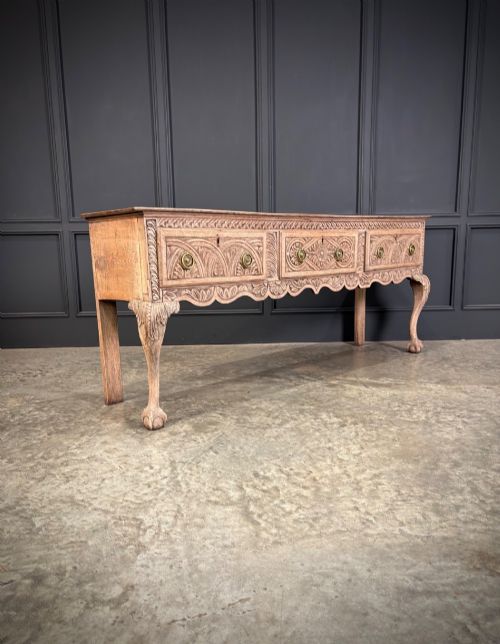
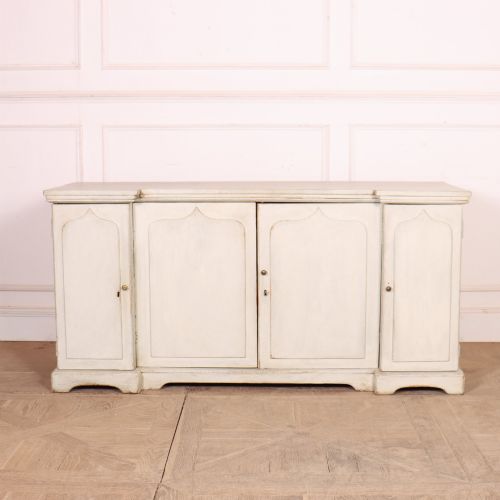




Georgian Country House Dresser
A georgian country house dresser brings vernacular warmth and sturdy utility to an interior, offering open display shelving and generous storage built for daily rural life.
Georgian Country House Dresser
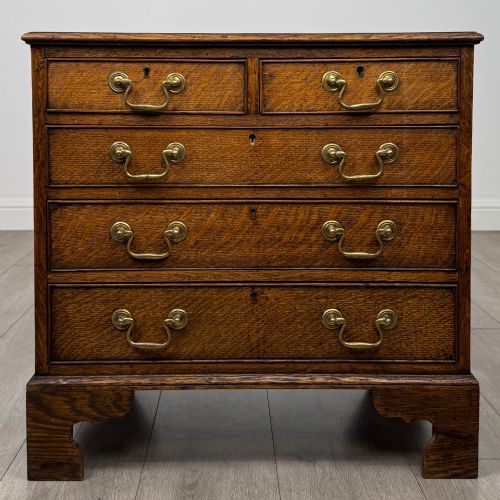
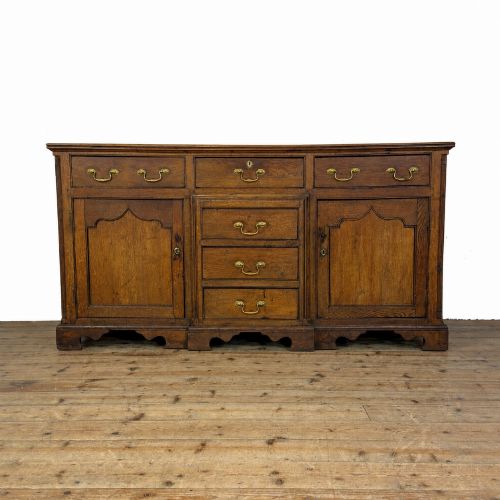
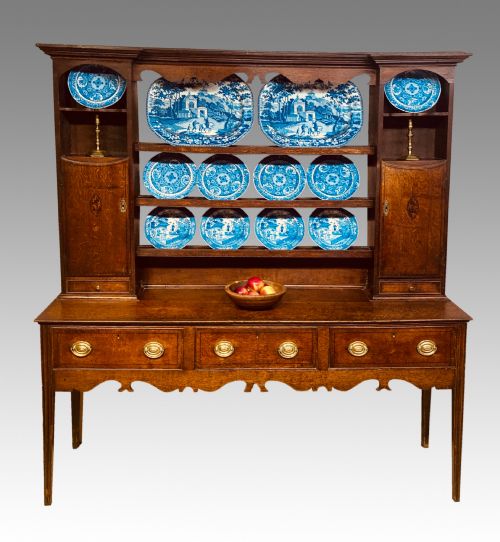
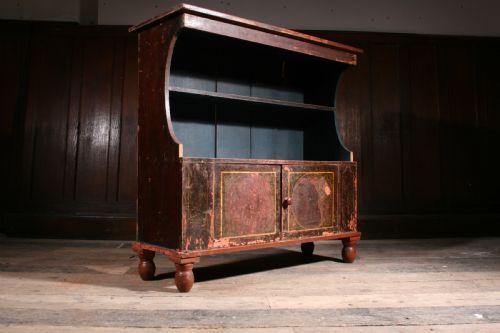
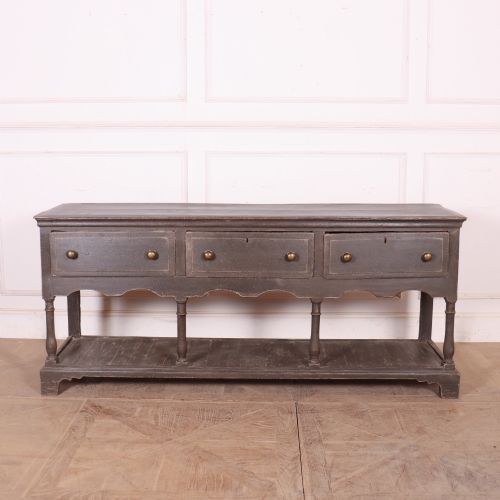
A georgian country house dresser is a domestic storage piece primarily built to hold tableware, dry goods, and kitchen utensils for rural households. These items range from open-backed plate racks paired with timber bases to breakfront cupboards and potboard serving tables.
The versions most frequently encountered on this page combine regional British workshop traditions with the understated proportions of the eighteenth and nineteenth centuries. Examples span oak, pine, and fruitwood constructions originating from English counties and Welsh valleys.
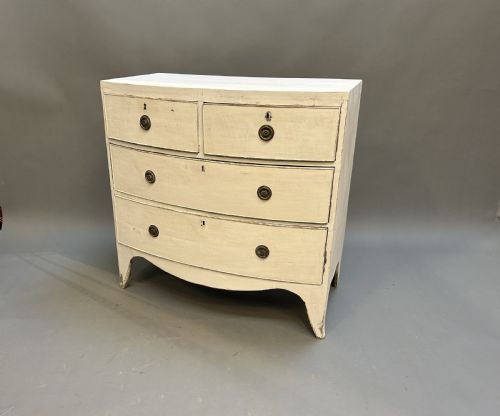
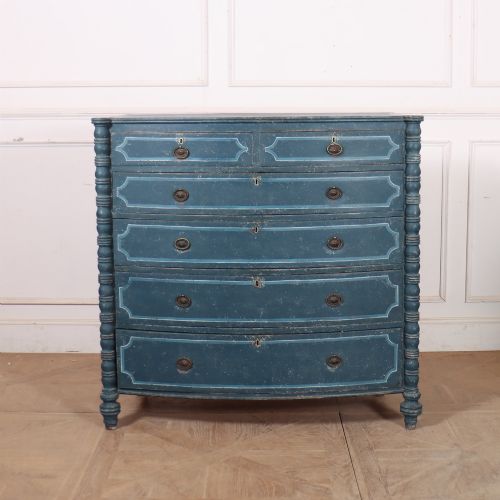
Makers utilised local timber such as oak, elm, and pine, often augmenting the base with functional drawers and lower potboards for heavy pots. Surviving pieces frequently display original paint finishes or rich patination accumulated through generations of domestic use.
Construction and Materials
Carpenters constructed these items primarily using solid oak, pine, and fruitwoods like walnut and yew, joined with traditional framing techniques. Timber selection depended on regional availability, resulting in robust boards built to withstand the rigours of large estate kitchens.
Georgian Country House Dresser Retail Price Guide 2026
Typical asking prices for georgian country house dresser among the pieces listed under this phrase on Sellingantiques today, from the lower quarter to the upper quarter. They describe what is for sale here now, not the wider market.
Site listings incorporate 17th Century, 18th Century, 19th Century, Georgian, Victorian, and Regency periods alongside oak, pine, mahogany, and painted timber.
Evaluating Craft and Condition
The distinction between standard utility furniture and superior examples lies in the integrity of the timber and the retention of original elements. Pieces preserving their initial plate racks, early paint, or integrated potboard lower tiers command greater architectural presence.
Construction details such as hand-cut dovetail drawers, timber selection, and regional vernacular quirks elevate individual items. The balance of proportion between upper display shelving and the lower cupboard base dictates visual harmony.
The Georgian Country House Dresser Glossary
- Potboard
- An open lower shelf beneath a dresser base traditionally used for storing pots and pans. This platform sits just above the floor on sturdy feet or stile extensions.
- Plate rack
- The upper shelving unit attached to or hung above a dresser base, featuring grooves to hold plates upright. These racks often include small cupboards or spice drawers.
- Breakfront
- A cabinet or dresser base where the central section projects forward from the flanking outer sections. This architectural arrangement creates depth and visual interest in larger dining spaces.
- Vernacular
- Architecture and furniture built by local craftsmen using traditional regional methods and materials rather than high-style metropolitan designs. These items reflect the specific domestic needs of their geographic origin.
- Patina
- The surface sheen and colour developed on timber through age, handling, exposure to light, and regular wax polishing. This quality marks genuine antique age and surface history.
Georgian Country House Dresser: Frequently Asked Questions
How do I tell a Welsh dresser apart?
Welsh dressers typically combine an integrated plate rack with a sturdy oak base containing multiple working drawers and lower potboard storage.
They reflect the specific domestic architecture of Welsh rural houses, often displaying distinct regional timber choices and simpler moulding details.
Where should I place a dresser?
These pieces suit farmhouse kitchens, large dining rooms, or spacious hallways where their linear proportions can anchor the room.
Ensure the wall space accommodates the height of the plate rack and provides enough clearance for lower cupboard doors to open fully.
Are painted finishes original?
Many country house pieces received layers of paint over their working life to suit changing domestic fashions or protect the underlying timber.
Original or early paint layers survive on select examples, adding historical character and distinct visual texture to the piece.