

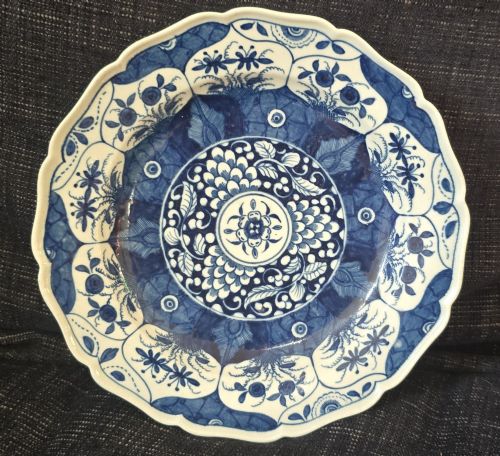

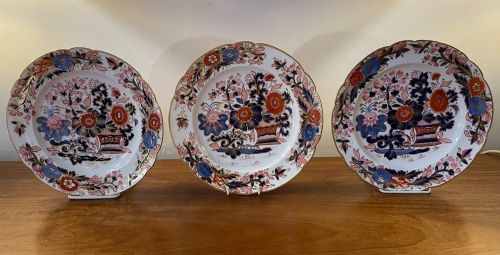



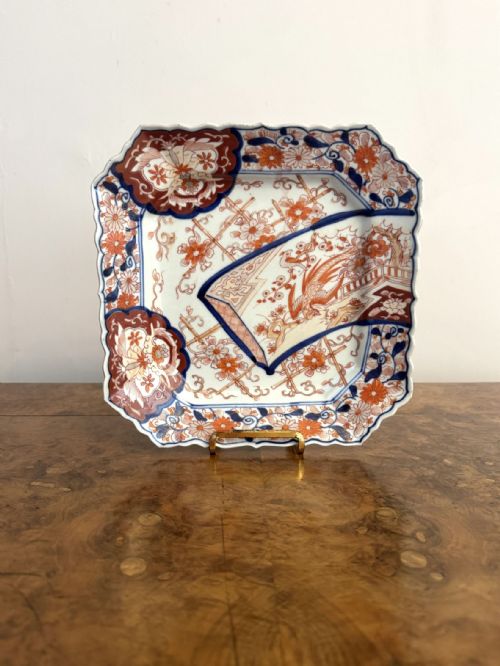

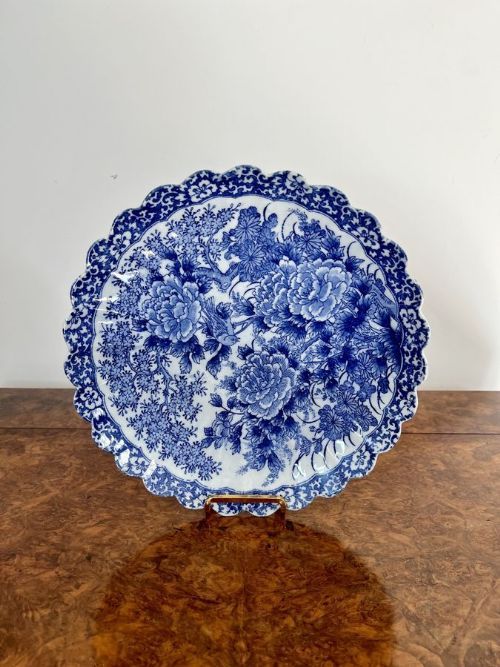
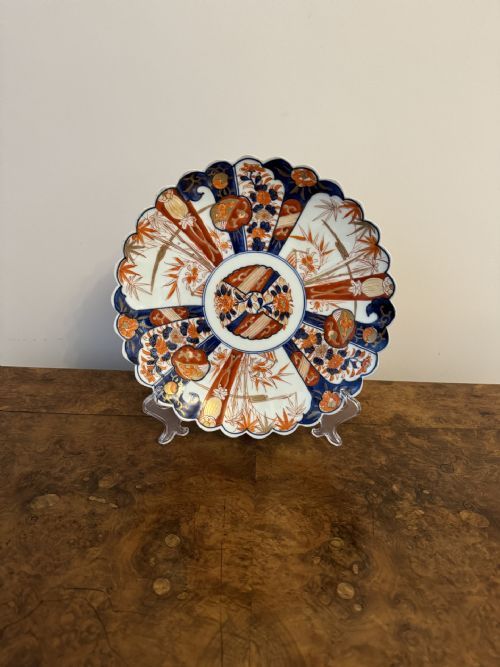
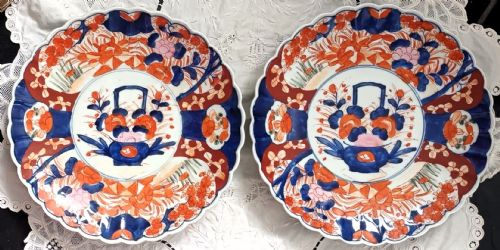


Scalloped Edge Blue Plate
A scalloped edge blue plate brings pattern and form together, offering a decorative surface that suits traditional and eclectic interiors alike.
Scalloped Edge Blue Plate
A scalloped edge blue plate combines a characteristic curved rim with cobalt decoration, appearing frequently across Japanese Imari and various 19th-century ceramic wares. Buyers searching for a scalloped edge blue plate encounter diverse forms ranging from small display dishes to large chargers and meat platters.
The selection on this page spans several centuries, drawing heavily on Meiji period Japanese porcelain alongside 18th-century English porcelain, Delft earthenware, and early 19th-century Staffordshire production. Japanese Imari examples dominate the entries, featuring characteristic blue and iron-red palettes enriched with intricate detailing.
Varying formats include pairs, sets of three, four, or five, and single large chargers depicting scenes such as the Seven Lucky Gods or exotic birds. These objects function primarily as decorative display items, serving platters, or wall-mounted chargers.
Materials and construction
Makers utilised porcelain, earthenware, and ceramic bodies, applying coloured glaze and cobalt pigments before firing at high temperatures. Many pieces incorporate hand-painted details, sometimes augmented with gold leaf, gilt, or gilding to highlight specific motifs.
Forming the distinct shaped edge involved moulding or cutting the clay before the application of glaze and underglaze painting. The combination of durable ceramic bodies with vitreous glaze layers ensured longevity for both utilitarian platters and decorative dishes.
Scalloped Edge Blue Plate Retail Price Guide 2026
Typical asking prices for scalloped edge blue plate among the pieces listed under this phrase on Sellingantiques today, from the lower quarter to the upper quarter. They describe what is for sale here now, not the wider market.
Listings span periods from the 17th century through the 18th century, 19th century, Victorian era, Edwardian period, and 1900.
Evaluating craftsmanship and condition
Quality rests in the crispness of the moulded edge, the precision of the hand-painted cobalt and iron-red brushwork, and the preservation of any applied gilding. Superior examples display balanced composition and well-defined motifs, whereas simpler items show looser execution.
The depth of the glaze, the absence of firing distortions in the ceramic body, and the complexity of the depicted subjects - such as figures or birds - further separate standard production from exceptional pieces.
The Scalloped Edge Blue Plate Glossary
- Imari
- A style of Japanese porcelain featuring a palette of cobalt blue, iron-red, and gold. This decorative scheme originated in Arita and became widely exported to Europe.
- Charger
- A large decorative plate utilised historically for service or display rather than individual dining. These substantial pieces often hang on walls or sit centrally on furniture.
- Meiji Period
- The era in Japanese history spanning from 1868 to 1912, known for prolific ceramic production aimed at international export markets. Pieces from this period frequently display meticulous hand-painted details.
- Earthenware
- Porous pottery fired at lower temperatures than porcelain, requiring a glazed surface to become impervious to liquids. Staffordshire and Delft examples on this page utilise this ceramic body.
Scalloped Edge Blue Plate: Frequently Asked Questions
How were these plates used?
Historically, large chargers and platters served food at communal tables or decorated sideboards in prominent rooms.
Today, collectors primarily utilise them for wall display, cabinet exhibition, or as decorative table centerpieces.
Are these plates dishwasher safe?
Antique ceramics featuring hand-painted pigments, enamel, and delicate gilding require gentle hand washing in lukewarm water.
Harsh detergents and mechanical dishwashers will damage the historic glaze and wear away the painted surface over time.
How do I distinguish Japanese Imari from English porcelain?
Japanese Imari typically combines deep underglaze cobalt blue with iron-red enamel and gold on a dense porcelain body, often featuring Japanese motifs.
English factories like Worcester produced European interpretations of these Asian designs using distinct paste compositions and glaze formulations.
Can I hang these plates on the wall?
Many chargers and large plates feature proportions well suited to vertical display using properly fitted, non-damaging wire hangers.
Ensure any hanging hardware supports the specific weight and dimensions of the ceramic piece securely.