

Satinwood Study Desk
These satinwood study desk examples span Victorian and Edwardian periods, offering refined writing spaces featuring marquetry, leather inserts, and rich timber figuring.
Satinwood Study Desk
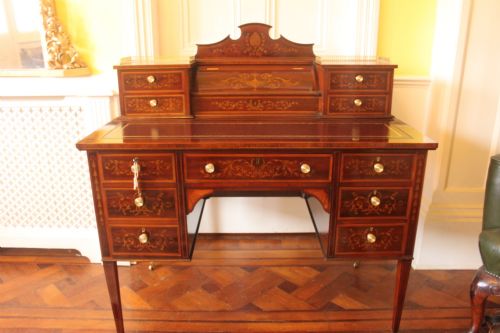
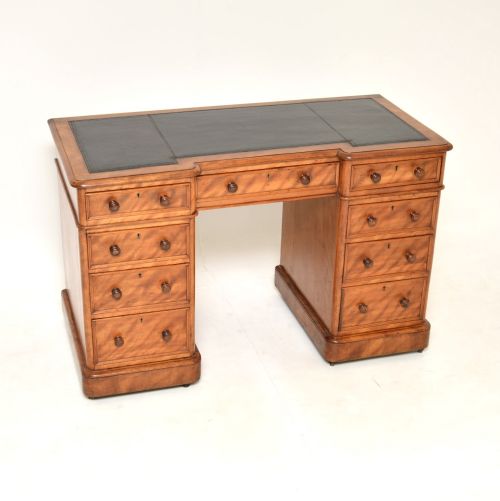
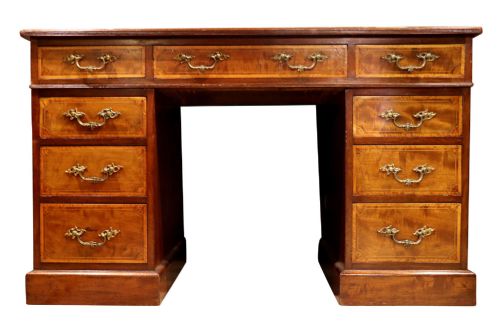
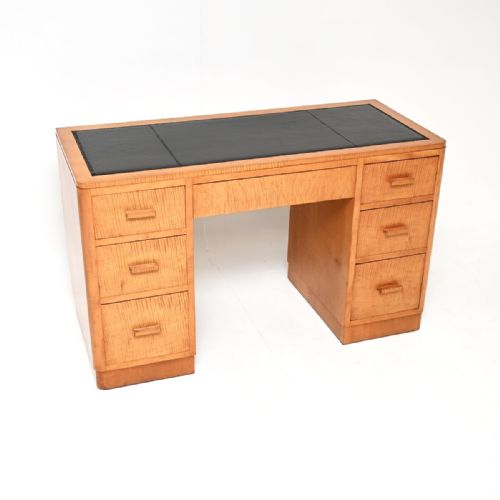
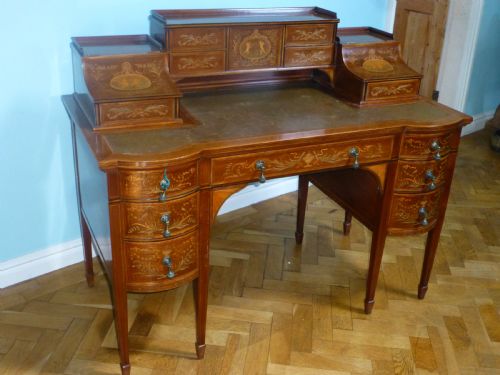
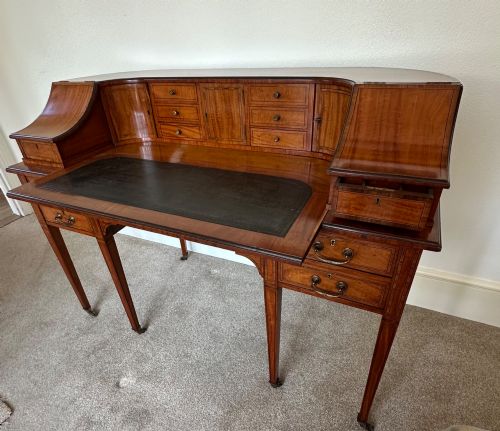
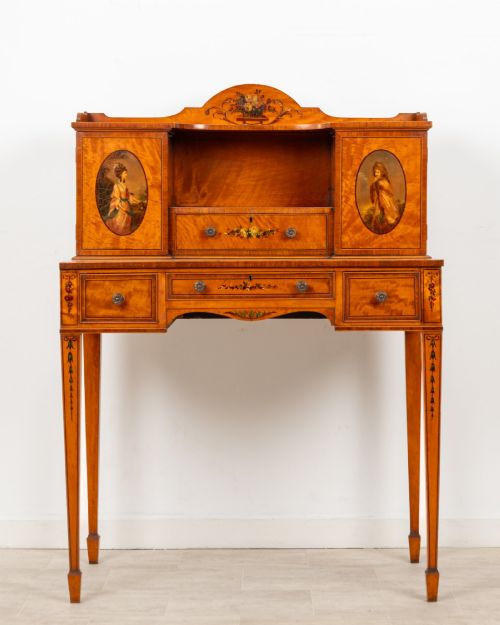
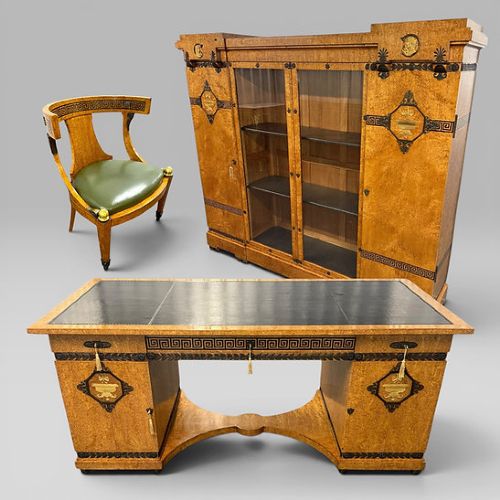
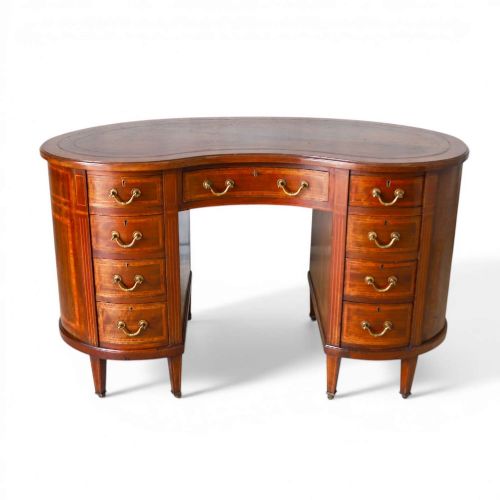
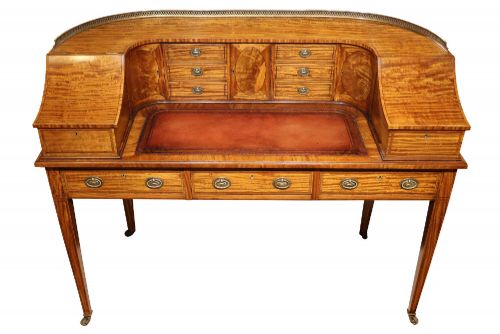
A satinwood study desk serves as a dedicated writing surface, often taking the form of pedestal desks, kneehole desks, or elaborate Carlton House designs with tiered compartments. These pieces emerge predominantly from Victorian and Edwardian workshops, reflecting the tastes of the nineteenth and early twentieth centuries.
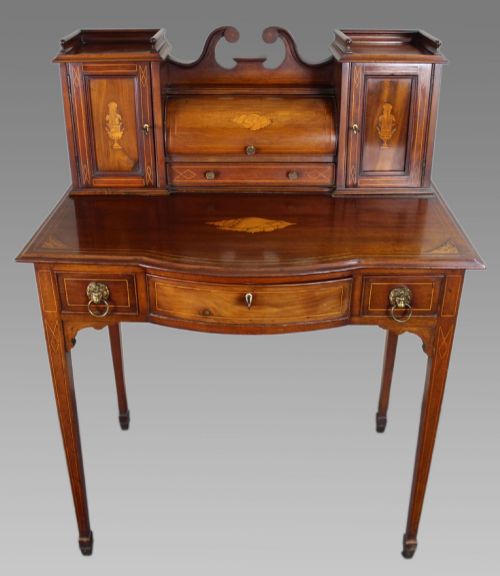
The most common variants encountered on this page date from the Edwardian era and the late Victorian period. These pieces frequently incorporate Sheraton Revival styling, pairing light exotic timbers with intricate inlay work and leather writing surfaces.
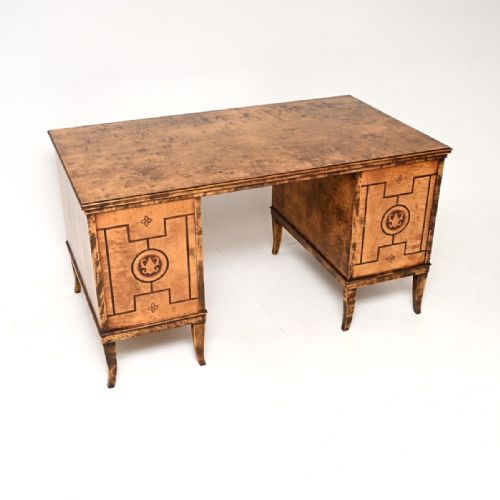
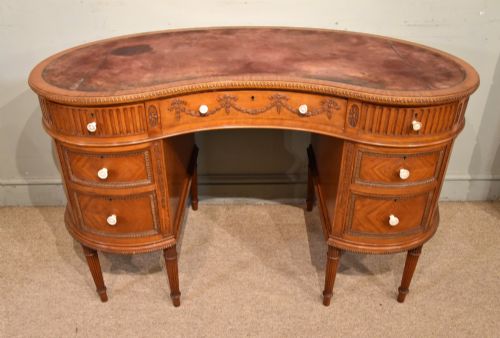
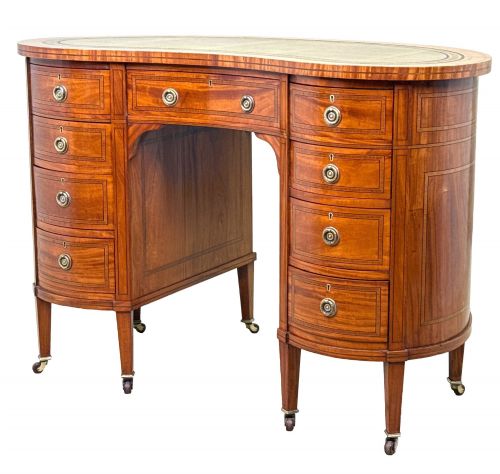
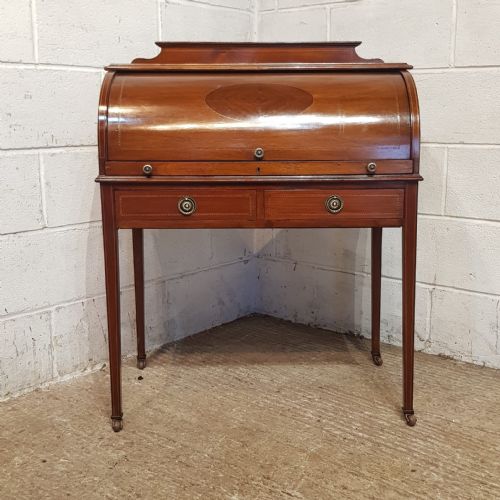
Makers utilised various formats, ranging from compact ladies writing desks to substantial kidney-shaped tables and pedestal units. Walnut, mahogany, and satin birch also appear alongside primary satinwood constructions, often enhanced by crossbanding.
Materials and construction
Cabinet makers built these desks using solid structural timbers like mahogany and oak for carcases and drawer linings, applying figured satinwood veneers or solid satinwood to visible surfaces. Marquetry inlay, kingswood crossbanding, and parquetry geometric patterns decorate the outer panels.
Writing surfaces typically feature inset leather panels, frequently gold-tooled along the margins. Metalwork details include cast brass handles, ormolu mounts, and original hardware secured to dovetailed drawers.
Desk drawers occasionally hide original stationery dividers designed for sealing wax and fountain pens.
Quality and execution
Quality rests upon the precision of the cabinet work, the complexity of the marquetry, and the selection of the timber figuring. Superior examples display tightly fitted joinery, hand-painted details, and intact original hardware rather than replaced elements.
The sophistication of the desk form dictates distinction, separating simpler rectangular writing tables from complex Carlton House desks fitted with multiple drawers, pigeonholes, and leather skivers.
Edwards and Roberts·Maple and Co·Mercier Frères·Donald Ross·James Shoolbred·Gillows of Lancaster·Howard and Sons
The Satinwood Study Desk Glossary
- Carlton House desk
- A form of writing desk featuring a curved superstructure of small drawers and pigeonholes enclosing the rear and sides of the writing surface. This layout originated in the late eighteenth century and saw revival popularity during the Victorian and Edwardian periods.
- Satinwood
- A hard, durable timber native to Ceylon and India, prized for its golden-yellow lustre and satin-like sheen. Cabinet makers used veneers extensively in high-status eighteenth and nineteenth century furniture.
- Pedestal desk
- A heavy, freestanding writing table supported by two banks of drawers reaching down to the floor. They usually feature an inset leather top and central kneehole space.
- Crossbanding
- A decorative border technique where thin strips of veneer are laid across the grain of the primary panel. Makers often used contrasting timbers such as kingswood to frame satinwood surfaces.
Satinwood Study Desk: Frequently Asked Questions
What is a Carlton House desk?
A Carlton House desk is a distinctive writing table featuring a curved superstructure of small drawers and compartments wrapping around the rear and sides of the writing surface. This arrangement provides partitioned storage for stationery and correspondence.
Cabinet makers revived this Georgian form during the Victorian and Edwardian eras, often enriching the surfaces with marquetry inlay and satinwood veneers.
How do I identify Edwardian satinwood pieces?
Edwardian satinwood furniture, dating around nineteen hundred, typically exhibits light timber tones combined with Sheraton Revival motifs such as urns, swags, and ribbon-tied bellflower inlay. These pieces often feature fine mahogany or satinwood carcases with oak-lined drawers.
Proportions tend to be lighter and more refined than earlier Victorian counterparts, reflecting the decorative revivals popular at the turn of the twentieth century.
Are original leather tops common?
Many surviving desks retain their original leather skivers, often decorated with blind and gold-tooled borders. Original leathers show appropriate patination from use.
Where leather has degraded, historical restoration may include replacement skivers matched to traditional tooling styles.
How should I care for satinwood furniture?
Satinwood requires protection from direct sunlight and excessive heat fluctuations to prevent the timber from fading or veneers from lifting. Regular dusting with a soft, dry cloth preserves the polished finish.
Application of appropriate microcrystalline wax feeds the wood and maintains the characteristic lustre without building up heavy residues.