
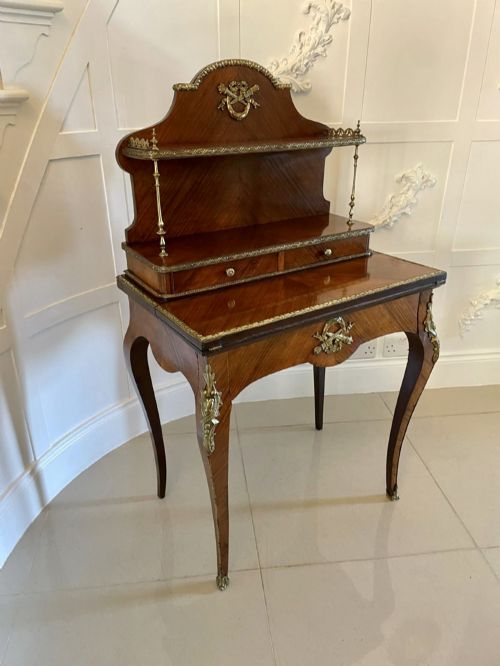
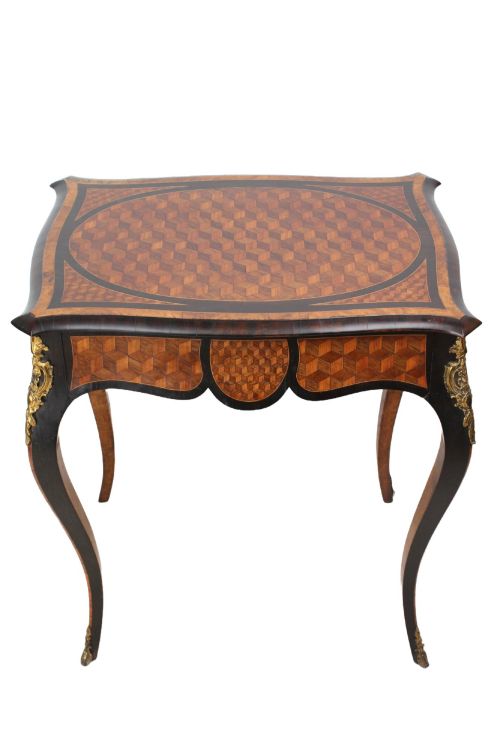

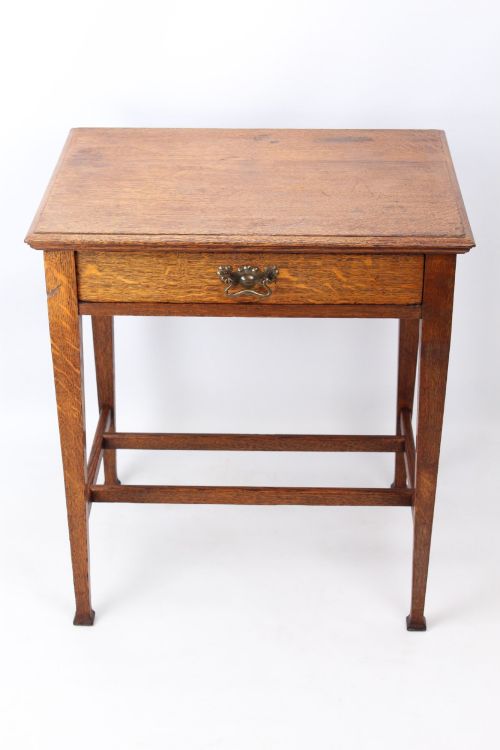
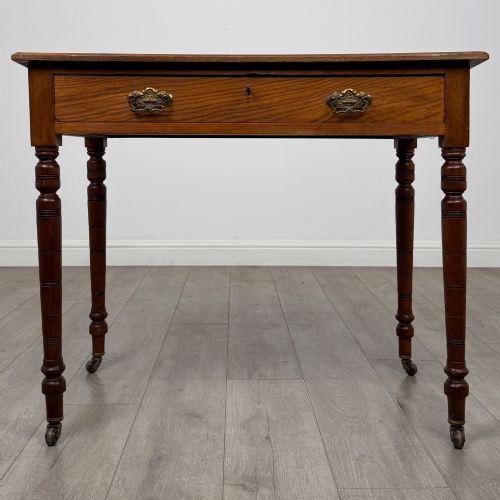
Small Victorian Desk
When you search for a small victorian desk, you are looking for a compact writing table or Davenport built during the nineteenth century.
Small Victorian Desk
A small victorian desk encompasses a variety of compact writing furniture produced during the nineteenth century, including Davenport desks, pedestal tables, and writing tables. These pieces were designed for domestic studies, boudoirs, and drawing rooms where space was limited yet practical workspace remained essential.
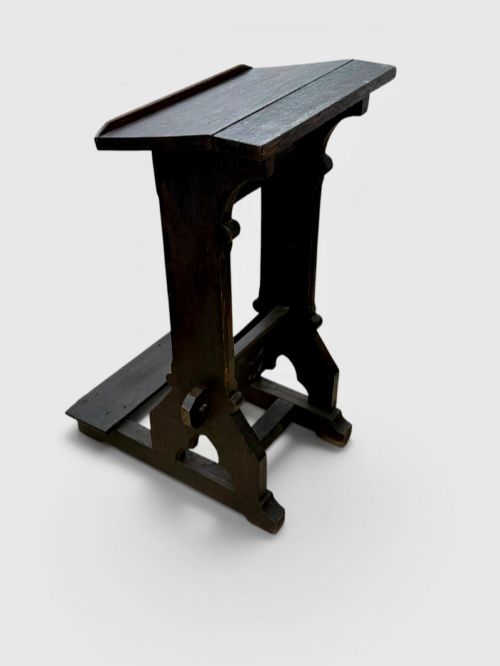
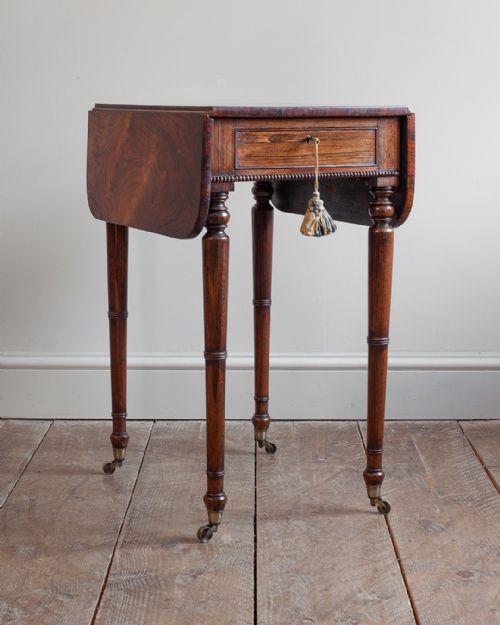
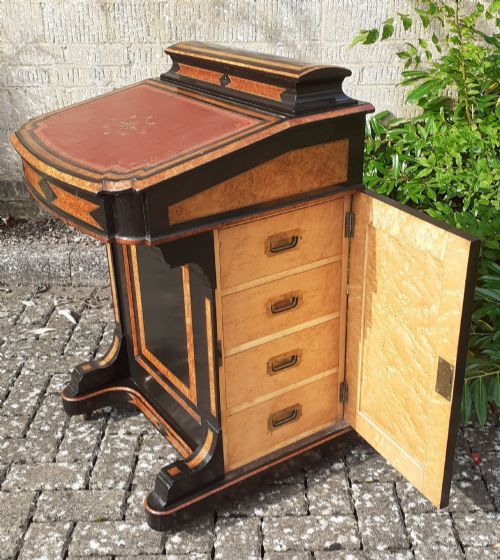
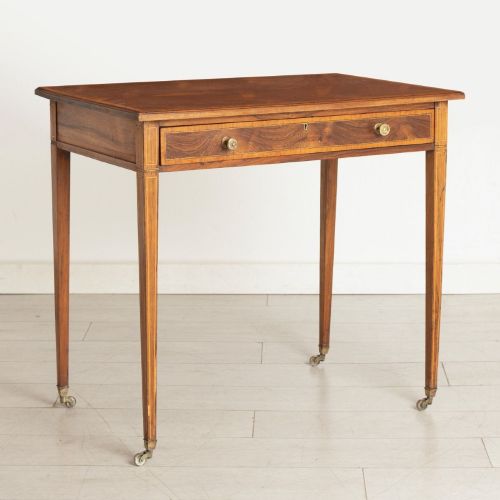
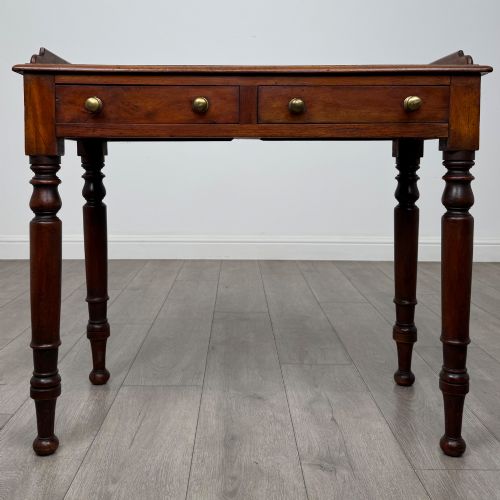
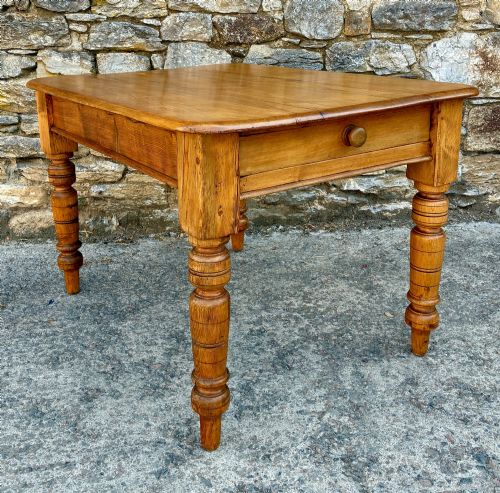
The version most commonly encountered on this page is the Davenport desk, typically featuring a sloping writing surface above a bank of drawers. Alongside these, buyers frequently find simpler writing tables in mahogany or oak, often fitted with single drawers for stationery.
Materials and construction
Makers of the period relied heavily on dense hardwoods such as mahogany, walnut, and rosewood, frequently incorporating burr veneers to add decorative grain patterns to flat surfaces. Secondary woods like pine appear within drawer carcases and internal partitions.
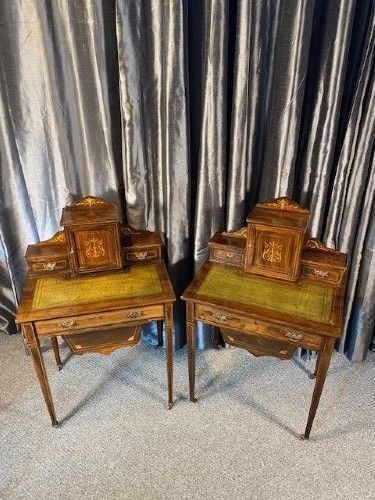
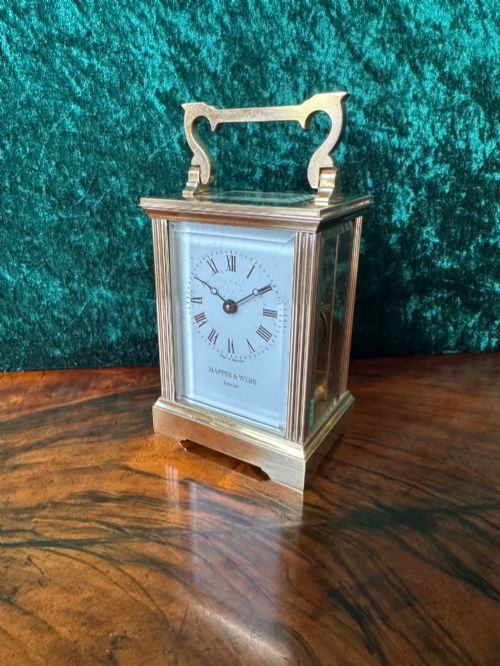
Writing surfaces were routinely inset with tooled leather or skivers, while cabinetry work utilised dovetail joinery for drawers and turned or fluted legs for support. Metal mounts in brass and ormolu often complemented the rich timber tones.
Small Victorian Desk Retail Price Guide 2026
Typical asking prices for small victorian desk among the pieces listed under this phrase on Sellingantiques today, from the lower quarter to the upper quarter. They describe what is for sale here now, not the wider market.
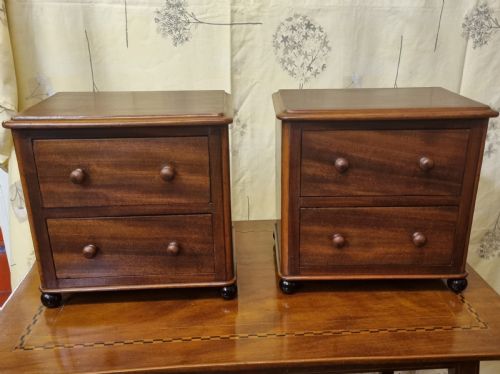
The selection includes miniature apprentice pieces alongside full-sized Davenport and pedestal desks.
Judging quality
The distinction between standard and superior pieces rests upon timber selection and the crispness of cabinetmaking. Superior desks employ finely figured burr walnut, amboyna, or rosewood, matched carefully across lid and drawer fronts rather than relying on plain stained timbers.
Construction detail further separates the range, evident in hand-cut dovetailing, original working locks by known makers such as Hobbs and Co, and subtle carved or inlaid decorative motifs that remain sharp and unblemished by heavy restoration.
JAS Shoolbred·Mappin and Web·Gillows of Lancaster·Heals and Son London·Hobbs and Co London·Richard Winter of Chieveley
The Small Victorian Desk Glossary
- Davenport
- A small pedestal desk featuring a sloping, hinged writing box lid that typically encloses small drawers and pigeonholes. It usually includes side drawers accessed from a seated position.
- Skiver
- A panel of leather inset into the top of a writing table or desk to provide a smooth, tactile writing surface. These are frequently edged with gilt tooling.
- Parquetry
- Geometric wood inlay work used to create decorative mosaic patterns across table tops and desk lids. It showcases contrasting timber colours.
- Bonheur du jour
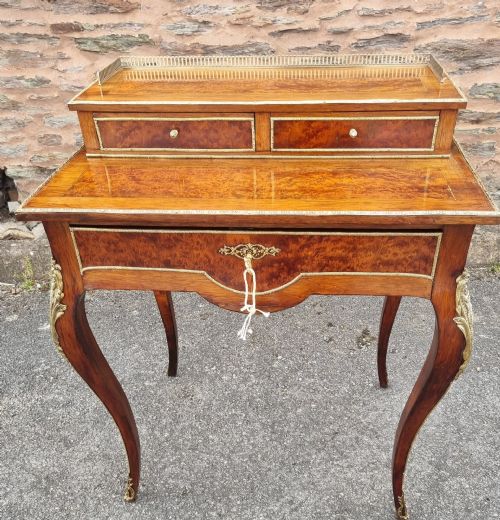
- A light lady's writing desk featuring a small cabinet, shelves, or drawers fitted to the top surface. It typically stands on slender legs.
- Ormolu
- Gilt bronze mounts applied to furniture for decorative effect, adding metallic contrast to dark woods like rosewood and mahogany.
Small Victorian Desk: Frequently Asked Questions
What is a Davenport desk?
A Davenport desk is a compact writing cabinet featuring a sloping lid that lifts to reveal stationery storage. The main body incorporates a pedestal of drawers accessed from the side.
This form gained popularity during the Victorian era for use in drawing rooms and small studies where full-sized partner desks proved impractical.
How were these desks used?
These desks served primarily for private correspondence, diary keeping, and managing household accounts. Their compact dimensions suited the parlour or bedroom rather than a grand commercial office.
Many incorporate clever internal compartments, pen trays, and inkwell slots designed to keep writing equipment organised within a minimal footprint.
How do I care for leather desk tops?
Leather skivers require gentle cleaning with a soft, dry cloth and occasional treatment with appropriate leather balms to prevent drying and cracking. Avoid using harsh chemical cleaners or excess moisture near the gilt tooling.
Keeping the leather conditioned preserves the supple texture and historical appearance of the writing surface.
How can I tell a Davenport from a writing table?
A Davenport integrates its storage drawers directly beneath a sloping writing surface in a single pedestal block. A writing table stands on open legs, offering a flat top with drawers built into the frieze beneath.
Writing tables provide knee clearance underneath the entire width, whereas Davenports require sitting sideways to access the side drawers.