


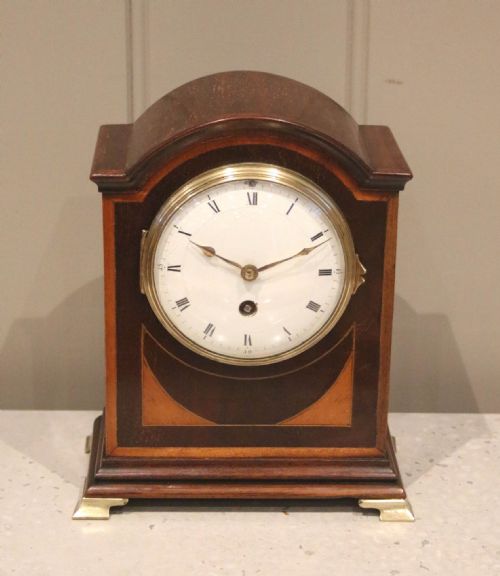

Satinwood Inlay Clock
A satinwood inlay clock brings warm wood tones and delicate pale contrast into a room, offering both traditional timekeeping and fine cabinetmaking.
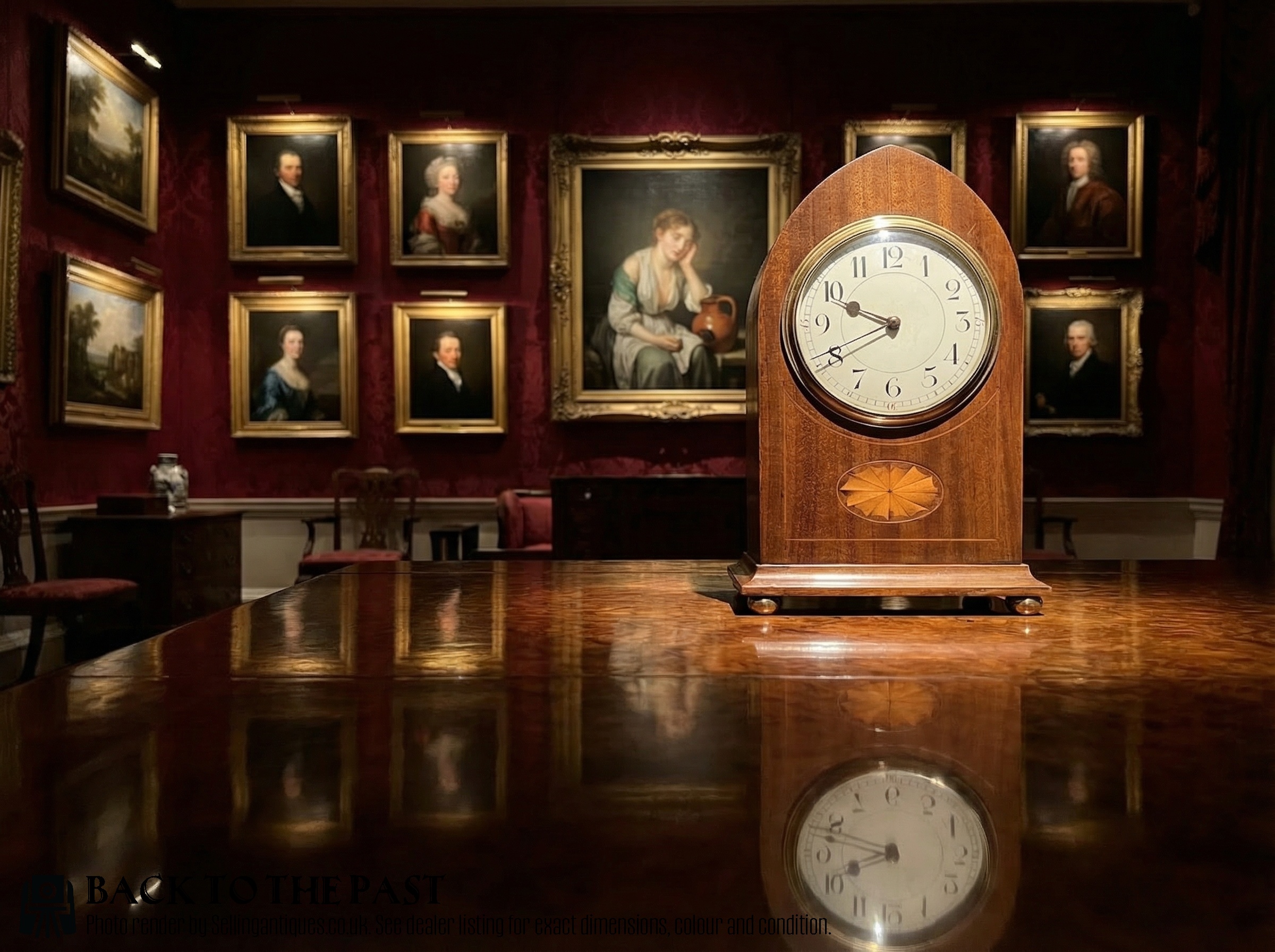
Satinwood Inlay Clock
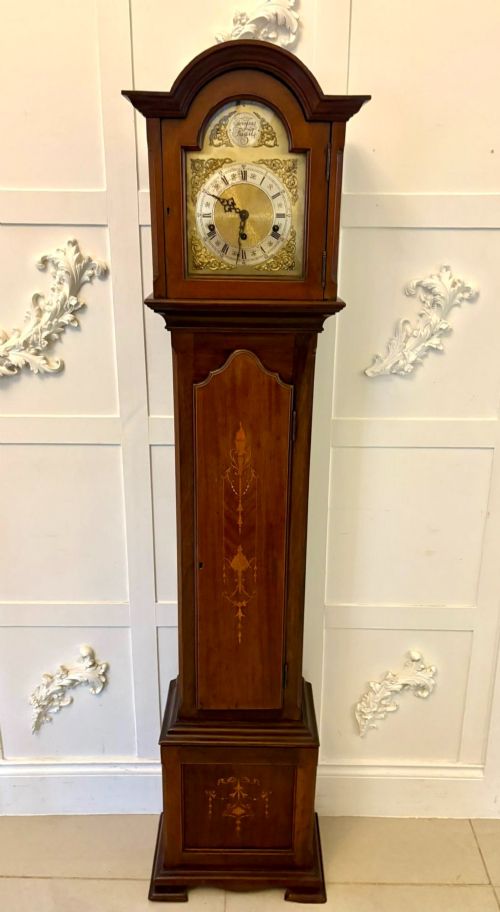
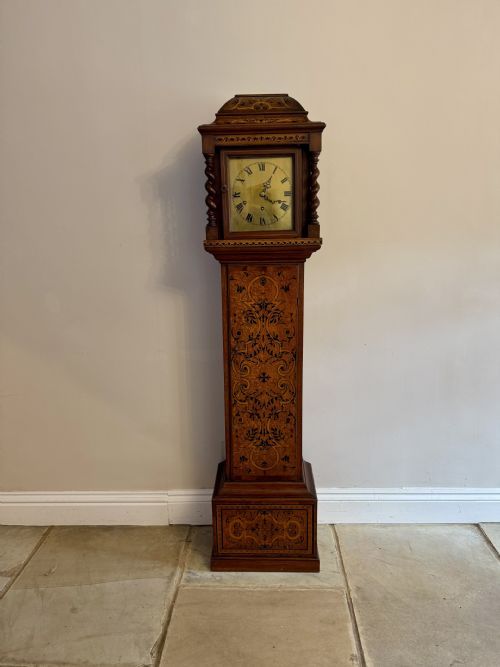
When you search for a satinwood inlay clock, you encounter timepieces predominantly fashioned during the Edwardian era and the Victorian period, alongside pieces dated around nineteen hundred. The selection spans compact mantel clocks designed for tabletops to taller floor-standing longcase and grandmother clocks.
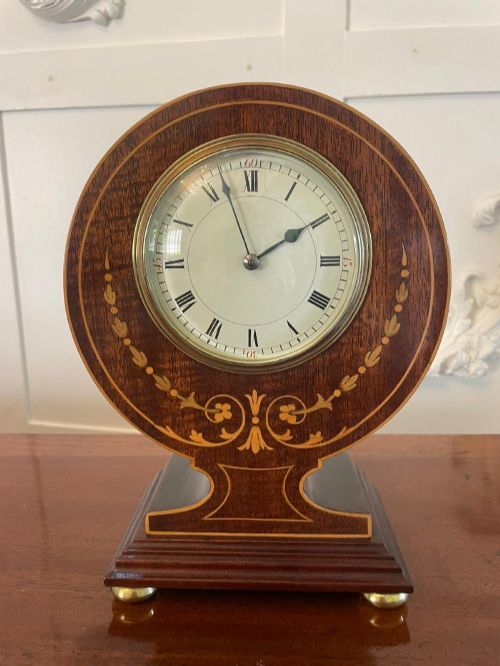
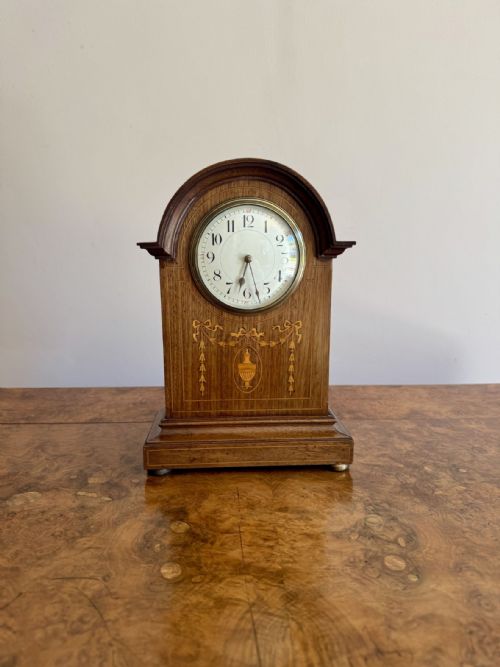
The mantel clock version is the type you are most likely to meet on this page, often built in mahogany with contrasting pale wood details. Architectural portico forms and bracket clocks also appear, alongside specific decorative motifs such as poppies and Dutch figures.
These items originate from British and continental workshops, combining utilitarian horology with decorative marquetry. They range from simple domestic timepieces to musical instruments housed in grander wooden cases.
How they were made
Cabinetmakers constructed the wooden housings using dense timbers like mahogany, walnut, and rosewood as a dark ground for detailed inlay work. Satinwood and boxwood were carefully cut and fitted into channels carved into the primary wood to create pale geometric borders or pictorial motifs.
The faces frequently feature enamel dials protected by glass panels, often surrounded by cast brassbezels or mounts. Movement components, including bell-striking mechanisms, were engineered by specialist horologists before being fitted into these bespoke veneered cases.
One cheerful Edwardian mantel clock arrives decorated with inlaid poppies, alongside another bearing the portrait of a Dutch girl.
What varies in quality
The distinction between standard domestic pieces and superior examples lies in the precision of the marquetry and the choice of primary timber. Finer clocks utilise carefully selected flame mahogany or rich rosewood paired with intricate, tightly fitted satinwood and boxwood inlay rather than simple painted lines.
Horological sophistication also divides the range, moving from standard time-only movements to complex musical mechanisms and eight-day bell-striking longcase systems signed by notable makers such as Summerhayes of Taunton.
The Satinwood Inlay Clock Glossary
- Marquetry
- The art of creating decorative pictures or patterns on wooden surfaces by fitting together small pieces of veneer. This technique allows for complex floral designs and figurative scenes across the clock body.
- Portico clock
- A distinct architectural style featuring supporting columns beneath a triangular pediment. French examples frequently employ rosewood cases with contrasting satinwood inlay.
- Bracket clock
- A portable timepiece originally designed to sit upon a wall bracket or a table. These often feature arched wooden cases with brass carrying handles.
- Bezel
- The metal ring that holds the glass protecting the clock face in place. Brass is commonly utilised for this component in Edwardian mantel clocks.
Satinwood Inlay Clock: Frequently Asked Questions
What periods do these clocks come from?
The available pieces primarily date from the Victorian era and the Edwardian period around nineteen hundred. A few examples extend back to the early nineteenth century.
Cabinet styles and inlay motifs closely follow the prevailing decorative tastes of these specific decades.
Where should I place a mantel clock?
These compact timepieces suit tabletops, sideboards, and mantelpieces where their polished timber and pale inlay catch the light. They require a stable, level surface to ensure the internal pendulum or balance wheel operates correctly.
Keep them away from direct sunlight and damp walls to preserve the delicate wood veneers.
How do I identify satinwood inlay?
Satinwood is a hard, yellowish timber known for its natural sheen and reflective grain. When used for inlay, it provides a striking pale contrast against darker woods like mahogany and rosewood.
Craftsmen utilised this timber for thin stringing lines as well as detailed pictorial elements.
What is the difference between a mantel and a longcase clock?
Mantel clocks are smaller, portable units intended for furniture display, whereas longcase or grandmother clocks stand directly on the floor. Longcase versions house long pendulums and weight-driven movements within tall wooden trunks.
Both types frequently incorporate satinwood stringing and decorative marquetry panels.