
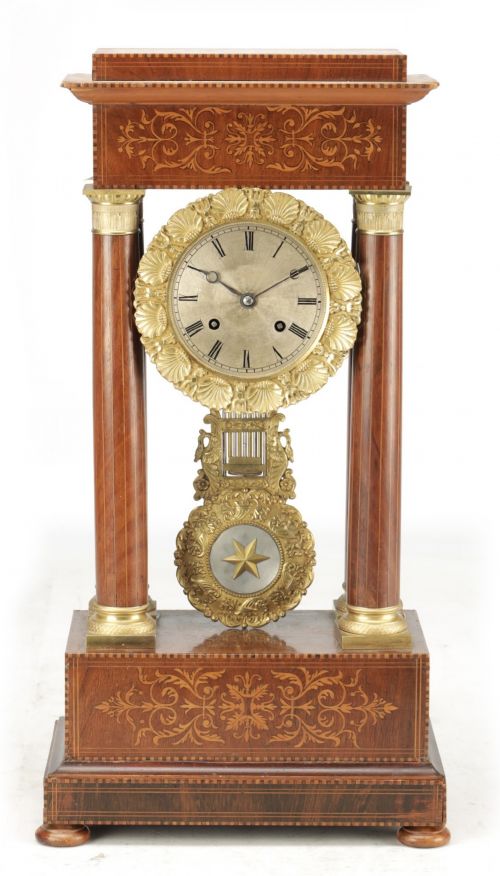
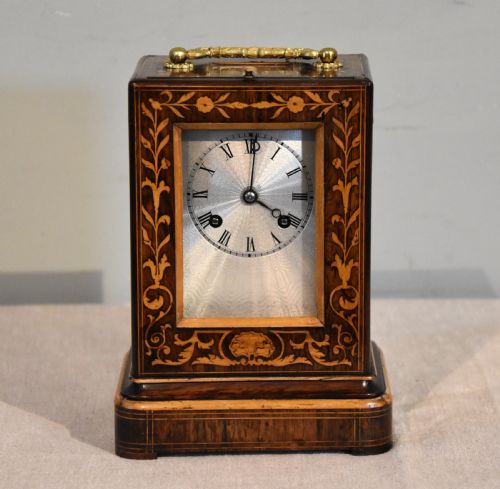

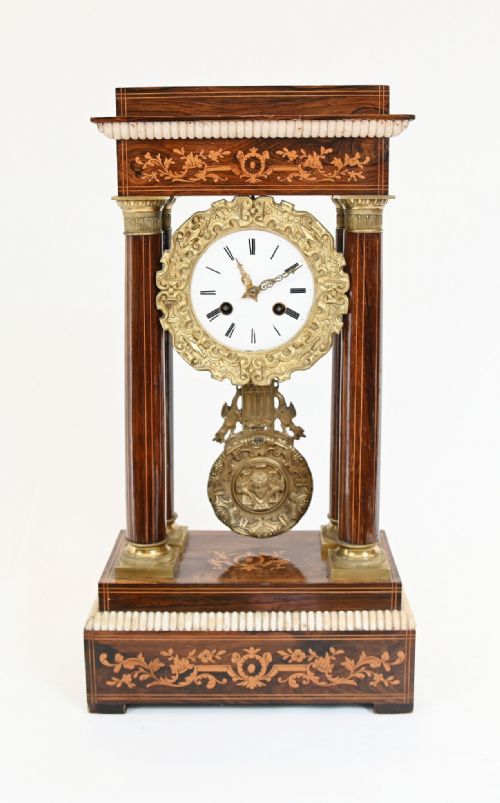
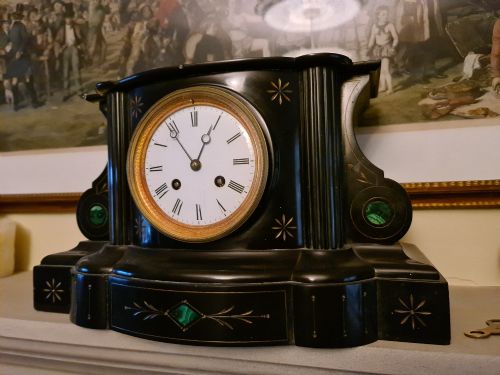

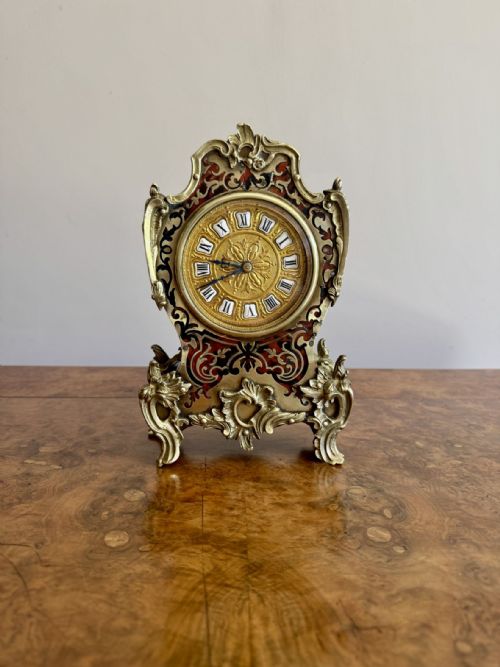


Antique French Inlaid Clock
An antique french inlaid clock combines precise horology with decorative marquetry, offering a decorative centrepiece that records nineteenth-century craftsmanship.
Antique French Inlaid Clock
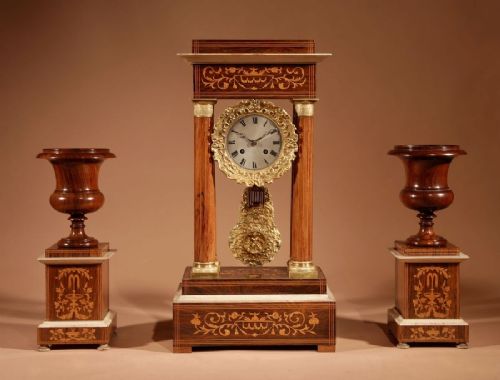
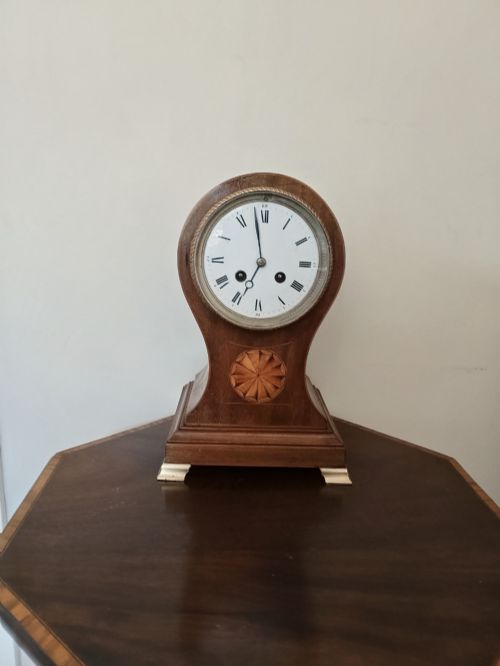
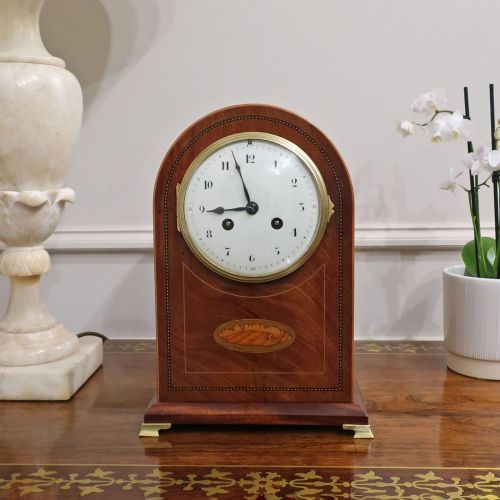
An antique french inlaid clock primarily appears on this page in forms such as mantel clocks, wall clocks, and portico clocks originating across the nineteenth century. These pieces function as domestic timekeepers embellished with marquetry, stringing, and elaborate timber work.
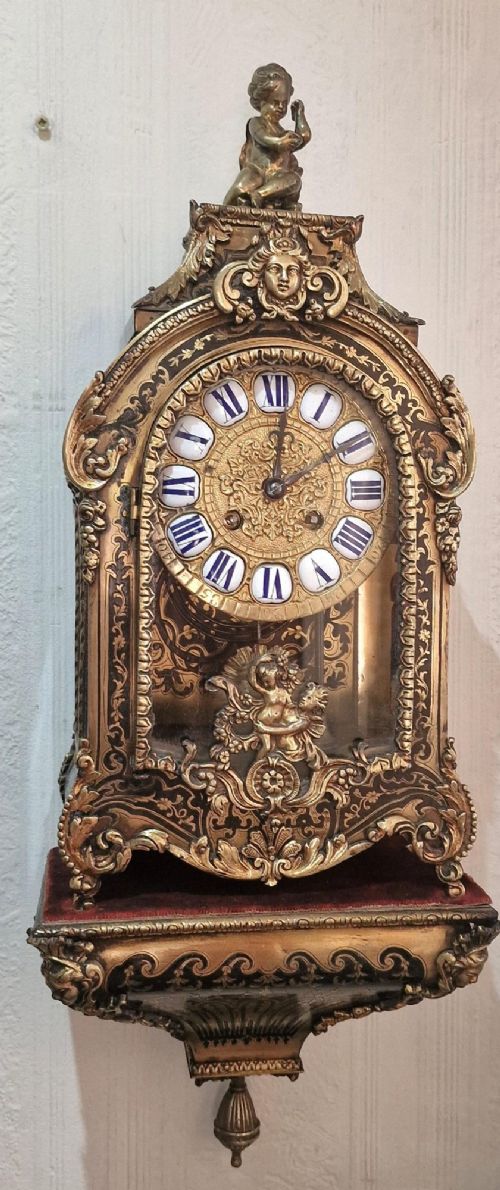
The selection ranges from mahogany balloon shapes to rosewood cases and ornate Boulle work featuring tortoiseshell and brass. Makers housed these movements in diverse bodies suited for tabletops, brackets, and grand longcases.
Dated examples span from the Louis Philippe and Napoleon III periods through to the Belle Epoque, reflecting changing interior tastes in France. Buyers encounter both simple architectural timber cases and complex glass-domed portico garnitures.
What varies in quality
The refinement of the marquetry and the precision of the brass or metal wire inlay dictate the visual standard of the piece. Finer examples display meticulous botanical or geometric patterns integrated seamlessly into the cabinet timber.
Material selection separates standard production from superior workshops, particularly the depth of the tortoiseshell in Boulle pieces and the casting quality of ormolu mounts. The complexity of the case architecture, such as portico columns and accompanying wall brackets, also elevates the stature of the object.
Some models measured time alongside atmospheric conditions by including an integrated thermometer within the dial surround.
Henri Marc·Thomas A Paris·Samuel Marti·Paul Garnier·Baby and Jannings·Lours of Puiseaux
The Antique French Inlaid Clock Glossary
- Boulle
- A method of marquetry using brass and tortoiseshell inlaid into wood, developed in France. This technique creates a rich tortoiseshell pattern across the surface of the clock case.
- Ormolu
- Gilded bronze used for decorative mounts and feet. Makers cast these metal elements to adorn the corners and dial surrounds of wooden cases.
- Portico clock
- A distinct architectural clock form featuring upright side pillars supporting a central dial housing. These monumental pieces often include glass domes and garniture sets.
- Marquetry
- Decorative patterns formed from thin pieces of wood veneer glued onto a structural case. Artisans utilised contrasting timbers to build floral or geometric designs.
- Garniture
- A set consisting of a clock flanked by matching decorative objects such as vases or candelabra. These sets were designed to sit symmetrically on mantelpieces.
Antique French Inlaid Clock: Frequently Asked Questions
Where did people place these clocks?
Owners typically positioned mantel clocks on the hearth or salon mantelpiece as functional ornaments. Wall clocks and bracket clocks were secured directly to drawing room partitions.
Larger portico models and longcase versions stood on tabletops or dedicated pedestals within prominent reception rooms.
How do I wind the movement?
Most mechanical movements utilise a winding key inserted directly into holes on the enamel dial face. Winding typically occurs every eight days depending on the specific spring barrel configuration.
Careful rotation ensures the internal brass teeth engage properly without over-tensioning the mainspring.
How are different periods identified?
Stylistic cues such as Louis Philippe architectural lines or Napoleon III marquetry help distinguish the manufacturing era. Material choices like red shell Boulle or Belle Epoque mahogany further point towards specific decades.
Signature plaques on the dial or movement backplate often provide direct evidence of the maker and active period.
Can these clocks run daily?
Many mechanical movements remain operational and keep accurate time when serviced by a professional horologist. Bell striking mechanisms sound the hours and half-hours across the room.
Placement on a level surface ensures the pendulum swings evenly for consistent timekeeping.