

Satinwood Bureau Desk
A satinwood bureau desk brings a pale, figured warmth and refined writing space to a room, spanning Georgian elegance to Edwardian lightness.
Satinwood Bureau Desk
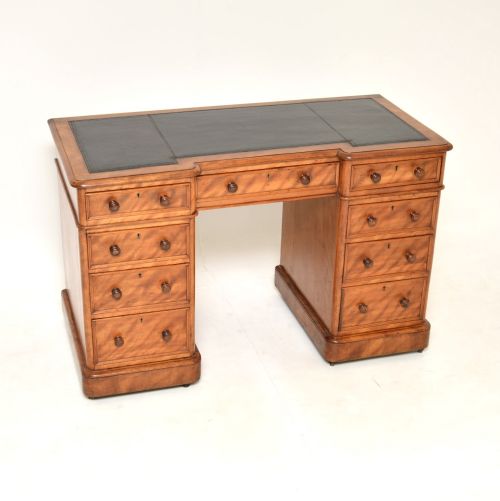
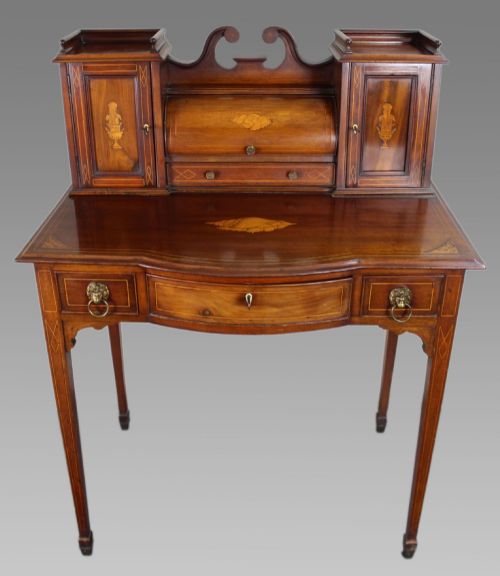
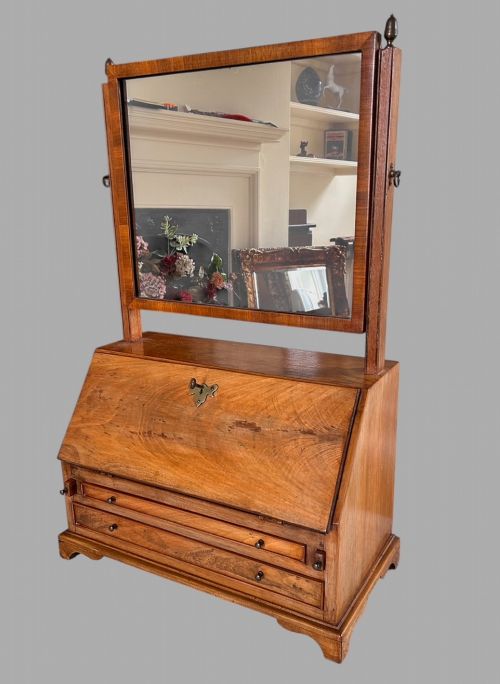
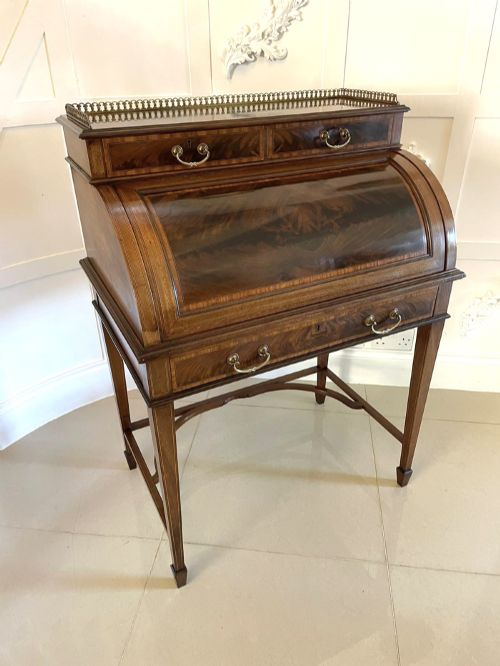
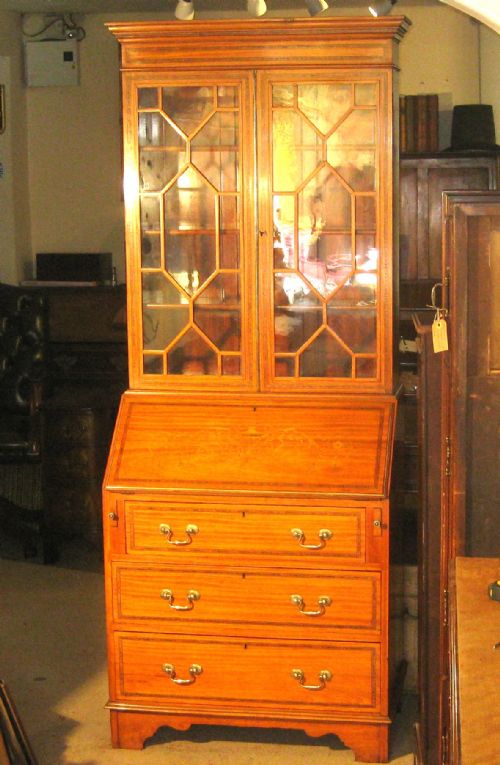
When you search for a satinwood bureau desk, you are looking at pieces designed for private correspondence and manuscript storage, ranging from compact table-top models to towering bureau bookcases. The selection here leans heavily towards Edwardian revivals and late nineteenth-century interpretations, alongside occasional eighteenth-century George III examples.
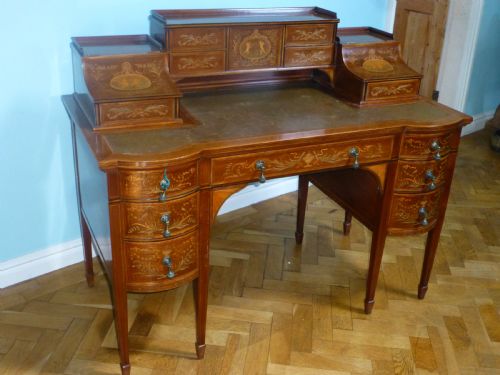
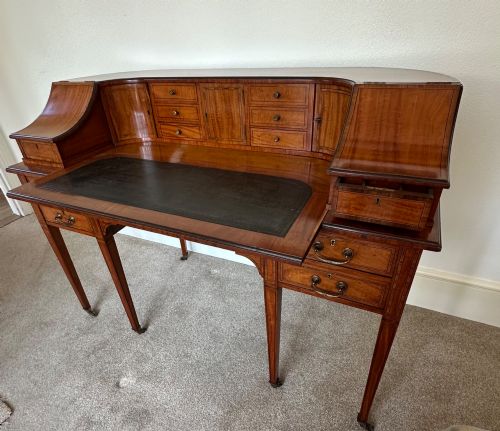
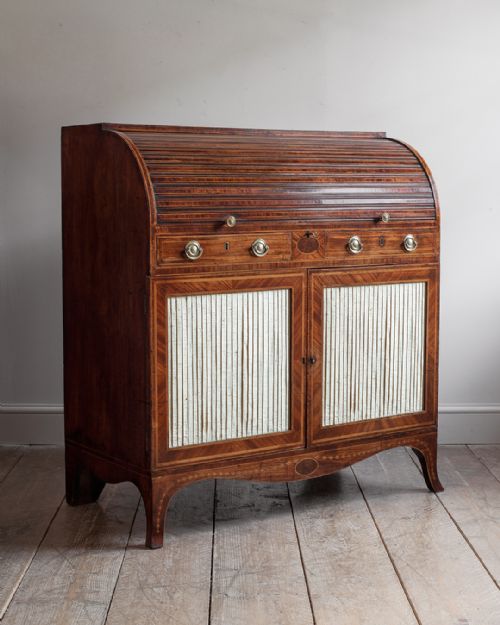
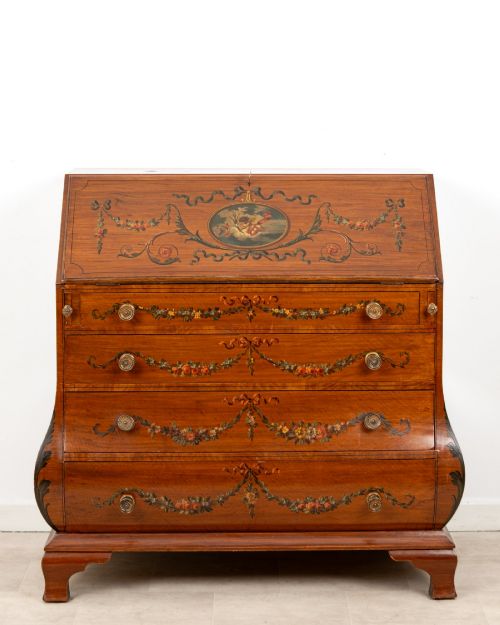
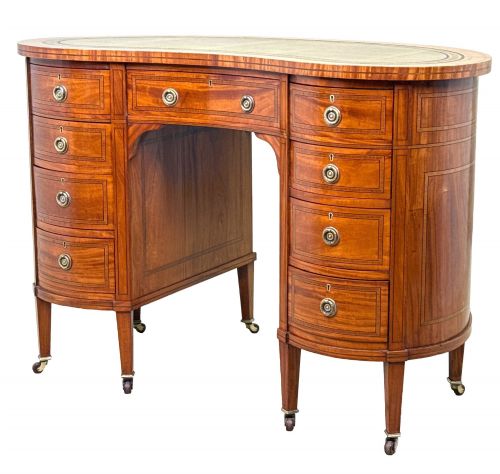
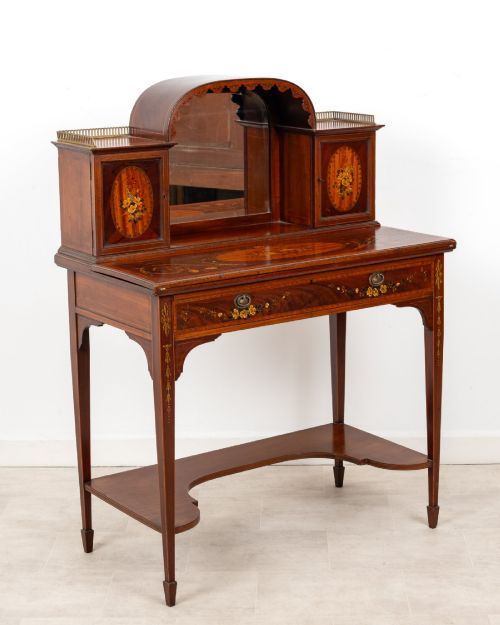
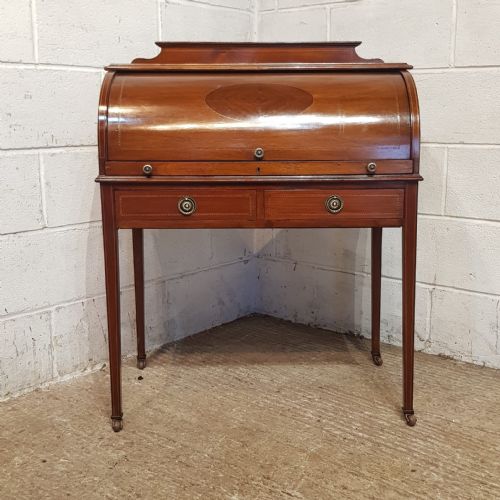
The forms vary from traditional slant-front bureaux and cylinder desks to elaborate Carlton House desks and bureau chests of drawers. You will frequently encounter inlaid mahogany structures dressed with satinwood panels, or solid satinwood pieces embellished with hand-painted details and marquetry.
How they were made
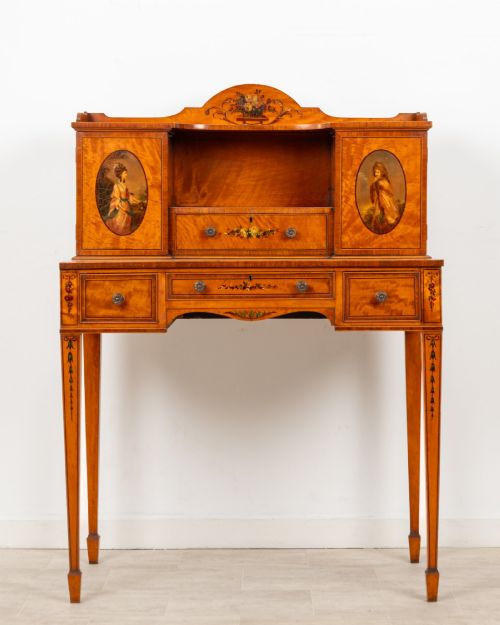
Cabinetmakers utilised the dense, lustrous qualities of satinwood as veneers or primary timbers, often pairing the blonde wood with contrasting mahogany, walnut, or sabicu. Surfaces were frequently enriched with satinwood inlay, marquetry, and delicate hand-painted motifs.
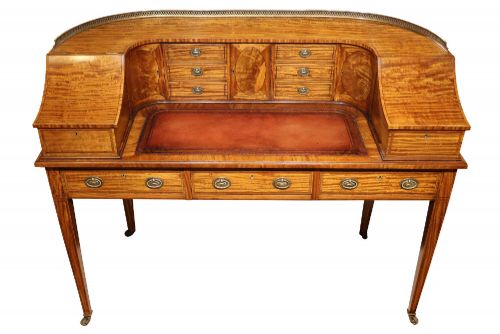
Functional hardware played a structural and decorative role, incorporating brass handles, ormolu mounts, and fitted leather writing surfaces inside the folding or sliding writing compartments.
Several desks include hidden compartments and secret drawers originally designed for keeping private correspondence safe from prying eyes.
What varies in quality
The standard of a piece rests on the selection of the timber veneers and the precision of the marquetry or inlay work. Grain alignment and the subtlety of hand-painted decorations distinguish standard commercial production from exceptional cabinet work.
Interior complexity also defines the upper tier, where fitted stationery compartments, secret drawers, and coordinated tambour or cylinder mechanisms demonstrate superior joinery.
Maple & Co. London·Edwards and Roberts·Donald Ross
The Satinwood Bureau Desk Glossary
- Satinwood
- A durable, exotic timber known for its pale, golden sheen and light-reflecting grain. It became highly fashionable in late eighteenth-century furniture and later Edwardian revivals.
- Carlton House desk
- A form of writing desk featuring a curved superstructure of small drawers and compartments wrapping around the back and sides of the writing surface. This layout originated in the late eighteenth century.
- Secretaire bookcase
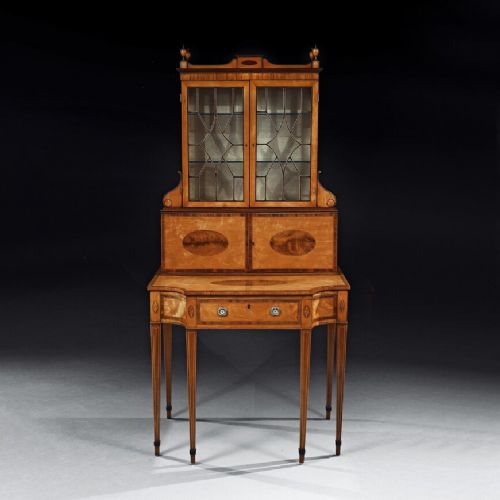
- A tall piece of furniture combining a bookcase top with a pull-out or drop-front writing drawer concealing a fitted interior. Lower sections typically comprise drawers or cupboards.
- Marquetry
- The art of applying pieces of veneer to a structure to form decorative patterns or pictures. Craftsmen used various contrasting woods to create pictorial designs on desktop surfaces.
- Cylinder desk
- A desk with a rotating quarter-cylinder lid that conceals a pull-out writing slide and pigeonholes. It offers a neat way to close up correspondence without clearing the desk.
Satinwood Bureau Desk: Frequently Asked Questions
How do I care for satinwood?
Keep satinwood furniture away from direct sunlight and steady heat sources to prevent the pale timber from darkening or the veneers from drying out.
Dust regularly with a soft, dry cloth and avoid modern silicone polishes that can build up and dull the natural sheen of the wood.
How do I date an Edwardian piece?
Edwardian satinwood pieces, usually dating around 1900, often display Sheraton Revival influences with light proportions, painted floral garlands, and inlaid banding.
Examining the secondary timbers inside drawers and the style of the brass hardware helps confirm the turn-of-the-century manufacturing period.
Can I use the leather top for writing?
Most antique leather inserts provide a smooth, resilient surface suitable for daily writing, provided the leather remains supple and intact.
Treat antique leather gently with specialist leather dressings if it shows signs of dryness, and avoid placing sharp metal objects directly on the surface.