
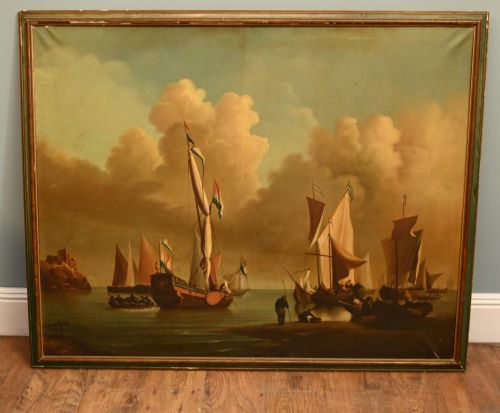
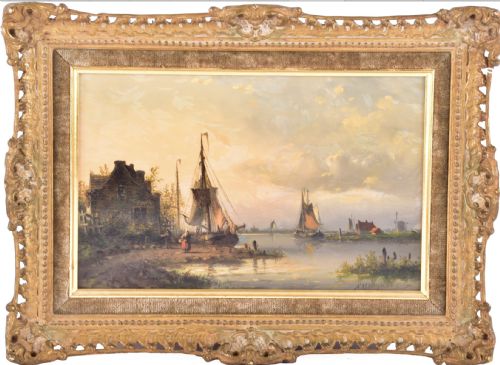
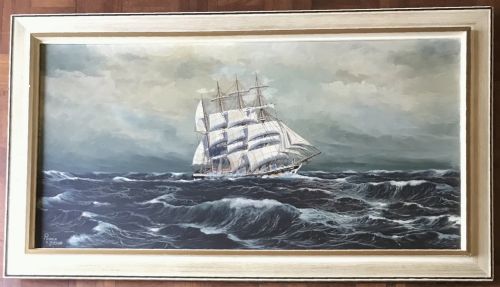


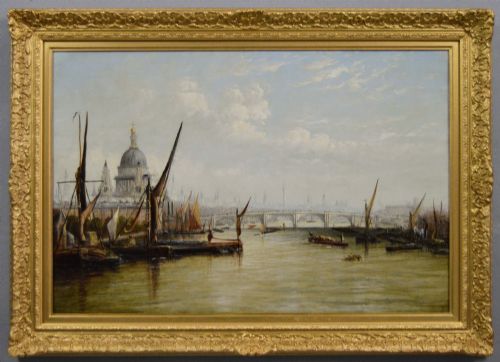
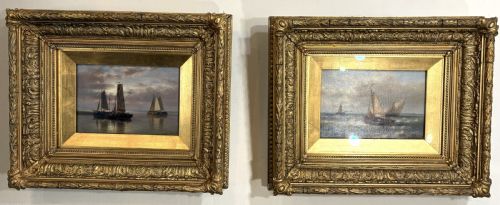


Sailing Boat Marine Canvas
Sailing boat marine canvas works capture maritime labour and coastal weather through oil paint on stretched fabric.
Sailing Boat Marine Canvas
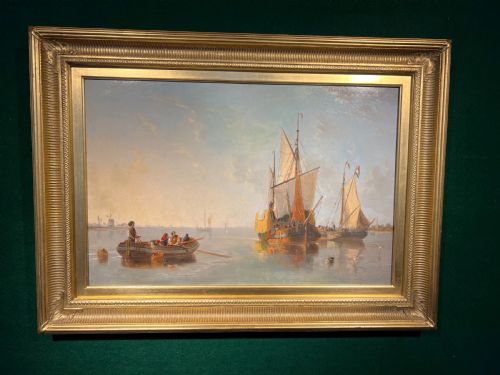
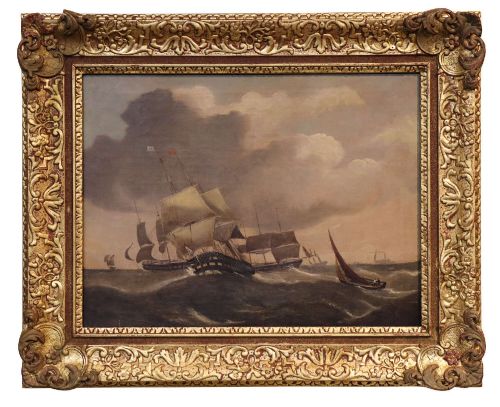
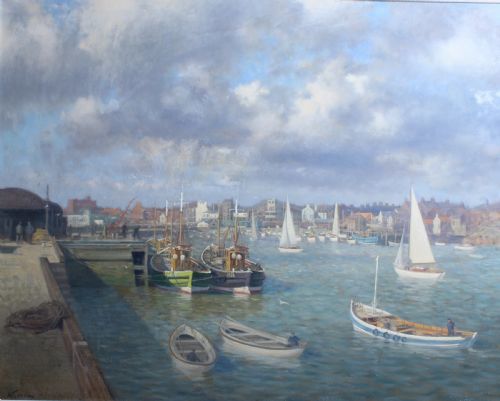
A sailing boat marine canvas typically depicts vessels navigating coastal waters, open seas, or busy harbours under varying atmospheric conditions. The selection spans quiet river scenes with Thames barges and dramatic depictions of Dutch boats in gales.
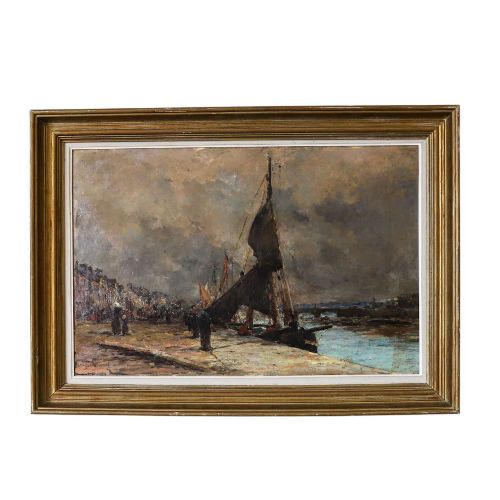
Most examples originate from the nineteenth and twentieth centuries, executed in oil paint upon woven canvas supports. Painters render naval schooners, fishing boats, and grand galleons alongside coastal figures and harbour walls.
The aesthetic bridges traditional maritime recording and impressionist brushwork, reflecting British, French, and Dutch artistic schools. Works range from intimate townscape oil paintings to large coastal scenes housed within period frames.
Materials and construction
Makers apply oil paint directly onto stretched canvas, utilising the tactile qualities of the medium to build texture in sea foam and billowing sails. Impasto techniques appear in twentieth-century examples to create physical depth in the water and sky.
Finished canvases find enclosure in carved wooden frames, often finished with gesso and giltwood or gilt wood details. The combination of oil pigments and heavy frames protects the textile support while defining the visual boundary of the seascape.
Several canvases manage to capture the exact moment a sailor drops a hat into a gale.
Distinctions in execution
Technical proficiency in rendering water movement, light reflection, and rigging accuracy separates standard topographical records from accomplished artistic interpretations. Master painters capture the weight of heavy seas and the specific play of light on damp canvas sails with greater anatomical and atmospheric precision.
The integrity of the original canvas support, the stability of the oil paint layer, and the matching period frame influence the overall physical standing of the artwork. Works bearing clear signatures or attributed to documented maritime painters carry distinct historical weight.
BONAVENTURA PEETERS·John Wilson Carmichael·Abraham Hulk I·Charles Napier Hemy·Edward Seago·Stephen J. Renard
The Sailing Boat Marine Canvas Glossary
- Canvas
- A heavy woven fabric, typically linen or cotton, stretched tightly across a wooden frame to serve as the foundation for oil paintings. It provides a durable and slightly textured surface for pigment application.
- Giltwood
- Wood that has been coated with a thin layer of gold leaf or gold paint, frequently used for ornate nineteenth-century picture frames. This finish adds a reflective border that complements the luminous quality of maritime oil paintings.
- Impasto
- A technique where oil paint is laid thickly on the canvas, standing out noticeably from the surface so that the brush or palette knife marks remain visible. It is often utilised to render churning waves and thick clouds in marine scenes.
- Seascape
- A painting depicting the sea, ships, or coastal views, analogous to a landscape but focused upon marine environments. These works form the primary category of nautical art found in historic oil paintings.
Sailing Boat Marine Canvas: Frequently Asked Questions
How do I date a marine oil painting?
Dating relies upon stylistic markers, costume details of any figures present, and the construction methods of the canvas stretcher and frame. Pigment analysis and artist signatures also provide reliable chronological anchors.
Comparative study against documented works by known nineteenth or twentieth-century marine painters helps narrow the period of creation further.
Where should I hang a sailing boat canvas?
These works require placement away from direct sunlight and excessive humidity to protect the oil paint and canvas fibres from degradation. Stable indoor environments prevent the wood stretcher and gilt frame from warping.
Positioning the painting at eye level on a sturdy wall allows the viewer to appreciate the texture of the impasto and the fine details of the rigging.
What is the difference between a seascape and a townscape?
A seascape focuses primarily on open water, shipping vessels, and coastal weather with the sea as the dominant subject. A townscape incorporates architecture, harbour walls, and urban life adjacent to the water.
Many maritime paintings combine both genres by showing fishing boats operating near bustling port structures or river bridges.
How should I clean an antique oil painting?
Dust accumulation requires gentle removal with a soft, dry brush without applying pressure to the canvas surface. Professional conservators should handle any chemical cleaning or varnish removal.
Touching the oil paint directly with moisture or household cleaners risks permanent damage to the pigment layer.