



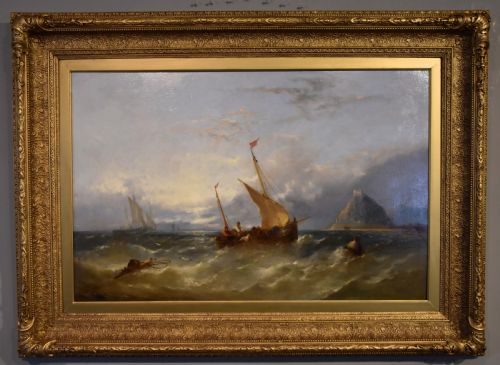
Antique Boat Canvas Painting
An antique boat canvas painting brings the shifting moods of 19th-century and early 20th-century maritime life directly into a room.
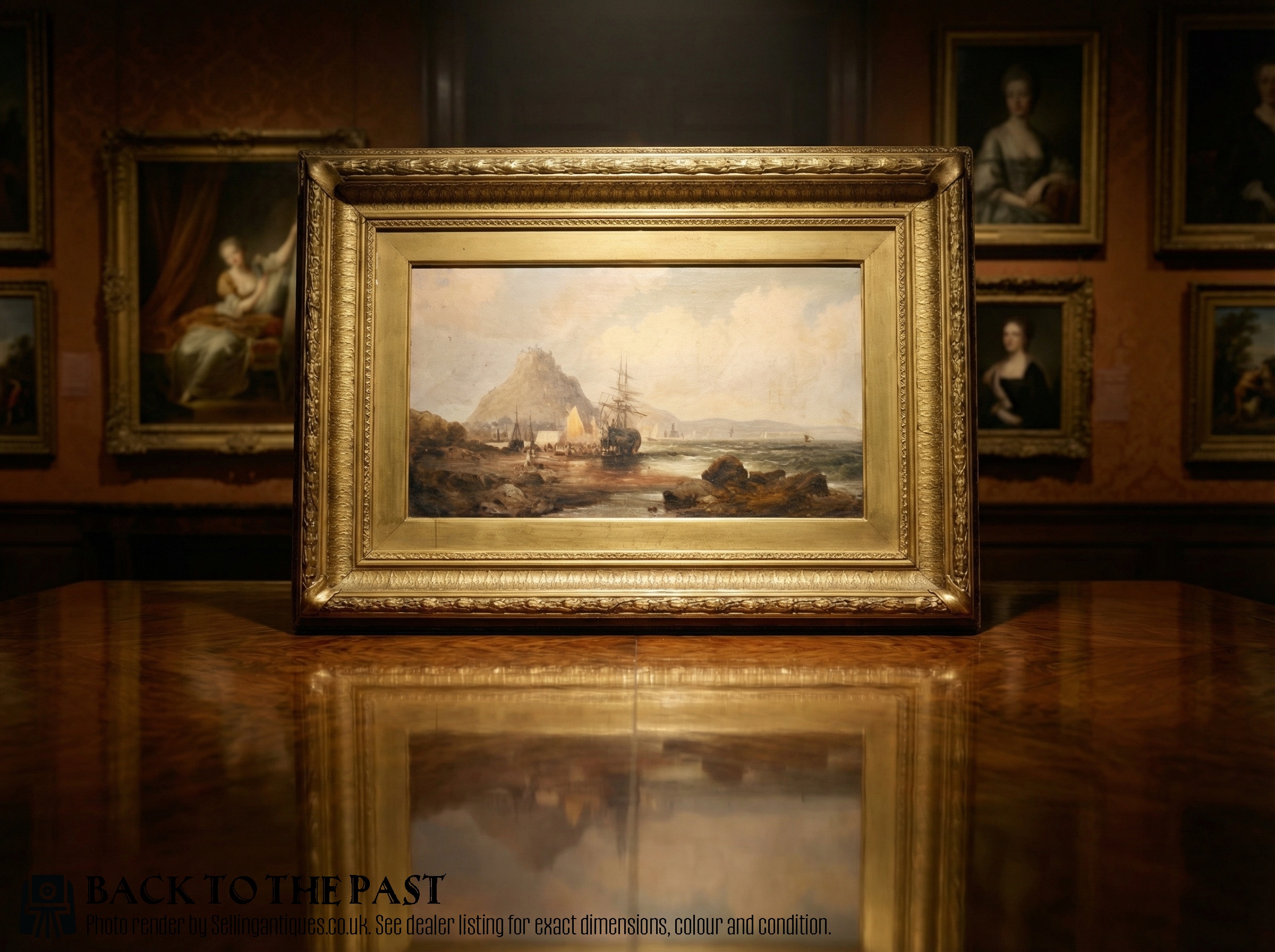
Antique Boat Canvas Painting
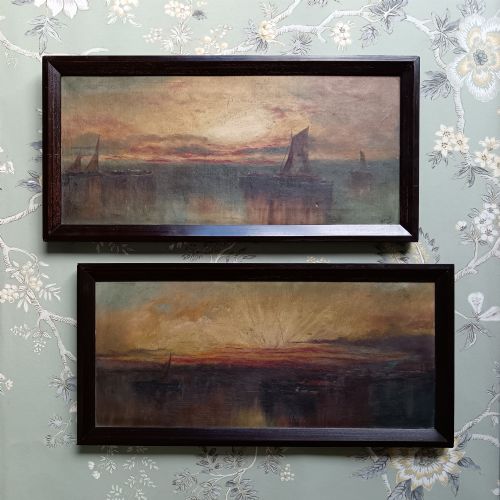
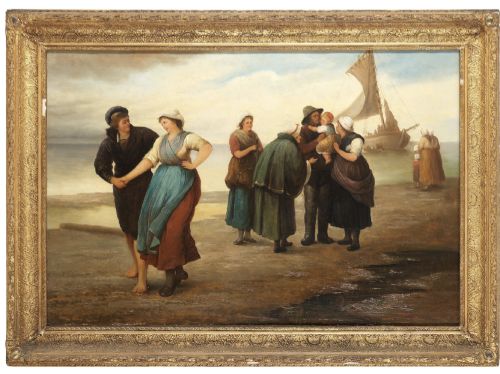
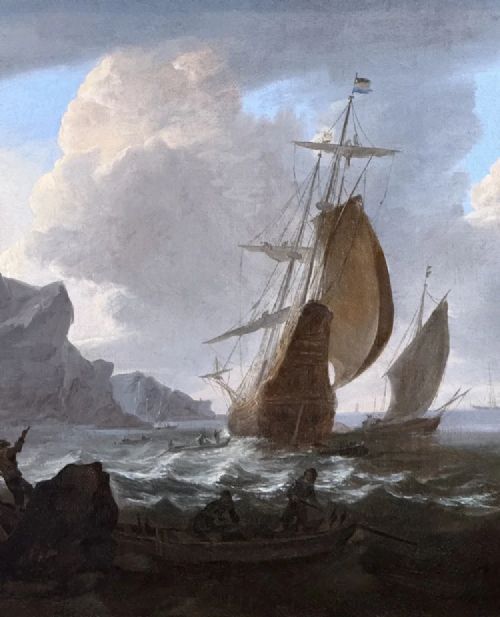
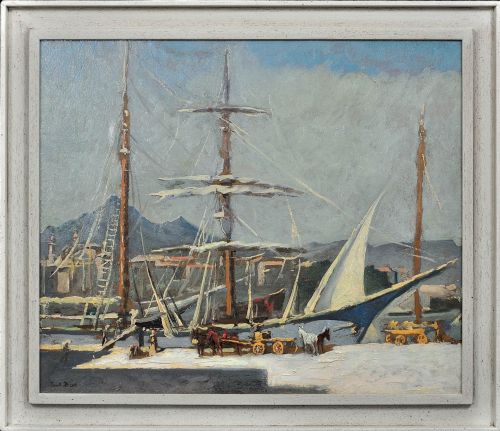
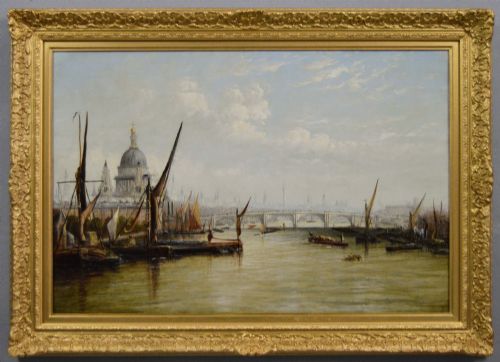
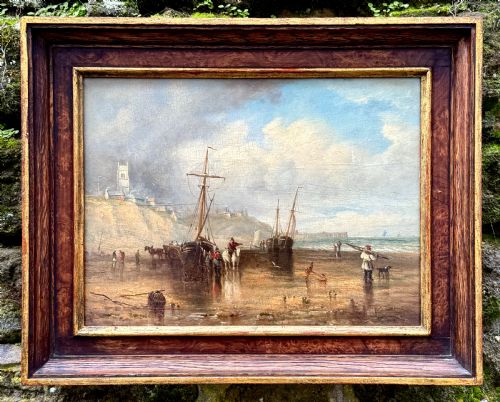
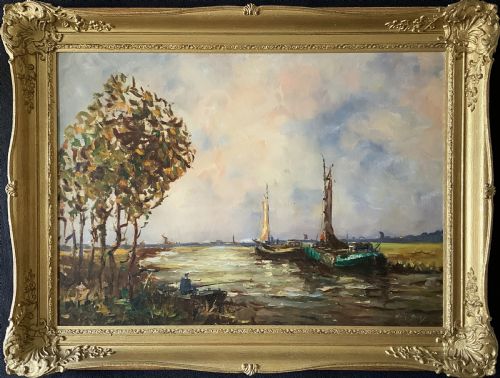
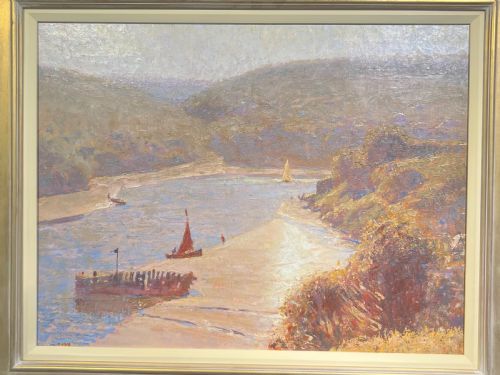
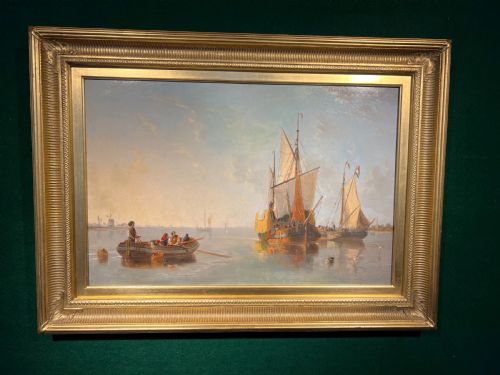
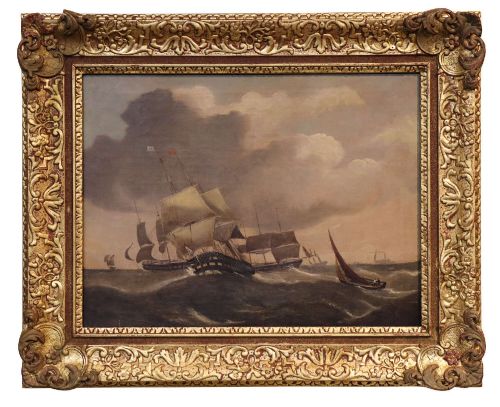
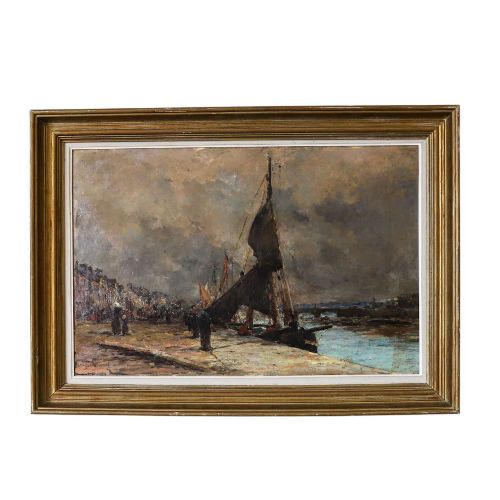
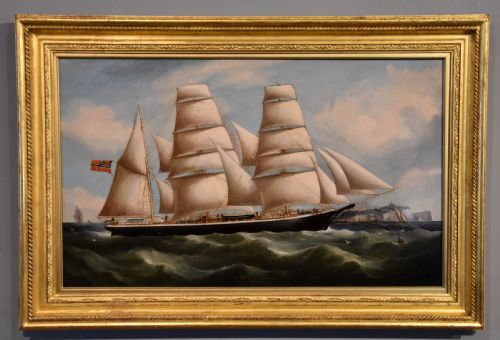
When searching for an antique boat canvas painting, buyers encounter oil paintings depicting vessels ranging from Dutch gale runners to Victorian fishing smacks on choppy coastal waters. These works capture naval engagements, quiet river stretches, and bustling harbour scenes across the nineteenth and early twentieth centuries.
The most common examples on this page date from the Victorian and Edwardian periods, executed by British and continental European artists. Such pieces typically show sailing ships, Thames barges, or coastal figures at low tide, rendered with direct observation of maritime atmosphere.
Beyond standard framed wall art, the selection occasionally extends to related decorative items like model boats, reflecting a broader 19th-century fascination with nautical trade and exploration.
Canvas, oil paint, and gilded frames
These works rely on oil paint applied to woven canvas stretched over wooden frames, allowing artists to build layered textures for water, sky, and sail. The tactile quality of the paint surface often retains visible brushwork from the artist's hand.
Presentation played an integral role, with many paintings housed in period giltwood or gesso frames enriched with gold leaf. These heavy wooden surrounds were designed to complement the maritime subject matter and project domestic prestige.
Antique Boat Canvas Painting Retail Price Guide 2026
Typical asking prices for boat canvas painting among the pieces listed under this phrase on Sellingantiques today, from the lower quarter to the upper quarter. They describe what is for sale here now, not the wider market.
The inventory records regional British and continental European scenes, capturing harbours from Cornwall and Whitby to Marseille and Rotterdam.
Composition, atmosphere, and framing
The distinction between ordinary and exceptional maritime canvases lies in the artist's handling of atmospheric light and water movement. Superior pieces convey the weight of heavy seas and the specific quality of dawn or twilight rather than relying on formulaic harbour layouts.
Condition and originality dictate standing within the market, particularly the preservation of the original oil surface and the harmony of the accompanying gilt frame. Works retaining clear signatures, exhibition histories, or documented provenance command stronger presence.
BONAVENTURA PEETERS·Francis Moltino·Thomas Creswick·Willem Bos·John Wilson Carmichael·Richard B. Spencer·William Henry Williamson·Abraham Hulk I·William Edward Webb·Edward Matthew Elliott·Charles Napier Hemy·Jean-Baptiste Olive·Gustave De Bréanski·Adrian Van Porten·Edward Henry Eugene Fletcher·George SHAW·Edward Seago·T.S. Wallis·Hendrik Willebrord Jansen·George Gregory·George Morland
The Antique Boat Canvas Painting Glossary
- Gesso
- A plaster-like mixture applied to wooden frames before gilding, providing a smooth base for intricate moulding work. It is prone to cracking or chipping over long periods.
- Giltwood
- Wood carved and coated with thin layers of gold leaf or metallic powder. This finish gives antique frames their characteristic warm metallic lustre.
- Seascape
- A work of fine art depicting the sea, ships, or coastal views. These subjects dominated 19th-century maritime painting traditions.
- Stretcher
- The wooden framework that holds a canvas taut behind a painting. Older examples often show wedge keys in the corners used to adjust tension.
- Provenance
- The documented history of ownership surrounding a work of art. Clear records help verify attribution and date.
Antique Boat Canvas Painting: Frequently Asked Questions
How do I date an antique marine painting?
Dating relies primarily on costume details of any figures present, the rigging style of the depicted vessels, and the construction methods of the canvas stretcher behind the work.
Framing styles also offer strong chronological clues, as Victorian and Edwardian makers utilised distinct moulding profiles and gilding techniques.
Where should I hang a large maritime canvas?
Large-scale seascapes require stable wall space away from direct sunlight and fluctuating heat sources, which can cause the underlying canvas and oil paint to crack.
Consider hanging them at eye level in rooms with adequate clearance so the weight of the original gilt frame commands the wall properly.
Are signed paintings more valuable?
Signatures or monograms provide a direct link to a recorded artist, making attribution straightforward and connecting the piece to known exhibition dates or school movements.
However, many fine 19th-century coastal scenes remain unsigned or bear indistinct initials while still demonstrating high artistic merit and skilled brushwork.