


Green Coastal Oil Landscape
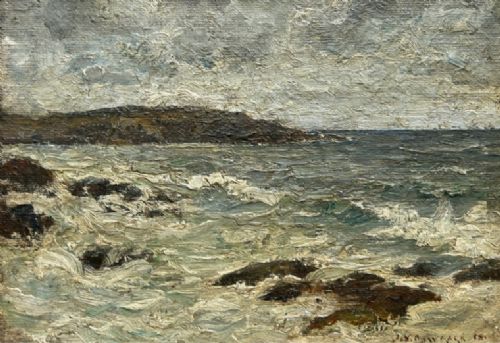
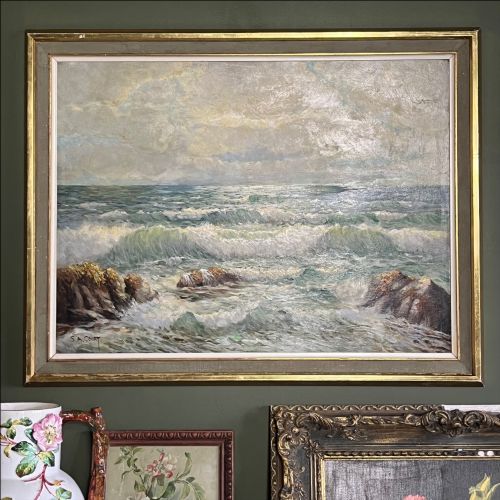
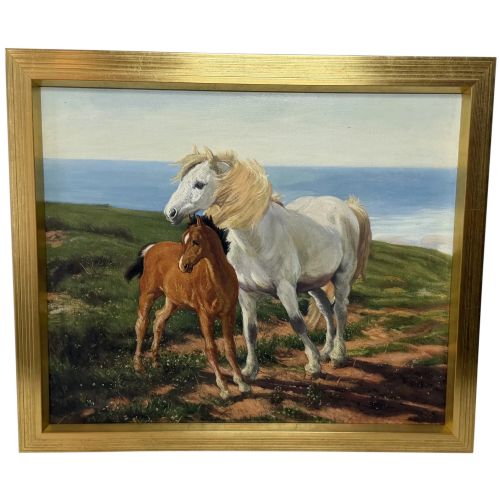
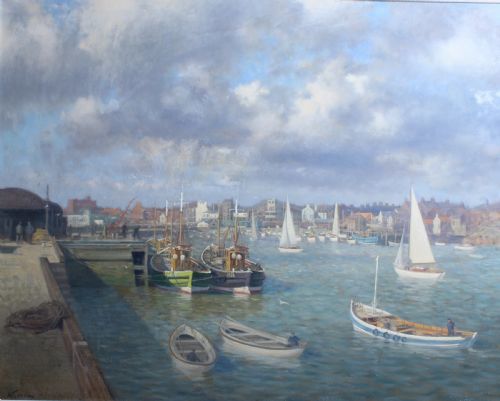
When you search for a green coastal oil landscape, you are looking at maritime views and shorelines captured in oil paint across the nineteenth and twentieth centuries.
Green Coastal Oil Landscape
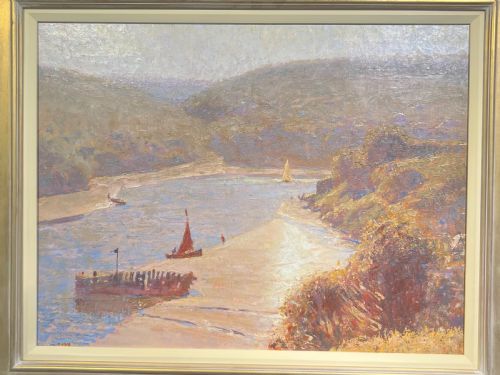
A green coastal oil landscape captures shorelines, harbours, estuaries, and cliffs through the medium of oil paint, often rooted in British and European traditions. These works span from the nineteenth century through the Victorian era and into the mid-twentieth century, encompassing periods such as the Edwardian era and mid-century modern movements.
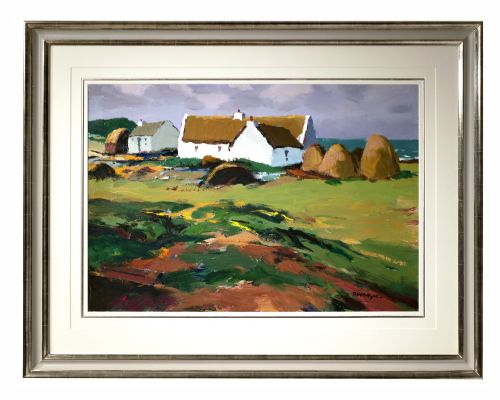
The compositions on this page range from plein air studies of Cornwall, Dorset, and Yorkshire to larger studio canvases depicting harbours, fishing boats, and rocky seascapes. Painters utilise varied approaches, from traditional academic marine scenes to British Impressionism and impasto textures.
How they were made
Artists painted primarily with oil paint on supports of canvas, wood panels, or boards, sometimes applying thick impasto layers to build texture on the surface. Works created en plein air relied on the direct observation of coastal light and weather, while studio pieces often employed underlying sketches to establish the composition before layering pigment.
Framing typically involved carved or moulded wood finished with gilt, serving to protect the edges of the canvas or board while complementing the tonal qualities of the maritime scene.
Among the coastal views, a solitary boxer and a photographer make an unexpected appearance by the seaside.
What varies in quality
The strength of a coastal oil painting rests in the handling of light, atmosphere, and brushwork, where confident mark-making brings movement to water and air. Works by established named artists command attention for their distinct command of colour harmony and spatial depth compared to anonymous or student pieces.
The condition of the pigment and the stability of the canvas or board affect the longevity and visual impact of the work, alongside the presence of period framing that suits the character of the painting.
Sidney A Court·Donald McIntyre·Cecil Allan Mould·Joseph Edward Hennah·Helen Layfield Bradley·James Fry·William J B Jenkins·Florence Hess·Harry Pennell·Gudrun Sibbons·William Lambert Bell·William Savage Cooper·James Watson·William Sidney Cooper·William Greaves·John W Morris·Walter Meegan·Charles Jones·Charles Martin Powell·Alastair Flatterly·J De Breanski·Samuel Bough
The Green Coastal Oil Landscape Glossary
- Impasto
- Paint applied thickly to a canvas or board, standing out in relief from the surface and capturing the movement of the artist's brush. This technique adds tactile depth to elements like crashing waves or rocky cliffs.
- Plein air
- Painting outdoors in direct natural light to capture the fleeting atmospheric conditions of a specific coastal location. Artists working this way often completed their pieces rapidly on small wood panels or canvas.
- Estuary
- The tidal mouth of a large river where the tide meets the sea, frequently chosen as a subject for nineteenth and twentieth-century landscape painters. These views offer a complex interplay of land, water, and shifting light.
- Gilt
- A thin layer of gold leaf or metallic paint applied to wooden picture frames. It was widely used in Victorian and Edwardian framing to provide a warm, reflective border around oil paintings.
Green Coastal Oil Landscape: Frequently Asked Questions
What is a green coastal oil landscape?
These artworks depict marine views, cliffs, and shorelines using oil paint on canvas or board. They range from nineteenth-century views to mid-century modern interpretations.
Such paintings often document specific British and European coastal locations, reflecting changes in artistic style over the decades.
How were these coastal paintings created?
Artists utilised oil paints applied to supports such as prepared canvas, wooden panels, or boards. Many works were painted en plein air to capture immediate atmospheric effects.
Others were developed in studios using preliminary sketches, occasionally incorporating thick impasto techniques to build texture on the surface.
How do I date a coastal oil painting?
Dating relies on stylistic evidence, signatures, artist records, and framing materials. Victorian and Edwardian works often feature heavier gilt frames and traditional academic brushwork.
Mid-century pieces tend toward looser interpretations, impressionistic colour palettes, and boards characteristic of the nineteen-fifties and sixties.
How should I display an oil painting?
Hang paintings away from direct sunlight and excessive humidity to protect the oil pigment and the wooden support. A stable indoor environment prevents warping in boards and canvas.
Ensure the piece has a secure hanging wire and rests safely within its period or replacement frame on a sturdy wall.