
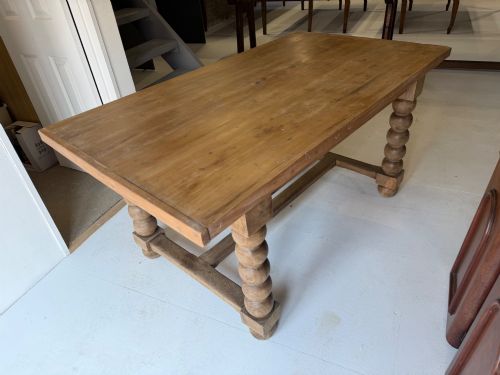
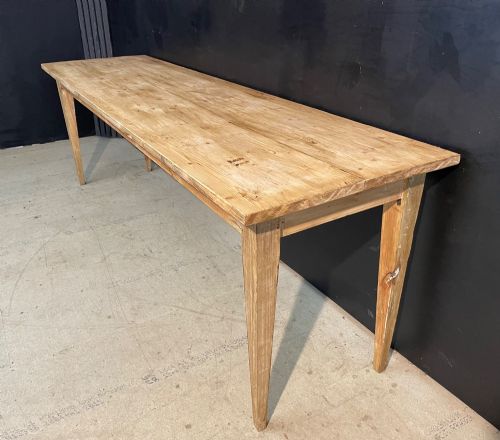
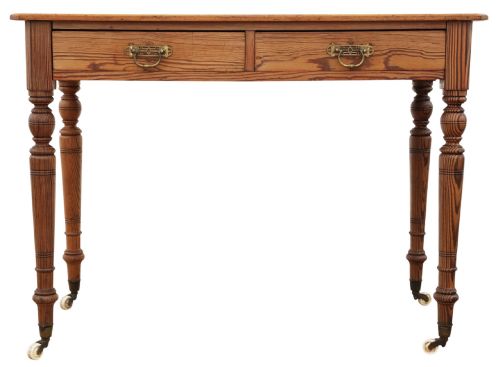
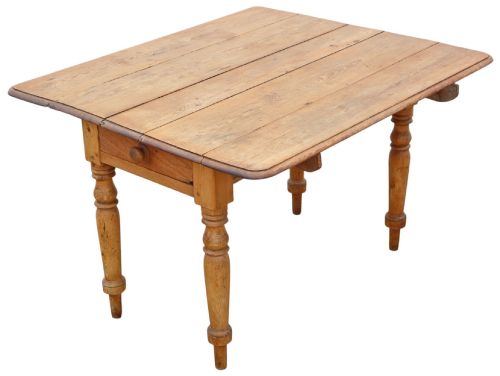

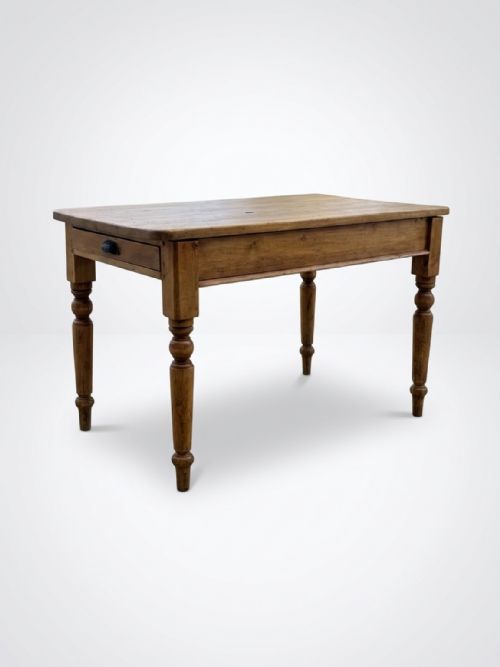
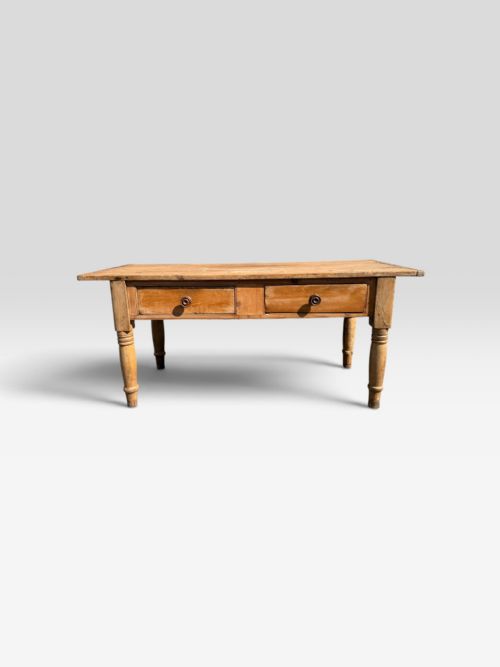
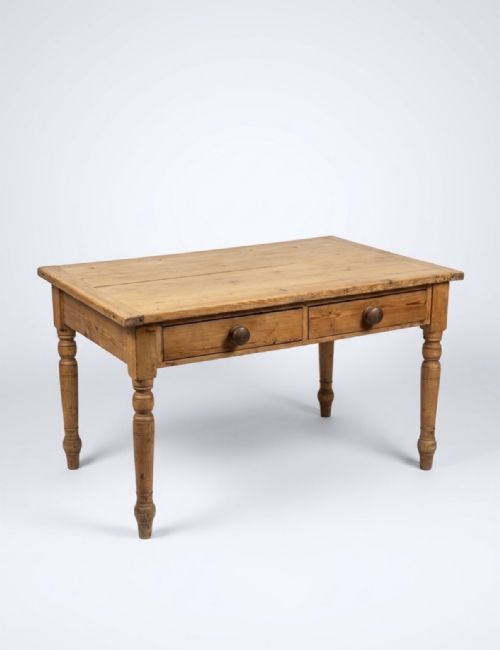
Rustic Country Side Table
These rustic country side tables are honest domestic pieces built from pine, oak, and cherrywood for everyday use.
Identifying rustic country side tables
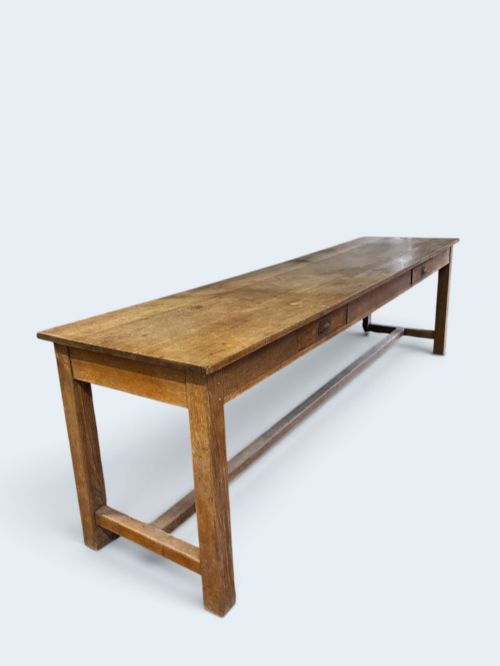
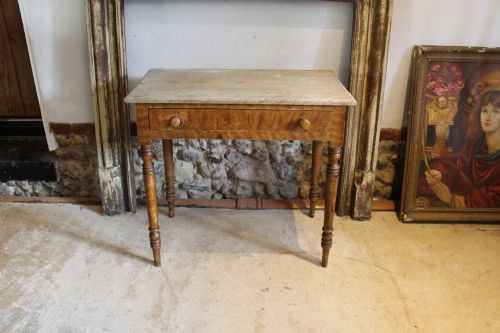
A rustic country side table serves as a sturdy auxiliary surface in domestic spaces, appearing in forms such as occasional tables, console tables, side tables, and kitchen tables. These pieces emerge from English country and French country traditions, carrying the straightforward utility demanded by rural households.
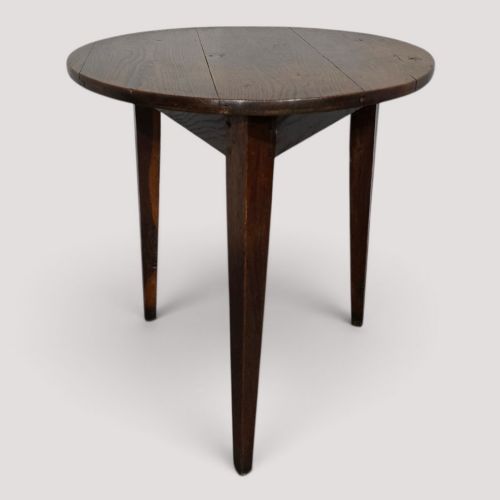
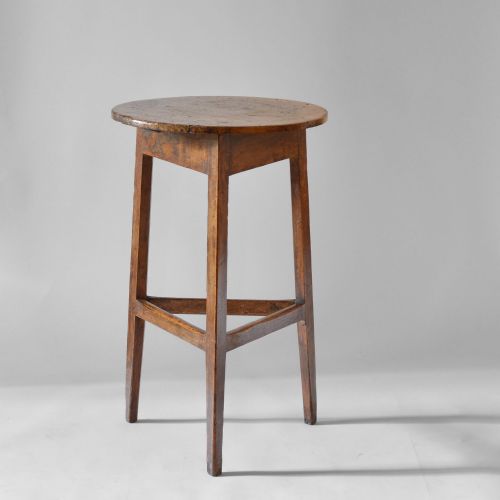
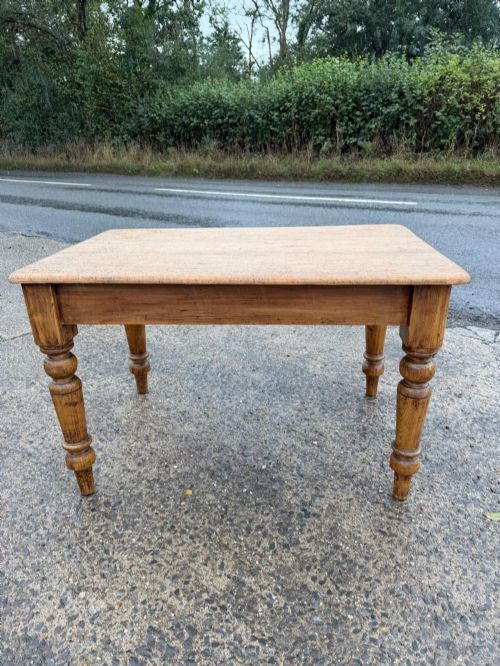
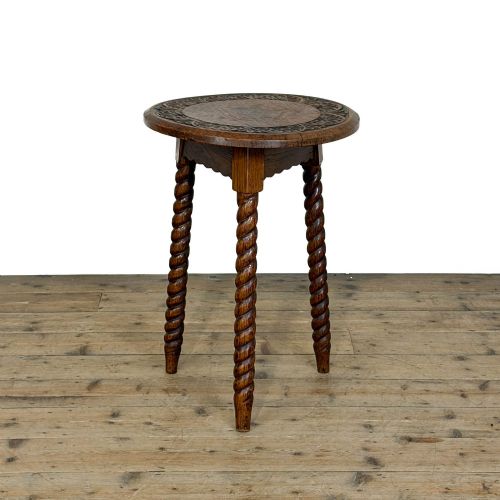
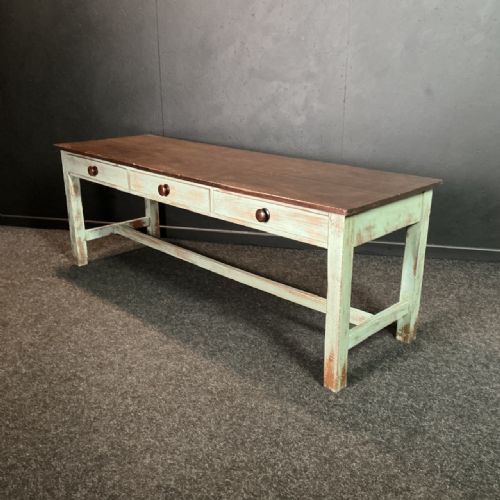
The listings on this page show examples ranging from the eighteenth century through the Victorian era to eighteen ninety. Forms include painted cricket tables with three legs, painted pine side tables, and oak lamp tables intended for practical daily service.
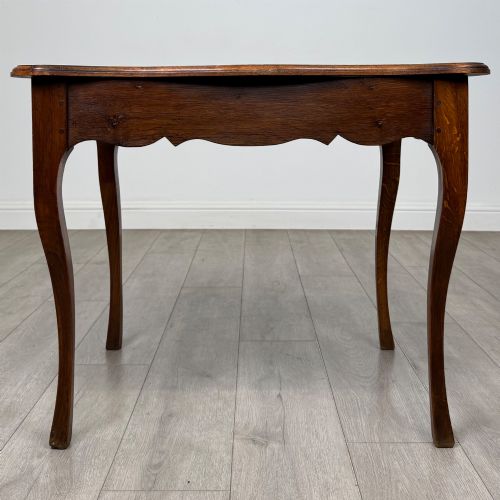
Buyers frequently encounter nineteenth-century pine and painted wood constructions alongside earlier eighteenth-century oak pieces. Walnut bedside cupboards and cherrywood console tables also appear, reflecting the broad interpretation of rural domestic furniture across different regions.
Materials and construction
Wood selection relies on accessible regional timbers, predominantly pine, oak, cherrywood, and walnut, complemented by timber and occasional brass or metal hardware. Makers utilise solid planks and straightforward joinery suited to utilitarian furniture rather than elaborate cabinet-making.
Surfaces often receive layers of paint, creating painted finishes that endure decades of domestic wear while altering the visual weight of the timber beneath. Structural elements remain unpretentious, prioritizing stability and function over decorative ornamentation.
Retail Price Guide 2026
Typical UK retail prices for rustic country side table, calculated from the Sellingantiques database of over a million retail prices indexed since 2003. This retail price guide relies exclusively on Sellingantiques data; no external sources or auction records are used, so the figures do not describe the wider market.
Judgements of quality
Quality rests upon the integrity of the timber and the depth of surface patination accumulated through years of domestic service. Pieces retaining their original painted finishes and uncompromised structural joints command greater interest than those stripped or heavily altered.
Proportion and utility define the better examples, where simple forms achieve a balanced presence. The character of the wood grain, combined with the honest wear of the edges, separates utilitarian survivors from ordinary later reproductions.
The Rustic Country Side Table Glossary
- Cricket table
- A small, lightweight table traditionally featuring three splayed legs designed to stand steady on uneven flagstone floors. This form frequently appears in painted pine or oak during the nineteenth century.
- Console table
- A wall-mounted or freestanding narrow table often used in hallways or serving areas. These pieces utilise timbers such as cherrywood or oak to provide a slim surface for domestic display.
- Patina
- The surface sheen and softening of edges developed on wood and paint through centuries of handling and cleaning. This quality indicates genuine age and continuous use.
- Lamp table
- A compact occasional table scaled to hold a light source beside seating. Eighteenth and nineteenth-century versions typically employ solid oak or pine construction.
Frequently Asked Questions
What is a cricket table?
A cricket table is a traditional three-legged occasional table designed to remain stable on uneven floors. These pieces often feature round wooden tops supported by splayed legs.
They served various portable duties in country houses and cottages. Their light construction made them easy to move beside a hearth or chair.
How old are these tables?
The pieces span from the eighteenth century through the Victorian period to the late nineteenth century. Eighteenth-century examples generally employ oak, while Victorian pieces frequently utilise pine.
Construction details and timber characteristics help distinguish the earlier periods from later nineteenth-century work. Paint layers and hardware styles also offer clues to age.
Where were these tables used?
These utility tables worked in kitchens, hallways, and living spaces across English and French country homes. Their unpretentious design suited domestic tasks and everyday storage.
Side tables and console tables provided surface space in narrow hallways or dining areas. Their sturdy timbers handled heavy daily demands.
Are painted finishes original?
Many tables retain historic painted surfaces applied to protect or refresh the underlying pine and wood. These layers often show wear that corresponds to the age of the piece.
Examining the paint helps reveal whether the finish accumulated through successive generations of use. Original pigment adds character and historical depth to rural furniture.