


Rust Persian Carpet
A rust persian carpet brings deep terracotta ground tones and geometric or floral motifs into a room, offering durability and enduring visual warmth.
Rust Persian Carpet
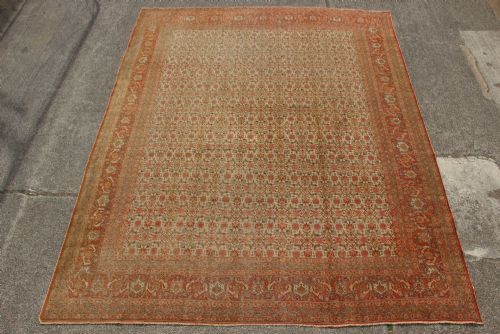
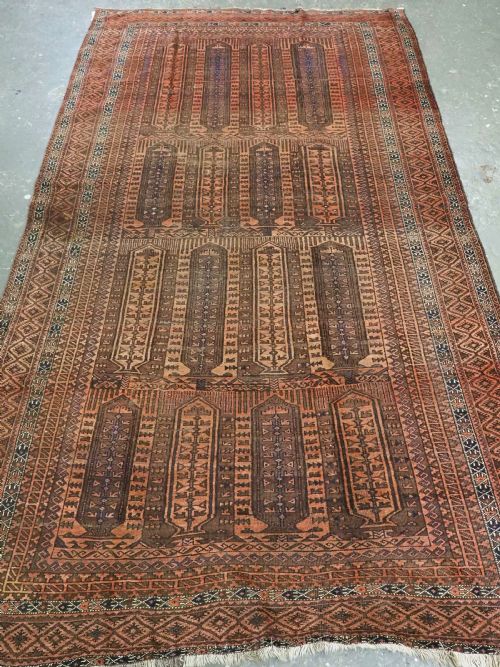
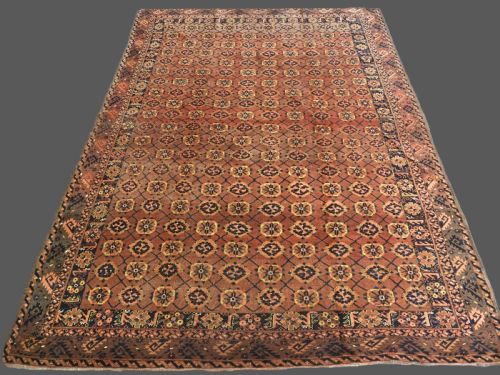
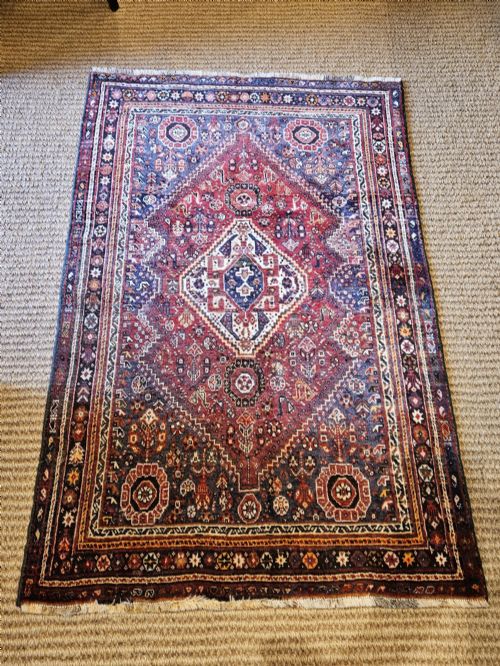
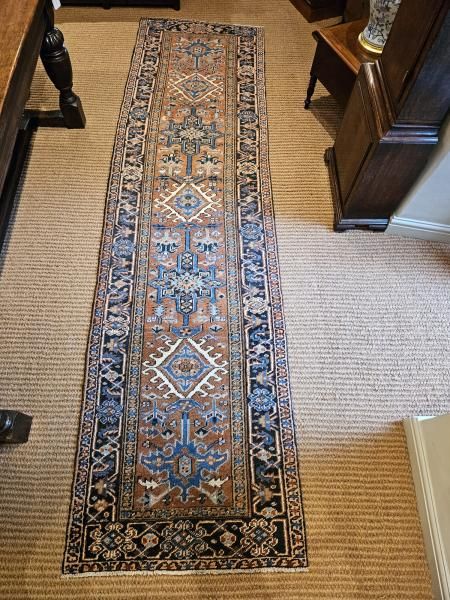
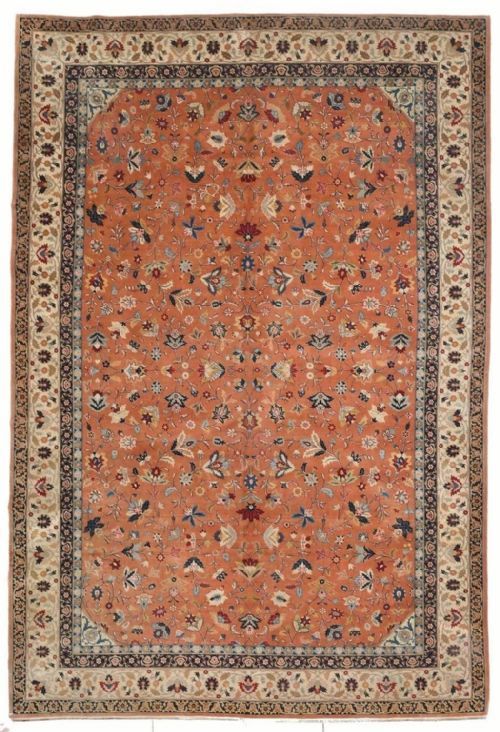
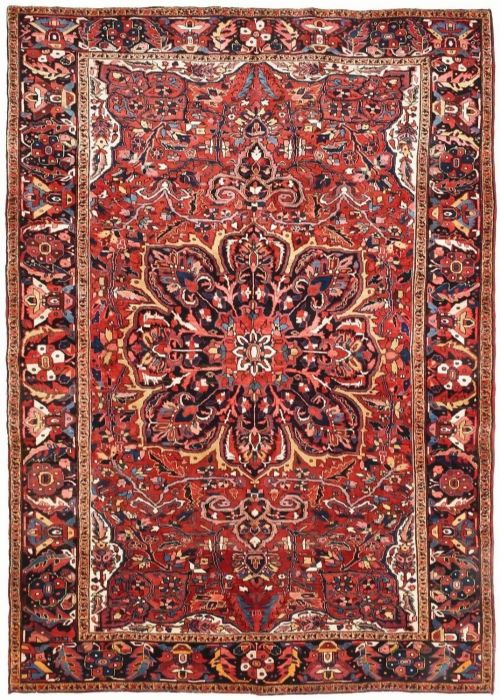
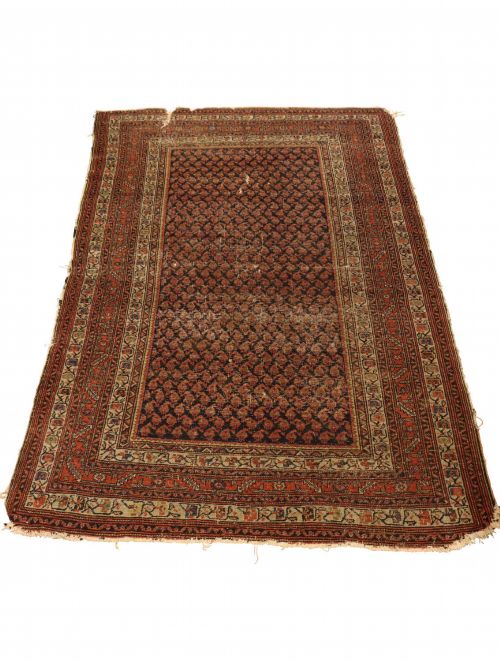
A rust persian carpet anchors a room with rich reddish-brown or terracotta fields derived from traditional dyestuffs, appearing across diverse regional traditions such as Heriz, Tabriz, and Baluch. These textiles span the mid-nineteenth century to the early twentieth century, showing a mix of large format country house carpets and smaller tribal formats.
Buyers inspecting this selection encounter substantial wool pile hand-knotted onto sturdy cotton or wool foundations, often displaying classic geometric medallions, all-over boteh patterns, or elaborate floral schemes. The predominant version on this page is the room-sized Heriz or Tabriz carpet featuring warm rust and terracotta tones.
Regional weaving centres each contribute distinct structural traits to these floor coverings, ranging from the coarse, durable wools of village workshops to the fine knotting of city ateliers. Examining the back of a carpet reveals the tightness of the weave and the characteristic knot structure peculiar to its origin.
How they were made
Weavers constructed these pieces using hand-spun wool for the pile, secured with sturdy knots onto foundations typically composed of cotton or wool. Goat hair occasionally appears in the outer guard borders or selvages of tribal pieces for added durability.
Natural dyes provide the enduring palette, yielding deep rust, madder red, and indigo blue hues that mellow gracefully with age. Artisans tied symmetrical or asymmetrical knots by hand, working from traditional design repertoires passed down through generations.
Regional styles represented include Heriz, Tabriz, Baluch, Afshar, and Afghan Turkmen traditions.
What varies in quality
Knot density and precision of the drawing set apart the finest workshop productions from simpler village or tribal weavings. City carpets like Tabriz exhibit intricate curves and high knot counts, whereas village Heriz pieces favour bold, architectural geometry with robust wool.
The choice of materials and the depth of the natural dyes dictate the longevity and visual resonance of the pile. Supple, lanolin-rich wool retains its lustre far better than dry or brittle fibre, ensuring the rust field maintains its tonal variation.
The Rust Persian Carpet Glossary
- Boteh
- A stylised almond or pear-shaped motif representing a floral or flame symbol. This recurring element appears frequently across Persian and tribal rugs.
- Heriz
- A style of carpet originating from north-west Persia, known for bold rectilinear medallions and sturdy construction. These pieces often feature prominent rust and terracotta fields.
- Tabriz
- A major weaving city in north-west Persia producing finely knotted carpets with classical floral designs. Workshop pieces from this centre display exceptional technical precision.
- Madder
- A natural vegetable dye extracted from the roots of the Rubia tinctorum plant. This dye produces the rich rust, brick, and red tones foundational to these carpets.
- Gul
- A medallion or repeating octagonal block pattern characteristic of tribal weaving traditions, particularly among Turkmen and Baluch groups. Each motif signifies specific clan lineages.
Rust Persian Carpet: Frequently Asked Questions
How do I style a rust persian carpet in a modern room?
The rich terracotta and earthy red tones of a rust persian carpet provide a natural anchor for neutral or contemporary furniture. Pairing the textile with minimalist wood or leather elements allows the traditional geometry and deep ground colour to stand out.
Because these carpets draw on versatile vegetable dyes, they bridge the gap between stark modern interiors and classic architectural spaces. Layering the rug over plain wooden flooring adds immediate texture and warmth to a living area or study.
What is the difference between a village carpet and a city carpet?
Village and tribal carpets, such as those from Heriz or Baluch traditions, typically employ bolder geometric designs and heavier wool. City productions from centres like Tabriz or Khorassan showcase finer knotting and more elaborate curved floral compositions.
While village pieces rely on memory and local tribal motifs, city workshops utilise master cartoon drawings. Both approaches result in durable floor coverings, but the visual language shifts from rustic abstraction to refined floral intricacy.
How do I care for an antique wool carpet?
Regular gentle vacuuming without a rotating power head keeps dust from settling deep into the wool pile. Professional specialist cleaning ensures the natural lanolin remains intact and prevents any dye migration.
Placing a quality underlay beneath the carpet prevents slipping and reduces friction between the foundation and the floorboards. Rotating the rug every year ensures even wear across high-traffic areas.
How can I tell the age of these carpets?
Dating relies on examining the subtle shifts in natural dye palettes, structural materials, and stylistic conventions. Pieces produced before the widespread introduction of synthetic aniline dyes in the late nineteenth century exhibit characteristic variation in their rust and madder tones.
Structural analysis of the foundation warps and wefts, along with the specific knotting technique, helps link a carpet to a particular production period. Frayed selvages and natural wear patterns further corroborate the age of nineteenth and early twentieth-century examples.