
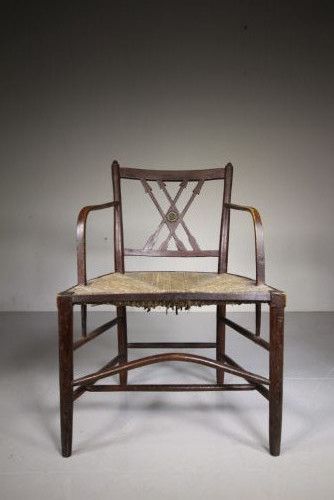

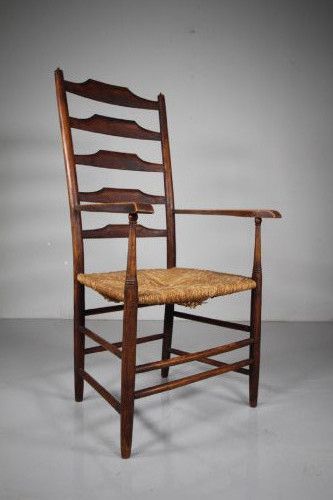
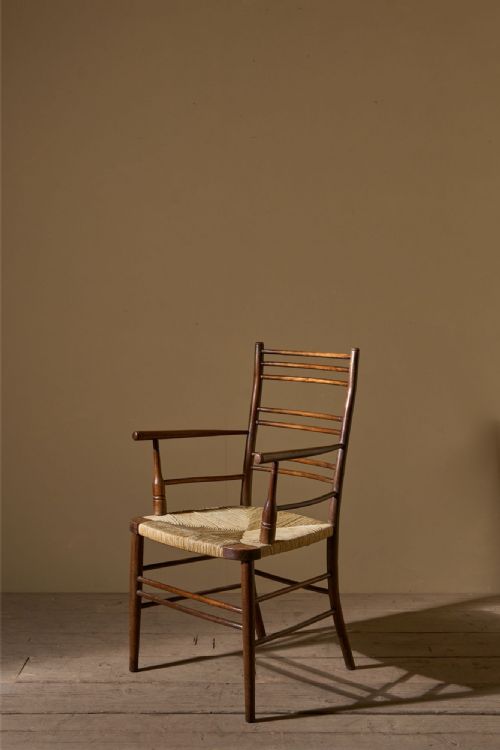
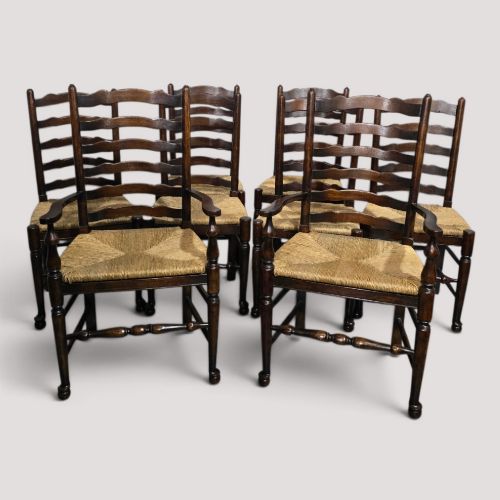


Rush Seated Carver Chair
A rush seated carver chair brings tactile warmth and vernacular strength to a room through its woven seat and open arms.
Rush Seated Carver Chair
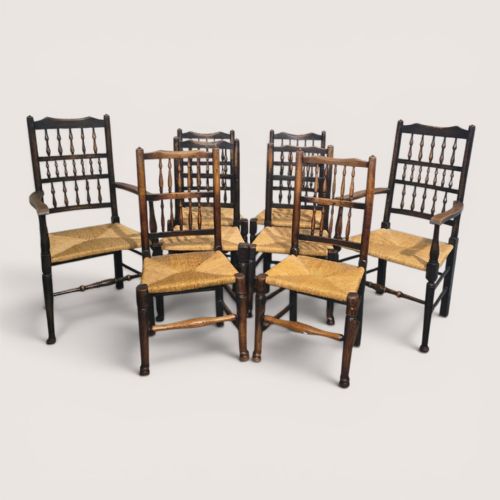
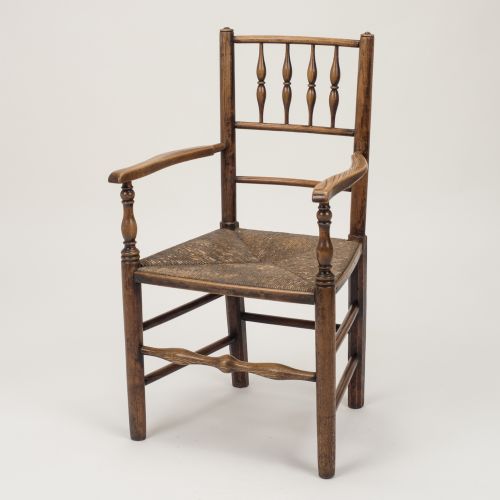
A rush seated carver chair is a substantial armchair designed for domestic utility, typically featuring a woven rush seat supported by a timber frame with open arms. When searching for a rush seated carver chair, buyers encounter pieces stemming from various periods including the Georgian era, the nineteenth century, and the Arts and Crafts movement.
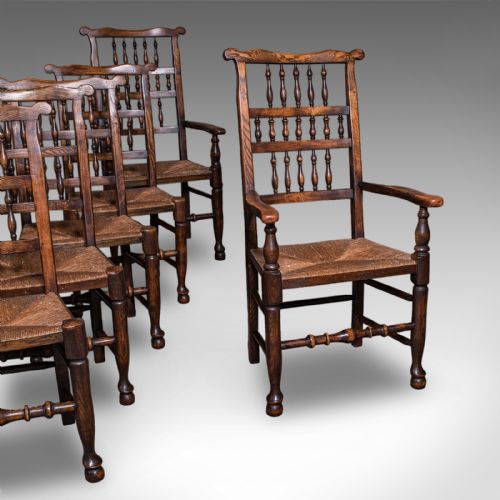
The selections on this page predominantly reflect English country vernacular styles, alongside regional variations from Lancashire, Cheshire, and Scotland. These armchairs often appear alongside matching dining sets or as single accent pieces within rustic farmhouse settings.
How They Were Made
Maker-craftsmen built these chairs using native hardwoods such as oak, elm, ash, beech, and fruitwood, often turning spindles on a lathe and bending green timber for structural members. Frames commonly utilise mortise and tenon joinery to endure daily domestic demands.
The distinctive seating surface relies on marsh rush twisted into cord and tightly woven around the seat rails in a traditional pattern. Certain examples incorporate painted finishes or applied colour over the underlying wood.
Listings feature pieces spanning the eighteenth century through the 1930s, constructed in oak, elm, ash, beech, and fruitwood.
What Varies in Quality
The standard of a rush seated carver chair rests upon the integrity of its timber frame and the tightness of the rush weave. Pieces retaining their original turned members and unblemished structural joints demonstrate superior craftsmanship.
Proportion and regional character also dictate distinction, with master regional turners producing more balanced arm assemblies and refined ladder backs than standard utility makers.
Liberty Morris And Co·Philip Clissett·William Morris·E W Godwin·Dicon Nance
The Rush Seated Carver Chair Glossary
- Carver
- An armchair, traditionally placed at the head of a dining table or utilised as a substantial fireside seat. It is distinguished from side chairs by the addition of armrests.
- Rush
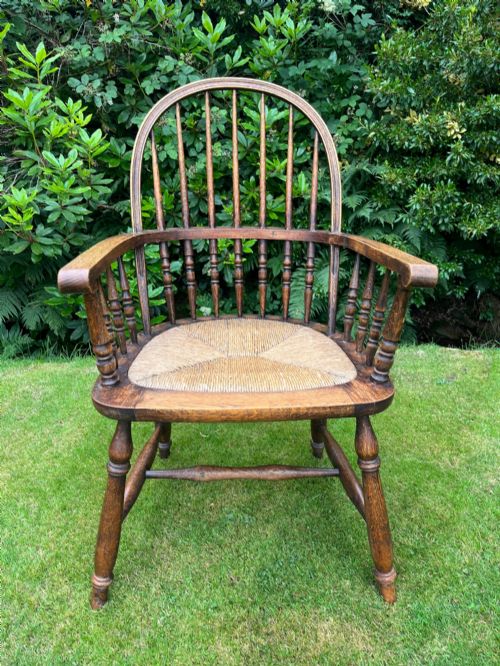
- Marsh grass utilised as a seating material. It is twisted into cordage and hand-woven to create a supportive, resilient platform.
- Ladderback
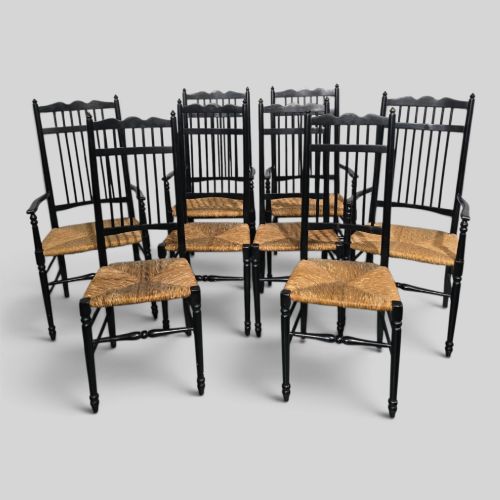
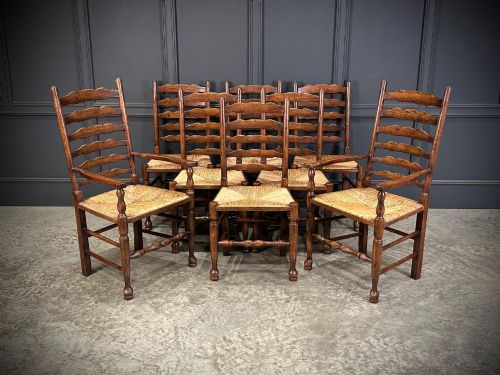
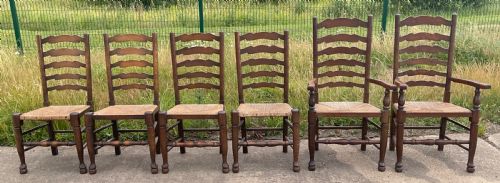
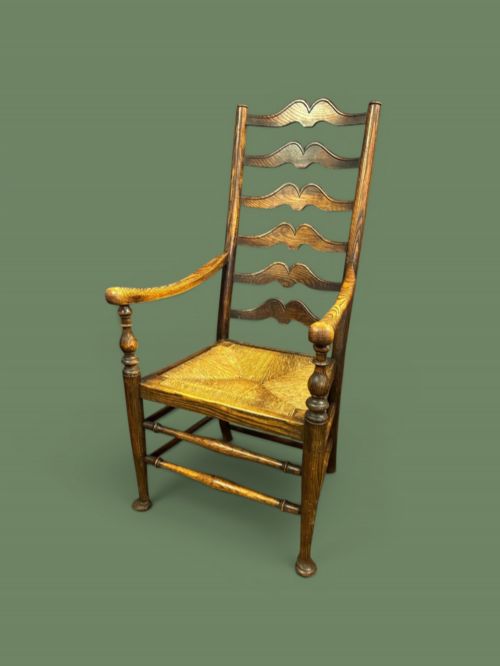
- A chair back constructed with multiple horizontal wooden rails spanning between the upright rear posts. This form is common in country vernacular seating.
- Spindleback
- A chair back incorporating numerous slender turned uprights rather than solid splats or horizontal rails. This technique lightens the frame while maintaining structural rigidity.
- Vernacular
- Objects designed by regional makers for local utility rather than following strict high-style metropolitan dictates. These pieces reflect local timber availability and traditional construction methods.
Rush Seated Carver Chair: Frequently Asked Questions
What is a rush seated carver chair?
A rush seated carver chair is an armchair featuring a woven rush seating pad and integrated armrests. These pieces stem primarily from country and vernacular traditions.
Craftsmen built them for domestic utility using native timbers such as oak, ash, and elm.
How do I care for a rush seat?
Rush seats require a stable indoor humidity level to prevent the natural fibres from becoming brittle. Regular gentle dusting keeps the woven strands clean.
Avoid excessive moisture or liquid spills, which can weaken the twisted rush cord over time.
Are these chairs comfortable for daily use?
The woven rush provides a surprisingly resilient and supportive surface that yields slightly to the body. The inclusion of armrests offers additional physical support.
Many buyers utilise them as desk chairs or occasional seating in living spaces.
How do I identify a country ladderback?
Country ladderbacks feature horizontal slats stacked between the rear upright posts, often accompanied by turned spindles. Regional variations include distinct rail shapes and timber selections.
Examining the turning marks on the wooden members helps reveal the age and origin.