


Royal Crown Derby Imari
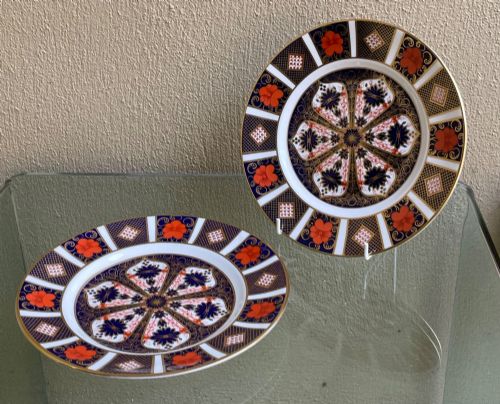
Royal Crown Derby imari pieces are decorated porcelain items combining rich iron-red, cobalt blue, and gold leaf in traditional Japanese-inspired patterns.

What royal crown derby imari includes
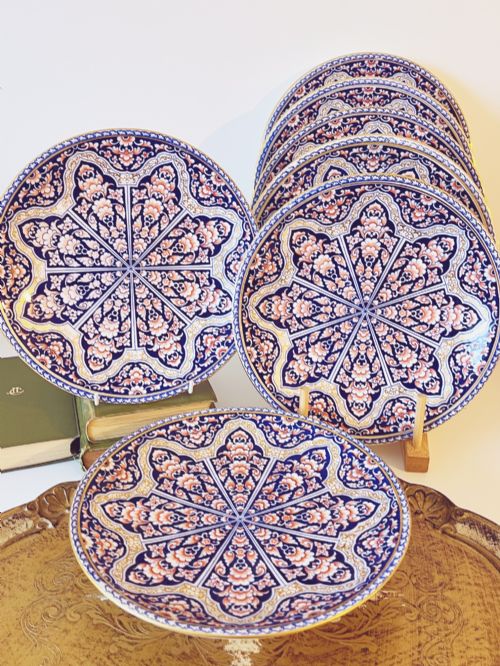
Royal Crown Derby imari encompasses a wide selection of decorative and functional ceramics from the late nineteenth century and the early decades of the twentieth century. Tableware forms range from cabinet plates and tazzas to complete tea services for six or twelve persons, alongside individual breakfast pieces like moustache cups and saucers.
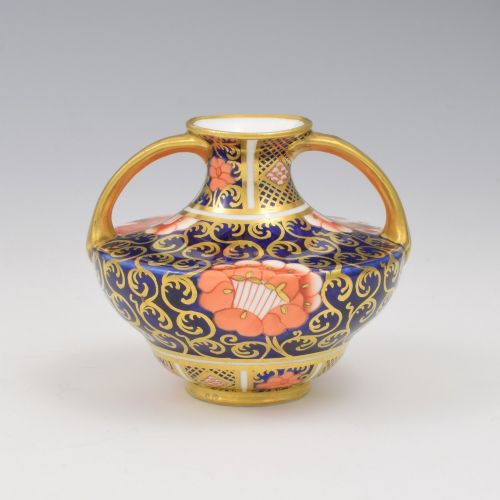
Beyond tea and dinner wares, the selection frequently incorporates cabinet pieces such as miniature vases, dwarf vases, fan-shaped pin dishes, lidded trinket boxes, and trophy cups. Distinctive forms like ewers, covered jars, butter knives, and miniature solitaire sets also appear.
The objects span stylistic categories from Victorian imari and the standard imari style to specific numbered patterns like 1128, 2451, 4591, and the Witches imari pattern. Pieces originate from periods including the Victorian era, the Edwardian period, and the nineteen-fifties.
Materials and production methods
The body of these objects consists of bone china, providing a bright white and durable base for intricate painting and glazing. Artisans shape this ceramic material into diverse functional forms, from lobed dishes to pedestal cups.
Decoration relies on underglaze cobalt blue and hand-applied enamel colours, principally iron-red, which are fixed through multiple kiln firings. Artisans then apply gold leaf accents by hand to outline motifs and highlight the rich surface detail characteristic of the imari palette.
Listings feature bone china and enamel materials shaped into forms ranging from miniature tea services to candlesticks.
Distinctions in quality
Quality rests upon the precision of the hand-painting and the crispness of the transfer-printed outlines beneath the glaze. Superior examples show careful brushwork where the iron-red and cobalt blue meet without blurring, alongside generous and intact gilding.
The complexity of the pattern also influences the character of a piece. Iconic patterns like the densely decorated 1128 require extensive hand-gilding and intricate detailing compared to simpler geometric border designs.
The Royal Crown Derby Imari Glossary
- Bone china
- A type of porcelain containing bone ash, known for its high strength, chip resistance, and translucent body.
- Imari style
- A decorative scheme originating in Japan, characterised by a distinctive palette of cobalt blue, iron-red, and gold.
- Tazza
- An ornamental shallow cup or plate mounted on a pedestal, used historically for serving fruit or sweets.
- Date marked
- Ceramics bearing factory cyphers or symbols indicating the specific year of manufacture.
Frequently Asked Questions
How do I identify pattern numbers?
Pattern numbers appear on the base of the porcelain alongside factory backstamps. They indicate the specific decorative scheme used on the item, such as 1128 or 2451.
These numbers help collectors match individual pieces like tea cups and saucers to larger dining or tea services.
Were these items used daily?
Many pieces, including tea sets, sandwich plates, and cream jugs, were made for formal dining and drawing-room entertaining.
Other items, such as cabinet plates and miniature vases, were primarily decorative objects displayed in Victorian and Edwardian homes.
How can I date my porcelain?
Dating relies on factory backstamps, impressed marks, and specific date ciphers located on the underside of the base. Stylistic cues, such as Victorian or Edwardian registry marks, also narrow down the production period.