
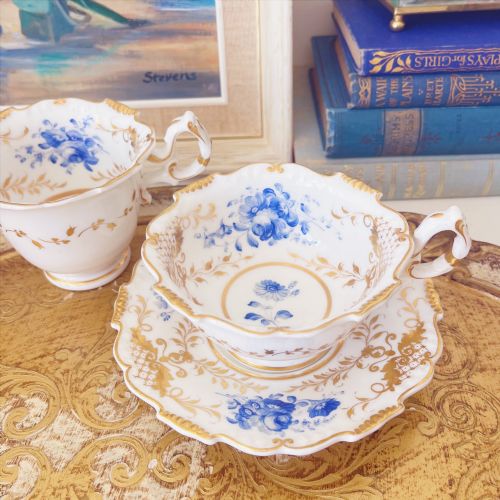
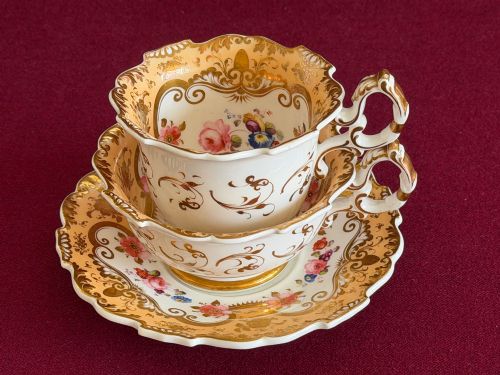
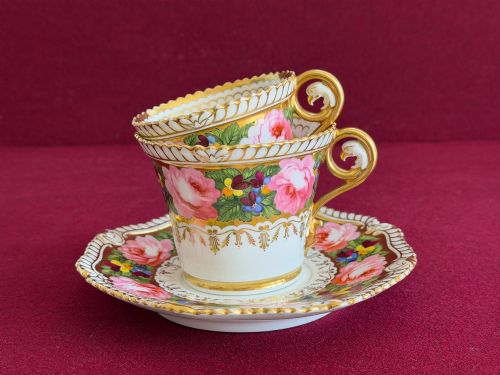
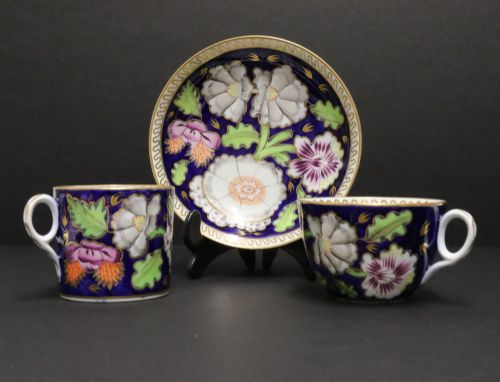
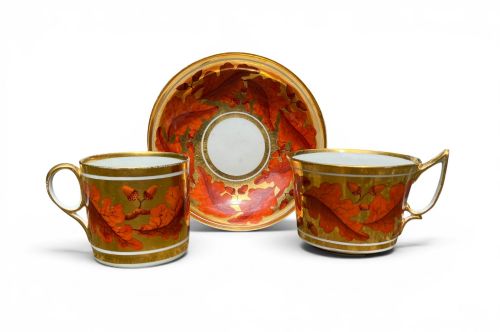
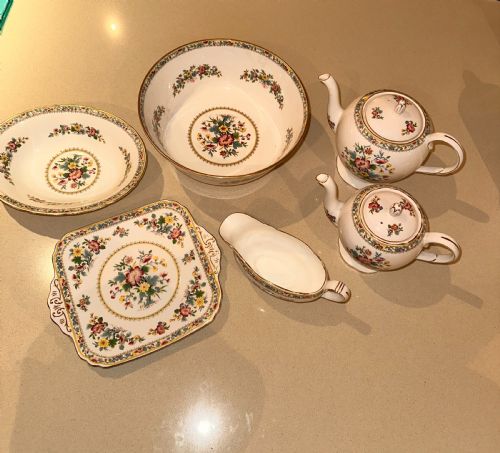
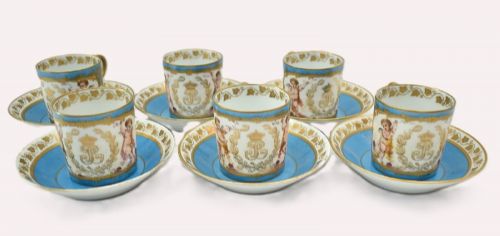


Gilded Porcelain Tea Set
These gilded porcelain tea set pieces bring genuine table-bound glamour, offering the collector painted enamel and precious metalwork from the late nineteenth and early twentieth centuries.
What a gilded porcelain tea set represents
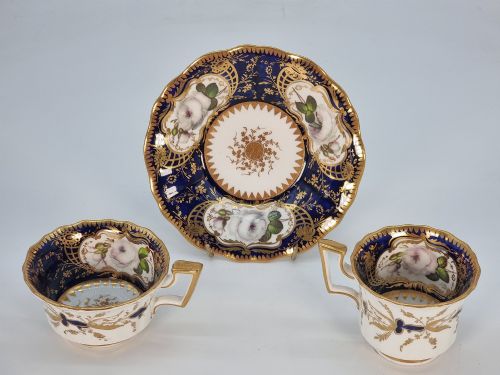
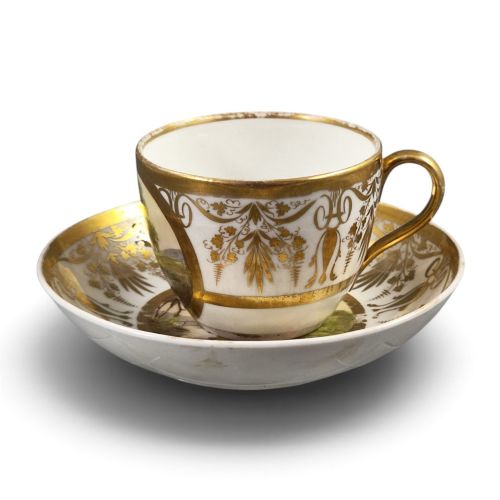
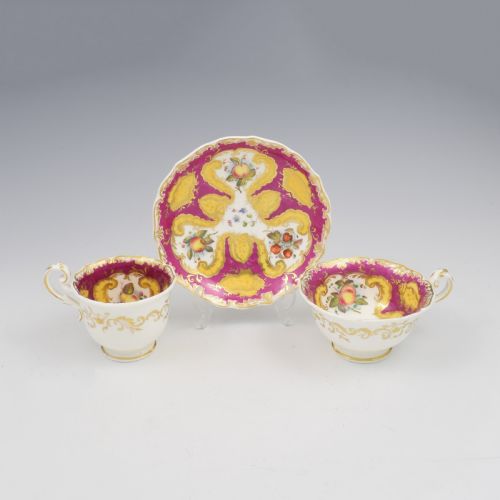
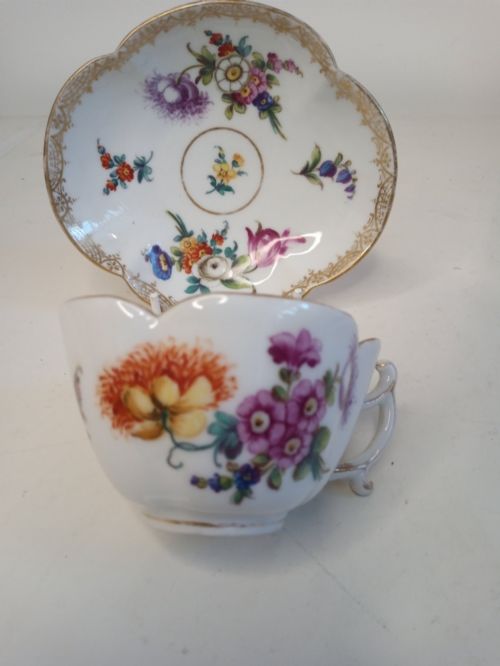
A gilded porcelain tea set encompasses domestic table wares decorated with metallic leaf, gilt, or gilding upon ceramic bodies. When you search for a gilded porcelain tea set, you encounter miniature services, coffee sets, teacup trios, and larger eighteen-piece collections spanning from the late nineteenth century to the interwar period.
The objects on this page range from Victorian Imari and Belle Epoque services to Art Deco designs and early Royal Crown Derby miniature solitaire sets. These groupings reflect diverse production origins, including English bone china, French porcelain from Limoges, and Japanese export wares bearing specific factory marks.
Materials and manufacture
Potters formed these pieces using fine porcelain or bone china, shaping vessels and cups before applying coloured enamel decoration. Artisans then integrated gold leaf or applied liquid gilding to accent handles, rims, and intricate surface patterns.
Kiln firing fixed both the vitreous body and the delicate enamel pigments, leaving the metallic highlights to catch the light. Workshops such as those in Limoges, Derby, and Japanese kilns employed specialised decorators to balance hand-painted motifs with rich metallic borders.
Current listings span the nineteenth century up to the 1930s, featuring porcelain, bone china, enamel, and gold leaf.
Judging quality in gilded ceramics
Quality reveals itself in the precision of the hand-painted enamel work and the thickness and intactness of the applied gilding. Superior sets demonstrate crisp definition in their patterns, balanced proportions across every component of a service, and refined potting that leaves the ceramic thin yet resilient.
The prestige of the maker and the legibility of period factory marks also separate standard domestic wares from exceptional collector pieces. Pieces retaining pristine gold leaf without rubbing show superior initial application and careful preservation through successive decades.
Noritake·Stevenson and Hancock Derby·Ahrenfeldt and Asalvary·Royal Crown Derby
The Gilded Porcelain Tea Set Glossary
- Gilding
- The application of gold leaf or powdered gold to the surface of porcelain. This technique adds reflective metallic highlights to rims, handles, and painted scenes.
- Bone China
- A type of soft-paste porcelain containing bone ash, invented in England to improve strength and translucency. It forms the bright white body for many nineteenth-century services.
- Enamel
- Vitreous glass paste fused to the ceramic surface during firing to produce vibrant, permanent colours. It provides the primary palette beneath or alongside metallic gilding.
- Solitaire Set
- A single-person tea or coffee service comprising a tray, teapot, creamer, sugar bowl, and cup. These miniature arrangements were designed for bedside use or solitary refreshment.
- Trio
- A matching set consisting of a teacup, saucer, and tea plate. Trios became a standard unit of table service in British and European households.
Frequently Asked Questions
What is included in a miniature tea service?
A miniature tea service typically comprises small-scale vessels designed for display or solitary use rather than heavy daily entertaining. These scaled-down sets include tiny teapots, cups, and saucers.
They reflect the high skill required of painters working on diminutive ceramic surfaces. Collectors prize them for their charming proportions and detailed decoration.
How do I identify a Victorian Imari style?
The Victorian Imari style draws inspiration from traditional Japanese export ceramics featuring a distinct palette of cobalt blue, iron red, and abundant gold leaf. Makers in Britain adopted these bold, geometric, and floral motifs during the nineteenth century.
Such pieces combine Eastern aesthetic influences with European ceramic shapes. The resulting items offer striking visual contrast on any dining table.
Are these sets safe for daily use?
Most antique gilded tea wares require gentle hand washing rather than mechanical dishwashing to protect fragile enamels and delicate gold leaf. Everyday use is possible if handled with care, though many collectors prefer display.
Harsh detergents and scrubbing pads will wear away the thin metallic gilding over time. Preserving the surface keeps the original decorative intent intact.
How do I date an antique porcelain set?
Dating relies heavily upon maker marks stamped or painted on the underside of each ceramic piece. Reference books match these backstamps to specific operational years of the factory.
Stylistic cues such as Belle Epoque curves or Art Deco geometries also narrow the era of production. Combining mark analysis with material type yields an accurate timeline.