
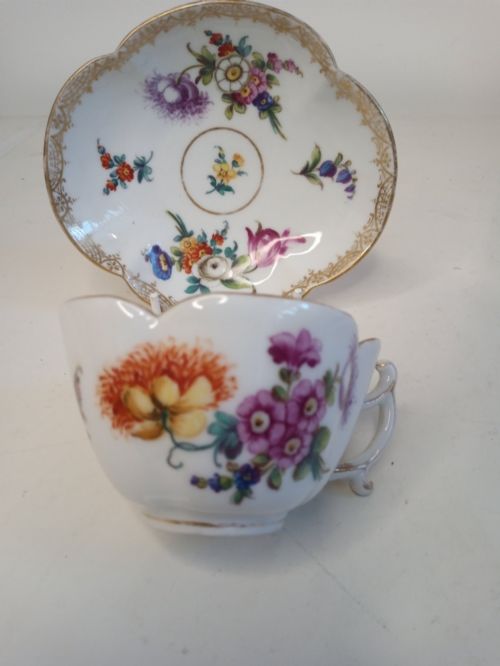


Gilded Bone China Tea Set
A gilded bone china tea set brings together bright porcelain, delicate handles and rich metallic leaf from periods spanning Georgian elegance to Art Deco service.
Gilded Bone China Tea Set
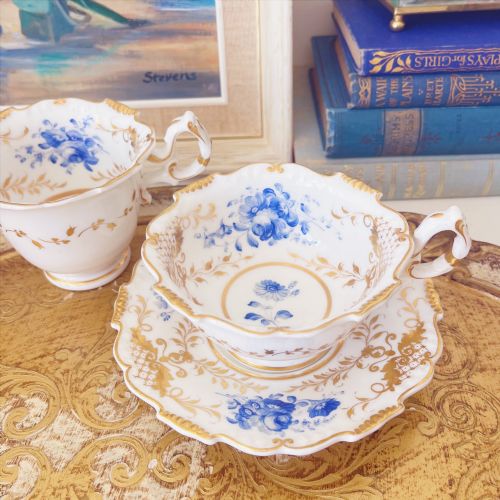
A gilded bone china tea set comprises matching vessels for serving tea, typically including cups, saucers and sugar bowls formed from refined ceramic paste and accented with gold leaf. When searching this phrase, a buyer meets everything from single cabinet trios to large afternoon tea services designed for multi-person gatherings.
The pieces appearing on this page stretch across the eighteenth, nineteenth and twentieth centuries, spanning Regency, Victorian and Edwardian reigns. Forms range from compact solitaire sets and individual teacups to extensive twenty-piece collections produced by historical English potteries.
How they were made
Potters shaped bone china and porcelain into delicate vessels before applying hand-painted designs and enamel pigments. Artisans then brushed or traced gold gilding and gold leaf across rims, handles and panels, firing the ceramics to bond the metallic decoration to the glaze.
Makers such as Coalport, Spode and Royal Worcester utilised specialised moulding and throwing techniques to achieve thin-walled forms that remained strong. Decoration combined fluid brushwork for floral or figurative scenes with precise geometric or botanical gilding.
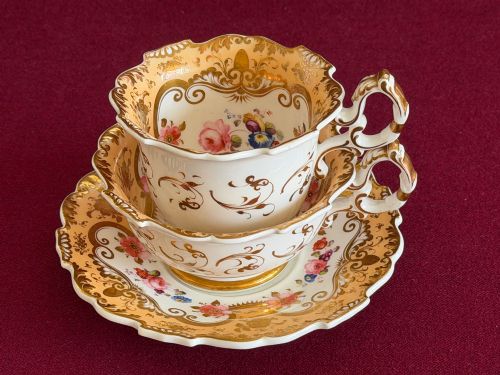
Early nineteenth-century tea drinkers often used separate cups for tea and coffee within the same matched trio, doubling the porcelain on the table.
What varies in quality
Quality rests on the crispness of the hand-painted details and the weight and purity of the porcelain body. Finer examples display meticulous brushwork and heavy, lustrous gold gilding that retains its depth across every component.
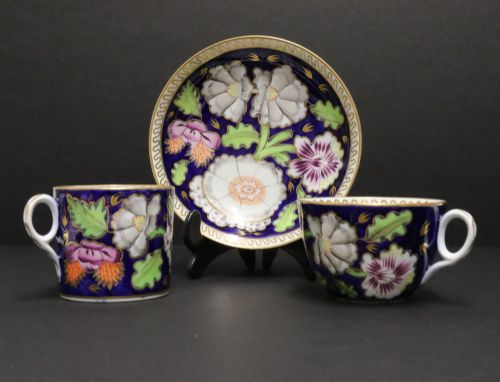
The precision of the ceramic form and the complexity of the pattern - such as intricate Bat Wing motifs or Kakiemon revivals - separate standard utilitarian wares from superior cabinet pieces intended for display.
H & R Daniel·Newhall·Coalport John Rose·Hicks Meigh And Johnson·Royal Davenport·Royal Worcester·Doric China Longton Stafford·Ridgway·Minton·Davenport·Spode·Wileman Foley Shelley·Royal Crown Derby·Gladstone Potteries
The Gilded Bone China Tea Set Glossary
- Trio
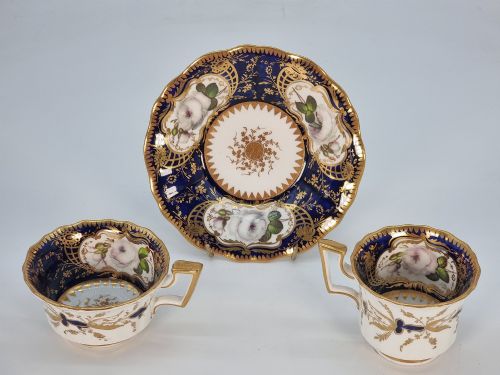
- A matching set comprising a teacup, a coffee cup and a saucer. These three-piece combinations were popular during the Regency and Victorian periods for formal morning or afternoon service.
- Gilding
- The application of gold leaf or gilt to ceramic surfaces. This metallic decoration highlights rims, handles and painted panels.
- Sucrier
- A covered bowl or sugar box used for serving lump or granulated sugar. They form part of larger tea and coffee services.
- Bone china
- A type of porcelain incorporating bone ash into the ceramic paste. This composition produces a strong, translucent body capable of holding delicate forms.
Gilded Bone China Tea Set: Frequently Asked Questions
What is included in a tea set?
A tea set typically comprises matching vessels for brewing and drinking, which can range from a single cup and saucer trio to multi-piece services including sugar bowls and larger pots.
Larger configurations accommodate multiple guests for afternoon gatherings, while smaller solitaire or trio sets cater to individual use.
How do I identify the period?
Dating relies on stylistic clues, ceramic bodies and maker marks stamped or painted on the underside of the pieces. Regency items often feature neoclassical shapes, whereas Victorian and Edwardian examples incorporate bolder floral motifs or Imari revivals.
Comparing the handle shape, gilding style and overall form against known factory production dates helps narrow down the era of manufacture.
Can I use these sets daily?
While these ceramics were originally created for domestic use, the presence of delicate hand-painted enamel and gold leaf means many owners prefer gentle handling and display. Modern dishwashers and microwaves can damage historic gilding and fragile bone china.
Hand washing in warm water with mild soap preserves the metallic surfaces and painted details for future generations.
What is a cabinet trio?
A cabinet trio refers to a matched set of three pieces - usually a teacup, coffee cup and saucer - kept primarily for display in a cabinet rather than everyday use. These items often showcase exceptional hand painting and rich gilding from periods like the Regency or early nineteenth century.
Collectors prize them for their decorative quality and the survival of all three matching components together.