


Gold Ceramic Tea Service
A gold ceramic tea service brings gleaming refinement to the table, uniting durable porcelain bodies with brilliant metallic decoration.
Gold Ceramic Tea Service
A gold ceramic tea service comprises coordinated vessels for hot beverages, specifically incorporating porcelain or bone china enhanced with metallic embellishment. These gatherings of wares typically include pots, sugar bowls, and cups intended for formal hospitality.
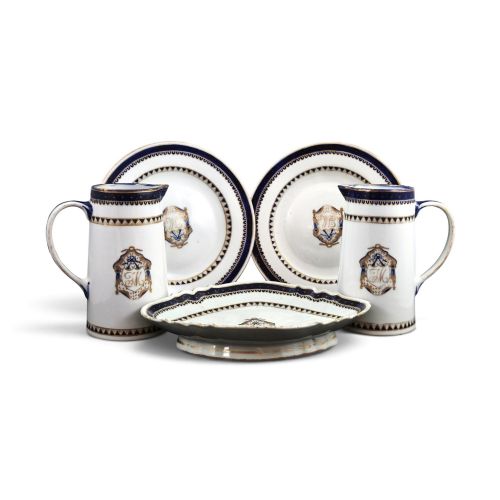
The selections encountered here span multiple eras, notably the eighteenth and nineteenth centuries alongside twentieth-century Edwardian and later periods. English traditions dominate the forms, accompanied by continental French porcelain and Chinese export pieces.
Makers represented range from historic English houses like Worcester and Coalport to French factories such as Limoges. Collectors find both complete sets for six and individual serving components like sucriers.
Materials and methods
Makers utilised refined ceramic bodies including hard-paste porcelain, soft-paste porcelain, and bone china, which provided smooth white foundations for subsequent decoration. These vitreous materials offered the necessary strength and thermal resilience for daily service.
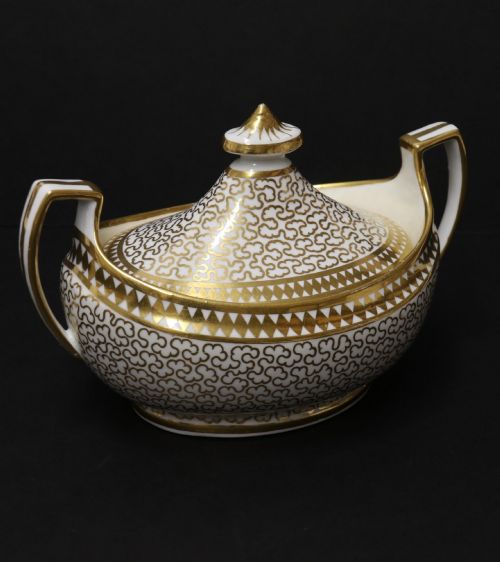
Surface ornamentation relied heavily upon applied gold leaf, gilding, and gold gilt, often combined with handpainted enamel and cobalt enamel highlights. Artisans carefully brushed or leafed the metallic lustre onto handles, rims, and intricate patterns.
The listings span from the eighteenth century through to the 1960s, uniting Chinese export porcelain with English bone china and French wares.
Distinctions in quality
The fineness of a set rests upon the dexterity of the handpainting and the purity of the applied gilding. Superior examples display crisp brushwork and deep, burnished metallic layers that retain their brilliance across complex motifs like the bat wing pattern.
Form and provenance further elevate certain wares, particularly pieces bearing documented factory marks from distinguished establishments such as Chamberlains Worcester or Barr, Flight and Barr. The structural integrity of delicate handles and covers also dictates the standing of each service.
Chamberlains Worcester·Spode·Coalport·Royal Albert Crown China·Ahrenfeldt and Asalvary·Royal Worcester·Worcester Barr Flight and Barr
The Gold Ceramic Tea Service Glossary
- Porcelain
- A vitreous ceramic material made from kaolin and petuntse, fired at high temperatures to produce a white, non-porous body. It forms the primary canvas for these gilded services.
- Bone china
- A type of porcelain incorporating bone ash for enhanced strength, translucency, and a warm white tone. English potteries frequently utilised this body for tea wares.
- Gilding
- The application of gold leaf or gold powder to the ceramic surface for decorative effect. This finish varies from flat matte to heavily burnished lustre.
- Sucrier
- A small covered sugar bowl designed to accompany a tea or coffee service. These vessels often match the central pattern of the cups and pots.
- Enamel
- A glass-based pigment fused to the ceramic body during firing to add vibrant colour. Cobalt enamel provides a striking deep blue contrast against white porcelain and gold.
Gold Ceramic Tea Service: Frequently Asked Questions
What pieces belong in a tea service?
A standard tea service generally includes a teapot, sugar bowl, cream jug, and matching cups with saucers. Larger gatherings may also incorporate larger serving plates and dedicated coffee pots.
Specific configurations vary by period, with eighteenth-century sets often focusing on specialised vessels like sucriers alongside tea bowls.
How do I care for gilded porcelain?
Gilded porcelain requires gentle hand washing in lukewarm water with mild soap using a soft cloth. Abrasive sponges and harsh detergents will quickly wear away delicate gold leaf and enamel.
Dishwashers and microwaves must be avoided entirely, as the extreme heat and harsh cycles permanently ruin metallic decoration.
Are these sets safe for drinking tea?
Most historical tea services remain suitable for serving hot beverages, provided the ceramic body and glaze show no structural cracks. Historic metallic leaf is generally stable under normal liquid contact.
Buyers intending to use their pieces regularly should inspect the interior glaze and ensure no harmful deterioration has occurred over the centuries.
How do I identify the period of a set?
Dating relies upon factory backstamps, stylistic cues such as Regency or Edwardian forms, and the specific composition of the ceramic body. Eighteenth-century wares often feature hand-pencilled marks and softer pastes, while twentieth-century sets display printed factory ciphers.
Comparing decorative motifs like bat wing patterns or handpainted fruit against known historical outputs provides further chronological clarity.