





Rope Twist Gilt Mirror
A rope twist gilt mirror brings a tactile, spiralled warmth to a room through carved wooden frames coated in shining leaf.
What a rope twist gilt mirror is
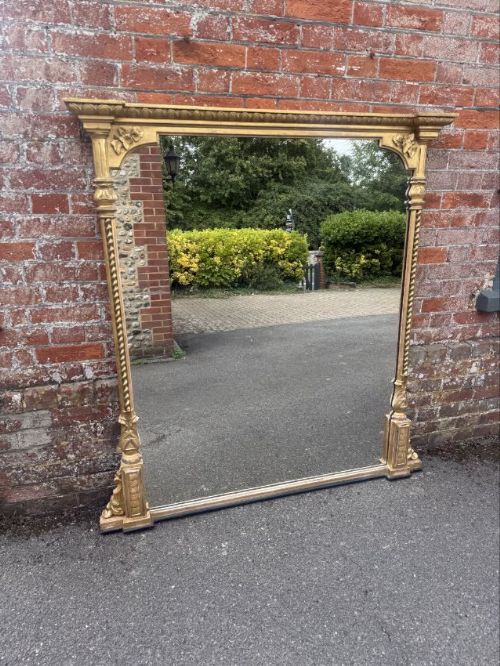
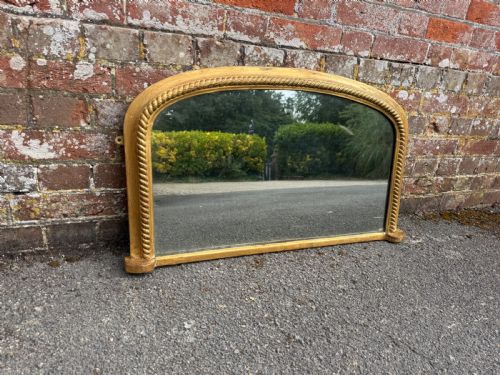
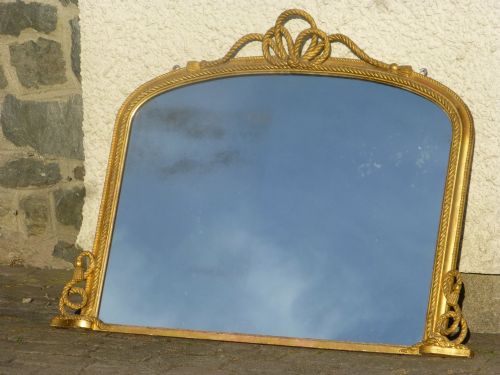
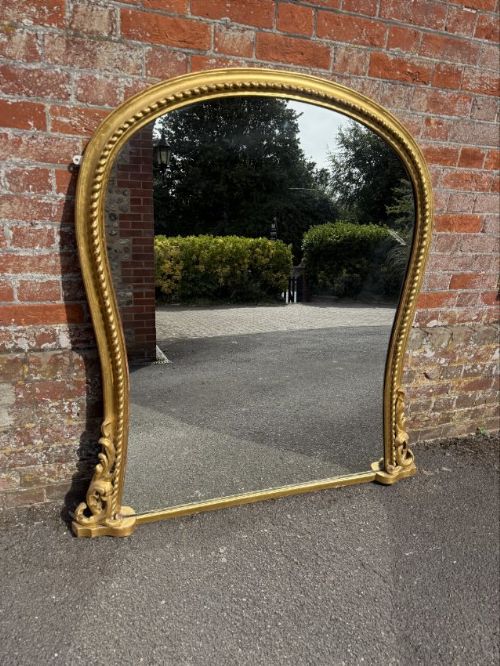
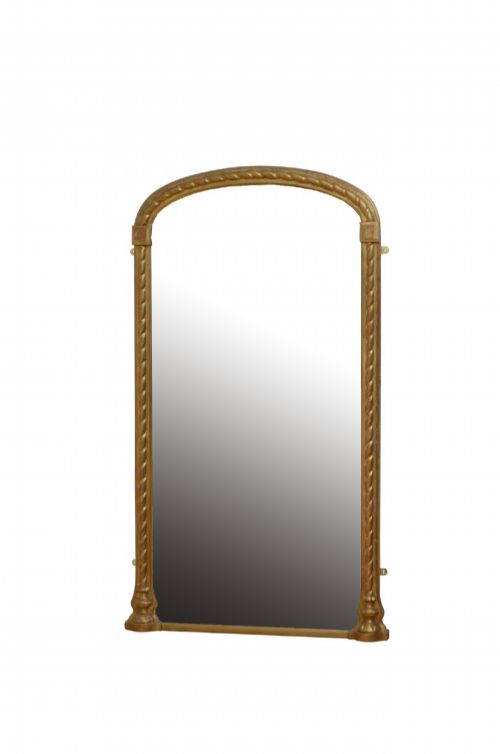
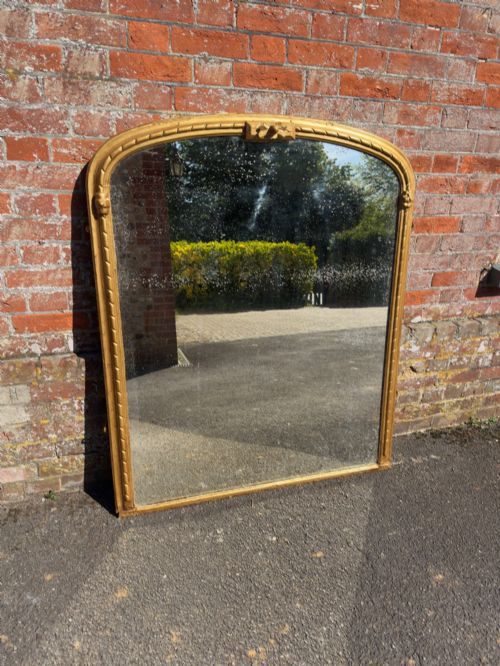
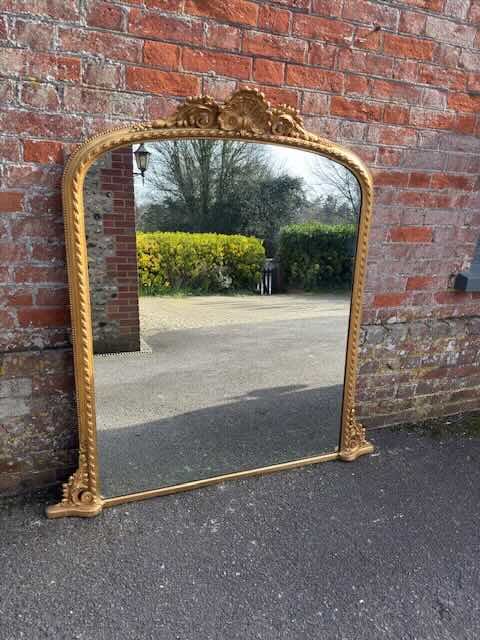
A rope twist gilt mirror is a reflective glass panel enclosed by a decorative frame carved to resemble a twisted cord. These furnishings appear most frequently as large overmantel mirrors designed to sit above a fireplace, alongside wall-mounted oval and cushion formats.
The evidence spans the Victorian era, including pieces from the 1860s and 1870s, originating primarily from English and French workshops. Alongside the dominant overmantel mirrors, the selection includes slender wall mirrors and girandole variants intended for domestic interiors.
How they were made
Craftsmen shaped the base structure from wood, carving the helical rope pattern directly into the timber or building the relief using layered gesso. Gesso provided a smooth, responsive ground that accepted crisp detailing before the application of finish.
Workers applied gold leaf or silver gilt directly onto the prepared gesso surfaces, sometimes combining paint with gilding to create nuanced metallic tones. The resulting frames held heavy glass panels secured within the moulded surrounds.
Retail Price Guide 2026
Typical UK retail prices for rope twist gilt mirror, calculated from the Sellingantiques database of over a million retail prices indexed since 2003. This retail price guide relies exclusively on Sellingantiques data; no external sources or auction records are used, so the figures do not describe the wider market.
Every spiral twist was carved by hand, meaning no two wooden ropes loop in the exact same direction.
What varies in quality
The depth and definition of the carved rope twist separate standard frames from finer examples, where the helical turns remain sharp and distinct through layers of gesso. Skill in moulding determines whether the twist reads as a fluid, continuous spiral or a rigid, flat-faced impression.
The integrity of the original gilt surface dictates the visual character of the piece, with intact gold leaf displaying a warmer reflectivity than worn or heavily retouched metallic paint. Preservation of the underlying wood and gesso structure without extensive rebuilding marks the distinction at the upper end.
The Rope Twist Gilt Mirror Glossary
- Gesso
- A mixture of plaster of Paris and glue used to coat wooden frames before gilding. This compound allows carvers to achieve fine relief details.
- Giltwood
- Timber that has been coated with thin sheets of gold leaf. It differs from painted gold by offering a deeper metallic lustre.
- Overmantel
- A large mirror designed specifically to hang on the wall directly above a mantelpiece. These pieces often feature arched tops to fit architectural chimney breasts.
- Cushion mirror
- A frame style with a rounded, convex profile that slopes outward towards the edges. This shape catches light from multiple angles in a room.
- Girandole
- A decorative wall mirror featuring attached candle sconces. The candleholders multiply the flickering light across the glass surface.
Frequently Asked Questions
Where should I hang an overmantel mirror?
These large mirrors traditionally anchor the space directly above a fireplace mantel, reflecting light back into the room.
They also function effectively on principal living room walls where their substantial scale can ground surrounding furniture.
How do I clean a antique gilt frame?
Dust the carved rope twist gently with a soft, dry brush to prevent accumulation in the grooves. Avoid all liquid cleaners and abrasive cloths, which can lift the delicate gold leaf from the gesso beneath.
What is the difference between an overmantel and a wall mirror?
Overmantel mirrors are traditionally wider and proportioned to span the width of a fireplace breast. Standard wall mirrors take oval, rectangular or cushion formats suited for narrower wall spaces.
How do I identify a Victorian mirror?
Victorian pieces often display heavy carved wooden construction finished with gesso and gold leaf. Arch tops and rope twist motifs recur frequently across pieces dated to the mid-nineteenth century.