
Roll Top Writing Desk
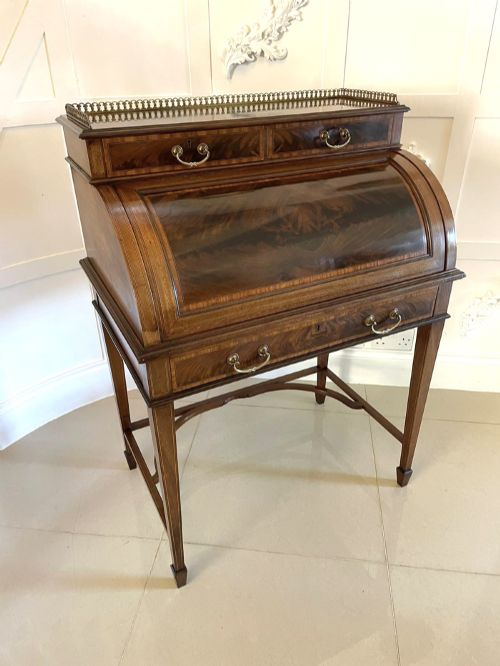
A roll top writing desk conceals a private workspace beneath a slatted or curved wooden cover, offering practical storage for documents and correspondence.
Roll Top Writing Desk
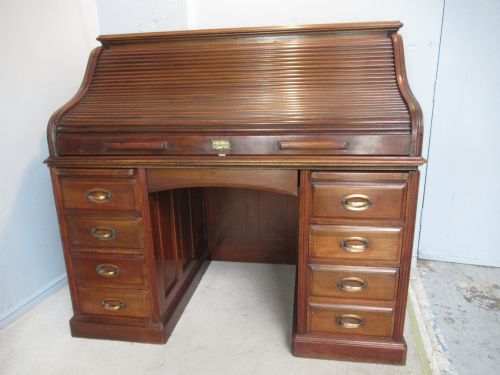
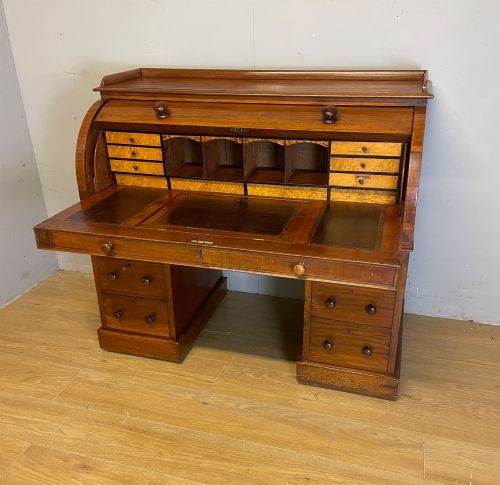
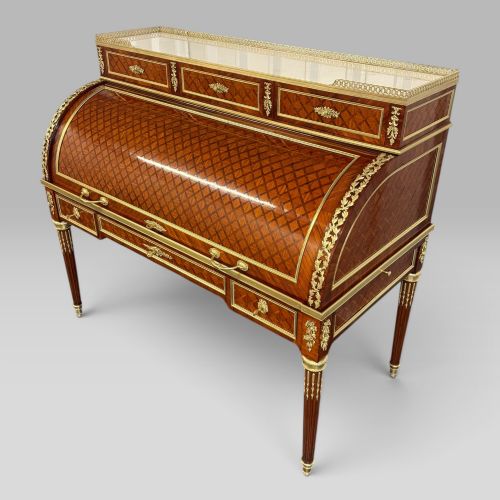
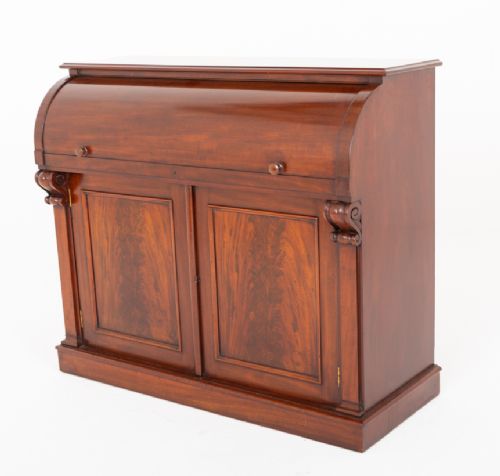
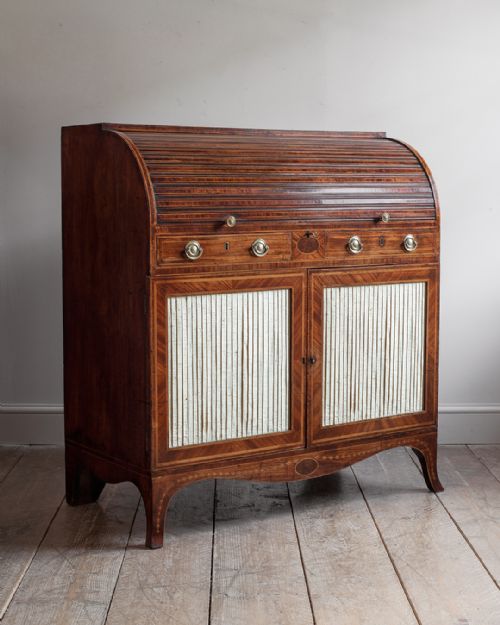
A roll top writing desk uses a flexible tambour or rigid cylinder closure to secure the working surface and pigeonholes within. These pieces appear across Georgian, Victorian, and Edwardian periods, stretching from the late eighteenth century into the twentieth.
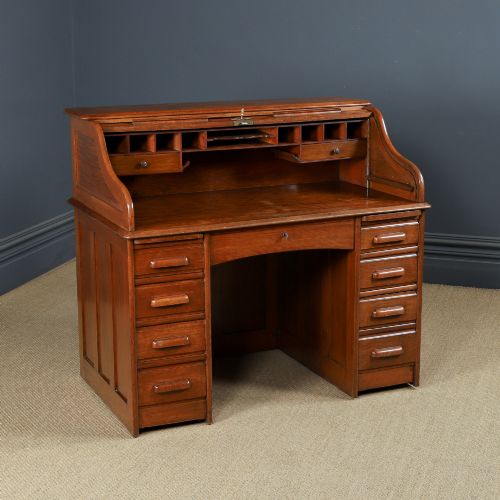
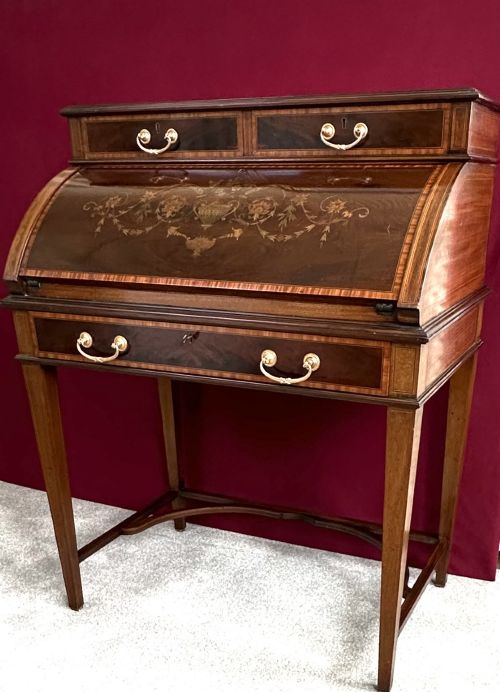
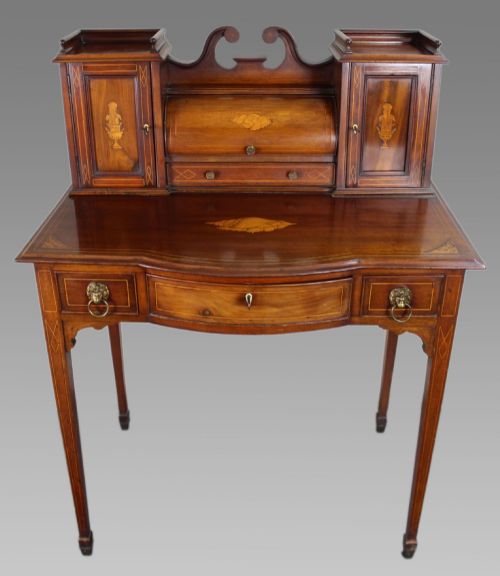
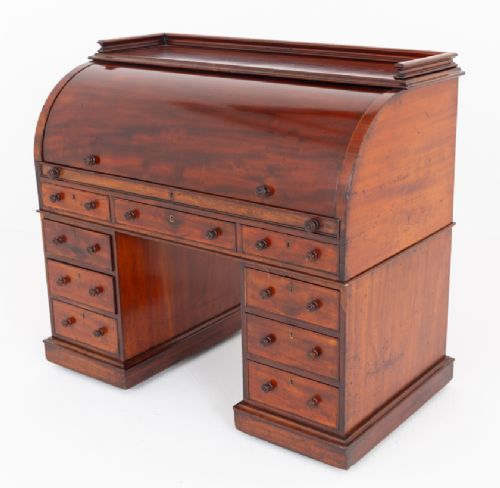
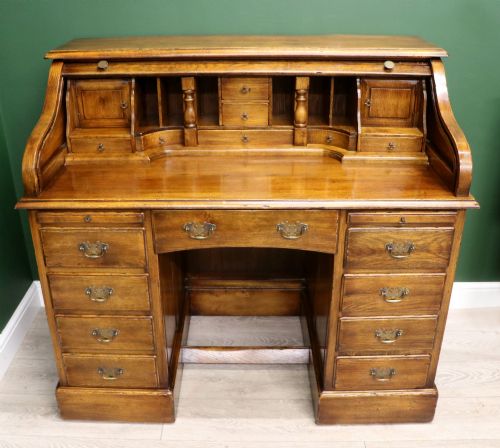
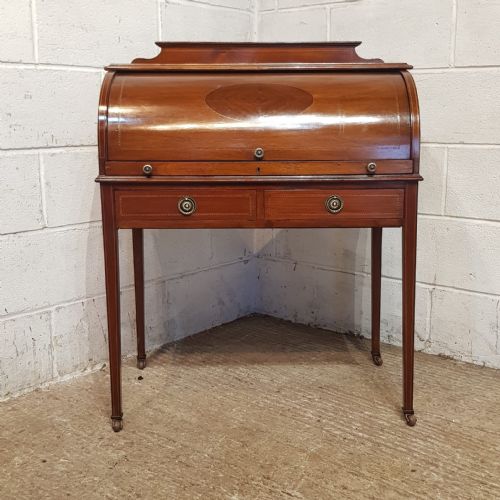
Buyers encounter substantial oak office pedestals from the Edwardian era alongside refined mahogany and satinwood cylinder desks from earlier Georgian and Victorian workshops. Both domestic ladies' writing tables and heavy commercial office furniture populate this category.
The form developed to keep paperwork concealed and locked away without clearing the desk surface entirely. Variations range from compact freestanding tables to large twin pedestal office models equipped with internal drawers.
Materials and construction
Cabinet makers built these desks using primary hardwoods like mahogany, oak, walnut, and satinwood, frequently accented with fruitwood, partridgewood, or ebony inlay. Secondary timbers were utilised for interior framing and drawer linings.
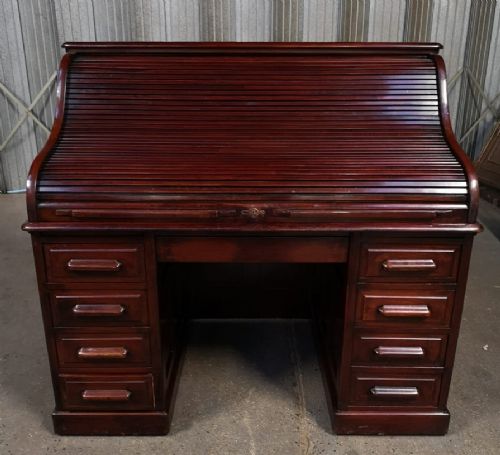
The flexible tambour top relies on individual narrow slats of wood glued to a canvas or leather backing, allowing the curtain to slide smoothly within concealed tracks. Cylinder fronts employ curved solid wood or veneered panels rotating on pivot pins.
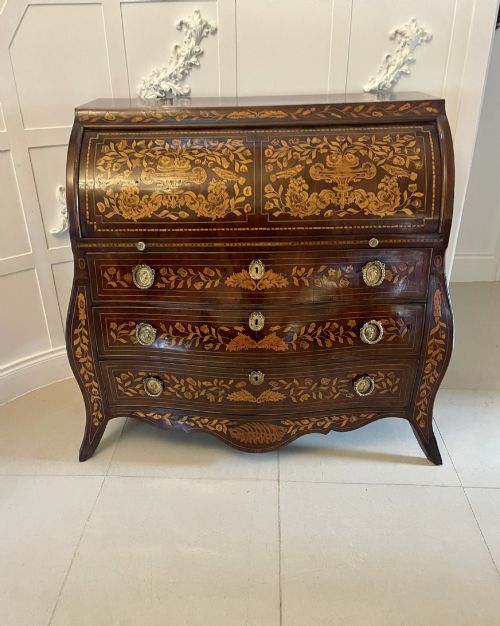
Writing surfaces frequently incorporate inset panels of tooled leather, whilst finer pieces showcase marquetry, ormolu mounts, and brass ring handles or hardware.
Listings feature woods spanning oak, mahogany, satinwood, walnut, camphor wood, and partridgewood across four centuries.
Assessing craftsmanship and construction
Quality rests in the precision of the tambour mechanism and the smooth operation of the rolling shutter without binding or jamming in its tracks. Superior examples maintain exact alignment across every slatted wooden strip.
Timber selection and veneer matching define the grade of a piece, particularly where floral marquetry or elaborate grain patterns adorn the cylinder front and pedestal drawers. Hand-cut dovetails on interior compartments signal disciplined workshop production.
The integrity of the internal fittings, including secret compartments, matching pigeonhole surrounds, and original brass hardware, separates standard commercial office desks from bespoke cabinet work.
Maple & Co London·Tudor & Burrey Shrewsbury·Edwards & Roberts·Angus of London·Horrocks Standard Company·Lebus·Ray & Miles of Liverpool·Globe Wernicke
The Roll Top Writing Desk Glossary
- Tambour
- A sliding shutter formed of narrow strips of wood glued to a flexible fabric backing. This allows the cover to follow a curved track around the top of the desk.
- Cylinder desk
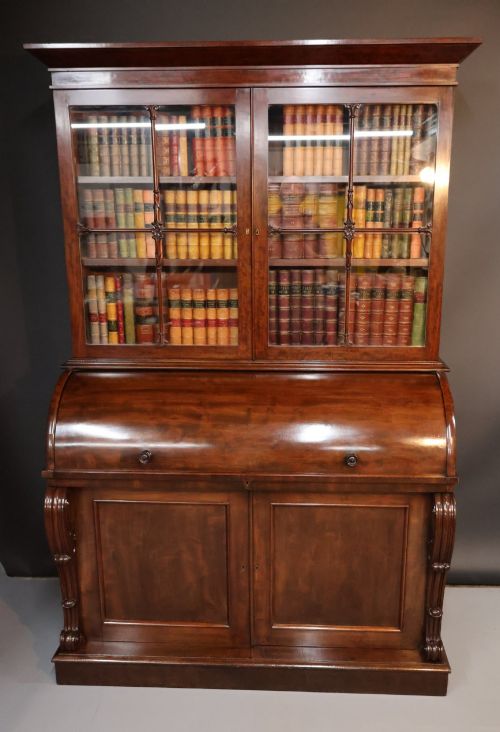
- A writing desk featuring a quarter-circle solid or veneered solid wooden roll front rather than a slatted tambour. It rotates upwards into the body of the desk.
- Pedestal desk
- A heavy freestanding desk supported by two banks of drawers or cupboards beneath the main writing surface. These dominate the Edwardian office iterations.
- Marquetry
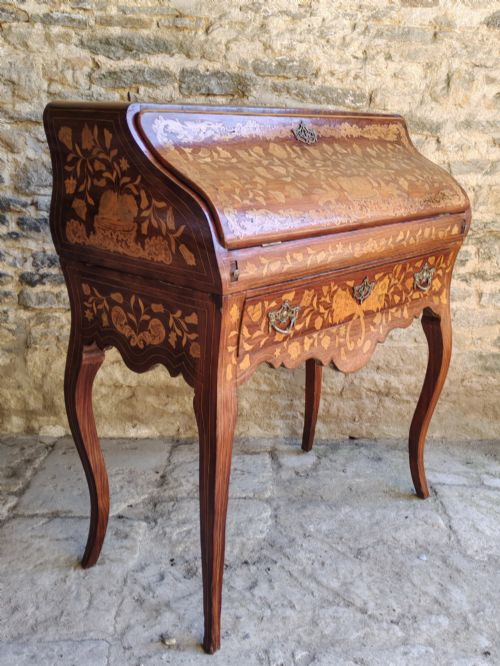
- Decorative patterns formed by fitting together contrasting veneers of wood or other materials onto a structural surface. Floral motifs frequently appear on Georgian and Dutch examples.
- Secretaire
- A cabinet or desk incorporating a pull-down writing flap or cylinder enclosing a fitted interior of small drawers and pigeonholes. These often form the upper section of a bookcase bureau.
Roll Top Writing Desk: Frequently Asked Questions
How do tambour and cylinder desks differ?
A tambour desk uses many narrow wooden slats joined to a flexible backing fabric, allowing the cover to bend around a curved track. A cylinder desk uses a solid or veneered curved panel that rotates as a single rigid piece on pivot pins.
Both styles serve the same purpose of concealing the writing surface and interior compartments, but they represent different mechanical approaches to the roll top design.
Where were roll top desks placed?
Earlier Georgian and Victorian cylinder desks stood in private libraries, drawing rooms, or domestic studies as refined pieces of furniture. Edwardian pedestal versions typically served in commercial offices, legal practices, and administration rooms.
Compact ladies' writing desks were designed for lighter correspondence and often occupied bedrooms or private sitting rooms.
How do I maintain the roll top mechanism?
Keep the wooden tracks clean and free from dust accumulation to ensure the tambour glides smoothly without catching. Avoid excessive moisture or wax buildup inside the grooves where the slats travel.
Periodic inspection of the canvas backing behind tambour slats helps prevent stiffening or fabric degradation over time.
Can these desks fit in modern home offices?
Many Edwardian and Victorian models come in standard widths starting around four feet, making them suitable for contemporary study spaces. Freestanding pedestal versions allow placement away from walls to showcase panelled backs.
Interior compartments accommodate modern stationery, though drawer depths reflect historical paper sizes rather than contemporary electronics.