

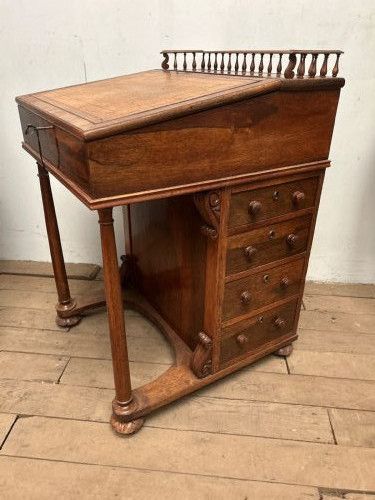
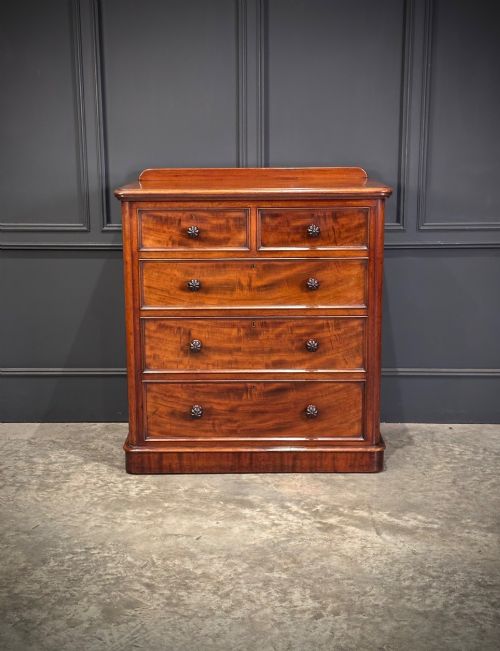
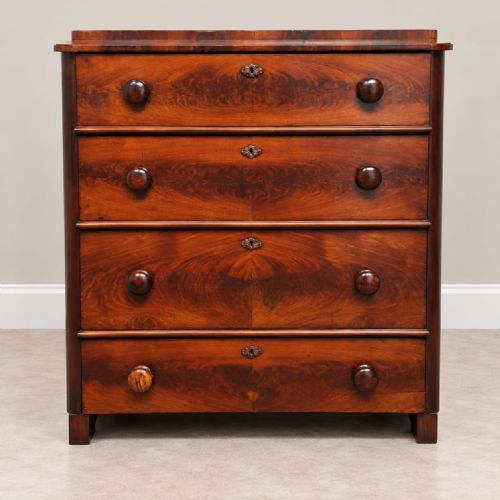
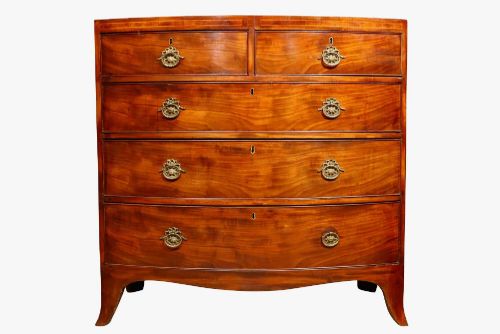
Nineteenth Century Bureau
A nineteenth century bureau offers a dedicated writing space with fitted interior drawers, bringing period craftsmanship and practical storage to a room.

Nineteenth Century Bureau
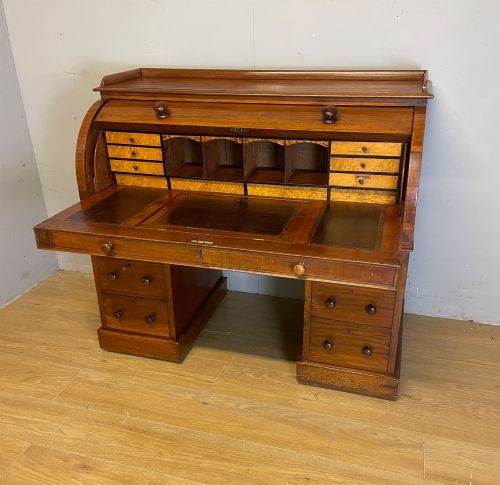
A nineteenth century bureau encompasses drop-front writing slopes, cylinder desks, and secretaire bookcases spanning the Georgian, Regency, and Victorian periods.
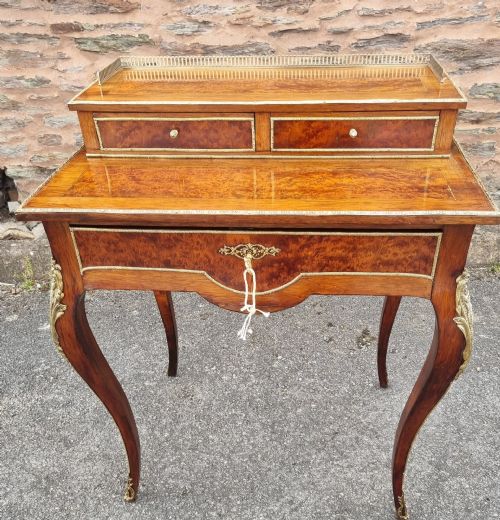
The pieces listed on this page include mahogany, walnut, and rosewood forms, alongside specialised writing tables such as Davenports and bonheurs du jour.
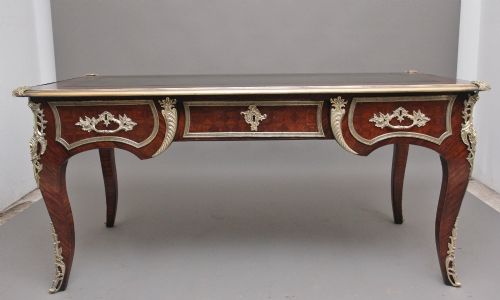
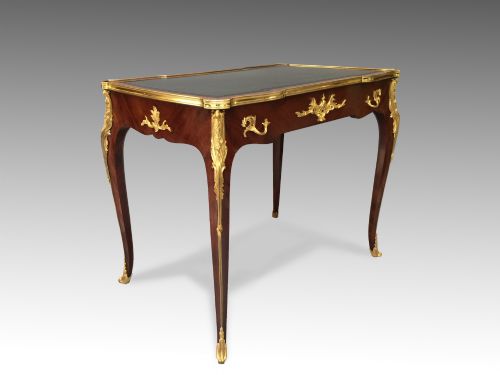
Buyers seeking this phrase encounter both British cabinet furniture and continental examples, including French revival pieces with ormolu mounts.
How they were made
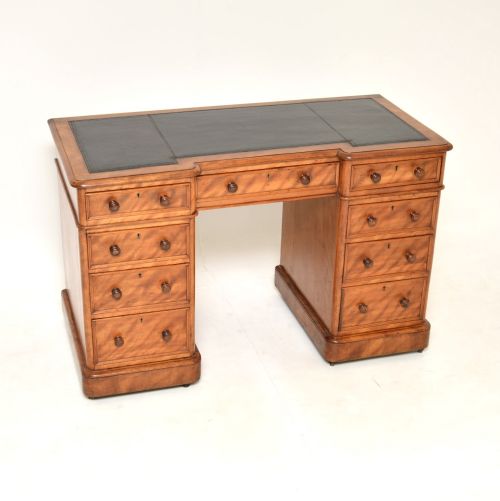
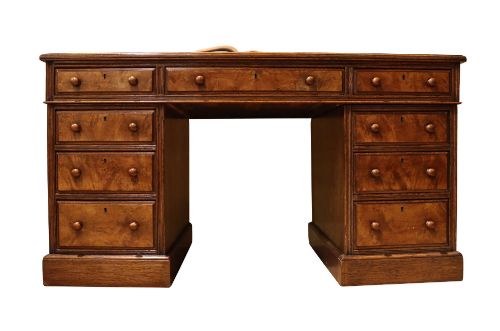
Cabinet makers constructed carcass frames in solid timbers such as mahogany, oak, and walnut, frequently applying flame mahogany, burr walnut, or satinwood veneers to prominent exterior surfaces.
Decorative detailing relied on brass hardware, inlaid stringing, porcelain plaques, and cast ormolu mounts, paired with leather writing surfaces inset into the desk tops.
Nineteenth Century Bureau Retail Price Guide 2026
Typical asking prices for nineteenth century bureau among the pieces listed under this phrase on Sellingantiques today, from the lower quarter to the upper quarter. They describe what is for sale here now, not the wider market.
Certain Victorian desks conceal hidden compartments behind internal pigeonholes, designed for private correspondence and stray postage stamps.
What varies in quality
Quality rests upon the selection of timber veneers, the crispness of hand-carved or cast ornamentation, and the precision with which internal pigeonholes and small drawers fit within the writing compartment.
Superior examples demonstrate secondary timbers like oak for drawer linings, well-executed dovetail joints, and retained maker signatures or retailer stamps.
Gillows·François Linke·Edwards and Roberts·Maple and Co
The Nineteenth Century Bureau Glossary
- Bureau
- A desk featuring a sloping drop-front that opens to reveal a fitted interior of small drawers and pigeonholes.
- Secretaire bookcase
- A tall cabinet combining a glazed upper bookcase section with a fitted writing drawer or pull-down fall-front desk.
- Davenport
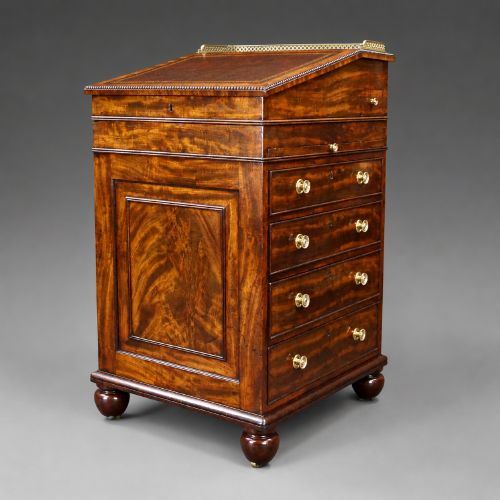
- A compact writing desk fitted with a sloping top and side drawers, originating in the Regency period.
- Ormolu
- Gilded bronze used for decorative mounts, feet, and gallery rails on French and English revival furniture.
- Dovetail
- A traditional interlocking joint utilised in drawer construction to ensure durable, long-lasting corners.
Nineteenth Century Bureau: Frequently Asked Questions
What is a Davenport desk?
A Davenport is a compact writing desk with a sloped leather-lined top. The writing surface slides forward on some variations for comfortable seating.
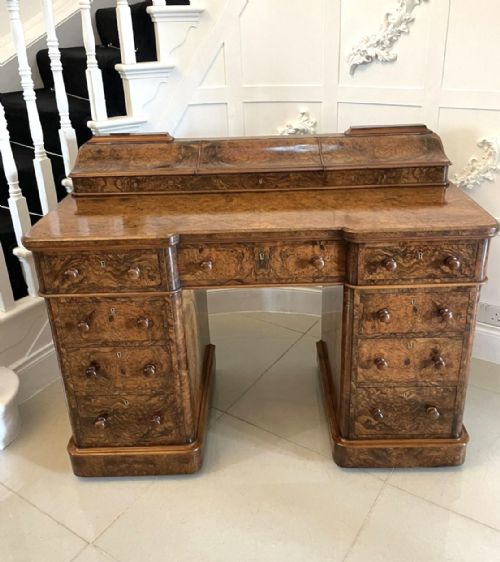
Pedestals beneath the top house drawers accessed from the side, often accompanied by a small stationery compartment on top.
How do I care for wood surfaces?
Nineteenth century timber finishes respond best to occasional applications of traditional beeswax rather than modern liquid sprays. Keeping furniture away from direct heat sources prevents timber splitting.
Leather writing surfaces benefit from gentle cleaning and occasional neutral wax conditioning to maintain suppleness.
What distinguishes Victorian from Regency?
Regency pieces often display classical restraint, clean architectural lines, and rosewood or mahogany veneers with minimal brass inlay. Victorian furniture tends toward heavier proportions, darker woods, and diverse revival styles.
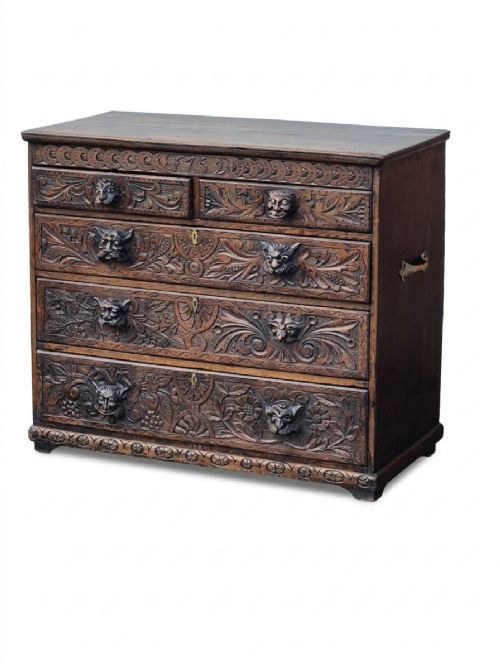
Victorian pieces on this page frequently incorporate burr walnut, ebonised details, or elaborate carving influenced by French and Gothic revivals.